Last updated: May 2026. Prices and hours subject to on-site info.
What This Experience Is
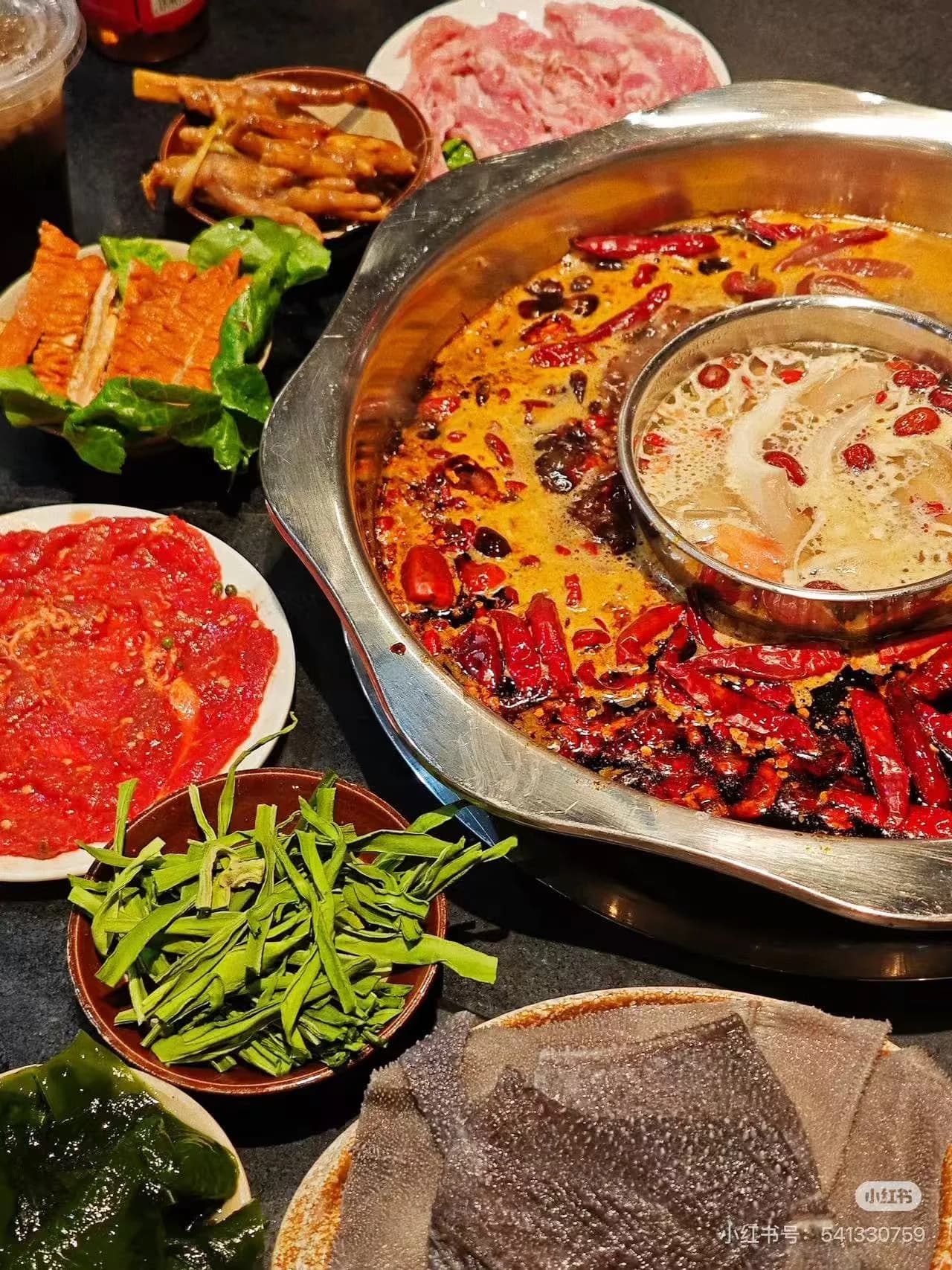
“Chongqing heat” comes in two forms: hotpot—beef-fat red or split pot, tripe and duck intestine you cook yourself, oil dip—about 1–2 hours per meal; and Jianghu cuisine—chilli chicken, máoxuěwàng (blood and tripe in broth), water-boiled fish and other big, bold dishes, ordered from the menu and shared, about an hour or more. You can do one of each or stick to one. Hotpot is one pot at the table; Jianghu is a restaurant meal of a few large spicy plates with rice. Jianghu is Chongqing-specific—Chengdu doesn’t have the same system. Chongqing and Chengdu hotpot differ in base and vibe—Chongqing is heavier on beef fat, nine-grid is common, more “jianghu”; many leave Chongqing still thinking of that taste.
In a sentence: Hotpot about ¥80–150 per person, Jianghu about ¥60–120; to really feel Chongqing “jianghu,” do one hotpot and one Jianghu meal rather than hotpot only.
Is It Worth It
If you’re in or planning to be in Chongqing and you’re okay with heat and offal (or willing to try), it’s well worth it: okay with a loud, oily, possibly hot room and at least 1–2 hours at the table, and you’ll get the difference from Chengdu—Chongqing beef-fat nine-grid plus Jianghu’s big plates. Can’t do spice and won’t touch the clear side of a split pot? Skip or ask for mild Jianghu. Don’t like tripe, duck intestine, aorta? Order more beef, lamb and vegetables. Want quiet, less oil, English menu and service? Old-school places mostly don’t have it. Only time for a “taste”? Hotpot needs a proper sit-down. If you’re okay with heat, oil and noise, many leave with the satisfaction of “I got my fill of Chongqing jianghu”; one hotpot and one Jianghu meal is more complete than hotpot alone.
The Real Experience
Hotpot
Where: old-school vs chain
- Old-school / alley hotpot: Basic setting, oily, mostly no English menu; base and dip are the real deal. Good if you’re okay with “messy”; ask the hotel or locals or check Dazhong Dianping. Chains / mall spots: Cleaner, some have split pot and spice levels, sometimes English or picture menu. Slightly more standard taste but reliable; good for first-timers, those who can’t do spice or want A/C.
At the table: base, items, oil dip
- Base: Red (beef fat), split (half red, half clear), or all clear. Can’t do spice? Split or clear. Can do spice? Ask for mild or medium first, not extra hot. Items: Tripe, duck intestine, aorta are classic “old Chongqing”; add beef slices, luncheon meat, vegetables, potato, etc. Order by head; better to order less and add than waste. Oil dip: Garlic, sesame oil, cilantro is the base; add oyster sauce, vinegar; it cools and flavours. Use less if you’re not used to it, but most people use it.
Jianghu Cuisine (the other half of Chongqing heat)
Jianghu is Chongqing’s system of big, bold dishes: order from the menu, large portions, numb-and-hot, for sharing. Not the same as Chengdu stir-fries or skewers; in Chongqing, for a spicy meal that isn’t hotpot, go to a Jianghu place.
Typical dishes
- Chilli chicken (làzǐjī) — Chicken bits among dried chillies, crispy and fragrant; order by portion, 2–4 people often share. Máoxuěwàng — Duck blood, tripe, bean sprouts and more in one pot, numb and hot; order by pot, eat with rice. Water-boiled fish / meat (shuǐzhǔ) — Fish or meat in chilli-and-peppercorn oil, served in a large bowl; by weight or portion, can ask for less spice. Other options: Jiānjiāo chicken, láifēng fish, Wànzhōu grilled fish, etc.; check the menu or point at pictures, order 1–2 dishes to try then add. Xiǎomiàn, wānzá miàn — For a quick meal, a bowl of noodles counts as a jianghu intro.
Finding a place and tips
- Search “重庆 江湖菜” or ask hotel or driver; Jiefangbei, Guanyinqiao, Nanbin Road have many. Most have no English menu—point at pictures, point at other tables or look up pinyin (e.g. làzǐjī, máoxuěwàng). Portions are big and oily-spicy; with few people order 1–2 dishes; you can ask for “mild” or “less spicy.”
What it feels like: Hotpot is loud and oily; tripe and duck intestine cook in seconds. Jianghu comes in big plates, shared with rice, same bold style. Easy to overdo the spice; start mild with hotpot and ask for mild with Jianghu. Most places have no English menu—point at other tables or pictures or have pinyin ready; many leave with the satisfaction of “I got my fill of Chongqing jianghu.”
How to Do It (Guide for International Visitors)
Location and choice
- Hotpot: Plenty around Jiefangbei, Guanyinqiao, Nanbin Road; old places often in alleys or residential areas—search “重庆 老火锅” or ask the hotel. Jianghu: Search “重庆 江湖菜” or ask locals; same areas have many Jianghu spots, mostly order-from-menu, no English. Most places run late; dinner peak around 18:00–21:00—go off-peak or early.
Cost
- Hotpot: About ¥80–150 per person (mid-range), by what you order and drinks; chains a bit more, old places can be cheaper. Jianghu: About ¥60–120 per person, by number and level of dishes; large plates suit 2–4; with fewer people order one or two dishes. Payment: mostly mobile scan; some old places cash or local pay only—have How to Pay in China ready.
Common Mistakes
Mistake 1: Going extra hot the first time — Start mild with both hotpot and Jianghu; add heat if needed; extra hot is too much for many.
Mistake 2: Cooking tripe and duck intestine too long — They get tough; a few to a dozen seconds is enough.
Mistake 3: Skipping the oil dip — It cools and protects the stomach; try garlic sesame oil at least once.
Mistake 4: Only eating hotpot and not trying Jianghu — For variety or a shared meal, add a Jianghu meal (chilli chicken, máoxuěwàng, water-boiled fish, etc.) to tell Chongqing apart from Chengdu.
Mistake 5: Expecting English menu and service — Old places mostly don’t have it; point at pictures, other tables or have dish names ready (e.g. máoxuěwàng, làzǐjī).
Mistake 6: Not ready to pay — Many places are scan-first; have How to Pay in China sorted.
Who It’s For / Who It’s Not For
A good fit: You’re in or planning to be in Chongqing and okay with heat; you want to feel the difference from Chengdu (nine-grid + Jianghu).
If you care more about no spice, quiet, less oil and English—go for split/clear pot, mild Jianghu or another experience.
Tip: When in doubt, ask for mild; tripe and duck intestine—take out when they curl or change colour; keep valuables safe.
Before You Go Checklist
- [ ] Okay with a bit of spice, or split/clear pot and mild Jianghu
- [ ] Allow 1–2 hours (hotpot) or about 1 hour (Jianghu); don’t rush
- [ ] Mobile pay or some cash ready
- [ ] If adding Jianghu, have pinyin for làzǐjī, máoxuěwàng, shuǐzhǔyú etc., or be ready to point at pictures
- [ ] For old-school places: expect noise, oil and likely no English
Chongqing heat isn’t only hotpot: beef-fat nine-grid is one path, chilli chicken, máoxuěwàng and water-boiled fish—Jianghu—is the other. Unlike Chengdu’s split pot and stir-fries, Chongqing’s beef-fat pot and Jianghu big plates are the two most local ways to eat. Many leave with the satisfaction of “I got my fill of Chongqing jianghu”; if you can’t do spice, split pot, clear soup or mild Jianghu still give you the jianghu vibe.


