Last updated: May 2026. Prices and hours subject to on-site info.
What This Experience Is
You go to a Guangzhou tea house, order a pot of tea and a few baskets of dim sum, pay per basket or piece, and sit for an hour or two—for many it’s the meal they look forward to most in Guangzhou. Morning, noon or afternoon all work; most tea houses serve dim sum from morning into evening. There’s no “performance”—it’s where locals have tea: loud, you read the menu or point at carts, almost no English, but the variety is huge and the taste is the real thing; that buzz is part of Guangzhou.
In a sentence: No booking needed; about ¥50–100 per person; one meal is enough to feel Cantonese dim sum and tea house culture.
The Real Experience
Choosing a Place: Old-School vs. Chain (Before You Go)
Old-school tea houses
- Mostly in the old town (Beijing Road, Shangxiajiu, Liwan); worn setting, busy, carts or handwritten slips
- Dim sum is the real deal but almost no English menu—use pictures, point at other tables or look up dish names
- Morning peak (about 8:00–10:30) often means a wait or shared table
Chains / mall branches
- In Tianhe, Zhujiang New Town etc.; cleaner, some with picture menus or scan-to-order
- Taste a bit more standard but reliable; some have English or pictures—easier for a first time
What it feels like: For full local buzz choose old-school; that old-style noise drops you straight into “I’m in Guangzhou.” First time and want it easy? Pick a chain—comfortable and less pressure. At old-school places 20–30 minutes’ wait at peak is normal; go off-peak or early, and use the wait to skim dish names and get in the mood.
At the Tea House: Finding a Seat, Ordering Tea (About 10 Minutes)
Finding a seat
- Tell staff how many; they’ll seat you or put you on a shared table. Some places take phone reservations; most are first-come. Shared tables are normal in Guangzhou—no need to mind.
Ordering tea
- Chrysanthemum pu’er, tieguanyin, pu’er are most common; tea charge per person (about ¥5–15), refills included
- Staff may ask “drink what tea?” (饮咩茶); point at the menu or say “菊普” “铁观音”
What it feels like: No Cantonese is fine—point at the menu or say the拼音 (e.g. tieguanyin) and they’ll get it. Once the tea arrives and the steam rises, the “sit down and eat slowly” rhythm starts. Tea charge is standard; one pot and you get refills—good value.
Ordering Dim Sum: Carts vs. Order Slip (About 15 Minutes)
Cart-style
- When the cart passes, point at the baskets you want; staff stamp your dim sum card; you pay by the card at the end. Point at what you want or at the same on the next table; start with two or three baskets, then order more.
Order / scan-to-order
- Tick the menu or scan, then hand to staff or submit
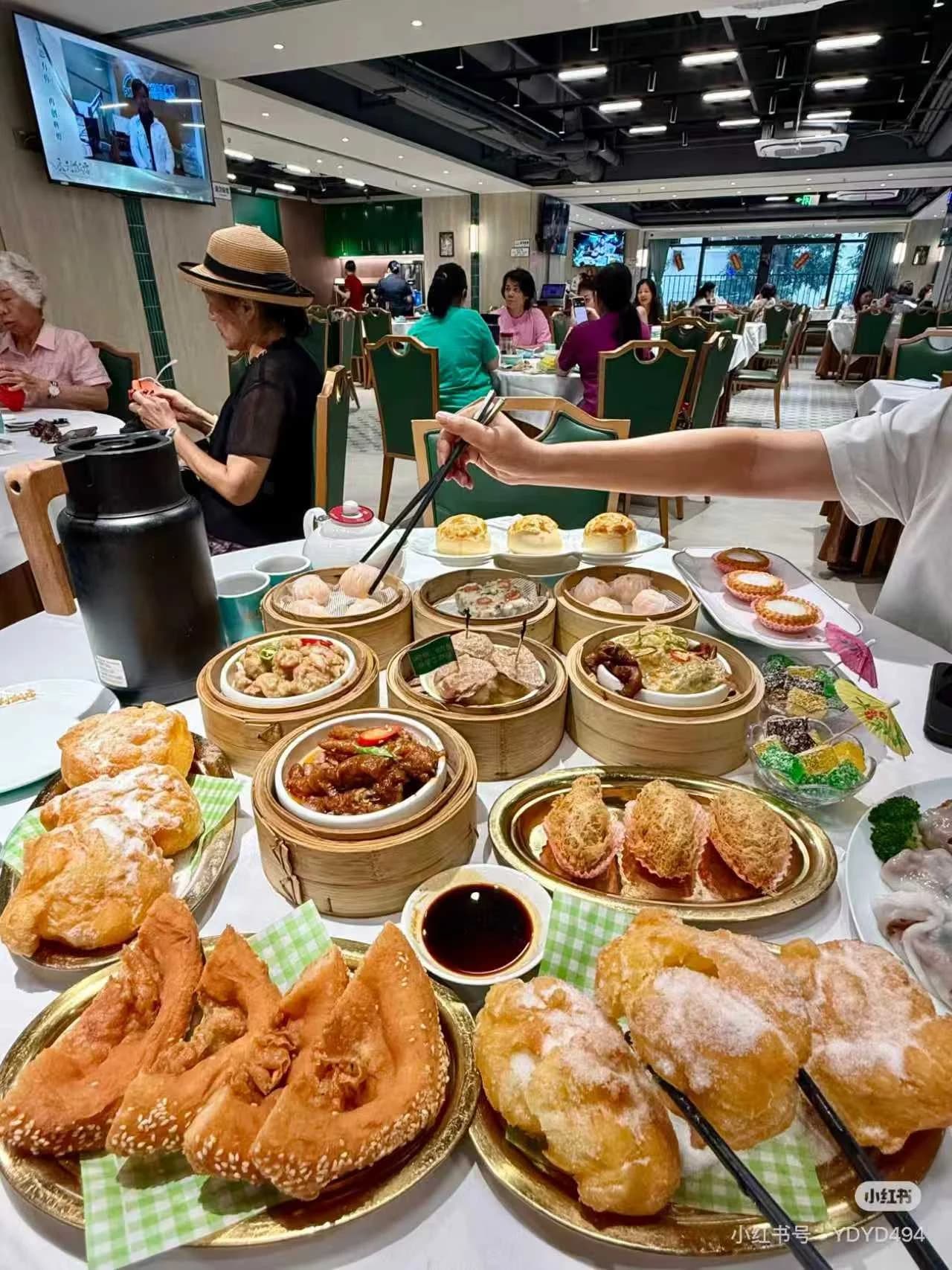
- Common: har gow, siu mai, chicken feet, cheung fun, char siu bao, lava buns, spare ribs, sticky rice in lotus leaf
Portions and top-ups
- A basket is usually 3–4 pieces; small dishes about ¥10–25 per basket, medium and large more
- Tea refills; dim sum you can add—no need to order everything at once
What it feels like: First round go for the “classic set”—har gow, siu mai, chicken feet, cheung fun, char siu bao or lava buns; when the baskets land you’ll feel the satisfaction. Add more as you go—yum cha is about adding and eating slowly. Chicken feet and spare ribs are soft and rich; if you’re okay with that, try a bite; many foreign friends end up craving them. Some items are sweet or oily—pick to your taste.
During the Meal: What You’ll See
- Loud, people talking, carts and staff moving, shared tables common—next to you might be a family chatting
- There’s no “correct” order; eat and add at your pace; keep it relaxed
- Staff may be too busy to explain each basket; use pictures, point or have names ready—a point is enough
What it feels like: Old-school places are about efficiency—you pour tea, watch the cart, point at baskets; that’s the “in the local scene” feeling. When you need more or the bill, raise a hand or say “唔该” (thanks / excuse me) and staff will come. That mix of voices and cart noise is what many miss after leaving Guangzhou.
Paying
- Cart-style: staff bring the dim sum card to add up; order-style: ask for the bill
- Most tea houses take scan (WeChat/Alipay); some old-school still cash only
- About ¥50–100 per person by appetite and grade; confirm on site
Is It Worth It
Short answer: Very much so—for many, the happiest meal in Guangzhou is yum cha.
You’ll enjoy it when:
- You’re interested in Cantonese dim sum or happy to try har gow, siu mai, chicken feet, cheung fun—each has a clear identity
- You’re okay with noise, no English, maybe shared table or a wait; that “order in the chaos” is part of the fun
- You can give 1–2 hours to sit and eat slowly, not a rush—yum cha’s appeal is that rhythm
- You want one meal that feels completely different from Western brunch; you’ll leave full and with a camera roll
Maybe not when:
- You won’t touch offal or chicken feet—stick to har gow, cheung fun, char siu bao; you’ll still have plenty to eat
- You need quiet, English service and menu—old-school mostly don’t have it; a mall chain is easier
- You only have time for “one bite”—yum cha needs a few baskets to make sense; 30 minutes is a shame
- You don’t care about tea—order a pot of chrysanthemum pu’er or tieguanyin; tea is standard and refills are free
Honestly: Guangzhou yum cha isn’t “check-in” type, it’s “experience” type. One meal and you’ll have a real sense of Cantonese dim sum and tea house culture; that noise and satisfaction are hard to copy elsewhere. It’s loud and there’s no English, but if you’re okay with that, this meal can be one reason you want to come to Guangzhou.
How to Do It (Guide for International Visitors)
Booking and Queuing
Most tea houses don’t take bookings—first-come, first-served. Morning peak (about 8:00–10:30) can mean a 20–40 minute wait. Some chains or newer places take phone or app reservations—search the name before you go. Old-school mostly use on-site queue; tell them how many and wait for your number.
Payment
For international visitors:
- ✅ Mobile pay — Most tea houses take WeChat/Alipay scan; you may need a linked card or top-up; see [→ How to Pay in China]
- ✅ Cash (RMB) — Some old-school still cash only; have about ¥200–300
- ⚠️ International cards — Tea houses rarely take foreign cards on site; a few mall branches might
Tip: Bring some cash and set up Alipay/WeChat international—cover both.
Language
What you might face:
- Old-school menus are mostly Chinese; staff often don’t speak English
- Cart-style means “point at the basket” or use names on the dim sum card
- Chains sometimes have picture menus or scan-to-order; some have English
What to do:
- Have dish names ready (Chinese/拼音), on your phone or paper, and show staff: har gow 虾饺 xiājiǎo, siu mai 烧卖 shāomài, chicken feet 凤爪 fèngzhuǎ, cheung fun 肠粉 chángfěn, char siu bao 叉烧包 chāshāo bāo
- Use pictures or point at other tables — See something you want? Point and say “this one” or gesture
- Use a translation app — Baidu, Google Translate, etc., to scan the menu or voice translate
Finding a Place and Transport
Areas:
- Old town: Beijing Road, Shangxiajiu, Liwan — old names, metro access
- New town: Tianhe, Zhujiang New Town — chains and mall branches, newer, some with English
Transport: Metro covers main areas; tea houses are often 5–15 minutes’ walk from a station. Search “广州 早茶” or “广州 茶楼” for ratings and addresses, or ask the hotel for one or two names.
Hours: Most open around 7:00–8:00 and serve dim sum until 14:00–15:00, some into dinner; confirm with the venue.
Cost Reference
| Item | Reference |
|---|---|
| Tea charge | ¥5–15 per person, refills included |
| Small dishes | About ¥10–25 per basket |
| Medium / large | More; confirm on site |
| Per person | ¥50–100 (by appetite and grade) |
Common Mistakes
Mistake 1: Expecting an English menu and English service — Old-school mostly don’t have it; use pictures, point at other tables or have names ready (har gow 虾饺, siu mai 烧卖).
Mistake 2: Ordering too much in one go — Dim sum comes in baskets of 3–4 pieces; order a few baskets first, try, then add; don’t fill the table at once.
Mistake 3: Not knowing about the tea charge — It’s per person and standard; order tea and it’s included; some places charge even if you don’t order tea.
Mistake 4: Being in a rush — Yum cha suits 1–2 hours; 30 minutes undercuts the experience.
Mistake 5: Not ready to pay — Tea houses mostly take scan; some old-school cash only; have [→ How to Pay in China] ready.
Mistake 6: Going on Monday to an old-school place — Some are closed or open late on Monday; check hours before you go.
Who It's For / Who It's Not For
A good fit:
- You’re interested in Cantonese dim sum and tea house culture—this meal will make you feel “coming to Guangzhou was right”
- You’re okay with noise, no English and ordering yourself—that involvement is part of the fun
- You have 1–2 hours to sit and eat slowly—yum cha’s pleasure is in the rhythm
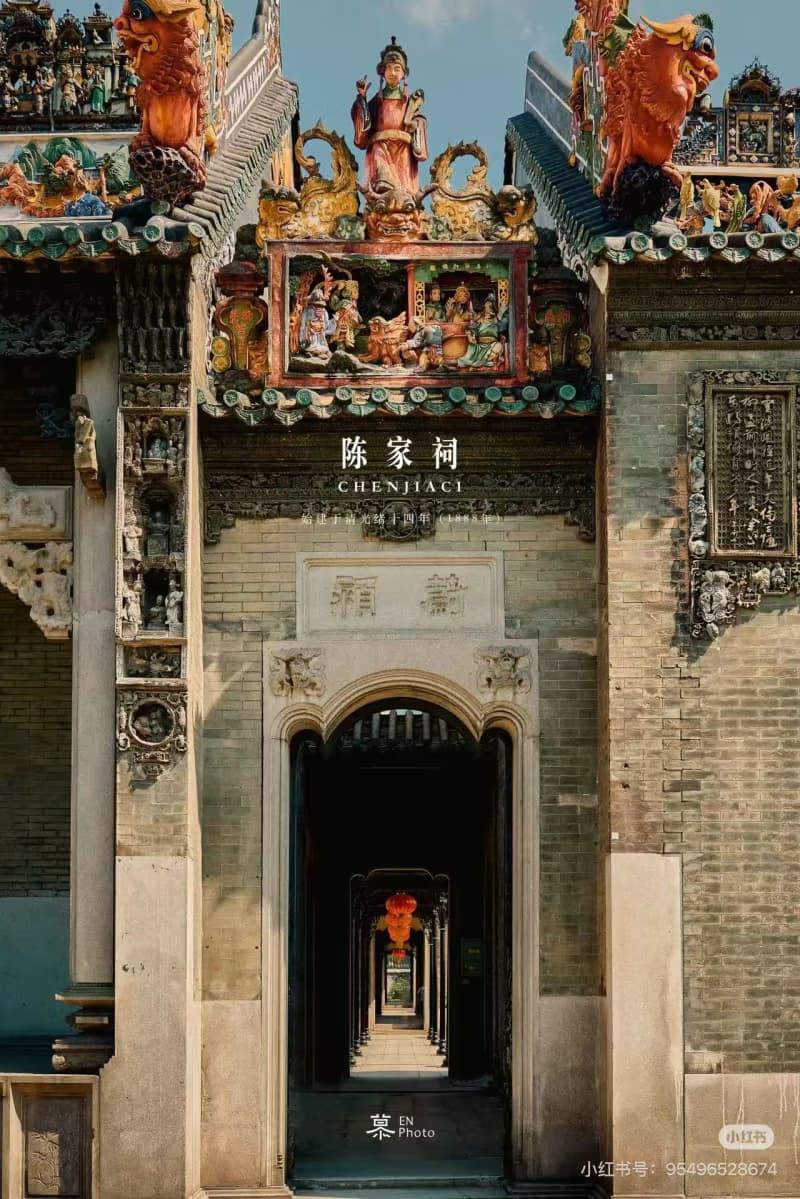
- You want to pair with Canton Tower, Shamian and Chen Clan Academy for an “eat + see” day or two—yum cha is the perfect stroke
If you care more about quiet, English service or very limited time, choose a mall chain or just 30 minutes for a few baskets; no offal or chicken feet is fine—har gow, cheung fun and char siu bao can still leave you very satisfied.
Tip: Waits are longer at peak; to queue less go off-peak (e.g. after 10:30 or afternoon) or a less popular spot—the experience is just as good.
Before You Go Checklist
- [ ] Allow 1–2 hours; don’t rush the next thing
- [ ] Have 1–2 tea house names, addresses and hours, or ask the hotel
- [ ] Mobile pay working + some cash (some old-school cash only)
- [ ] Expect noise, possibly no English, ordering yourself; you can look up dim sum names in Chinese/拼音 in advance
One pot, two pieces, a few baskets, an hour or two at the table—that’s Guangzhou yum cha, simple but memorable. You don’t need “most authentic” or a must-eat list; find a tea house that’s full of locals and order a few classics, and the noise and satisfaction will come. Pair with Canton Tower, Shamian and Chen Clan Academy for an “eat + see” day or two and you’ll leave thinking “I’ll come back for tea.” That experience only exists in Guangzhou’s tea houses.
Extended Reading
- [→ Guangzhou City Guide]
- [→ How to Pay in China]