Last updated: May 2026. Verify before booking.
Xi'an has more than three days' worth of things to see. The practical constraint is sequence, not content: the terracotta warriors are 40 kilometers outside the city and can't be combined with anything else without one of the visits feeling abbreviated; the Shaanxi History Museum is free but requires advance booking and fills up before most people think to check; the evening performance at Huaqing Palace starts at 8 p.m. and ends late enough that returning the same evening means staying in the Lintong district through dinner rather than making two round trips. Get the order right and three days covers the essential range — from the Qin dynasty in 221 BC through the Tang dynasty's peak, across 13 kilometers of Ming-era city wall — without any of it feeling rushed.
Is This Right For You
✅ A good fit for travelers who:
- Are stopping in Xi'an as part of a longer China trip — Xi'an sits on the Beijing–Chengdu and Beijing–Shanghai rail corridors and inserts cleanly into most multi-city itineraries; high-speed rail from Beijing takes about 4.5 hours
- Have some interest in Chinese history — the site density here is unusually high, and three days moves through more than 1,500 years of material; even travelers without prior knowledge tend to find the terracotta warriors specifically hard to prepare for until they're standing in front of them
❌ Not a good fit if:
- Only two days are available — two days is workable but requires choosing between the History Museum and the city wall; combining the terracotta warriors with anything else on Day 2 compresses everything
- Extended outdoor walking in heat is a problem — the city wall cycling loop is 13.7 kilometers with no shade; the terracotta warriors site has significant open-air sections; both are demanding in summer
Route Overview
| Day | Focus | Key Sites | Transport |
|---|---|---|---|
| Day 1 | Museum + Muslim Quarter | Shaanxi History Museum, Muslim Quarter | Metro |
| Day 2 | City outskirts — full day | Terracotta Warriors, Huaqing Palace, Song of Everlasting Regret | Tourist bus + Didi |
| Day 3 | City wall + departure | Xi'an City Wall, Small Wild Goose Pagoda | Walking + metro |
Why this sequence:
The History Museum goes on Day 1 because its free tickets run out by 8 a.m. on peak days — booking 2–3 days in advance is the only reliable method, and having Day 1 as a buffer gives time to rebook if the first attempt fails. Day 2 is entirely outside the city walls: the terracotta warriors site, a two-kilometer transfer to Huaqing Palace for the afternoon, dinner in the Lintong district, and the evening performance — no return trip to the city in between, which saves 90 minutes of transit. Day 3 uses the city wall as a slow, physical counterpoint to the previous day, and the timing works for an afternoon departure.
Budget estimate (mid-range, CNY per person):
- Day 1: CNY 100–200 (museum free; Muslim Quarter food CNY 80–120)
- Day 2: CNY 500–700 (terracotta warriors CNY 120 + Huaqing Palace CNY 120 + performance CNY 250–350)
- Day 3: CNY 100–150 (city wall CNY 54 + bike CNY 45)
Best months: March–May or September–November. Summer (June–August) is the busiest period and the outdoor sites — the city wall, the terracotta warriors' open sections, Huaqing Palace — are significantly more demanding in heat.
Day 1: Shaanxi History Museum and the Muslim Quarter
Afternoon: Shaanxi History Museum (陕西历史博物馆)
Xi'an's main high-speed rail station is Xi'an North (西安北站), about 9 kilometers from the city center. Metro Line 4 runs directly to the central district in under 30 minutes. If arriving in the morning, check in and head to the museum after lunch; if arriving mid-afternoon, the museum visit can be shortened or deferred to a morning slot, replacing it with the Muslim Quarter as the first stop.
Shaanxi History Museum is the most content-dense free museum in northwest China. The daily visitor cap is approximately 5,000; on peak days, the foreign visitor ticket allocation is gone before 9 a.m. The booking method for foreign passport holders: search "Shaanxi History Museum" on the official WeChat mini-program, or use Dazhongdianping (大众点评) or Trip.com to find the booking link — foreign passports qualify for the same free ticket. Book 2–3 days ahead. If the booking fails, the Small Wild Goose Pagoda museum (Day 3) covers similar ground at lower density and without advance reservation.
Allow 2–2.5 hours inside. The recommended approach: move quickly through the ground-floor chronological survey (prehistory to Ming dynasty), then spend the remaining time in the Tang dynasty section on the third floor. The Tang material — tri-color glazed pottery (唐三彩), gold and silver vessels, and Silk Road trade goods — is the strongest part of the collection and the section where English label translations are most complete.
Language: Main gallery labels are bilingual. Individual exhibit cards have abbreviated English descriptions. Audio guides are available in English for rent (approximately CNY 30) and cover the highlights adequately.
Evening: Muslim Quarter (回民街)
The Muslim Quarter (回民街, also called Huifang) is the densest street food area in the city. The core streets — Huajue Lane (化觉巷), West Sheep Market Street (西羊市街), and North Courtyard Gate (北院门) — take about 20 minutes to walk end-to-end.
Arrive by 6 p.m. The main street becomes genuinely difficult to move through after 7 p.m. Going at 5:30–6 p.m. covers the same food with 30–40% fewer people.
What to eat:
- Lamb or beef roujiamo (肉夹馍): The Muslim Quarter version uses halal lamb or beef rather than the pork version found elsewhere in Xi'an. The filling is braised, slightly dry, well-spiced. CNY 15–20
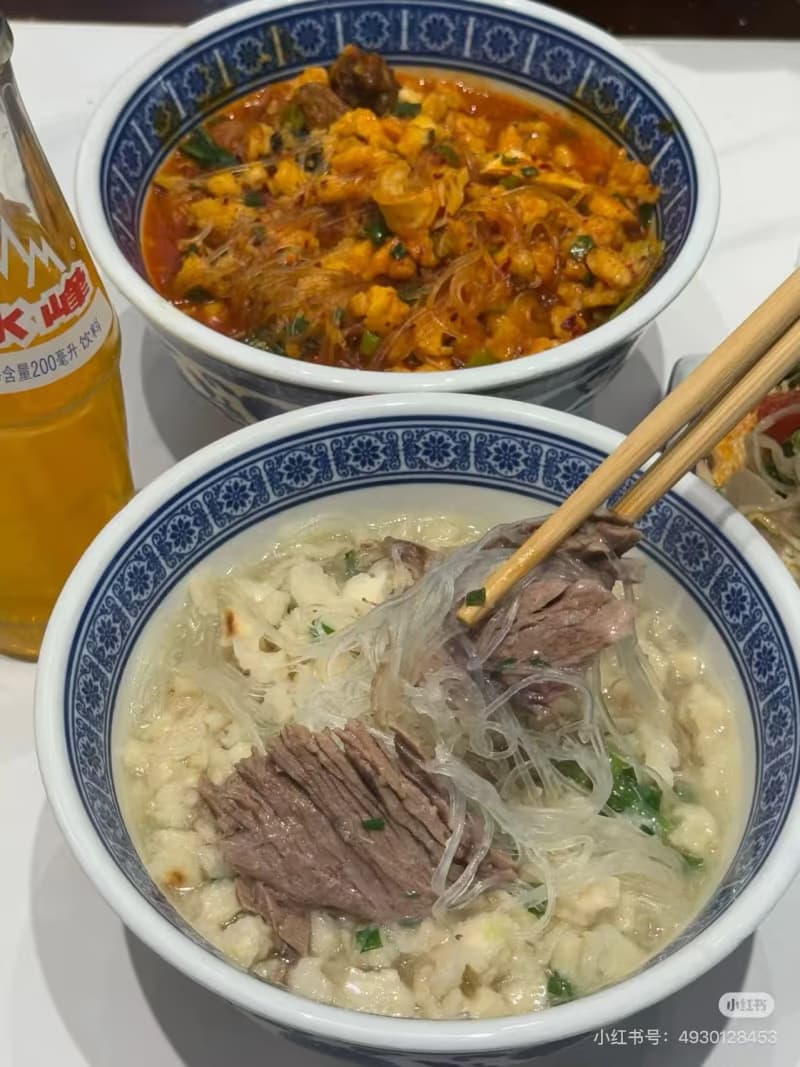
- Yangrou paomo (羊肉泡馍): Order the "break-it-yourself" (自己掰) version — the server brings unleavened flatbread, you tear it into small pieces and return it to the kitchen, where it's combined with mutton broth and glass noodles. CNY 35–50 per bowl. This takes 20 minutes; it is not fast food
- Liangpi (凉皮): Cold rice or wheat noodles with chili oil and vinegar. CNY 10–15. Available everywhere on the street
Payment: Most stalls take WeChat Pay or Alipay. Small push-carts may be cash only — CNY 100 in small bills covers anything you'd want to buy. See How to Pay in China for setup before arrival.
Day 2: Terracotta Warriors, Huaqing Palace, and the Song of Everlasting Regret
This is the longest day and the one that requires the most advance preparation. Leave the hotel by 7:30–8 a.m. — the first Tourist Bus 306 from Xi'an Railway Station East Plaza (西安火车站东广场) departs around 7:30 a.m. The goal is to arrive at the terracotta warriors site before 9:30 a.m., before the tour groups from the city's hotels begin arriving in volume.
Morning: Museum of Qin Terra-Cotta Warriors and Horses (秦始皇兵马俑博物馆)
The site is approximately 40 kilometers east of Xi'an city. Transport options:
- Tourist Bus 306 (recommended): departs from Xi'an Railway Station East Plaza, CNY 7–8 one way, approximately 45 minutes, drops directly at the site entrance. No reservation needed — queue and board
- Metro + Didi: Metro Line 9 to Qin-Han Boulevard station, then Didi approximately 20 minutes, totaling CNY 20–30 and similar journey time
Tickets: CNY 120 per person, including an audio guide device. Foreign passport holders can book in advance on the official website or via Klook (passport number required). In peak season — April to May, July to August, October — advance booking is strongly recommended; the on-site queue for walk-in tickets can exceed one hour.
How to move through the site:
The museum's core consists of three excavation pits. Allow 2.5–3 hours for the full visit:
- Pit 1 (largest): The main formation of over 6,000 terracotta soldiers in battle array, covered by a large hall. The standard approach is to walk the perimeter for an overview, then lean over the pit edge to look closely at individual figures. Every face and hairstyle was hand-finished separately — no two figures are identical. This is not obvious from photographs and only becomes clear when close enough to compare adjacent figures. Spend 60–90 minutes here
- Pit 2: Partially excavated. Displays both figures in situ (unrestored, showing the broken condition after tomb collapse) and restored complete figures in glass cases nearby. The contrast between the two states is instructive
- Pit 3: The smallest pit, interpreted as a command headquarters. Fewer figures but different formation — worth 20 minutes
- Bronze Chariots Exhibition Hall: A 15-minute walk from the main pits. Two bronze horse-drawn carriages at 1:2 scale, with decoration detail that is worth a dedicated look. Don't skip this if time allows
Language on site: English audio guide available on the official app (download before arrival in case of poor signal), and paper English maps are available free at the ticket office. The rental audio guide device (CNY 40 extra, choose the English version) covers the main interpretation points in each pit.
Afternoon: Huaqing Palace (华清宫)
From the terracotta warriors site exit, take a Didi to Huaqing Palace — approximately 2 kilometers, CNY 10–15, under 10 minutes. Buy a separate ticket at the gate: CNY 120. Allow 1.5–2 hours for the daytime visit.
Huaqing Palace operates on two registers. The Tang dynasty hot spring bathing complex — stone pools where the imperial court bathed, partially preserved — gives a physical sense of the palace that once occupied this site in the 7th–8th centuries. The second layer is the 1936 Xi'an Incident, where Chiang Kai-shek was captured during the Chinese civil war and a unity agreement with the Communists was negotiated; the villa where he was taken and the bullet holes in the walls are still visible. English signage covers both sections adequately.
Between afternoon and evening: Dinner in Lintong district
After the Huaqing Palace visit, the time between roughly 3 p.m. and the 8 p.m. performance start is best spent locally — going back to Xi'an city and returning wastes 90 minutes of transit each way. Local restaurants in the Lintong district around Huaqing Palace serve biangbiang noodles (CNY 25–40) and lamb dishes; this is a working district rather than a tourist zone, and prices reflect that. Eat by 6:30 p.m. and rest before the performance.
Evening: Song of Everlasting Regret (《长恨歌》), Huaqing Palace
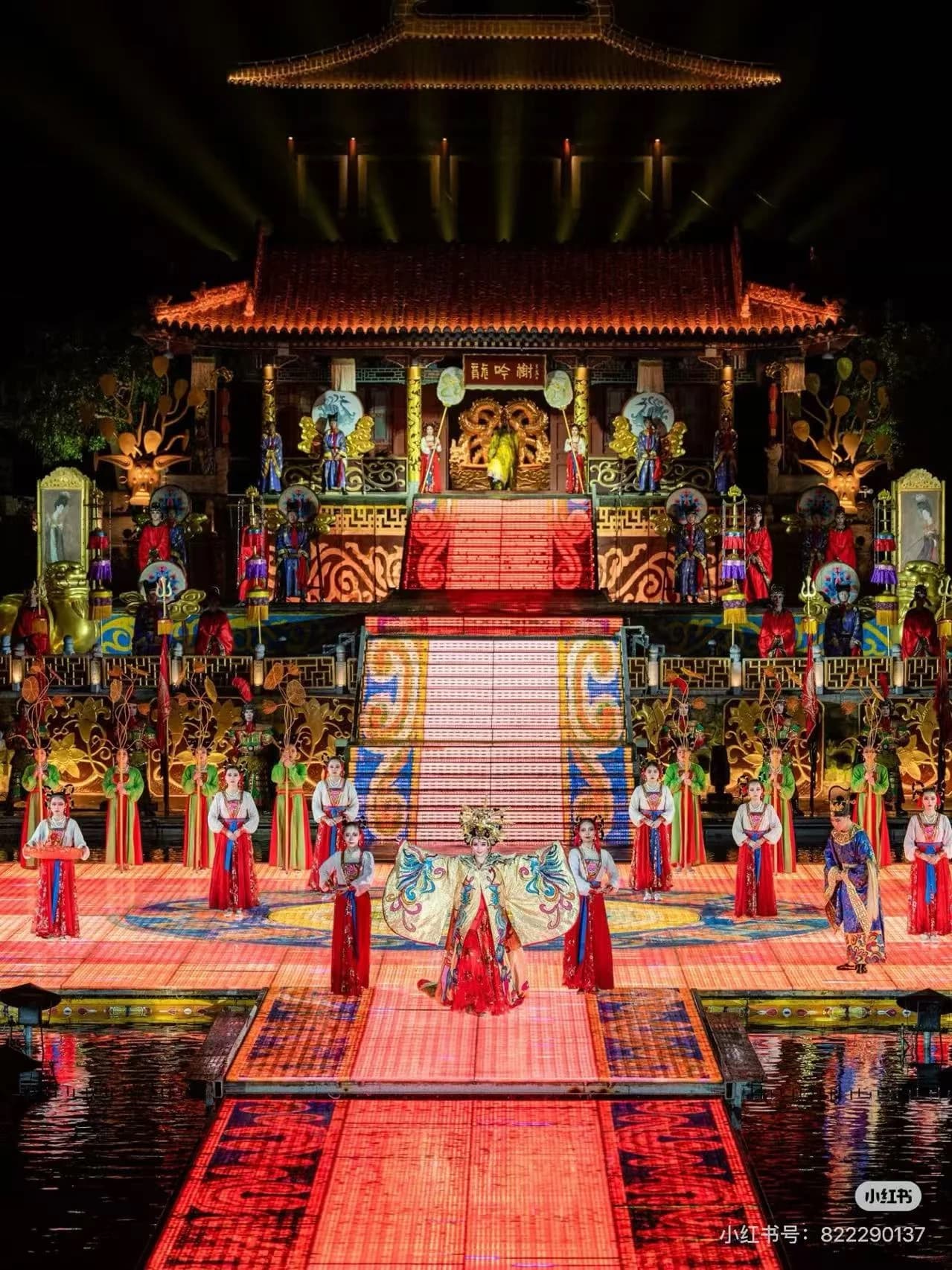
The Song of Everlasting Regret is an outdoor performance staged at the foot of Li Mountain (骊山) inside the Huaqing Palace grounds, using the mountain slope, pine forest, and the hot spring lake as a backdrop. The subject is the love story of Emperor Xuanzong (唐玄宗) and his consort Yang Guifei (杨贵妃), drawn from the Tang dynasty poem of the same name by Bai Juyi (白居易). The production involves several hundred performers, lighting rigs built into the mountain face, and the reflective surface of the lake — effects that a theater building cannot replicate.
Practical details:
- Performance time: Approximately 8:00 or 8:30 p.m. depending on season; confirm the specific time at booking (it shifts by 30 minutes between spring/summer and autumn)
- Duration: Approximately 60 minutes
- Tickets: CNY 198–398 depending on seating zone; mid-zone seats and above give an unobstructed sightline. The cheapest tickets at the outer edges have partial obstruction from the terrain
- Booking: Klook or Damai (大麦) platform; passport number required. In peak season, book at least one week ahead — the venue capacity is limited and weekends sell out
- What to bring: A light jacket in spring and autumn (the mountain air cools significantly after dark); mosquito repellent in summer; the performance is outdoors with no shelter
The performance ends around 9:00–9:30 p.m. Take a Didi from the Huaqing Palace exit back to Xi'an city center — approximately 45 minutes, CNY 80–100. Expect to arrive at the hotel around 10:30–11 p.m. This is the itinerary's latest night; plan accordingly on Day 1 and avoid scheduling anything demanding before 9 a.m. on Day 3.
Day 3: City Wall by Bike, Small Wild Goose Pagoda, Afternoon Departure
Morning: Xi'an City Wall (西安城墙)
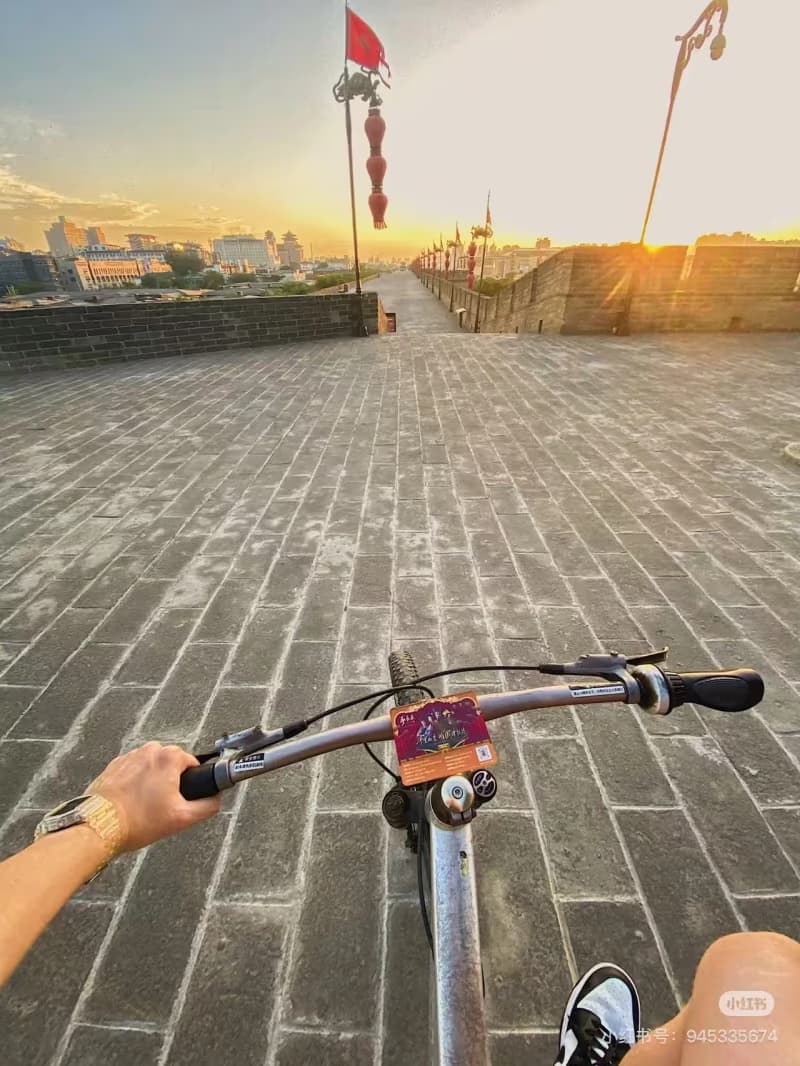
Xi'an's city wall is the most completely preserved Ming-dynasty city wall in China — 13.7 kilometers in circumference, 12–14 meters wide at the top, wide enough that two cyclists can pass each other comfortably. Cycling the full loop takes 1.5–2 hours at a relaxed pace; walking the full circuit takes 3–4 hours. Cycling is the right choice unless the pace itself is the point.
Entry and bike rental:
- Main gates: South Gate (永宁门, Yongning Gate) is the most organized entry point with a dedicated visitor center. North Gate (安远Gate) and East Gate (长乐门) also have rental points
- Wall ticket: CNY 54 per person
- Bike rental: CNY 45 for a single bike (2-hour window); tandem bikes are also available
- Payment: WeChat Pay or Alipay at the rental counter; no advance booking needed
- Deposit: CNY 200–300, payable by mobile payment or cash. A foreign passport can be held as deposit if preferred — ask at the counter
Recommended direction: counterclockwise from South Gate (heading west). The western section of the wall has cleaner sightlines over the city and is less congested in the morning. Go before 9:30 a.m. — tour groups begin arriving around 10 a.m. and the wall narrows perceptibly. No shade on the wall; bring water.
Mid-morning: Small Wild Goose Pagoda (小雁塔)
The Small Wild Goose Pagoda is 20 minutes on foot from South Gate, inside the Xi'an Museum grounds. Admission CNY 30, which includes the museum. The pagoda is 43 meters tall, built in 707 CE during the Tang dynasty — slightly more slender in proportion than the better-known Big Wild Goose Pagoda and significantly less crowded. The surrounding garden is well-maintained and quiet. Good place to decompress after the city wall before a journey.
Afternoon: Departure
Xi'an North Station has frequent high-speed rail departures to Beijing West, Zhengzhou, Chengdu, and most major cities. Metro Line 4 from the city center reaches Xi'an North in approximately 30 minutes (CNY 5–6). For flights, Xi'an Xianyang International Airport (XIY) is about 40 minutes by Didi (CNY 80–100) or 50 minutes by Metro Line 16.
Getting There and Getting Around
Arriving in Xi'an:
- High-speed rail to Xi'an North Station: approximately 4.5 hours from Beijing West (second class CNY 515–560); 5.5 hours from Shanghai Hongqiao; 3.5 hours from Chengdu East. Book on Trip.com English platform 3–7 days ahead; passport number required
- Flights: Xi'an Xianyang International Airport (XIY) serves domestic and some international routes. Metro Airport Line to city center takes approximately 50 minutes
City transport:
- Metro Lines 1 (east–west) and 4 (north–south) cover the main sightseeing corridor. Single journeys cost CNY 2–5
- Didi: Inexpensive by Chinese city standards; most city center trips cost CNY 10–20. Set up the app before arrival — entering destination text is all that's needed, no spoken communication required
- Terracotta Warriors: Tourist Bus 306 from Xi'an Railway Station East Plaza is the most direct option. Does not require a metro transfer or Didi coordination
Practical Information
| Item | Details |
|---|---|
| Visas | Visa-free entry available for many nationalities; check Visiting China Visa-Free |
| Payment | WeChat Pay and Alipay accept foreign card linking since 2024; city wall and terracotta warriors accept mobile payment; carry CNY 300 cash for Muslim Quarter stalls. See How to Pay in China |
| Language | Terracotta warriors site: English audio guide available. Shaanxi History Museum: bilingual labels, abbreviated English. Muslim Quarter and restaurants: translation app with camera mode handles menus |
| Accommodation | South Gate (永宁门) area gives walking access to the city wall, Drum Tower, and Muslim Quarter within 15 minutes on foot |
| Best months | March–May or September–November |
| Daily budget | CNY 200–700 depending on day (Day 2 highest due to performance and two site tickets) |
Book These in Advance
- Shaanxi History Museum — Free but capacity-limited. Book 2–3 days ahead via the official WeChat mini-program or Dazhongdianping; select the foreign passport option. If same-day tickets are unavailable, Xi'an Museum at the Small Wild Goose Pagoda is the alternative
- Terracotta Warriors — Advance booking strongly recommended in peak season (April–May, July–August, October). Book via official website or Klook; passport number required. At minimum, book the day before
- Song of Everlasting Regret performance — Book at least one week ahead in peak season via Klook or Damai (大麦). Confirm the exact performance time (8:00 or 8:30 p.m.) at the time of booking, as it shifts seasonally. Select mid-zone seating or above for an unobstructed view
- Payment setup (WeChat Pay / Alipay) — Must be done before or on Day 1. Required for the city wall bike rental and Muslim Quarter payments. See How to Pay in China
Tips and Tricks
- History Museum: go at opening or late afternoon. The 9–10 a.m. window after opening has the lightest crowds. After 3 p.m. numbers rise again as morning visitors cycle through. Whichever time slot you book, arriving exactly at the start of that slot matters
- Muslim Quarter: use the side lanes. Huajue Lane and the main stretch of West Sheep Market Street are the most congested arteries. The North Guangji Street (北广济街) area one block north has identical food density with noticeably less foot traffic
- Terracotta Warriors Pit 1: don't just photograph and move on. The pit is large enough that most people complete a full perimeter walk without stopping. Leaning over the edge to examine individual figures — the facial features, headgear variations — takes 15 minutes and is a qualitatively different experience from the overview
- Day 2: do not return to the city between Huaqing Palace and the performance. The Lintong district to Xi'an city center is 45 minutes by Didi. Making the round trip to change clothes or rest costs 90 minutes of transit for marginal benefit; staying in the area and eating locally is the right call
- Song of Everlasting Regret seating: The cheapest outer-zone tickets (around CNY 198) have terrain-related sightline obstructions on the sides. Spending CNY 50–100 more for a mid-zone central position is worth it for the lighting and water reflection effects, which are visible straight-on but not from the flanks
- City wall: start before 9:30 a.m. After 10 a.m. the wall fills with tour group traffic and the cycling lane becomes congested. The western section in early morning light is the most photogenic part of the loop
What to Cut If You're Short on Time
If only two days are available:
- Day 1: Terracotta Warriors (morning, early start), return to city for lunch; Muslim Quarter in the evening
- Day 2: City Wall cycling (morning); Small Wild Goose Pagoda; afternoon departure
- Drop: Shaanxi History Museum (requires advance booking, hard to arrange last-minute), Huaqing Palace daytime visit, and the evening performance
Do not cut:
- Terracotta Warriors — removing this converts the Xi'an stop into a generic walled-city visit
- Muslim Quarter — zero entry cost, walkable from most central hotels, minimal time cost; there is no logical reason to skip it
- City Wall cycling — the only activity in the itinerary that's physically participatory rather than observational; removing it leaves the three days as a pure museum-and-exhibition sequence
Before You Go Checklist
- □ Visa / entry status — Confirm current eligibility at Visiting China Visa-Free
- □ Shaanxi History Museum ticket — Book 2–3 days before arrival; free, foreign passport eligible; do this before leaving home if possible
- □ Terracotta Warriors ticket — Book at least 1 day ahead; 1 week in peak season. Klook or official website, passport number required
- □ Song of Everlasting Regret ticket — Book at least 1 week ahead in peak season. Confirm performance time (8:00 or 8:30 p.m.) and bring a jacket for the evening
- □ Payment setup — WeChat Pay or Alipay with foreign card linked. Carry CNY 300 cash
- □ Translation app offline pack — Download Chinese language pack before departure; signal inside some site interiors is unreliable
- □ Rail tickets in/out of Xi'an — Book 3–7 days ahead on Trip.com; earlier during Chinese public holidays
FAQ
Is the Song of Everlasting Regret performance worth the ticket price?
For travelers who have no specific interest in Tang dynasty history or court culture, the performance works on a purely visual level — the scale of the mountain backdrop, the lighting effects on the water, and the crowd of performers together produce something that reads as impressive regardless of prior knowledge. The story is told through movement and spectacle rather than dialogue, so not understanding the language is not a barrier. Mid-zone tickets at CNY 250–350 represent fair value for the production scale.
Are the terracotta warriors worth a half-day journey outside the city?
Yes, specifically because of the individual variation in each figure. Photographs of the pit show the scale and the formation but cannot show that every face was individually modeled — no two figures are the same. This is only apparent when standing close to the pit edge and looking at adjacent soldiers side by side. That detail alone makes the 40-kilometer trip worthwhile.
Does the Shaanxi History Museum require Chinese to navigate?
No. The main gallery labels are bilingual, the major exhibits have English cards, and the rental audio guide has an English track. The abbreviated English descriptions on secondary exhibits mean that some context is lost, but the core narrative — particularly in the Tang dynasty section — is accessible without Chinese language ability.
What if the Shaanxi History Museum booking fails?
Xi'an Museum, located inside the Small Wild Goose Pagoda grounds on Day 3, is the practical alternative. The collection is smaller and focused on Xi'an-area finds rather than the full provincial range, but it requires no advance booking and the entrance is included in the pagoda admission. The two museums are complementary rather than duplicative.
How late does Day 2 run, and is it manageable?
Realistically: leave hotel at 7:30 a.m., return to hotel around 10:30–11 p.m. That's a long day, but the two site visits (warriors in the morning, Huaqing Palace in the afternoon) involve significant walking rather than sustained intensity. The gap between the afternoon visit and the 8 p.m. performance — roughly 3–4 hours — is the recovery window. Keeping Day 1 and Day 3 lighter makes Day 2 work without carrying fatigue into departure.
Three days in Xi'an covers a range that few cities can match in the same footprint: a Qin dynasty emperor's burial army, a Tang dynasty hot spring palace turned outdoor theater, 13 kilometers of Ming city wall, and a food district that has operated continuously since the Song dynasty. The logistics are more front-loaded than most itineraries — booking three separate tickets before arrival — but once those are in place, the days run in sequence without improvisation. For a longer itinerary that includes Xi'an as one stop on a multi-city trip, see China 10-Day Itinerary. Full destination detail at Xi'an City Guide.