Last updated: May 2026. Autumn foliage timing may vary slightly year to year. Verify before booking.
Ask people who live in Xi'an when the city feels best, and many will say: autumn—especially from late October to mid-November. By then the summer heat has gone, winter hasn't fully arrived, the city wall no longer burns your feet, you can comfortably wander all day, and evenings on the Muslim Quarter streets or by the moat don't feel cold. Most days you get crisp, dry autumn blue skies and clear air; photos look clean even without filters. For visitors who want “everyday life in an ancient city + easy weather,” autumn is that season where you don’t have to do much prep—you just come, and it feels right.
One-Sentence Summary
Good for: Travelers who like slow city walks, photography, and climbing the wall without being baked or chilled; first-time visitors who want low-friction weather
Not good for: Those expecting cherry blossoms or dramatic mountain-wide red leaves—Xi'an’s city autumn is more understated
Best window: Mid-October to mid/late November (avoid National Day Golden Week)
Why Autumn Is Worth It
City Wall and Old City—Finally Comfortable to Walk by Day
In summer, Xi'an’s city wall at midday feels like a huge baking tray; in winter, the wind up there can make you think about coming down sooner than planned. Autumn sits between the two: daytime temperatures often sit in the mid-teens to low twenties Celsius, sunlight is bright but not harsh, and the wind is gentler. You can go up at South Gate (Yongningmen) and walk a long section—or even the full 13.7 km—without constantly hunting for shade or fleeing the wind.
From the wall you see tiled roofs inside the old city and newer towers outside very clearly—autumn’s dry air and good visibility make it obvious that this is both an ancient capital and a modern city at the same time. For many first-time visitors, an autumn wall walk is the best moment to really feel the city’s scale.
Practical info:
- Time: Most daytime hours work; morning and afternoon have the best light. To avoid busier periods, skip midday and early evening.
- Tips: If your fitness is average, consider half a loop (e.g. South Gate → East Gate → North Gate). If you’re in good shape and the weather cooperates, a full loop is rewarding.
Autumn in the Muslim Quarter and Backstreets—Comfortable Everyday City Life
In spring, the Muslim Quarter has blossom season; in summer, it has night breezes. In autumn, it adds something else: a “just right” feeling. You don’t need to hunch over a bowl of soup for warmth, and you won’t sweat through dinner like on a July night. By day you can wander around Bell and Drum Tower and the lanes around the Quarter, stopping to photograph old archways, stalls, and mosque courtyards; in the evening you can sit at a street-side table with skewers and sour plum drink, needing only a light jacket.
It’s not just the Muslim Quarter. Shuyuanmen and other old streets inside the walls feel more walkable in autumn—too hot in summer, too windy in winter, but in autumn they’re “streets you can stand still in for a while.” For visitors who enjoy everyday city life and street photography, autumn Xi'an has few “blow-your-mind” moments, but the whole picture is quietly satisfying.
Hills, Parks, and the Ginkgo Temple—If You Want a Bit of Color
If you care about autumn colors, you can give half a day to a nearby hill or park: easy hiking trails around the Zhongnan Mountains, or in the city, mature trees and fallen leaves in parks like Xingqinggong or Revolution Park. They’re not as theatrical as Beijing’s Fragrant Hills, but under soft autumn light, yellow and orange leaves next to old buildings or along a hillside path still make for “this is autumn in a northwestern Chinese city” photos.
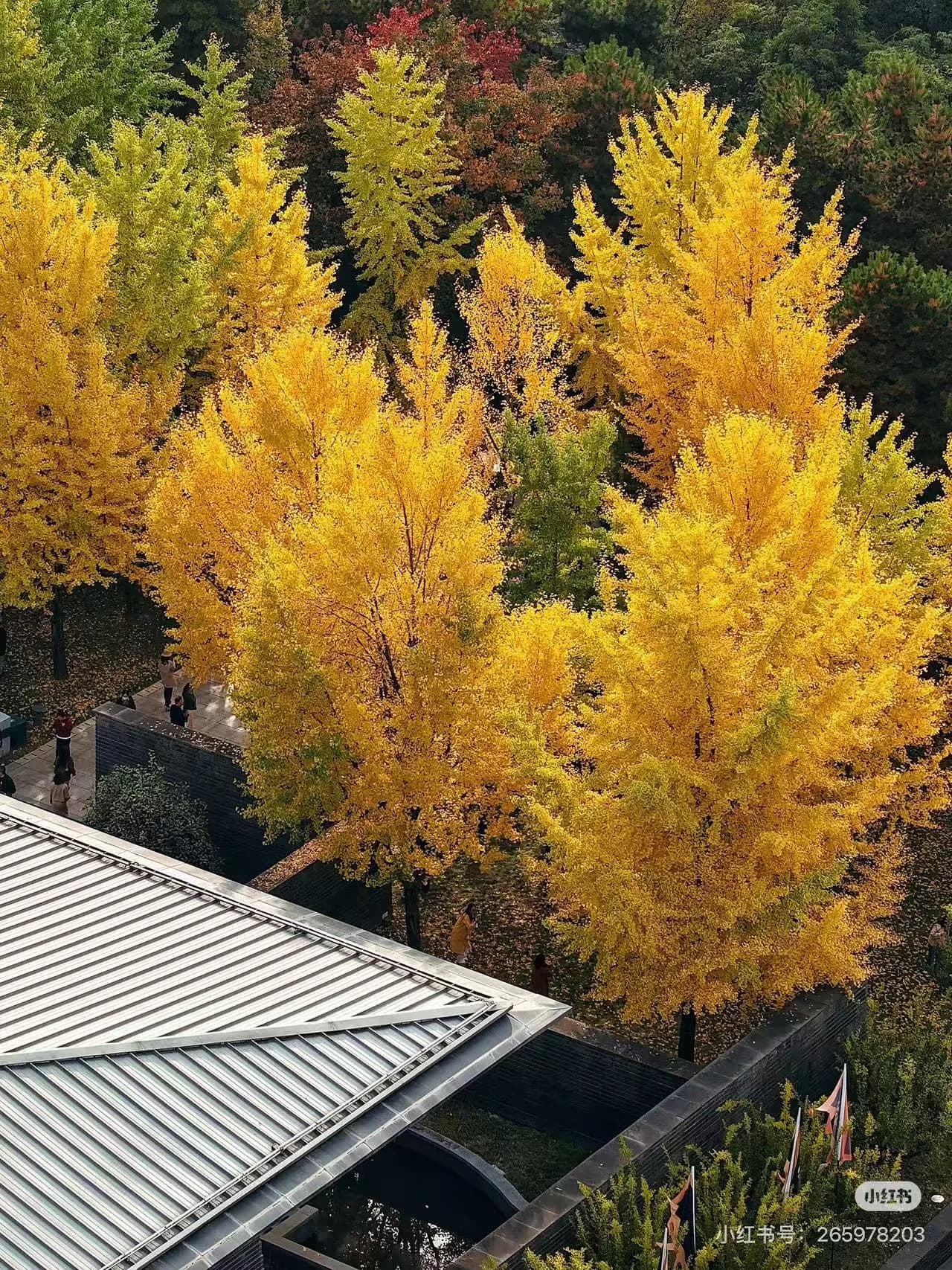
There’s also a more “season-limited” option: the ginkgo at Guguanyin Temple on the city’s outskirts. Inside the temple courtyard stands a famous old ginkgo tree. Every late autumn (roughly in mid-November), its leaves turn a solid gold, and when they fall the yard looks like it’s been carpeted in yellow. Many locals and domestic travelers make a special trip there for this one–two week window. If you’re willing to spend half a day outside the city, this is one of the places where Xi'an’s autumn gives you a postcard-level scene.
Practical info:
- If you prefer to stay in the city: pick parks with big trees and water (e.g. Xingqinggong, Qujiang Pool). Morning and evening light is best, with fewer people.
- If you want a “limited-time” scene: check the expected ginkgo turning dates at Guguanyin Temple for that year and set aside half a day for a taxi ride or simple tour out and back.
- If you’re happy to go farther: look up an easy Zhongnan Mountains hiking route through a local operator or guide; most can be done as a day trip.
Stable Weather, Easier Planning
Choosing Xi'an in autumn comes with a quiet advantage: planning is simpler. Compared with summer, where you dodge midday heat, and winter, where you have to think about how long you can stay outside, most daytime hours in autumn work fine for walking the city without major adjustments. If you’re connecting between Beijing, Shanghai, or Chengdu, putting Xi'an in the middle of an autumn trip gives the whole journey a slower, more breathable stretch.
What to Plan For (Autumn's Cost)
Autumn is one of Xi'an’s easiest seasons, but a few things are worth knowing in advance.
National Day Golden Week
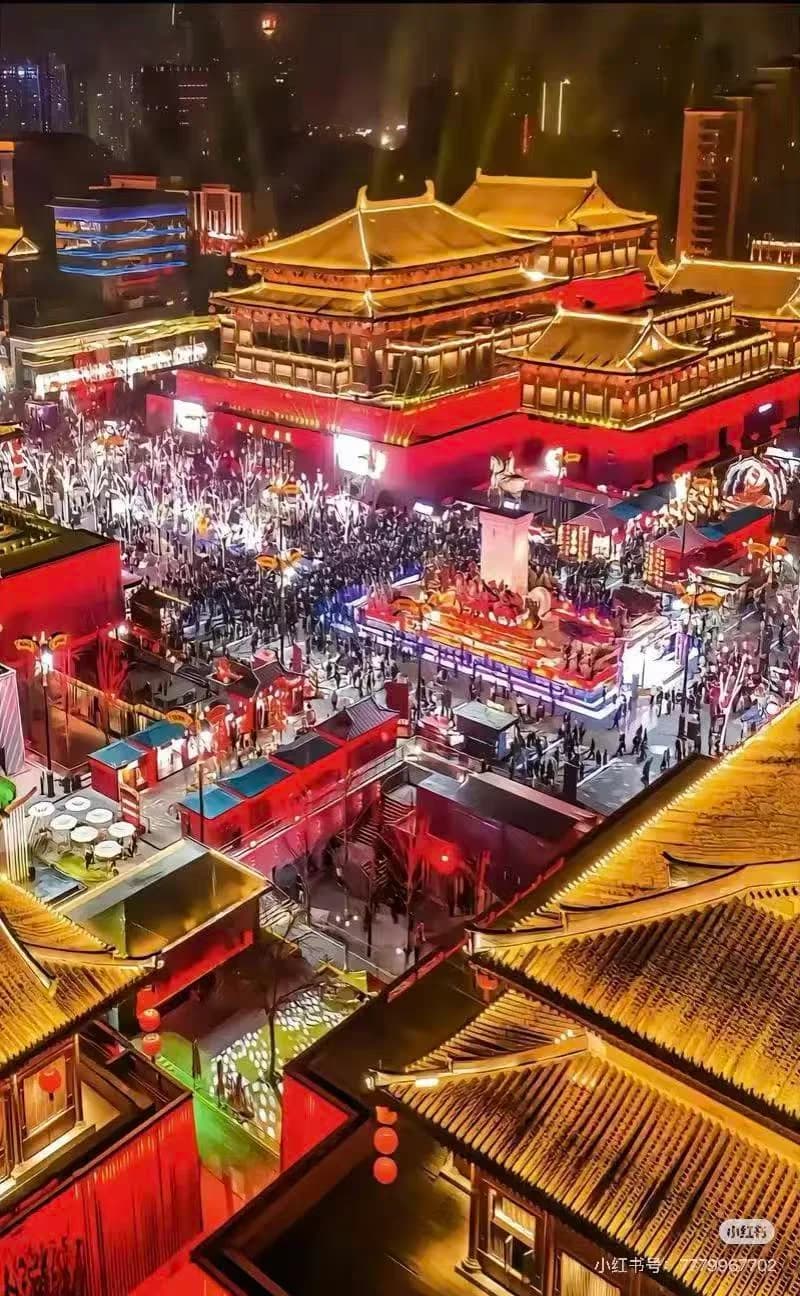
October 1–7 is China’s National Day holiday. All major destinations see higher prices and denser crowds, and Xi'an is no exception. The Terracotta Warriors, city wall, Muslim Quarter, and Great Tang Everbright City are all notably busier, and traffic is heavier. If you can choose, aim for mid-October to mid-November and skip those seven days—the same itinerary will feel much more relaxed.
Day–Night Temperature Swing
Xi'an’s inland climate means a bit of a gap between day and night temperatures. Daytime might be comfortable in a T-shirt or light long sleeves, but an evening sitting on the wall or by the moat is better with a jacket. Pack one or two thin layers—a light jacket or knit—that you can strap to your bag during the day and throw on at night.
Autumn Color Expectations
If you’re dreaming of entire mountainsides blazing red, central Xi'an may not match that picture. The appeal is more about city walls, old streets, and clusters of trees looking good in autumn light, not stepping outside to instant postcard-red slopes. For travelers chasing extreme fall color, it’s better to treat Xi'an as the “comfortable weather, characterful city” stop in the route rather than the sole foliage destination.
What to Wear in Autumn
October–November suggestions:
- Daytime: T-shirt or light long sleeves with long pants, plus good walking shoes (the wall and stone streets can easily fill a full day)
- Early mornings and evenings: Light jacket, knit, or trench coat, easy to put on and take off
- Backup: A thin scarf—useful against breeze if you sit outside on the wall or by the water
Packing logic: Aim for “warm enough to walk the city by day and sit outside at night without freezing.” Several light layers are more useful than one heavy coat.
3-Day Autumn Itinerary
Day 1: City Wall + Old City Walks
Morning: Go up at South Gate and, depending on weather and energy, walk half the loop or the full circle. Autumn light is friendly—pause often to look at the contrast between old roofs inside and new districts outside.
Midday: Come down into the city for lunch—simple local dishes or noodles are enough to refuel.
Afternoon: Explore Bell and Drum Tower and nearby old streets. Drop into the Muslim Quarter to see daytime market life; you don’t need to try every snack in this first visit.
Evening: Depending on your energy and the weather, sit for a while in the Muslim Quarter or by the moat. A hot drink or sour plum juice pairs well with an autumn night that’s neither too hot nor too cold.
Day 2: Terracotta Warriors + Park or Neighborhood
Morning: Head to the Terracotta Warriors early (same logistics as other seasons). In autumn, the moderate temperature makes 2–3 hours in the pits much easier.
Afternoon: Back in the city, choose either a park (Xingqinggong, Qujiang Pool) or a neighborhood (like Shuyuanmen) for a slow walk. Autumn trees and light make these everyday spaces more photogenic.
Evening: Pick one night for a proper meal in the Muslim Quarter. Street food and grills under cool autumn air feel less sticky than in summer and more comfortable overall.
Day 3: Museum + Open Slot
Morning: Visit one museum—Shaanxi History Museum, Datang West Market Museum, or the Forest of Stone Steles. Autumn weather doesn’t force you indoors, but a museum fills in the “stories and artifacts behind this old capital.”
Afternoon: Leave this open for what you’ve discovered you like: another section of wall, a café or teahouse you noticed earlier, or a neighborhood you walked through too quickly the first time.
Evening: Return to the place you liked most over the past two days—maybe the Muslim Quarter, the moat, a park, or simply a stretch at the foot of the wall—and let autumn Xi'an end in a scene you now know well.
Summary
Xi'an in autumn doesn’t have a single cherry-blossom-style peak moment, and it isn’t as noisy as summer nights. Its value is that the entire city sits in a “just right” state—weather, light, and walking comfort all line up. For first-time visitors to China who want one historic city in the itinerary, slotting Xi'an into autumn is often a low-effort, high-return choice.
If you’re already thinking about an autumn China trip, put Xi'an in the middle. Let this old city, with its clear air, walkable wall, and unhurried streets, slow the pace of the whole journey a little. What many people remember afterward isn’t one huge “set-piece scene,” but those extra few minutes they spent on the wall, by the moat, or at the corner of the Muslim Quarter on an autumn evening.