Last updated: May 2026. Prices and availability subject to change—verify before booking.
Beijing has around 400 roast duck restaurants. The most famous one isn't the best one. This matters less than it sounds—the gap between a competent roast duck and an exceptional one is smaller than the gap between any decent roast duck and whatever the hotel is serving.
The Duck Itself: What You're Actually Getting
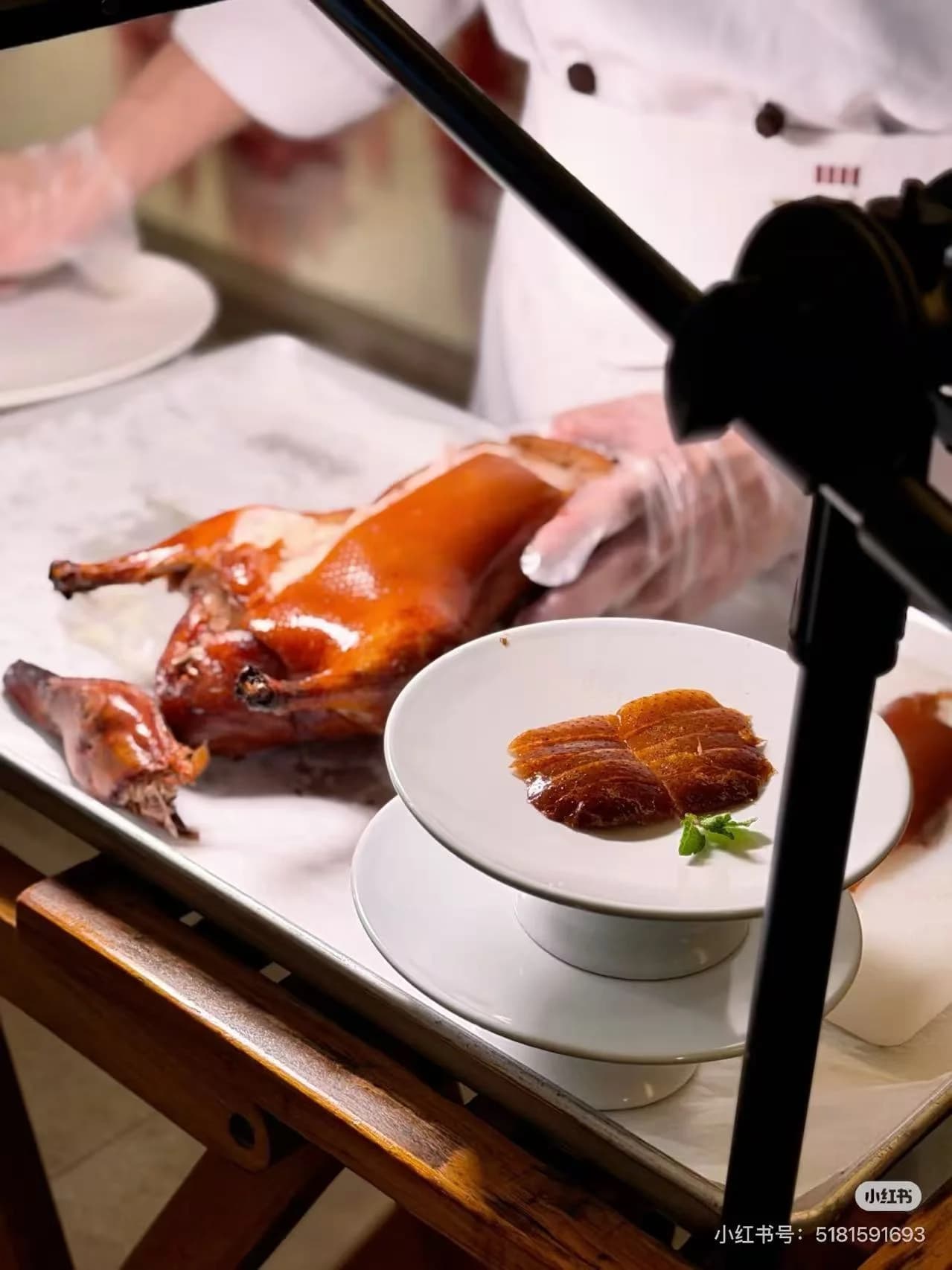
Beijing roast duck—called kaoya (烤鸭) locally—is a whole duck roasted at high heat in a hanging oven until the skin blisters into something close to a crackling. Lean meat underneath, almost no fat. The eating process is the same at most restaurants: roll slices of duck and skin into a thin wheat pancake with sweet bean sauce (hoisin-style), scallion strips, and cucumber. One roll, one bite.
The skin is the point. A well-roasted duck produces skin that shatters slightly when bitten—thin, dry, no grease. The meat underneath is almost secondary. If you leave a Beijing roast duck meal thinking mainly about the meat, something went wrong with the order of priorities.
Reference price: ¥100–250 per person depending on the restaurant; book ahead for the popular spots.
Which Restaurant to Choose
This is where most visitors make the first mistake: defaulting to the most famous name.
| Type | Example | Per Person | Notes |
|---|---|---|---|
| Local favorite | Siji Minfu (四季民福), Wangfujing | ¥120–180 | Near Forbidden City; bookable via Dianping or Trip.com; picture menu |
| High-end | Dadong (大董) | ¥250–350 | Known for lean duck and thin skin; book 1–2 weeks ahead in peak season |
| Famous chain | Quanjude (全聚德), Qianmen | ¥160–220 | The name everyone knows; locals choose it less often than tourists do |
| Neighborhood spot | Search "北京烤鸭" on Dianping | ¥80–120 | No booking needed on weekdays; no English menu; the best value |
Quanjude's reputation was built over decades and it remains a functioning restaurant. But at current prices, with current tourist volume, and the consistency gap between branches, it's not where most Beijing residents would take a friend who wanted good duck. Siji Minfu's Wangfujing branch is the most workable starting point for first-time visitors: near the Forbidden City, bookable in English through Trip.com, and the picture menu makes ordering manageable without Chinese.
Dadong is worth the premium if you want the duck to be the meal rather than part of the meal—the skin is noticeably thinner and the duck leaner than the standard version. Book early.
How the Meal Works
Whole or half: Most restaurants sell by whole or half bird. A whole duck feeds 2–3 people; half is enough for 1–2. Ask when you arrive—most places offer half without issue, and it's not an unusual request. Some neighborhood spots let you order by portion rather than by bird.
The slicing: At higher-end restaurants, the chef wheels a small cart to your table and slices in front of you. The back of the bird produces the thinnest, crispiest skin—worth noting before the plate empties. At neighborhood restaurants, the duck arrives pre-sliced from the kitchen. The taste is comparable; only the presentation differs.
How to eat it: Lay one pancake flat in your hand. Spread a small amount of sweet bean sauce across the center—not too much, it's very sweet. Add two or three slices of duck, a few scallion strips, cucumber if you like. Fold one edge over and roll from one end. Some restaurants serve white sugar alongside the sauce for eating the skin on its own—an old Beijing pairing worth trying once.
Duck soup—ask before the meal ends: The carcass can be made into a clear broth with tofu and salt. Almost no restaurant will offer this unprompted. Before things wind down, tell the server you'd like the bones made into soup. ¥10–20 extra at most places, and a clean finish to a rich meal.
Booking, Payment, and Language
Booking: Siji Minfu needs 3–5 days advance in peak periods (May, October Golden Week). Dadong needs 1–2 weeks. On Dianping: search the restaurant name → tap "预约" (reservation) → select date, time, guests → enter passport number. Trip.com's English version handles the same booking flow entirely in English. Quanjude and neighborhood spots are generally walk-in on weekdays.
Payment:
| Method | Notes |
|---|---|
| ✅ WeChat Pay / Alipay | Standard everywhere; set up before arrival—How to Pay in China |
| ✅ Cash (RMB) | Accepted everywhere |
| ⚠️ International credit cards | Accepted at Dadong and hotel restaurants; not reliable at local spots |
Language: Siji Minfu and Dadong have picture menus or English menus. Quanjude's Qianmen branch usually has staff who can handle basic English. Neighborhood restaurants have no English; pointing at the menu and holding up fingers covers the basics. If uncertain, show the server: 一只烤鸭 (whole duck) or 半只烤鸭 (half duck).
Cost reference:
| Item | Reference Price |
|---|---|
| Whole duck (2–3 people) | ¥180–350 |
| Half duck (1–2 people) | ¥100–180 |
| Pancakes and condiments | Included |
| Duck bone soup | ¥10–20 extra |
| Per person total | ¥100–250 |
Common Mistakes
Mistake 1: Going to Quanjude by default — Beijing's most famous brand is not its best value. Siji Minfu, Bianyifang (便宜坊), or a well-reviewed neighborhood restaurant will usually serve better duck at lower or equal prices.
Mistake 2: Not asking about half duck — Most restaurants offer it; most visitors don't ask and end up ordering a whole bird for two people, which is too much.
Mistake 3: Forgetting to request the duck soup — Ask before dessert arrives. Almost every kitchen will make it; almost none will volunteer it.
Mistake 4: Eating near Tiananmen without checking the restaurant first — Restaurants adjacent to the main tourist sites charge 30–50% more for noticeably lower-quality duck. One metro stop away makes a significant difference.
Mistake 5: Leaving payment setup to the restaurant — Neighborhood spots take mobile pay and cash only. Set up WeChat Pay or Alipay the night before; see How to Pay in China.
The best Beijing roast duck meal isn't the most famous one—it's the one where the skin is properly crisp, the pancakes arrive warm, and you have enough time to eat slowly. Pick a restaurant that fits your budget, ask for half duck if you're a small group, watch the chef slice if you're at a place that does it tableside, and order the soup before the meal ends. For how to fit a roast duck dinner into a Beijing trip, see 4 Days in Beijing. For where Beijing duck sits in the broader picture of regional Chinese food, see the Chinese Food Regional Guide.