Last updated: May 2026. Attraction policies change frequently—verify current hours and reservation requirements before visiting.
Why It's Worth Seeking Out
Beijing preserves the world's largest and most complete ancient wooden palace complex. Since Yongle Emperor moved the capital here in 1420, these buildings have carried the daily lives and political rituals of 24 emperors. But most visitors only see the surface—the red walls and yellow tiles. They miss the codes: roof ornament counts that signal political rank, pillar arrangements that encode cosmology, spatial scales that manufacture power distance.
This isn't ordinary historical heritage. It's a power-linguistics textbook written in wood, stone, and color—still readable after 600 years.
The Forbidden City: More Than Gold and Glory
Breaking the "emperor lived in a big house" myth
The Forbidden City covers 720,000 square meters, yet the emperor's private living space was surprisingly small. The Hall of Heavenly Purity spans nine bays, but the actual bedroom was only 30 square meters—smaller than a modern hotel suite. This wasn't austerity; it was political theater: the emperor existed forever between "office" (Hall of Heavenly Purity) and "meeting room" (Hall of Supreme Harmony), his private life compressed to minimum.
The spatial politics of the Six Western Palaces
Turn west to the Palace of Gathered Elegance and the Palace of Radiant Life, and you'll discover concubines' real living conditions: five-bay main halls with less than 100 square meters of actual living space, narrow courtyards, dim light. This bears no resemblance to the "palaces" in TV dramas—you'll rethink "palace intrigue" as spatial compression: not grand narratives of power struggle, but psychological tension of dozens of people crowded into tight quarters.
Yet when you look up at those faded painted beams and elaborately carved eaves, you still sense a quiet beauty—not splendor, but the kind that grows on you with time.
Architectural codes: roof ornaments and colors
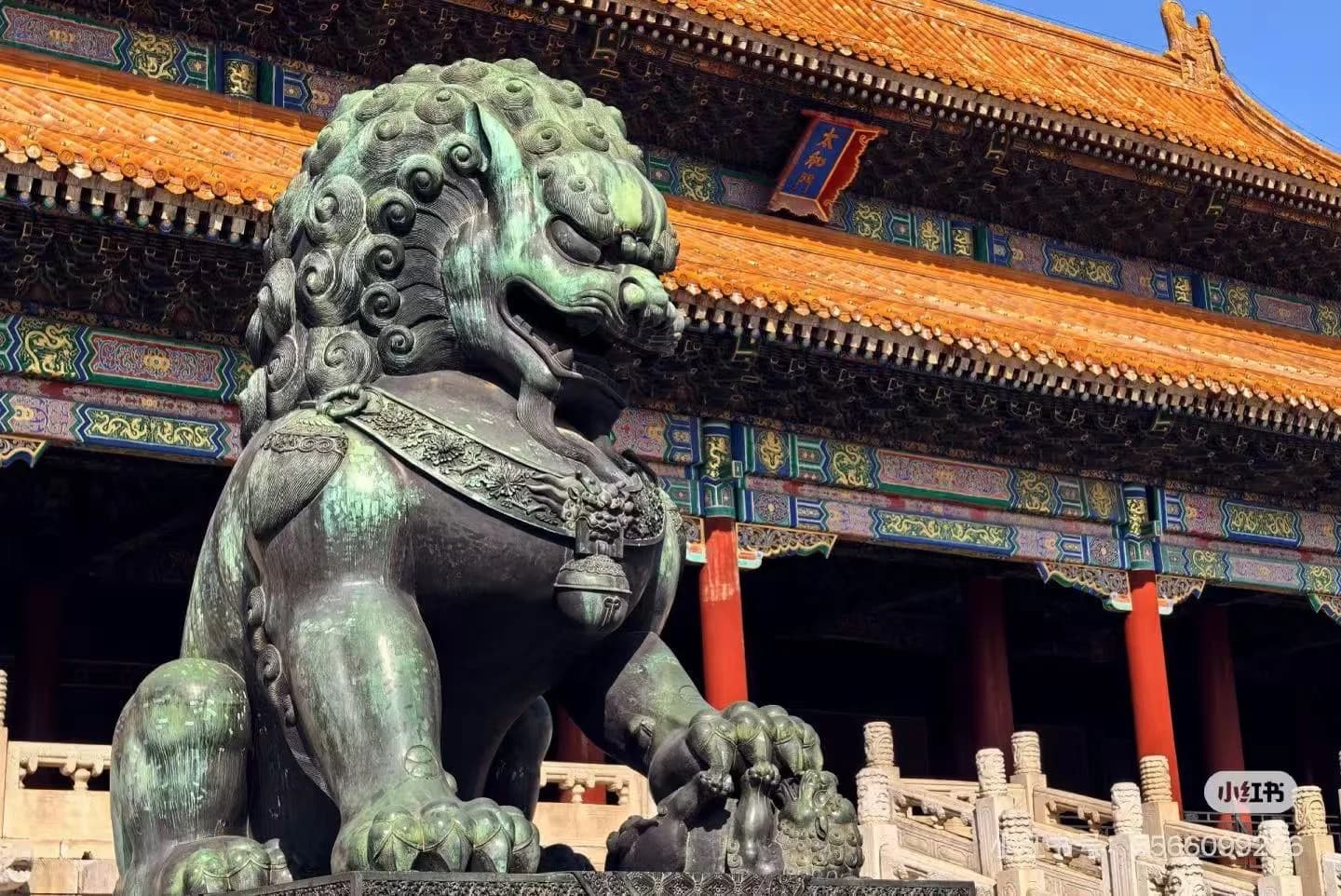
The Hall of Supreme Harmony has 10 roof ornaments—the highest rank in Chinese architecture. The order is: dragon, phoenix, lion, seahorse, heavenly horse, suanni, xieyu, xiezhi, douniu, and hangshi. That final "hangshi" (Lei Zhenzi) is unique to this hall; other buildings max out at nine.
Yellow glazed tiles were reserved for royalty, but you'll also find green (princes' quarters) and black (Wenyuan Pavilion, for fire prevention in the library) within the Forbidden City. Colors aren't decoration; they're identity codes.
Where to look and how
- Avoid the central axis: Tour groups cluster at the Hall of Supreme Harmony, Hall of Central Harmony, and Hall of Preserving Harmony. Turn west to the Palace of Compassion and Tranquility and Palace of Longevity and Health—more open space, clearer architectural details.
- Treasure Gallery requires separate ticket (~10 CNY): The Qianlong collection at the Palace of Tranquil Longevity—watch how an emperor constructed self-image through artifacts.
- Best timing: After 3 PM when crowds thin and light softens, ideal for observing architectural details.
Temple of Heaven: The Emperor's Observatory
Breaking the "ritual ceremony" stereotype
Temple of Heaven isn't a religious site; it's an astronomical instrument. The Hall of Prayer for Good Harvests' 28 pillars form a complete cosmic model: inner circle of 4 (four seasons), middle circle of 12 (twelve months), outer circle of 12 (twelve hours), totaling 28 representing the Twenty-Eight Constellations. The emperor wasn't "praying" here—he was locating himself within a cosmic model: Son of Heaven, literally.
The Echo Wall is engineering, not superstition
The circular wall around the Imperial Vault of Heaven (Echo Wall) and the Heart of Heaven Stone at the Circular Mound Altar are acoustic designs. Stand at the center stone and speak—the unusually loud echo isn't "heaven listening"; it's Ming Dynasty craftsmen using sound wave reflection. The Circular Mound Altar's three-tier platform with nine circles of fan-shaped stones per tier, all multiples of nine (nine = ultimate yang number). Numbers are language; buildings are text.
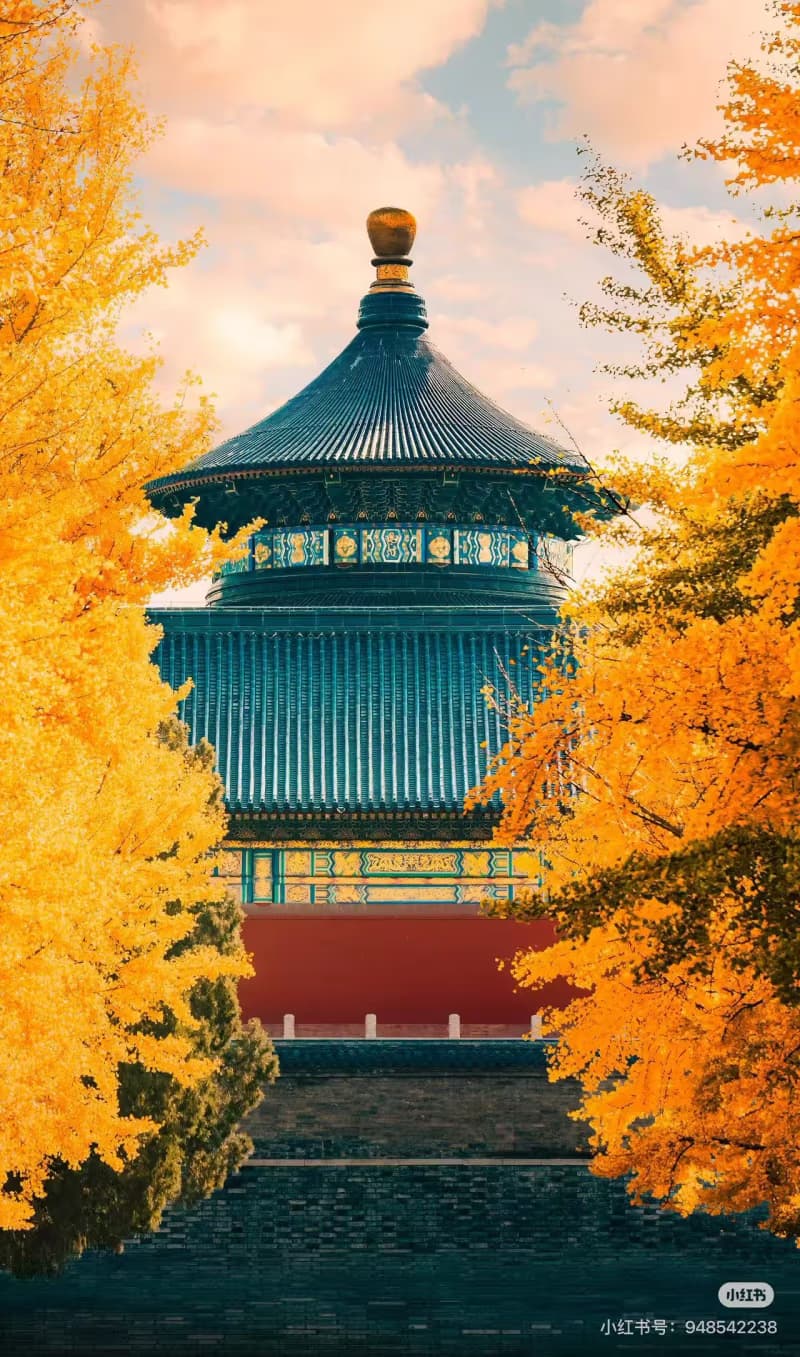
The Hall of Prayer for Good Harvests itself—that three-tiered round hall with blue tiles and golden roof—presents an almost sacred geometric beauty against the sky, one of the most elegant expressions of traditional Chinese architecture.
Where to look and how
- 6:00–8:00 AM: Watch locals practice tai chi, kick shuttlecocks, sing Peking Opera. Historic architecture integrated into daily life—more authentic than any performance.
- Inside the Hall of Prayer: Look up at the pillar matrix to understand ancient Chinese cosmology.
- Heart of Heaven Stone: Stand at the center to experience the acoustic design (but please keep quiet—no shouting).
Summer Palace and Beihai: Gardens as Power
Kunming Lake was a training ground, not decoration
When Qianlong expanded the Summer Palace, Kunming Lake mimicked Hangzhou's West Lake in shape, but served a different function—this was Qing Dynasty naval training grounds. Every summer, the emperor reviewed the fleet here. Behind the garden beauty lies military drill.
Borrowed scenery is power projection
Standing at the Summer Palace's Tower of Buddhist Incense on Longevity Hill, looking west, Jade Spring Hill and the Western Hills are "borrowed" into the garden view. This isn't aesthetic choice; it's geopolitical expression: the garden's boundary is the empire's boundary.
On summer days, Kunming Lake shimmers with light, the Seventeen-Arch Bridge stretches like a rainbow across the water, and the Western Hills fade into the misty distance—this realm of "made by man, yet seeming like nature" represents the pinnacle of Chinese garden aesthetics.
Beihai's White Dagoba and forbidden gardens
The White Dagoba on Beihai's Qionghua Island was built in 1651 (Shunzhi's eighth year), a Tibetan Buddhist structure. Qing emperors used this pagoda to signal goodwill to Mongolia and Tibet—architecture as diplomatic tool. Beihai was a "forbidden garden" in the Qing Dynasty; ordinary officials couldn't enter. Every step tourists walk today was once the exclusive domain of imperial power.
Where to look and how
- Summer Palace Long Corridor: Examine the painted historical stories (Three Kingdoms, Journey to the West, Water Margin) to understand Qing royal cultural consumption.
- Beihai Round City: The world's smallest castle, once Yuan Dynasty emperors' summer retreat, continued through Ming and Qing. Layered space: Yuan→Ming→Qing, physical witness to 600 years of power transition.
- Best timing: Summer Palace needs a full day (~6-8 hours); Beihai half-day suffices.
How to Plan Without Wasting Time
Time allocation guide
| Attraction | Suggested Time | Booking Notes |
|---|---|---|
| Forbidden City | 1 full day (6-8 hours) | Book 7 days ahead, tickets release at 20:00 daily |
| Temple of Heaven | Half day (3-4 hours) | Real-name reservation required via WeChat "Temple of Heaven" or "Visiting Beijing Parks" |
| Summer Palace | 1 full day (6-8 hours) | Large, needs complete day |
| Beihai | Half day (2-3 hours) | No reservation, purchase on-site |
Route logic
- Day 1: Forbidden City + Jingshan (exit Divine Might Gate, cross street directly, climb for panoramic view)
- Day 2 morning: Temple of Heaven (arrive early for morning exercise, then architecture)
- Day 3: Summer Palace (full day, suggest East Palace Gate in, North Palace Gate out)
- Flexible: Beihai can combine with other attractions (close to Forbidden City)
Physical demands
These attractions require substantial walking (8-12 km daily). Suggestions:
- Wear comfortable flat shoes
- Bring water and snacks (few and expensive inside attractions)
- Schedule only one major attraction per day; don't overpack
Official booking channels
- Forbidden City: https://www.dpm.org.cn/ or WeChat mini-program "The Palace Museum"
- Temple of Heaven: WeChat "Temple of Heaven" or "Visiting Beijing Parks"
- Summer Palace: WeChat "Summer Palace" or "Visiting Beijing Parks"
- Beihai: On-site purchase
Prices are indicative — confirm before booking.
Related Reading
- The Forbidden City: Complete Visitor's Guide
- Temple of Heaven Guide
- Summer Palace Guide
- Beijing City Guide