Last updated: May 2026. Ticket prices and performance schedules subject to change—confirm on the day.
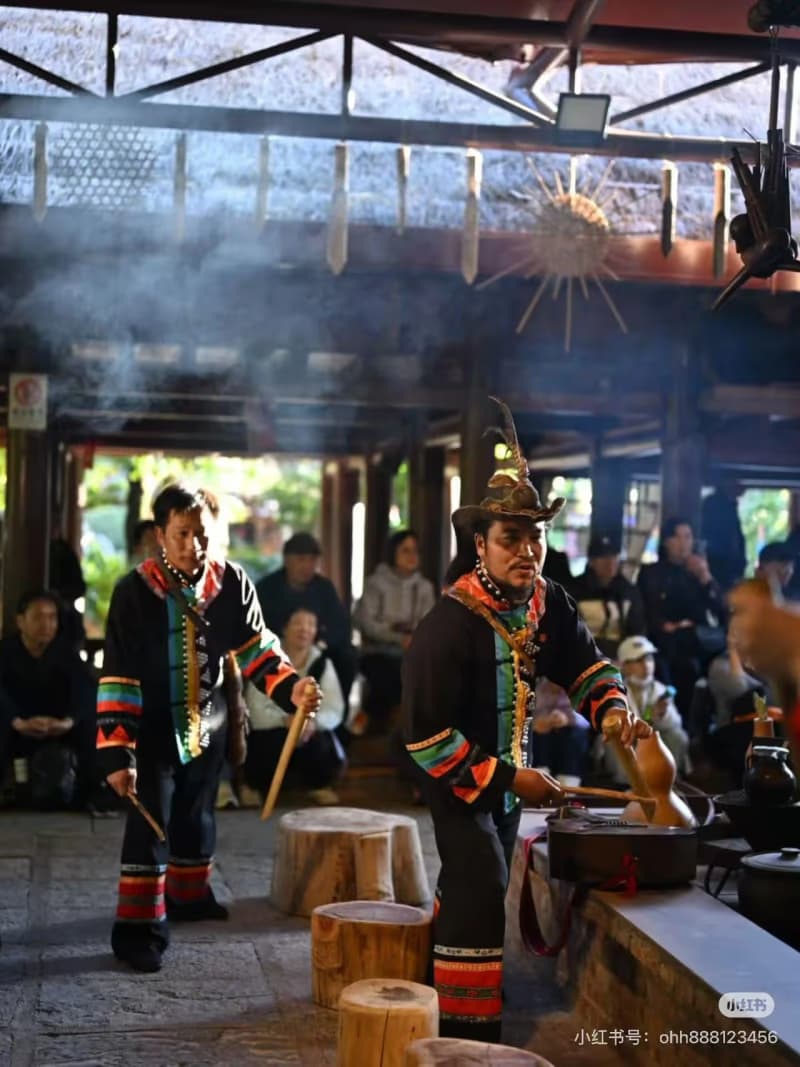
The musicians are already on stage when you sit down—adjusting strings, passing rosin, saying nothing. Most of them are in their sixties or seventies. When the lights drop and the first note comes through the wooden hall, the tour groups stop talking.
What This Actually Is
Naxi classical music (纳西古乐, Dongzhe music) is a body of classical Chinese music brought to Lijiang from central China during the Tang and Song dynasties, preserved by the Naxi people across the centuries since. Performances at fixed venues inside the Old Town run about 1.5 hours, usually in the evening. The musicians are mostly in their sixties or seventies, many having played for decades. Tickets are ¥120–160, bought at the door.
A small ensemble of elderly musicians. A wooden hall that seats about 150. A repertoire they have spent their lives learning.
Is It Worth It
If you have more than two nights in Lijiang, schedule one evening for this.
The Old Town at night runs loud—bars, souvenir shops, people moving in clusters. This is 1.5 hours somewhere quieter. Whether or not you follow the Chinese commentary doesn't change what the music does. The performers' ages tell you most of what you need to know before the first note starts.
Skip it if you want high-energy folk dance with lighting and costumes; if you have children under six who won't sit through a quiet concert; or if you only have one night in Lijiang and want to spend it on the streets.
The Real Experience
Finding the Right Venue
Not every venue calling itself a Naxi music or Naxi culture show is the same. Commercial shows—priced at ¥30–50, with someone flagging you down from the doorway—are generic tourist entertainment. Legitimate venues have a fixed start time, printed receipts, and nobody recruiting outside. Arrive 30 minutes early. The hall is indoor, assigned seating, roughly 100–200 capacity.
During the Show
A host introduces each piece in Chinese. If you don't speak Chinese, you won't catch the commentary, but the music needs no translation. Some venues offer an English program—ask at the door when you enter. There's about a 15-minute intermission halfway through. Seating is close together; leaving mid-performance disrupts the people around you. Photography is generally fine, flash off.
What You're Actually Watching
The youngest musician on stage looks to be in his fifties. The ensemble has been shrinking—older members have passed, fewer younger players are coming up. The host mentions this before the show starts; it's not treated as a secret. After the performance, several audience members walk up to the stage to talk to the musicians, phones out with translation apps. The musicians take their time with them.
How to Do It
Tickets: Buy at the venue on the night, ¥120–160. During peak season (May, July–August, October National Holiday), arrive half a day early to confirm remaining seats, or ask your hotel to call ahead. Trip.com in English sometimes lists availability, but stock is unreliable; international booking platforms don't consistently cover small cultural venues of this kind, so buying in person is the only dependable method. No passport required—just payment.
| Payment | Available | Notes |
|---|---|---|
| WeChat Pay | ✅ | Link an international card before arriving |
| Alipay | ✅ | Same—set up on stable Wi-Fi before the trip |
| Cash (RMB) | ✅ | Most reliable backup; ¥200 is enough |
| International credit card | ⚠️ | Most venues don't accept them directly |
Getting there: The venue is inside the Old Town, about 10–15 minutes on foot from Sifang Square (四方街). No vehicles are allowed in the Old Town—walking is the only option. Evening lighting is adequate, but stone paving is uneven; wear flat shoes.
Language at the ticket window: Staff have limited English, but the process is short—show fingers for quantity, hand over payment. For an English program, say "English program?" when you enter; most venues have a few copies. Seat numbers match what's printed on your ticket.
Common Mistakes
Mistake 1: Walking into the wrong show. If someone is flagging you down from the entrance, it's probably not the legitimate venue. Tickets under ¥80 are usually the commercial version.
Mistake 2: Not confirming the start time. Shows typically begin at 8 p.m., but this shifts with season. Ask your hotel to check on the day, or look it up via maps before heading out.
Mistake 3: Arriving without payment sorted. Mobile signal in the Old Town can be slow. The ticket window is not where you want to set up Alipay for the first time. If digital payment isn't ready, bring cash.
Mistake 4: Bringing very young children. 1.5 hours of quiet music with no visual movement. Children under six are unlikely to last, and leaving mid-show affects the whole row.
Mistake 5: Phone not on silent. The hall is small. A single notification sound carries across the room.
Before You Go Checklist
- [ ] Confirm tonight's start time with your hotel or via maps app
- [ ] WeChat Pay or Alipay linked to an international card, or ¥200 cash ready
- [ ] Flat-soled shoes for the stone streets
- [ ] Arrive 30 minutes before showtime
- [ ] Phone on silent before entering
Lijiang's Old Town is easy to read after a few days—the same streets, the same light. This is harder to place. The musicians have been playing this repertoire their whole lives, and the ensemble is smaller than it used to be. An hour and a half later, walking back out onto the stone paving, most people find they have stopped thinking about where to eat next.