Last updated: May 2026. Verify before booking.
Three days is enough to cover Chengdu's main circuit, but only if the order is right. The Giant Panda Research Base requires an early arrival — pandas feed between 8 and 10 a.m. and mostly retreat indoors after that, so getting there by 7:30 a.m. is not optional if you want to see them doing something. Leshan Giant Buddha is a full-day commitment once you account for the train, the queue at the cliffside walkway, and the boat back; it breaks any other day it's attached to. Wuhou Shrine and Jinli work well on Day 1 because they're walkable from each other, unhurried, and low-stakes — a good way to land in the city before committing to early alarms.
Is This Right For You
✅ A good fit if:
- You're passing through Chengdu on a longer China trip — high-speed rail from Chongqing takes 90 minutes and from Xi'an about 2.5 hours, so Chengdu inserts cleanly into most southwest or northwest itineraries
- Giant pandas are anywhere on your list — the Research Base is one of the few places in the world where you can watch them at close range; most visitors underestimate how much the timing matters until they've already missed the feeding window
❌ Not a good fit if:
- You only have two days — two days forces a choice between Leshan and Kuanzhai Alleys, and the itinerary loses coherence; the panda base stays either way
- You're visiting in July or August — Chengdu summers are hot and humid, and both the panda base and Leshan involve long stretches of outdoor walking with no shade; the same budget spent in autumn is a significantly better use of time
Route Overview
| Day | Focus | Key Stops | Getting Around |
|---|---|---|---|
| Day 1 | Arrival + old Chengdu | Wuhou Shrine, Jinli Street, hotpot dinner | Metro + walking |
| Day 2 | Pandas early, then city | Giant Panda Research Base, Kuanzhai Alleys, Renmin Park | Didi + metro |
| Day 3 | Day trip or slow finish | Leshan Giant Buddha (Option A) or Wenshu Monastery + Qingyang Palace (Option B) | High-speed rail + bus / metro |
Why this sequence:
Wuhou Shrine goes on Day 1 because it doesn't require advance planning, the pace is relaxed, and it shares a wall with Jinli — one ticket covers both in a single afternoon. Day 2 is built around the panda base: putting it mid-trip lets you book a hotel in the north of the city the night before, cutting the early-morning commute significantly. The afternoon after the panda base is unhurried enough for Kuanzhai Alleys. Leshan takes Day 3 because the round-trip transit alone is three to four hours; attaching it to any other day leaves something feeling short-changed. If Leshan doesn't appeal or you have an early flight, Option B (Wenshu Monastery) uses the day well without requiring a train.
Budget estimate (mid-range, CNY per person):
- Day 1: CNY 300–500 (Wuhou Shrine CNY 60; Jinli free; hotpot dinner CNY 120–200 per person)
- Day 2: CNY 200–350 (panda base CNY 55; food and transport CNY 100–150)
- Day 3, Option A: CNY 350–500 (high-speed rail round-trip CNY 120; Leshan ticket CNY 90; lunch CNY 80–120)
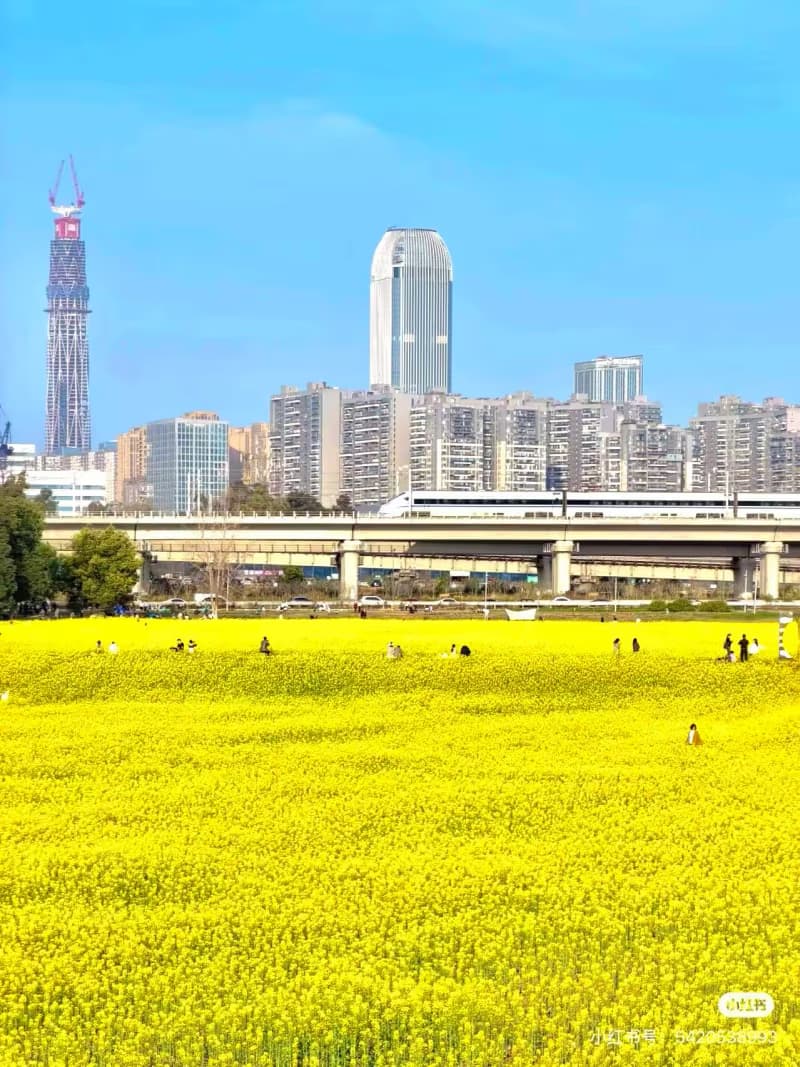
Best months: March to May, or September to November. Late March adds the oil-rapeseed flowers around the broader Sichuan countryside; November turns the ginkgo trees at the panda base. Summer (June to August) is the busiest period and the outdoor sections — Leshan's cliffside path, the panda base grounds — are noticeably harder in heat.
Day 1: Wuhou Shrine, Jinli, and Your First Hotpot
Afternoon: Wuhou Shrine (武侯祠)
Wuhou Shrine is a memorial complex dedicated to Zhuge Liang and Liu Bei, the central figures of the Three Kingdoms period. The entrance fee is CNY 60; no advance booking is required for foreign passport holders, and payment at the gate takes WeChat Pay or Alipay.
Plan on arriving before 2 p.m. and allowing two hours inside. The recommended path: enter through the main gate, move through the Three-Righteousness Hall and the main Wuhou Hall, then continue to the rear of the complex where Liu Bei's mausoleum sits. Most visitors stop at the main shrine and turn around — the mausoleum section sees a fraction of the foot traffic.
English signage covers the main halls with reasonable detail. Individual exhibit labels have brief English captions. If Three Kingdoms history is unfamiliar, a printed map guide sold outside the entrance (about CNY 10) gives more context than the audio tours, which tend to be slow.
From the shrine's east exit, a direct passage leads into Jinli — no second ticket required.
Evening: Jinli Street (锦里)
Jinli is a pedestrian street built in Qing dynasty architectural style, dense with snacks and craft stalls. The crowd is manageable before 6:30 p.m. and noticeably heavier after 7:30. Arriving at 5:30 p.m. gets you the same food with 30 to 40 percent fewer people.
Things worth eating here:
- Sandapao (三大炮): glutinous rice balls tossed against a drum into a tray of sesame and soybean powder. CNY 10–15. The performance is half the point.
- Tanghulu (糖画): sugar-poured art shapes. CNY 5–8. Better to watch someone else order and then decide.
- Bingfen (冰粉): cold rice jelly with brown sugar syrup and dried fruits. CNY 8–12. A Chengdu standard on hot days.
The main street is about a 20-minute walk end to end. Most people do it twice — once to look, once to eat.
Dinner: Sichuan hotpot
The hotpot places directly around Jinli and Wuhou Shrine are tourist-facing and priced accordingly. Ask your hotel front desk for a recommendation within three kilometers, or use Dianping (大众点评) — search for locations with more than 500 reviews and a rating above 4.5. The food quality difference between a well-regarded neighborhood spot and a scenic-area restaurant is significant.
Ordering works by scanning a QR code; most larger restaurants have bilingual menus or picture menus with English labels. Mild spice tolerance: ask for a yuanyang (鸳鸯) pot, which splits the broth between spicy and non-spicy sides. Payment by WeChat Pay or Alipay — some restaurants don't accept international cards directly, so mobile payment setup before arrival matters. See Alipay for Tourists in China for the setup steps.
Budget: CNY 120–200 per person, covering tripe, duck blood, tofu skin, SPAM-style luncheon meat, and a spread of vegetables.
Day 2: The Panda Base Before Anyone Else Arrives
Morning: Giant Panda Research Base (成都大熊猫繁育研究基地)
The single most important thing: be at the entrance gate by 7:30 a.m. Adult giant pandas eat between 8 and 10 a.m.; after 10, most go inside and sleep. Visitors who arrive at 10 a.m. typically see pandas curled up in enclosures, which is not what the trip is for.
Tickets for foreign visitors: CNY 55 per person. Booking is required in advance through the official WeChat mini-program (search "成都大熊猫基地"); a passport number is needed during registration. Trip.com's English-language site and Klook both sell tickets at a slight premium but have simpler interfaces for international visitors. During peak season (March to May, September to October), book three to five days ahead; on public holidays, one full week.
Route inside: From the main entrance, turn right toward Enclosure 1, the sub-adult panda area — this is where activity levels are highest in the morning. Move inward toward Enclosures 3 and 4 as pandas start eating bamboo; the movements are large enough for clear photos. The red panda section sits on the east side of the base and is a longer walk from the entrance — worth the detour if time allows, cuttable if it doesn't.
Allow two to two and a half hours total. There are electric shuttles inside, but the queue for them is often longer than walking the same distance. Plan the route on foot.
Language note: Signs are bilingual throughout. Guides at the base don't routinely offer English commentary, but video areas have English subtitles.
Getting back to the city: The panda base is north of the third ring road, with no direct metro connection. Options: Didi to the city center (CNY 25–40, 15–20 minutes), or Bus 83 to Zhaojiesi Station, then Metro Line 3 south. Taking Didi in the morning when traffic is lighter; the bus is often faster on the return because you avoid waiting for a ride during peak demand.
Afternoon: Wide and Narrow Alleys (宽窄巷子)
Three parallel lanes — Wide Alley (宽巷子), Narrow Alley (窄巷子), Well Alley (井巷子) — preserved from the Qing dynasty Manchu garrison settlement. Entry is free. The courtyard spaces inside hold teahouses, small restaurants, and independent coffee shops. The overall feel is quieter than Jinli, and the architecture is more considered.
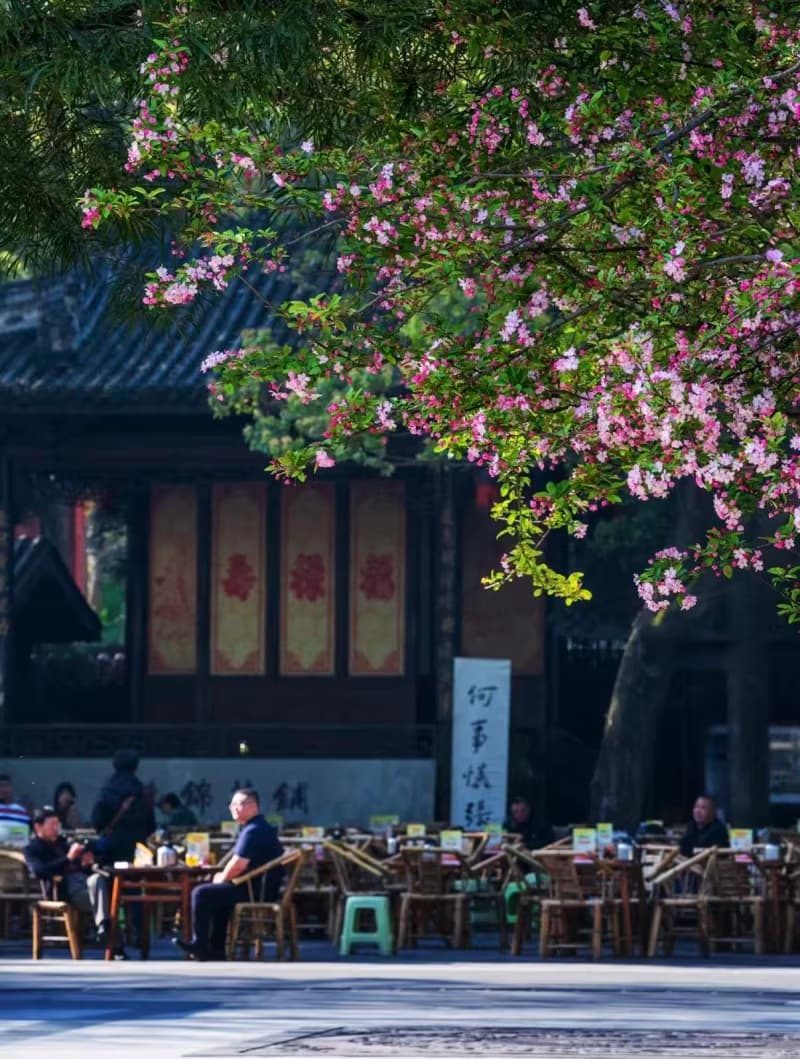
The recommended experience: find a courtyard teahouse on Wide Alley with bamboo chairs, sit down, and order a gaiwan (lidded bowl) of Chengdu tea (CNY 30–60). The teahouse culture here is essentially about occupying a seat for as long as you like — there's no pressure to order again, and no expectation to leave quickly. An hour here does more for understanding Chengdu than most itinerary items.
Well Alley is the best place for quick bites: dan hong gao (蛋烘糕, egg pancake with sweet or savory fillings, CNY 8–12) and ye'er ba (叶儿粑, glutinous rice cakes wrapped in banana leaf, CNY 5–8) are both concentrated there.
Evening: Renmin Park, then dinner
Renmin Park is a 15-minute walk from the Kuanzhai Alleys. In the late afternoon, local residents play cards, practice calligraphy, and dance — the pace is entirely different from the tourist areas. If you want a low-key version of what everyday Chengdu looks like, sitting here for half an hour is more effective than most things on the itinerary.
For dinner, return to the Kuanzhai neighborhood or ask the hotel for a recommendation for chuan chuan xiang (串串香) — Sichuan's lighter hotpot variant where individual skewers are cooked in broth rather than a communal pot. Per-person cost is lower (CNY 50–80) and the format is faster.
Day 3: Leshan Giant Buddha (or a Slow Morning in the City)
Option A: Leshan Giant Buddha (Recommended)
The Leshan Giant Buddha (乐山大佛) is a 71-meter Maitreya Buddha carved into a cliff face at the confluence of three rivers. It's the largest stone-carved Buddha in the world by height, and seeing it from the cliffside walkway — looking down at the head, then descending past the hands and feet to the river — is a different kind of encounter than any photograph suggests.
High-speed rail from Chengdu East Station or Chengdu Station to Leshan Station (乐山站) takes about 50 minutes. Tickets cost CNY 40–60; the first trains leave around 7 a.m. From Leshan Station, take Bus 13 or a taxi to the Lingyun Temple scenic area entrance (about 15–20 minutes, CNY 20–40 by taxi).
Suggested timing:
- 7:00 — Depart Chengdu
- 8:00–8:30 — Arrive Leshan Station, transfer to the site
- 9:00 — Enter the scenic area before the main crowd arrives
- 9:00–12:00 — Climb up and take the Lingyun Nine Turns path down
- 12:30 — Lunch in Jiading Old Town (跷脚牛肉, "foot-dangling beef," is the local specialty — named for the posture of eating it at low stools)
- 14:00 — Return to Leshan Station
- 15:30–16:00 — Back in Chengdu
Two ways to see the Buddha:
The cliff path (included in the entrance ticket) starts at the top and descends past the full figure to the river. The path is narrow and the stairs are steep; during peak season, the Lingyun Nine Turns section has queues of 30 to 60 minutes. This is the closer, more detailed view.
The river boat (CNY 70–100 from Leshan Dock) lets you see the full figure from the water. The distance is greater, but the proportions of the entire statue are visible in a single frame. The two methods can be combined: walk down in the morning, take the boat before the return train.
Tickets: The Lingyun Scenic Area combined ticket is CNY 90, which includes the cliff path and Lingyun Temple. Foreign passports can purchase on-site or via Trip.com in advance. On-site ticket windows accept WeChat Pay and Alipay; cash is also accepted. English signage at major junctions is bilingual; the overall trail is self-navigable without language ability.
Option B: Wenshu Monastery and Qingyang Palace
If Leshan doesn't fit the schedule or energy level, Wenshu Monastery (文殊院) is the best-preserved Buddhist temple in central Chengdu. Entry is free (donations welcome). The monastery kitchen serves vegetarian breakfast and lunch (CNY 30–60 per person); arriving by 8:30 a.m. means the food is still fresh and the courtyard is calm.
Qingyang Palace (青羊宫), a Taoist site, is about three kilometers west of Wenshu — reachable by metro or a short Didi ride. The surrounding park area is a local weekend destination for tai chi and card games. This combination suits a morning before an afternoon departure.
Getting There and Getting Around
Flying into Chengdu:
Chengdu has two airports. Tianfu International Airport (TFU), the newer facility, is roughly 60 kilometers southeast of the city center. Metro Line 18 connects it directly to Tianfu Square in about 30 minutes (CNY 23). Shuangliu International Airport (CTU), closer in, is served by Metro Line 10 (about 20 minutes, CNY 10). Most international flights now use TFU — confirm your terminal before booking ground transport.
High-speed rail into Chengdu:
The main station for most inter-city routes is Chengdu East (成都东站). Journey times: Chongqing 90 minutes, Xi'an 2.5 hours, Shanghai 5.5 hours, Beijing 7.5 hours. Tickets require passport-linked real-name registration and are available through 12306.cn (English version exists) or Trip.com in English. Passport originals are checked on board.
Getting around the city:
Metro coverage reaches Wuhou Shrine (Line 3), Tianfu Square (central interchange), and the airport. Kuanzhai Alleys is closest to Jingsha Station on Line 4 (about a 15-minute walk). The panda base has no metro stop — use Didi. DiDi's international app (English interface) works in Chengdu with an overseas phone number and international credit card. Shared bikes (Meituan, Hello Bike) require WeChat Pay or Alipay linked accounts and are a practical option for flat city-center distances.
Practical Information
| Item | Details |
|---|---|
| Visa | Most nationalities require a visa; an expanding list of countries now qualifies for visa-free entry — see China Visa-Free Entry: Complete Guide |
| Best months | March–May, September–November; avoid Golden Week (October 1–7) and Chinese New Year (January–February) |
| Payment | WeChat Pay and Alipay accepted at most venues; keep CNY 100–200 in small bills for market stalls and smaller vendors |
| Language | English is limited outside hotels; metro announcements and signage are bilingual; major attraction labels are English-available |
| Internet | Google, WhatsApp, and Instagram don't work on mainland China networks; arrange a SIM card or VPN setup before arrival — see Internet Access in China |
| Accommodation tip | For Day 2's early panda visit, staying near the Zhaojiesi metro area the night before cuts commute time by 30 minutes compared to the city center |
Book These in Advance
- □ Giant Panda Research Base — Book at least 3 days ahead via the official WeChat mini-program (passport number required); 1 full week before public holidays. Walk-in availability is unreliable during peak season.
- □ High-speed rail tickets (arriving and departing Chengdu) — 5–7 days ahead; 2 weeks before public holidays. Available on 12306.cn (English) or Trip.com; passport real-name registration is required and checked on board.
- □ Alipay or WeChat Pay setup — Complete this before arriving in China. International Visa and Mastercard cards can be linked to Alipay from outside mainland China. See Alipay for Tourists in China.
- □ Leshan tickets (if choosing Option A) — Purchase via Trip.com to avoid peak-hour queues; the on-site line can be 20–40 minutes on busy days.
- □ Airport confirmation — Verify whether your flight uses TFU (Tianfu) or CTU (Shuangliu); the metro lines are different and the journey times vary significantly.
Tips and Tricks
- Stay north on the panda night: If the panda base is on Day 2, staying near Zhaojiesi metro station on Day 1 evening saves a meaningful amount of morning stress. The 7:30 a.m. target is tight from the city center in rush-hour traffic.
- Kuanzhai Alleys on a weekday: Weekend afternoons see crowd levels that change the experience considerably. A Tuesday or Wednesday visit before 3 p.m. is a different place — quieter courtyards, no line for the teahouse.
- The 7 a.m. train to Leshan matters: Arriving at the Leshan site by 9 a.m. means the cliffside walkway queue is under 30 minutes. Groups arriving at 11 a.m. have reported 90-minute waits for the same path.
- Don't eat hotpot near the tourist sites: Restaurants adjacent to Jinli and Kuanzhai Alleys charge tourist-area prices for the same ingredients. A well-reviewed local spot three kilometers out is both better and cheaper.
- DiDi registration takes time: Set up the international app before the trip, not on arrival. If DiDi isn't working, ask the hotel front desk to call a local taxi — most four-star-and-above hotels do this without issue.
What to Cut If You're Short on Time
Cuttable without losing the core:
- Qingyang Palace — Wenshu Monastery alone covers the same experience adequately; both together is repetitive unless religion is a specific interest
- Jinli — if Kuanzhai Alleys is already on the list, both are pedestrian snack streets with similar character; one is enough
- The river boat at Leshan — the cliffside walkway gives a more detailed view; the boat is an addition, not a substitute
Don't cut:
- The panda base — it's the reason most people come to Chengdu specifically; removing it leaves a city that could be anywhere
- A proper hotpot sit-down — not a tourist-facing version, an actual local restaurant; this is what Chengdu tastes like
- The main Wuhou Shrine halls — Jinli can be walked quickly, but the shrine itself deserves the full route
Compressed two-day version: Day 1 — Wuhou Shrine + Jinli + hotpot. Day 2 — panda base early + Kuanzhai Alleys. Drop Leshan and Wenshu entirely. Two days with the right sequencing is better than three days with the pacing off.
Before You Go Checklist
- □ Alipay or WeChat Pay linked and tested — setting this up after landing adds friction at the worst time
- □ Panda base ticket booked, passport number entered correctly — a typo here means the booking won't match at the gate
- □ High-speed rail tickets purchased, passport original packed — checked on board, not just at the station
- □ Offline maps downloaded — Google Maps offline pack for Chengdu, or Amap (高德地图) international version
- □ Hotel notified of arrival time — smaller boutique properties sometimes don't staff reception 24 hours
- □ Airport terminal confirmed — TFU vs. CTU; different metro lines, different journey times
FAQ
Do you really need to book the panda base in advance?
During peak season (March to May, September to October, and public holidays) — yes. On-site tickets exist but are limited, and the early-morning slots that matter most sell out first. In low season there's more flexibility, but booking ahead costs nothing and removes one variable from a morning that already has a tight timetable.
Is Leshan worth a full day from Chengdu?
For a three-day trip, yes. The transit alone is unavoidable, and the cliffside walkway at the site is slow-moving when crowded. Anyone who tries to combine Leshan with another Chengdu activity in the same day usually regrets the second thing. If you're also planning Emei Mountain, those two can be combined into an overnight trip — but that's a separate itinerary.
Where should you actually eat hotpot?
There's no single "most authentic" answer — Chengdu locals disagree on this constantly. The practical method: search on Dianping (大众点评) for hotpot near your hotel, filter for more than 500 reviews and a rating above 4.5, and choose from the top five. This produces better results than chasing brand names or following generic recommendations.
Does DiDi work in English?
The DiDi international app has an English interface and works in Chengdu with an overseas phone number and international credit card. Some features available in the Chinese version are missing, but basic trip booking functions. During peak hours near major tourist sites, wait times can be longer — picking up near a metro station entrance rather than a main attraction door is usually faster.
Can you combine Chengdu and Chongqing in this trip?
Easily. The high-speed rail is 90 minutes, one of the most naturally pairable city combinations in China. For a full two-city plan, see the Chengdu and Chongqing 7-Day Itinerary.
Will language be a real barrier?
The main attractions have enough English signage to navigate independently. The metro has bilingual announcements. The genuine challenges are ordering food (pointing at a picture menu works; having the hotel write your order in Chinese helps more), using ride-hailing apps (DiDi international solves most of this), and the panda base WeChat booking (requires a passport number and some patience with the interface). None of these are trip-breakers — they're advance-preparation items.
Three days gives Chengdu a fair hearing: the pandas at their most active, the hotpot done properly, and a sense of why the city's pace feels different from the rest of China. The itinerary itself isn't complex — what tends to go wrong is execution: missing the panda window, showing up at Leshan at noon, eating near the tourist sites. Sort those three things out before you land and the rest follows.
Extending the trip or combining with another city? The Chengdu and Chongqing 7-Day Itinerary covers both cities in detail, and the Chengdu Destination Guide has more on neighborhoods, day trips, and what to skip.