Last updated: May 2026. Winter event information may change; verify before booking.
Winter in Xi'an doesn’t bring constant deep snow like Beijing sometimes does, and it isn’t as damp-to-the-bone as Shanghai. Most of the time it feels like a city held together by clear cold air, hot soup, and central heating: the wind on the city wall can be sharp, but bowls of yangroupaomo, sour dumpling soup, and hulatang in small restaurants slowly warm you from your stomach to your fingertips. For travelers who don’t mind the cold and want to see an ancient city that runs more on everyday life and steam than on blossom season or noisy night markets, winter Xi'an is a quieter, more honest version.
One-Sentence Summary
Good for: Travelers who aren’t too cold-sensitive, like quieter walls and sights, and are happy to fight low temperatures with hot soup and stews
Not good for: People who hate cold, want to stay outdoors for long stretches, or are expecting thick, fairy-tale snow scenes
Best window: December–February (if you want to gamble on snow, keep an eye on January–February forecasts)
Why Winter Is Worth It
Winter on the Wall—Sharper Wind, Fewer People, Clear Views
On the wall in winter, the wind feels more direct than in other seasons; stand too long and your face will sting a little. The upside: fewer people and cleaner views. On a clear blue-sky day you can go up at South Gate, walk just one or two sections, and take your time looking at old roofs and distant towers without summer heat haze or autumn weekend crowds.
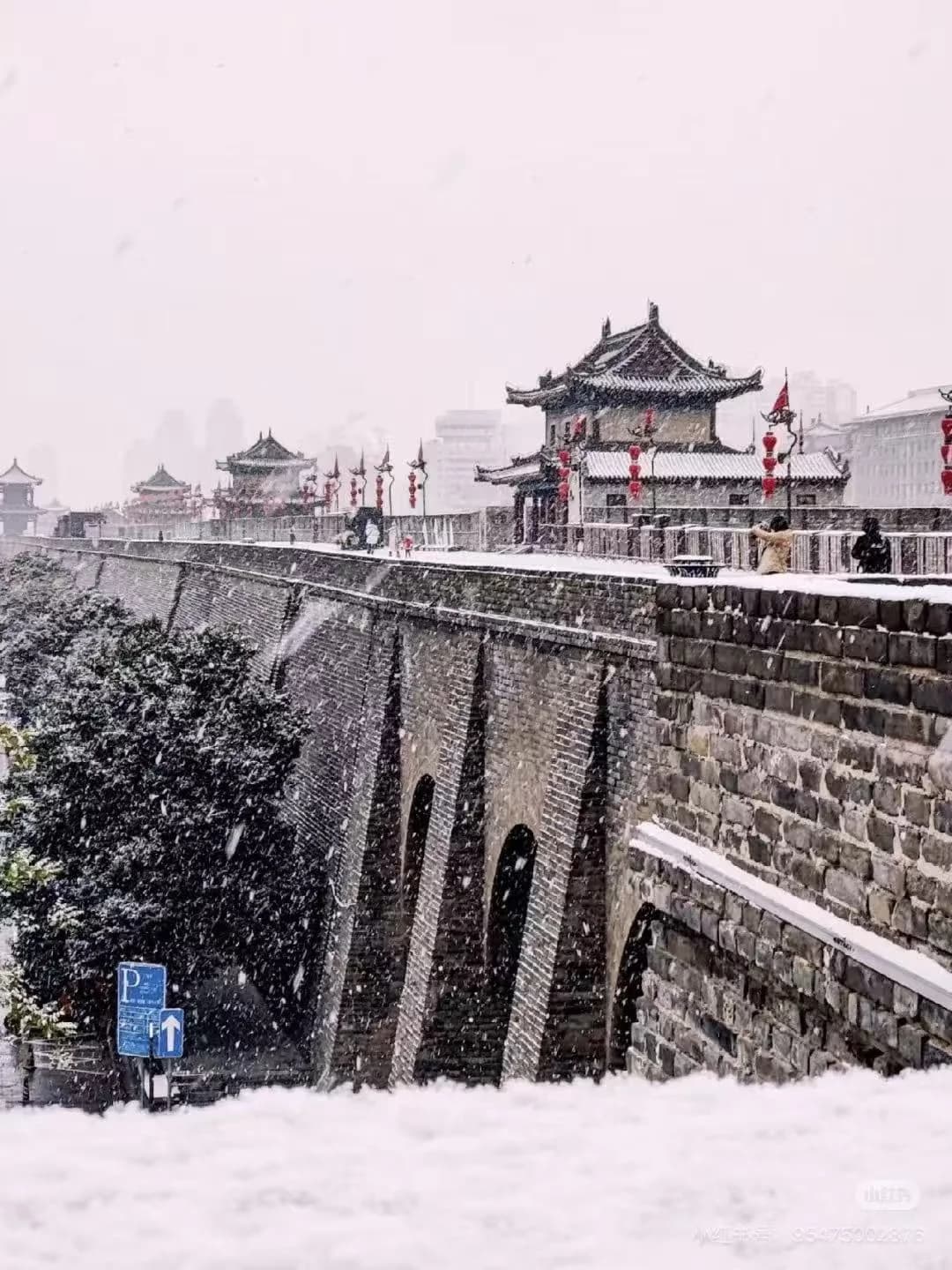
If you happen to catch light snowfall, you may see the wall, towers, and brick surface sprinkled with a thin layer of snow—not postcard-deep drifts, but a very real “someone dusted the old city with sugar” look. This doesn’t happen often each year and depends entirely on luck. Treat it as a bonus: if you see it, linger; if you don’t, don’t lock your schedule around it.
Practical info:
- Time: Around late morning to early afternoon (11:00–15:00) when the wind feels slightly less cutting
- Tip: One or two sections are enough—focus on winter light and open views rather than forcing a full loop
Steaming Muslim Quarter and Snack Shops—Winter Belongs to the Bowl
If summer in the Muslim Quarter feels like “smoke pressed against your skin,” winter feels more like “steam hitting your face from the bowl.” When temperatures drop, you can see vapor rolling out of doorways of yangroupaomo shops; when a bowl of paomo, a plate of biangbiang noodles, or a bowl of sour dumpling soup lands on your table, you understand quickly that “this city’s winter comfort is eaten, not just seen.”
Take it slow in winter: wander the lanes by day, watching fire in tandoor ovens and steam from stacked bamboo baskets; pick one or two places with locals in line, sit near a radiator or heat vent, and turn a single meal into a full warm-up session. If it isn’t too cold at night, head back outside for skewers or a hot drink and let steam—not neon—close out the day.
Tang Paradise Lanterns—Tang-Style Light in a Cold Night
In winter, Tang Paradise doesn’t have as many outdoor activities as in warmer months, but when lantern events are running, the entire Tang-style garden lights up at night. Palace lanterns, themed installations, outlines of pavilions, and reflections on the lake turn what would be a quiet winter evening into a dramatic stage. For first-time visitors, this can be one of the few winter night scenes in Xi'an that’s worth dedicating an evening to: spend the day in nearby museums or around the Big Wild Goose Pagoda area, then enter Tang Paradise after dark to walk slowly along the lakeside under the lights.
Practical info:
- Lantern festivals and night openings change year by year. Before your trip, check whether there is a lantern event during your dates and confirm dates, hours, and ticket prices.
- Even with lights, it’s cold: dress in layers and plan your time around “watch a section, then duck indoors or grab a hot drink.”
Museums and Indoors—Weather Doesn’t Dictate Your Plan
Unlike summer, where midday basically belongs to air conditioning, winter in Xi'an is more about choosing how long you want to stay outside. It’s cold, but not so extreme that you can’t stand still for a few minutes. For planning, this means you can move more freely between outdoors and indoors: when you feel cold, step into a museum, café, or mall; once warmed up, head back out for another stretch.
A natural winter combo is: wall or old-city walk in the morning, museums (Shaanxi History Museum, Datang West Market Museum, Forest of Stone Steles) or heated cafés for midday and afternoon, and a hot dinner in the Muslim Quarter or around the Big Wild Goose Pagoda area. Compared with cities that have truly extreme winter weather, Xi'an in winter feels more like “you need to respect the weather, but you’re not a hostage to it.”
Prices and Crowds—A Softer Season
Winter (outside of Chinese New Year) is generally one of Xi'an’s off seasons. Domestic visitor numbers drop, and popular sights and hotels tend to be more forgiving on price. For budget-conscious travelers who dislike long lines, visiting Xi'an in winter can mean pleasant surprises on flights and hotels and more chances to find quiet corners at major sights to read plaques or simply sit and watch.
What to Plan For (Winter's Cost)
Temperature and How It Feels
From December to February, daytime highs usually sit around 0–10°C, with colder mornings and evenings. Wind can push the “feels-like” temperature below the number on the forecast. It’s nowhere near northeastern China’s -20°C, but if you wear only a thin jacket and spend long stretches on the wall or in open spaces, you’ll likely feel uncomfortably cold.
Snow Is a Matter of Luck
Xi'an does see snow in winter, but not on a fixed schedule or with guaranteed depth. Some years bring a few pretty snowfalls; others are mostly dry cold with the occasional flurry. If “thick snow guaranteed” is your main requirement, Xi'an isn’t the most reliable choice. It’s better to treat snow as a nice extra, not the sole reason for the trip.
Shorter Days, Colder Nights
Winter days are shorter; it gets dark earlier, and usable natural light is less than in spring or autumn. Nights on the wall or by the moat are noticeably colder than days. If you’re used to late mornings and late nights, shift your schedule forward a little: put anything that needs light and views in daytime slots and leave evenings for meals and indoor activities.
What to Wear in Winter
December–February suggestions:
- A warm outer layer (down jacket or heavy coat), with sweatshirts/knits underneath that you can layer
- Warm pants, or normal pants with thermal leggings underneath
- Shoes that are warm, have grip, and are comfortable for walking (winter wind + wall + stone streets make foot comfort important)
- Backup: hat, gloves, scarf—especially if you plan to spend time on the wall or outdoors at night
Packing logic: Pack for “can stand on the wall in the wind for half an hour and wait outside for a bowl of hot soup,” not just for the few minutes between hotel door and taxi.
3-Day Winter Itinerary
Day 1: Short Wall Walk + First Bowl of Soup
Morning: On a clear day, go up at South Gate and walk one or two sections. Focus on winter light, wind, and the unusual emptiness compared with other seasons. Come down before lunch and find a well-heated restaurant inside the walls.
Afternoon: Explore Bell and Drum Tower and wander toward the Muslim Quarter. If you get cold, step into a café or teahouse for a warm drink and a break.
Evening: Pick a Muslim Quarter spot that locals actually eat at—yangroupaomo, noodles, or dumplings—and give yourself time to eat slowly. Let “winter Xi'an” move from scenery into the bowl.
Day 2: Terracotta Warriors + Indoor Recovery
Morning: Head to the Terracotta Warriors early. Temperatures are low, but the pits don’t feel stuffy as they can in summer, making it easier to take your time with the figures and museum displays. Dress warmly and bring extra layers.
Afternoon: Back in the city, spend the afternoon in a museum (Datang West Market Museum or the Forest of Stone Steles, for example). You warm up physically and deepen your understanding of the city at the same time.
Evening: Depending on your energy, either return to the Muslim Quarter or choose hot pot or barbecue somewhere else in the city for a second evening of “warmth in a bowl.”
Day 3: Old Streets and Flexible Time
Morning: Choose Shuyuanmen or another area you passed but didn’t fully explore and walk a loop—antique shops, snack stalls, and everyday street life. If it’s particularly cold, keep this block short and pivot to indoor space sooner.
Afternoon: Treat this as flex time. Add another museum, settle into a favorite café or teahouse for the afternoon, or go back to the wall or moat to shoot angles you missed in better light.
Evening: Close out the trip with your favorite type of Xi'an winter food—lamb, noodles, or soup—and let the contrast between hot steam and cold air be your final memory of the city.
Summary
Xi'an in winter isn’t a “built-in filter” season. It leans on quiet walls, clear air, and bowls of hot noodles and soup. For travelers willing to trade a bit of cold for fewer people and softer prices, putting Xi'an in a winter itinerary shows you a version of the city with less “tourist posture” and more everyday rhythm—slower, real, with plenty of places to duck into when you feel the chill.
If your China dates already fall between December and February, or you simply want to experience a historic city in winter, Xi'an is worth considering. You don’t have to pin all your hopes on snow; as long as you accept the basic deal—cold outside, warm inside—you can find a winter way of visiting between the wall, old streets, museums, and small shops in the Muslim Quarter.