Last updated: May 2026. Restaurant details and performance schedules change—verify before you go.
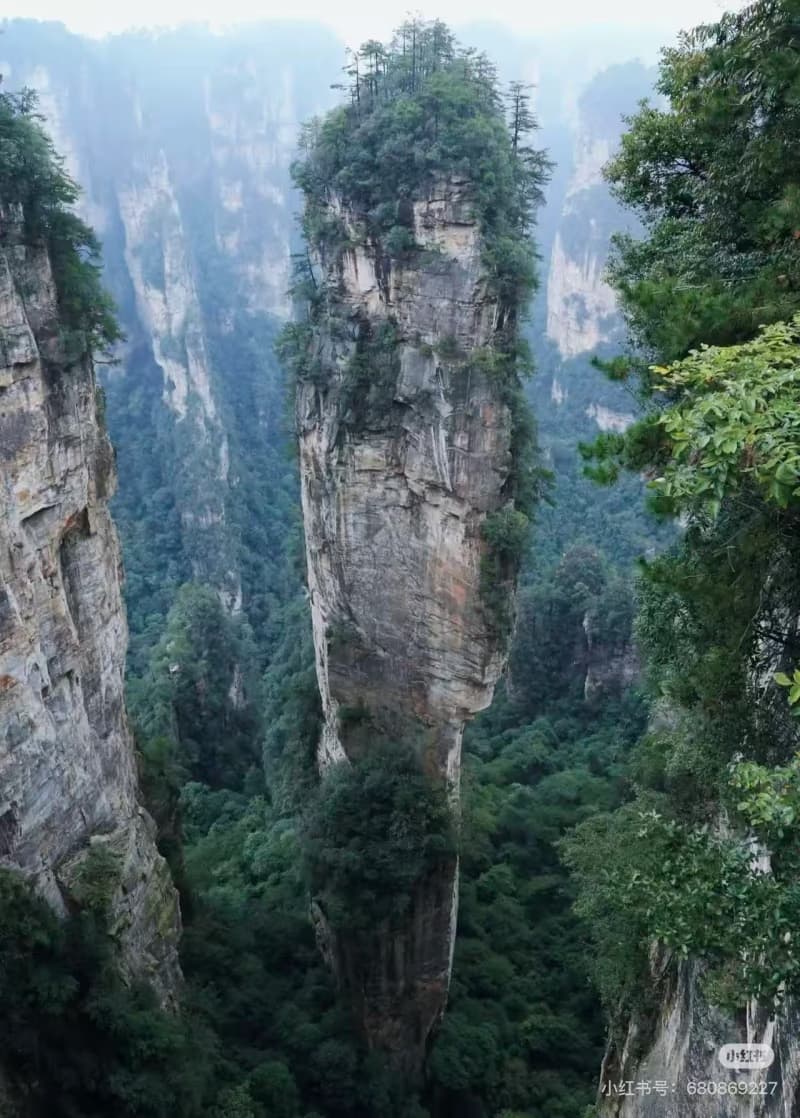
Most visitors come to Zhangjiajie with Avatar in mind and leave with sandstone pillars in their memory. What they often miss is that over 75% of the local population belongs to ethnic minority groups, and the Tujia—who call themselves Bizika, meaning "native people"—are the largest of them. They've lived in these mountains for centuries. What remains isn't just the stilted wooden houses; it's an entire food culture and set of traditions that runs parallel to the scenery. Once the pillars are done, this is what makes the extra day worthwhile.
What This Actually Is
Tujia culture in Zhangjiajie comes through two channels: food and performance. On the food side, Sanxiaguo (three-in-one pot), smoked pork, and blood tofu are on the menu at any local restaurant in town—no special access required. On the performance side, the 72 Tujia Stilted Buildings complex runs evening shows, and the Tujia Folk Customs Park holds daytime dance performances. Food is the lowest-barrier entry point. The evening show is the highest-density cultural experience. Together they don't take more than an afternoon plus one evening.
What this is: not a museum visit, but piecing together a living culture through dinner and a street performance.
Is It Worth It
Short answer: if you're staying two nights or more in Wulingyuan, yes.
Worth doing if you're curious about what's behind the landscape—the Tujia relationship with this terrain is geographic, not decorative. Worth doing if you want to eat something genuinely local rather than the generic tourist-restaurant version of Chinese food. Worth doing if you have a free evening and don't want to spend it in the hotel.
You can skip it if your schedule only leaves one day for the park itself, or if you have no interest in folk performance and genuinely can't handle spicy food.
Honest take: the 72 Stilted Buildings evening show runs over two hours and has uneven pacing—some segments land, others drag. If you only have an hour, the dinner table is a more authentic experience than the show. But the Baishou group dance and the wedding procession performance are genuinely worth seeing. You can arrive, catch those, and leave before the full program ends.
The Real Experience
Food: Sanxiaguo and Beyond
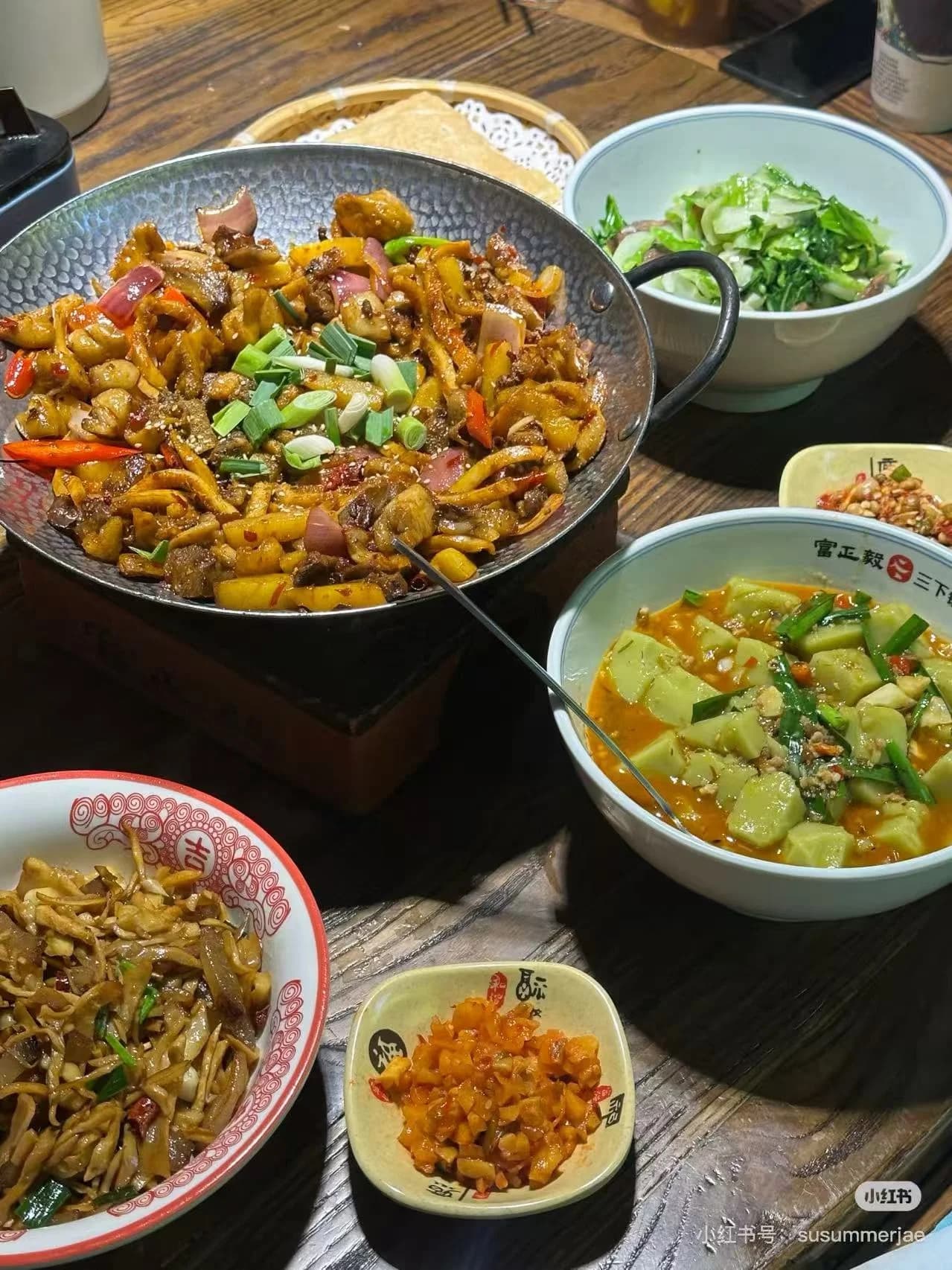
Sanxiaguo (三下锅) is Zhangjiajie's most representative Tujia dish. The original version combined cured pork, tofu, and radish in a single pot—a dish that reportedly dates to a Tujia chieftain's tradition of celebrating the new year a day early. Today each restaurant has its own combination, typically pork stomach or intestine, smoked pork, and tofu. It comes as a dry pot (more common) or a soup pot. The flavor is salty and heavily spiced.
Other dishes worth ordering:
- Smoked pork (腊肉, larou) — Cured over wood smoke and sliced thin into a hot pan. The smoky base note runs through most Tujia cooking, and this is the clearest version of it.
- Blood tofu (血豆腐, xuetofu) — Pork blood mixed with tofu, pressed and smoked. Denser than regular tofu, with a deep savory flavor that's hard to find outside this region.
- Glutinous rice cake (糍粑, ciba) — Pounded sticky rice, pan-fried and dipped in sugar or chili. Common street food, easiest introduction to Tujia staples.
- Stone ear mushroom chicken soup (石耳炖鸡, shierdunjiao) — A mountain mushroom harvested from local cliff faces, slow-cooked with free-range chicken. The broth is clear and clean. Worth ordering if you want a break from the spice.
Where to eat:
Small local restaurants in Wulingyuan town are the most practical option while you're based near the park. The entrance area of Xibu Old Street (溪布老街) has a cluster of Tujia-style restaurants with slightly better settings than roadside spots. In Zhangjiajie city center, Fengwan Road has the highest concentration of Sanxiaguo restaurants—Master Hu's Sanxiaguo (胡师傅三下锅) is a local institution with consistent quality and prices roughly 30–50% lower than the park vicinity. In-park dining (around Yuanjiajie) has limited options and charges premium prices; handle main meals in town.
Ordering without Chinese: Almost no local restaurants have English menus. The most reliable approach is a phone screenshot of dish names run through a translation app, or pointing at what the next table is eating. For spice level, show the server a screenshot reading "一点辣也不要" (no spice at all). Even then, the baseline saltiness of Tujia cooking is higher than most visitors expect.
Culture: 72 Stilted Buildings and Tujia Folk Customs Park
72 Tujia Stilted Buildings (七十二奇楼)
Located in Zhangjiajie city center, the complex centers on a cluster of diaojiaolou stilted wooden houses—the tallest reaches 109.9 meters, a Guinness record. Evening shows run approximately 18:00–22:35 and include drum performances, the Baishou group dance (a 500-year-old 70-gesture ceremonial dance representing farming, hunting, and courtship), a wedding procession parade through the streets, and various folk acts. The format is an open-air walking precinct, not a fixed theater—you move through it at your own pace. Ticket prices are approximately ¥200–300; verify before going as they fluctuate. Purchase at the gate or through Chinese booking apps if you have access.
Tujia Folk Customs Park (土家风情园)
Closer to the Wulingyuan scenic area, this park has more traditional architecture and daily life exhibits, with Baishou dance performances at 10:00 and 16:00. The scale is smaller than the 72 Stilted Buildings. If you can only choose one, the evening show in the city has higher content density. The folk customs park works well as a daytime visit if you want to see the architecture and catch a shorter performance.
How to Do It
Restaurants: No reservation needed—walk in. Payment at most local spots is mobile (Alipay or WeChat Pay) or cash. International credit cards are rarely accepted. Carry 100–200 RMB in cash as backup. Alipay International accepts Visa and Mastercard; set it up before you arrive.
72 Stilted Buildings show: Tickets available at the gate or on Chinese booking apps. No dedicated foreign visitor channel, but gate staff can process a passport for direct purchase—there's typically a price board. Bring your passport. The daytime architecture area doesn't require a ticket; the evening performance does.
Tujia Folk Customs Park: Tickets sold at the gate, approximately ¥100 (verify current price). Passport required for entry. Performances at 10:00 and 16:00—arrive 15 minutes early for a decent position.
Common Mistakes
Underestimating the spice. "Not spicy" (不辣) is a relative term in Zhangjiajie. Sanxiaguo's base flavor is already heavy even without added chili. If your tolerance is low, show the server a translation that reads "一点辣也不要" and accept that the result might still be saltier than expected. If you have a genuine allergy or intolerance, this is worth communicating clearly before the food is cooked.
Eating in the park and paying park prices. A bowl of noodles near Yuanjiajie costs roughly twice what the same bowl costs in Wulingyuan town, which costs roughly twice what it costs in the city. Plan main meals outside the scenic area.
Staying for the full evening show. The 72 Stilted Buildings program runs over two hours. The Baishou group dance and the wedding procession are the highlights—both happen within the first hour. You're free to walk out after those. There's no obligation to stay for every act, and the open-air format makes leaving easy.
Before You Go
- □ Download a translation app with camera function (Google Translate works offline after downloading the Chinese language pack)
- □ Carry 100–200 RMB in cash for restaurants and gate tickets
- □ Set up Alipay International before arrival, or plan to use cash
- □ Check the 72 Stilted Buildings current ticket price and show schedule—it changes seasonally
- □ If you have any spice intolerance, prepare the phrase "一点辣也不要" in your translation app before ordering
The sandstone pillars are the frame. The Tujia culture is what's inside it. A bowl of Sanxiaguo and one Baishou dance won't give you the whole picture—nothing does in a few days—but they're the difference between passing through a landscape and actually landing somewhere.
- Zhangjiajie City Guide — Accommodation, transport, and itinerary suggestions
- Zhangjiajie National Forest Park — Park entry, ticket prices, and route planning
- How to Pay in China — Mobile payment setup and cash logistics