Last updated: May 2026. Ticketing rules, transport operations and cable car status change—verify before you go.
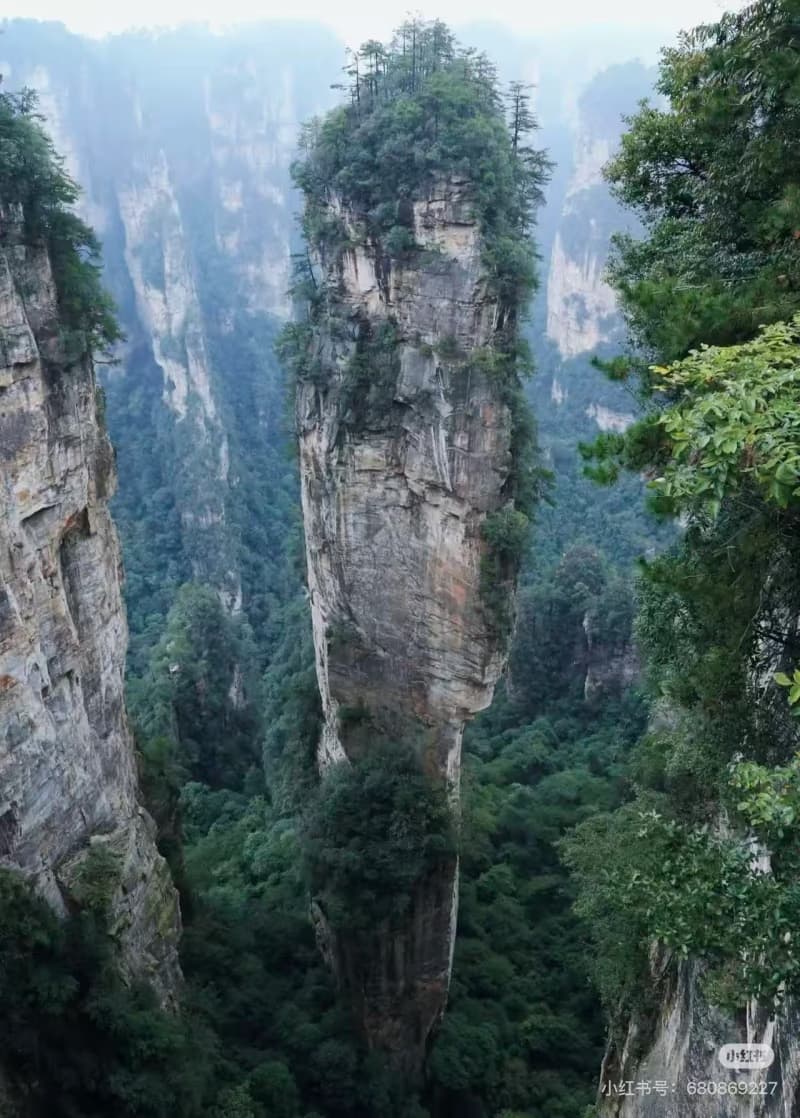
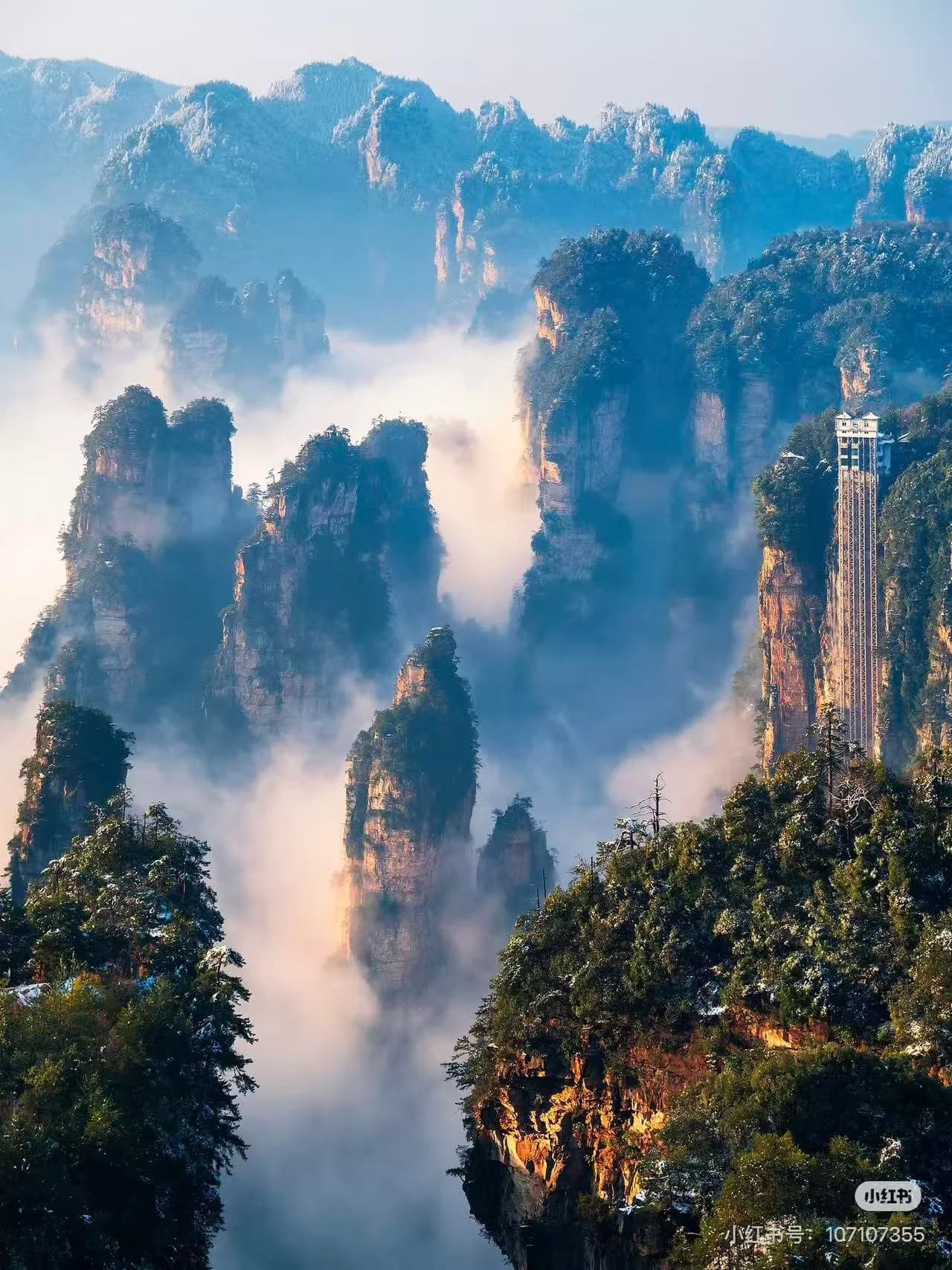
The sandstone pillars rise straight from the valley floor—some over three hundred meters tall, thousands of them clustered together. They don't look natural, but they are: three hundred million years of erosion produced them.
The Avatar art team came here, photographed the formations, and went back to build Pandora's floating mountains from those images. Not "inspired by" in the loose sense—the visual reference was direct. This is a rare situation where a real place looks less plausible than its fictional version.
Zhangjiajie city itself is small. Most visitors concentrate around Wulingyuan town near the park. The urban district of Yongding, a short drive away, moves at its own pace: cured meats and mountain goods at the market, Tujia stilt houses still being lived in, mostly separate from the tourist economy.
At a Glance
| - | - |
| Best time to visit | April–May, September–October (spring mist over the pillars; clear autumn skies; avoid July–August heat and October 1–7 national holiday crowds) |
| Recommended stay | 3–4 days (National Forest Park 2 days + Tianmen Mountain 1 day + Glass Bridge half day) |
| Budget per day | ¥350–550 mid-range, not including park tickets (National Forest Park 4-day pass ¥225; Tianmen Mountain ¥288) |
| Getting there | Changsha South → Zhangjiajie West by high-speed rail, ~2.5 hours from ¥119; or direct flights to Hehua Airport (ZPY) from major cities |
| Known for | Wulingyuan sandstone pillars (UNESCO World Heritage), Tianmen Mountain, Grand Canyon Glass Bridge, Tujia culture |
| Special requirements | National Forest Park tickets require advance online booking; Tianmen Mountain main cable car under maintenance since November 2025 (expected 12+ months)—confirm current status before visiting |
Why Zhangjiajie Belongs on Your China Itinerary
The point of Wulingyuan isn't any single attraction—it's the scale of the whole thing. Across 420 square kilometers, more than three thousand sandstone pillars rise from the valley, some with over two hundred meters of vertical drop from base to top. That number doesn't register until you ride the Bailong Elevator 326 meters out of the valley floor in roughly two minutes, then look back down at where you were standing.
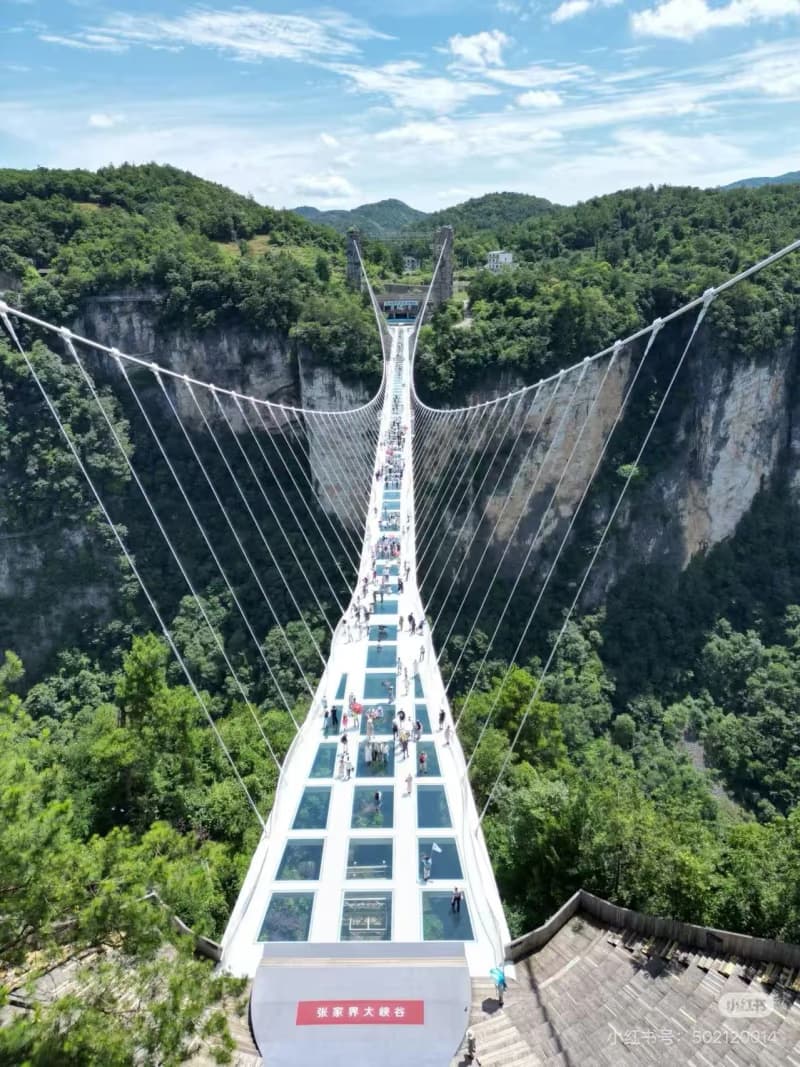
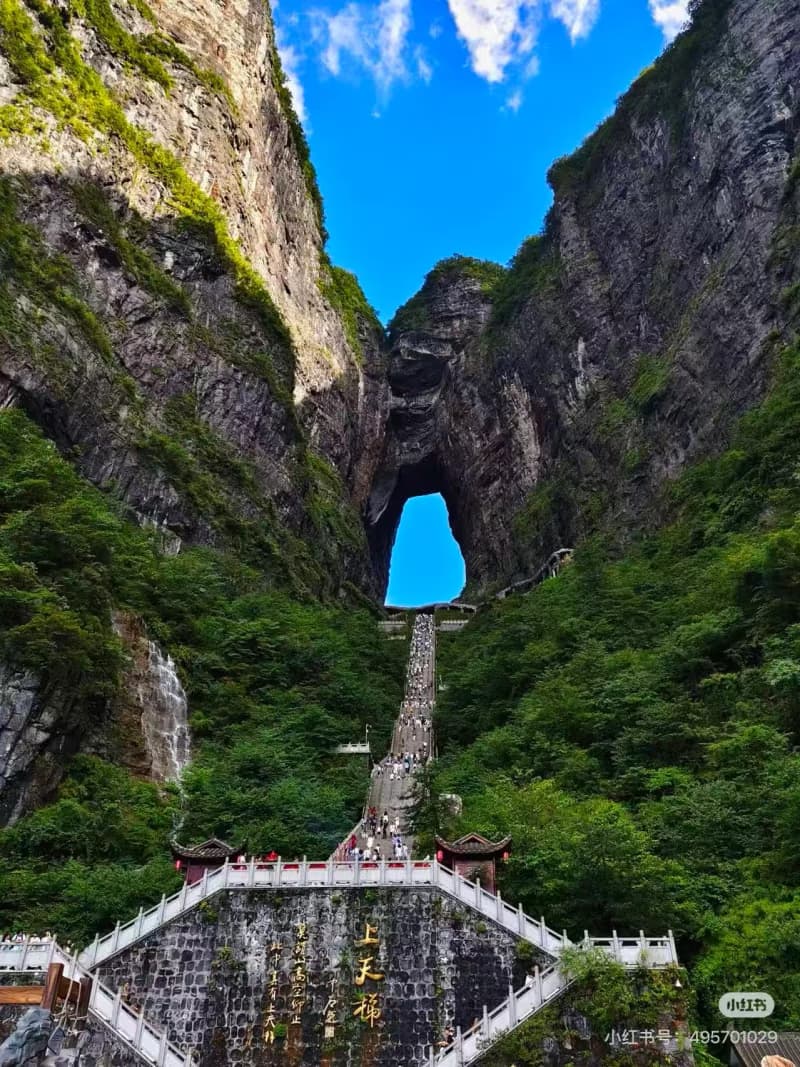
Tianmen Mountain and the Grand Canyon Glass Bridge offer something entirely different from Wulingyuan: a 1,518-meter summit with a natural arch, cliff walkways, and a 430-meter glass suspension bridge over a canyon floor 300 meters below. Three distinct landscapes in one trip, with enough variety for a four-day itinerary.
One honest note: the infrastructure inside the national park is impressive—elevators, cable cars, shuttle buses—but the trade-off is crowds and a system that takes some planning. Allowing at least two full days inside the park, and pre-booking tickets well in advance, makes a real difference.
Ways to Experience Zhangjiajie
Spend Multiple Days Inside the Sandstone Pillars
Wulingyuan is roughly the size of a small city. Getting through it properly—moving between zones rather than walking one trail—is the only way to understand the place. Jinbian Stream valley is the flattest entry point. Yuanjiajie and Tianzi Mountain require cable cars or the Bailong Elevator to reach. Yangjiajie attracts fewer visitors and has the most intact trail sections. Plan a minimum of two days; one day only covers a single section of a much larger whole.
Zhangjiajie National Forest Park Multi-Day Hiking Guide
Explore Tujia Culture at Local Markets
In the city district markets and villages near Wulingyuan, half a day is enough to see how Tujia people actually live—without any arranged performance. Smoked cured pork hangs in whole slabs, priced by smoking time and breed. Xilankap (西兰卡普), traditional Tujia woven textile, uses a pattern system unrelated to mainstream Chinese decorative conventions. None of this needs advance arrangements; a few hours at the urban market produces far more than a heritage-themed tourist site would.
Tujia Culture and Local Food in Zhangjiajie
Add a Day Trip to Fenghuang Ancient Town
About two and a half hours south of Zhangjiajie, Fenghuang is a Miao ethnic town built along the Tuojiang River, stilt houses lining both banks. It's a completely different world from Wulingyuan's geology—combining both in one trip gives two contrasting landscapes. Same-day return is feasible; last buses back run around 5–6 pm. Works well as a final day after two days inside the park.
Fenghuang Ancient Town Day Trip
Top Attractions in Zhangjiajie
Wulingyuan World Heritage Core (Zhangjiajie National Forest Park)
UNESCO World Heritage Site since 1992, covering Yuanjiajie, Tianzi Mountain, Yangjiajie and Jinbian Stream. 4-day pass ¥225 in peak season; advance online reservation required. Foreign visitors can book via Klook, GetYourGuide or Trip.com's English platform—passport number required at booking. Zhangjiajie National Forest Park
Tianmen Mountain (Tianmen Cave and Glass Walkway)
Summit at 1,518 meters with a naturally formed arch 131 meters high and roughly 1.6 kilometers of cliff-edge glass walkway; admission ¥288. ⚠️ Main cable car out of service since November 2025 for 12+ months—confirm current operations before visiting. Tianmen Mountain and Glass Walkway
Grand Canyon Glass Bridge
Opened 2016; 430 meters long, suspended approximately 300 meters above the canyon floor; admission ¥178 (bridge and canyon). Open 09:00–15:30, last entry strictly enforced. About 1.5 hours from Wulingyuan—plan a separate half day. Book 1–3 days ahead during peak season. Zhangjiajie Grand Canyon Glass Bridge
What to Eat in Zhangjiajie
Zhangjiajie food is Tujia and Hunanese at the same time: smoked and fermented flavors, a lot of dried and preserved ingredients, and chili in almost everything. The best versions are never near the park gates.
Smoked Cured Pork (腊肉, làròu) — ¥40–80
Pork salted and hung over pine wood smoke for several weeks. Sliced and stir-fried, the skin holds the smoke and the meat has a firmer texture than cured pork from other regions. Every family smokes differently; market versions and restaurant versions taste noticeably different.
Mountain-Raised Chicken (土鸡, tǔjī) — ¥60–120
Free-range chicken from the mountain villages around Wulingyuan, cooked dry-pot style with local chili and foraged mushrooms. Avoid restaurants at the park entrance—prices are inflated and sourcing is less reliable. Walk into the residential streets of Wulingyuan town instead.
Wild Mountain Mushrooms (野生山菌) — ¥30–60
Tiger palm fungus and porcini from Wulingyuan appear at the town market in spring and autumn. Dried versions are available year-round, easy to pack, better quality than city supermarket stock.
Rice Tofu (米豆腐, mǐ dòufu) — ¥5–15
Ground rice cooked into a soft set block, served with house-made chili paste or sour broth. Street stalls sell a bowl for around five yuan—a staple Tujia breakfast and late-night snack, and one of the cheapest genuinely local things you can eat here.
Where to eat: Residential-side restaurants in Wulingyuan town. The row of large "specialty dishes" restaurants facing the north gate serves tour groups—skip them.
Where to Stay in Zhangjiajie
[Most Convenient for the Park] Wulingyuan Town
Walking distance or a short taxi ride to the National Forest Park north gate. Concentrated supply of guesthouses and hotels at ¥150–400 per night, with convenience stores and local restaurants nearby.
Best for: Travelers spending 2+ nights focused on the national park. Keep in mind: Peak-season parking is very tight for drivers; confirm with the hotel before arrival. Book 1–2 weeks ahead in peak season—options shrink fast.
[Most Flexible] Yongding District (City Center)
The main urban area; fuller commercial infrastructure and lower prices at ¥100–280 per night. Closer to Tianmen Mountain; getting to Wulingyuan requires a park shuttle bus or taxi, about one hour each way.
Best for: Itineraries where Tianmen Mountain and the Glass Bridge are the priority and Wulingyuan is secondary. Keep in mind: Add a one-hour daily commute each way if Wulingyuan is your main focus.
[Budget-First] Guesthouses Near Park Entrances
Small guesthouses around each park entrance from ¥80–200 per night. Earliest access and lowest prices. English is essentially non-existent; book via Trip.com or Ctrip and confirm details over chat before arrival.
Use Booking.com or Trip.com with area and distance filters to shortlist options.
Getting to and Around Zhangjiajie
Getting to Zhangjiajie
From Changsha (recommended connection)
Changsha South to Zhangjiajie West by high-speed rail takes about 2.5 hours from ¥119; multiple daily departures. From Zhangjiajie West station, direct shuttle buses to Wulingyuan run about one hour (¥15), or taxi ¥90–110.
By air
Zhangjiajie Hehua Airport (ZPY) has direct flights from Beijing, Shanghai, Guangzhou, Shenzhen, Chengdu and Chongqing; flight times range from 1.5 to 2.5 hours. Airport to Wulingyuan takes about one hour—airport bus ¥20, taxi approximately ¥80.
Getting to Zhangjiajie: Flights, Trains and Connections
Getting Around
Inside the National Forest Park, shuttle buses and the Bailong Elevator are covered in the entrance ticket. The Tianzi Mountain cable car costs extra at around ¥98. The park's internal transit system is well-organized; the main planning challenge is deciding which zones to visit on which day—the park is too large to cover in one go.
City to Wulingyuan: shuttle bus ¥15 or taxi ¥90–110, roughly one hour. The Glass Bridge is about 1.5 hours from Wulingyuan—hire a private car (¥300–400) or join a group tour for a half-day trip.
Didi works in the urban district. In the Wulingyuan mountain area, few drivers accept app bookings; ask the hotel to arrange a car instead.
Before You Go
→ How to Pay in China — Cash is still used at some Wulingyuan stalls; carry ¥200–300 before entering the park → Staying Connected in China — 4G signal in Wulingyuan mountain areas is patchy; download offline maps before entering → China Visa Guide
Zhangjiajie-specific notes:
- National Forest Park tickets must be booked online in advance—no on-site ticket windows. Foreign visitors can book via Klook, GetYourGuide or Trip.com's English platform; passport number required at checkout.
- Tianmen Mountain's main cable car has been out of service since November 2025 for 12+ months. Confirm current operating status via Trip.com or Tianmen Mountain's official channels before you go.
- Grand Canyon Glass Bridge requires advance booking 1–3 days ahead in peak season; last entry at 15:30 is strictly enforced.
- English coverage across Wulingyuan is very limited—restaurants almost never have English menus. Translation apps with photo recognition work reasonably well here.
- Spring (March–April) brings frequent mist; the pillars appear and disappear. Autumn (September–October) brings clearer days and full visibility. Both are worth seeing; neither is the "wrong" season.
The sandstone pillars look different on a misty day versus a clear one: fog removes the edges between columns and valley; clear weather shows the rock texture and lets your eyes reach all the way to Tianzi Mountain. If you stay two nights, you'll likely see both. Don't stay in one zone—move from Jinbian Stream to Yuanjiajie, then spend a second day in Tianzi Mountain. That's the actual Wulingyuan.
Related Links:
- Zhangjiajie National Forest Park — Zone breakdown, Bailong Elevator and multi-day trail planning
- Tianmen Mountain and Glass Walkway — Natural arch, cliff trails and current cable car status
- Zhangjiajie Grand Canyon Glass Bridge — Booking, opening hours and canyon trails
- Getting to Zhangjiajie — High-speed rail, flights and park connections