Last updated: May 2026. Ticket rules differ by city and brand — read the board at the front desk the same day you enter.
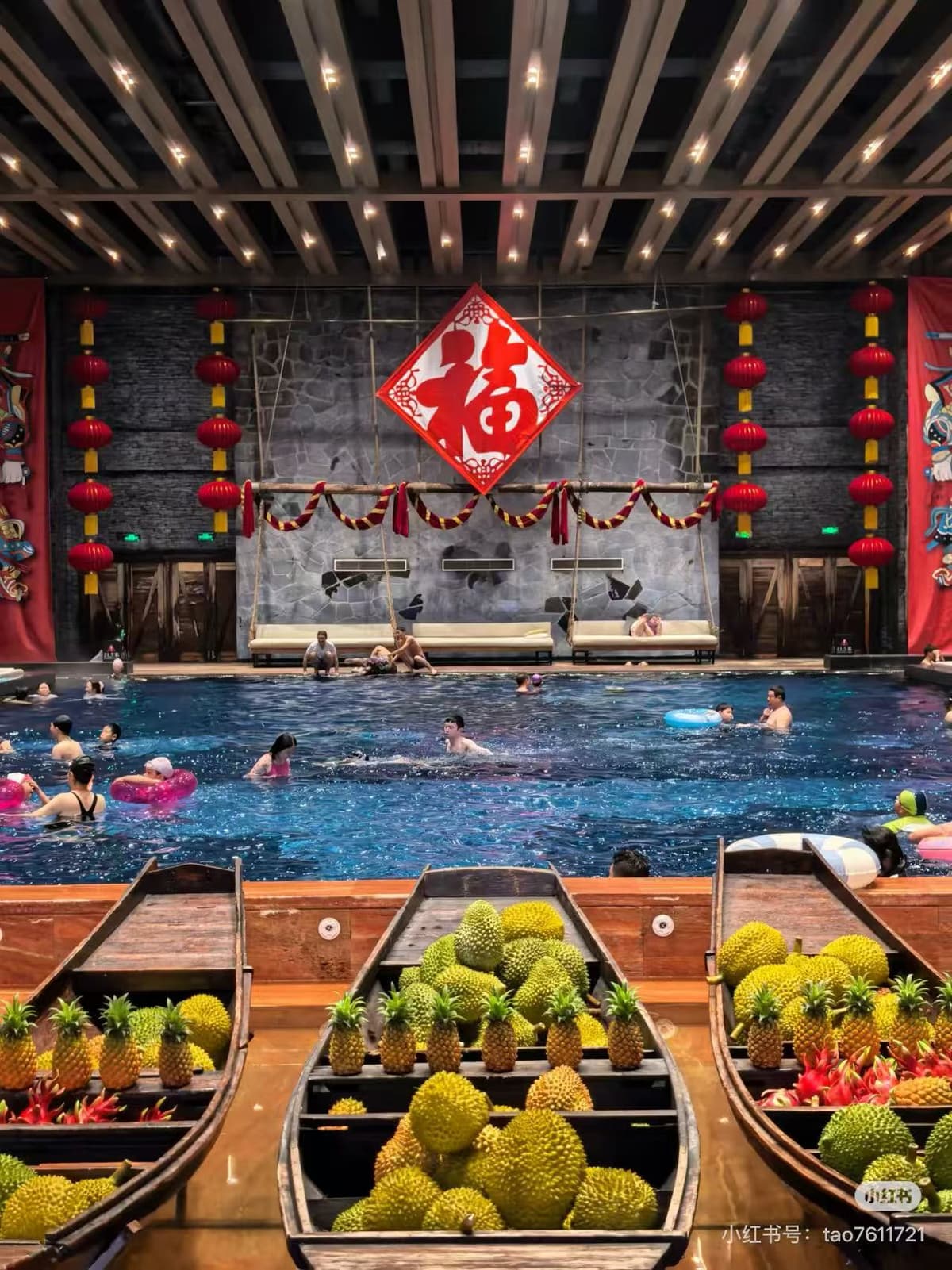
In travel clips, "China spa" often means a whole building: scrub tables, hot pools, saunas, recliners, buffet lines, cinema seats, and sometimes a corner where you can sleep until morning — entry tickets can look shockingly low compared with a hotel night. The format has grown fast across China in recent years. It is not only a cuozao hall, not only a single-room oil massage — within one building and often within a 24-hour window, you can stack most of the low-effort leisure activities you would otherwise spread across a weekend.
At a Glance
| Item | What to expect |
|---|---|
| Common names | Bath complex, tangquan (hot-spring club — not always real geothermal water), "water club" |
| Layout | Wet zone (showers, pools, sauna) + dry zone (rest hall, dining, massage, games) |
| Typical entry | About ¥100–¥400+ per person per visit (tier and city vary; buffet bundles cost more) |
| Time rules | Many tickets run X hours from check-in; 24-hour passes usually let you stay until the same clock time next day — confirm on paper |
| Wristband | RFID band or locker chip logs add-ons (scrub, massage, food upgrades); you pay everything at exit |
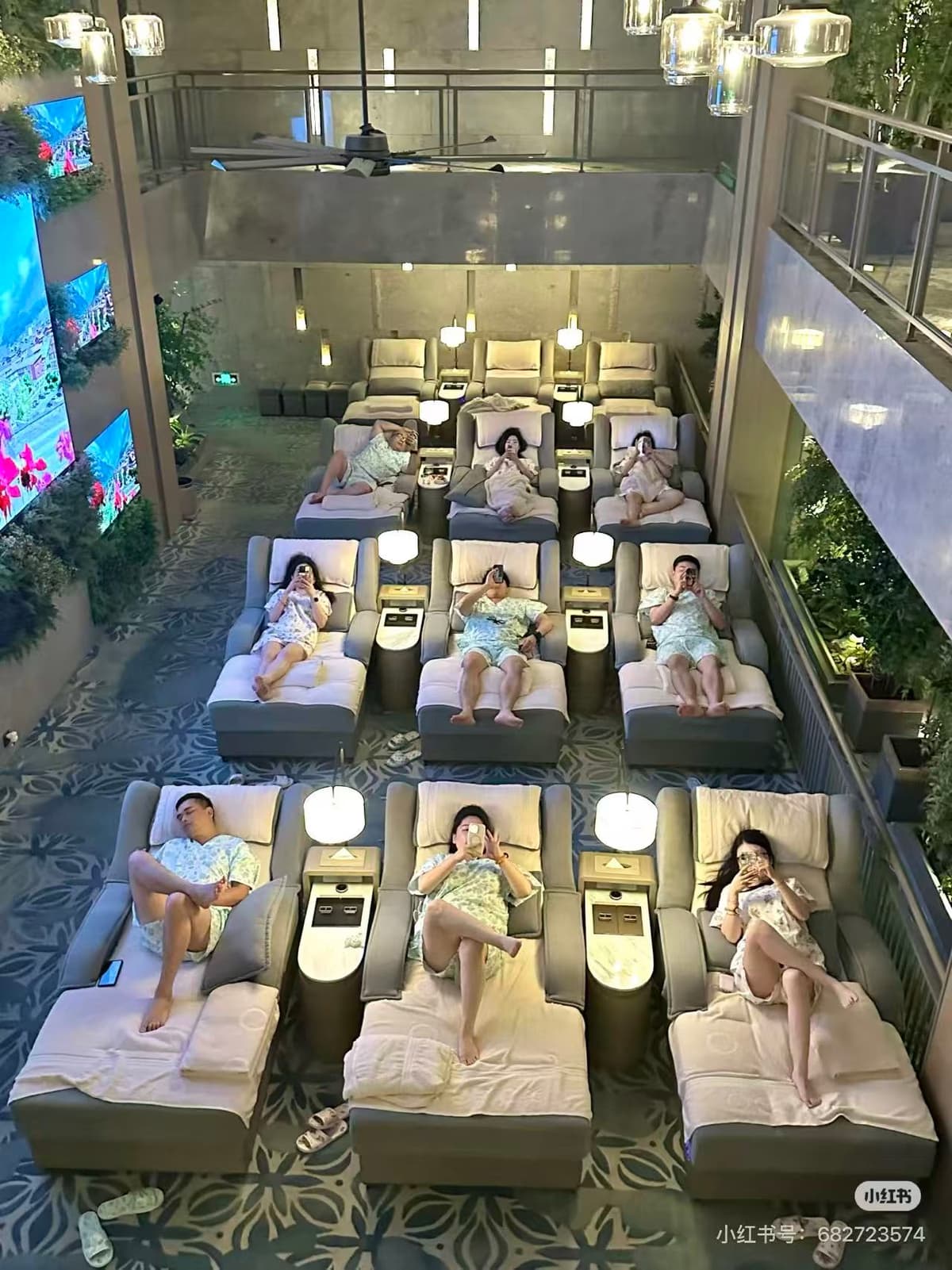
| Overnight | Some include lounge recliners or pods; private sleep rooms are usually extra and sell out early |
| Payment | Alipay and WeChat dominate; carry cash for small venues |
| Language | Big-city flagships may label basics in English; most visits rely on menu photos + translation apps |
Prices are indicative — confirm on the venue's printed board before you tap the band.
How Is This Different From a Western Spa?
Think leisure mall with bathtubs, not a 60-minute facial in a hushed suite. The usual path: wash and soak in the wet zone → change into house clothes for the dry zone → eat, lie down, optional massage or games → pay and leave when your ticket window ends.
Signs that say tangquan or "hot spring" do not always mean natural geothermal water — many venues heat ordinary pool water and borrow the word for branding. If mineral springs matter to you, read the fine print or ask the desk before you buy.
"24 hours" refers to opening hours or the maximum stay on a pass — nobody forces you to use every minute. Plenty of people enter in the afternoon, leave after dinner, or buy an overnight pass and sleep in a public rest hall.
Daypack basics: flip-flops that handle wet tile, a refillable water bottle for the dry zone (check whether outside drinks are allowed), earplugs if you might sleep in a lounge, and a zip pouch for the locker key if the venue still uses plastic chips instead of a wristband-only system.
What Happens From the Front Desk to Checkout?
1. Buy a ticket, take a wristband
Choose hourly bundles, buffet-inclusive passes, or 24-hour products. Ask upfront: overtime rates, buffet serving windows, and child rules (height or age cuts).
2. Locker room → wet zone
Swap shoes, stash bags, shower, hit pools and sauna if offered. Cuozao (body scrub), when available, is usually booked inside the wet area — step-by-step in the scrub guide linked below.
3. Change into house wear for the dry zone
Venues issue pajamas or robes for restaurants, lounges, and corridors; street clothes often stay in the locker — follow posted dress rules.
4. Eat, rest, add services
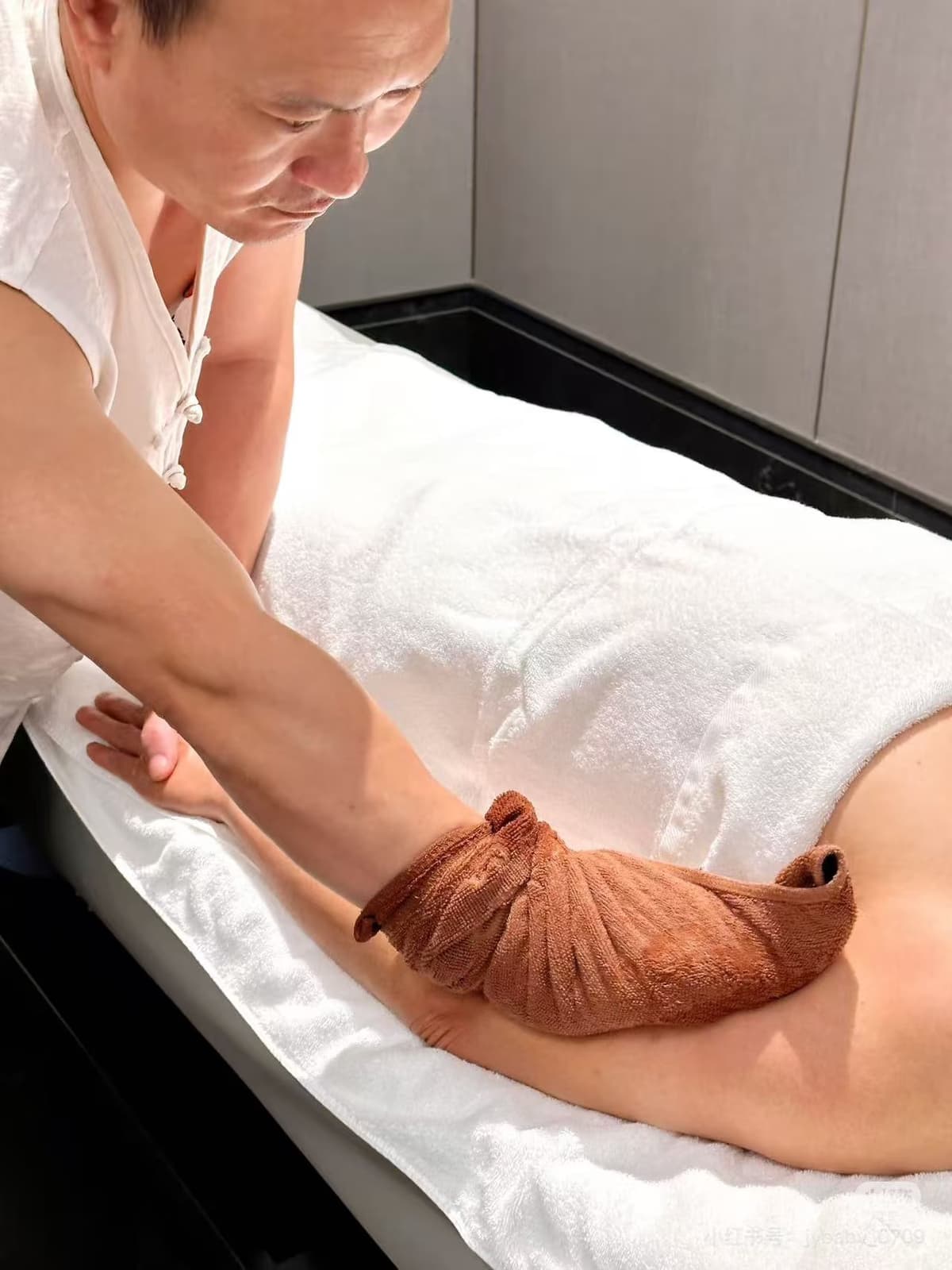
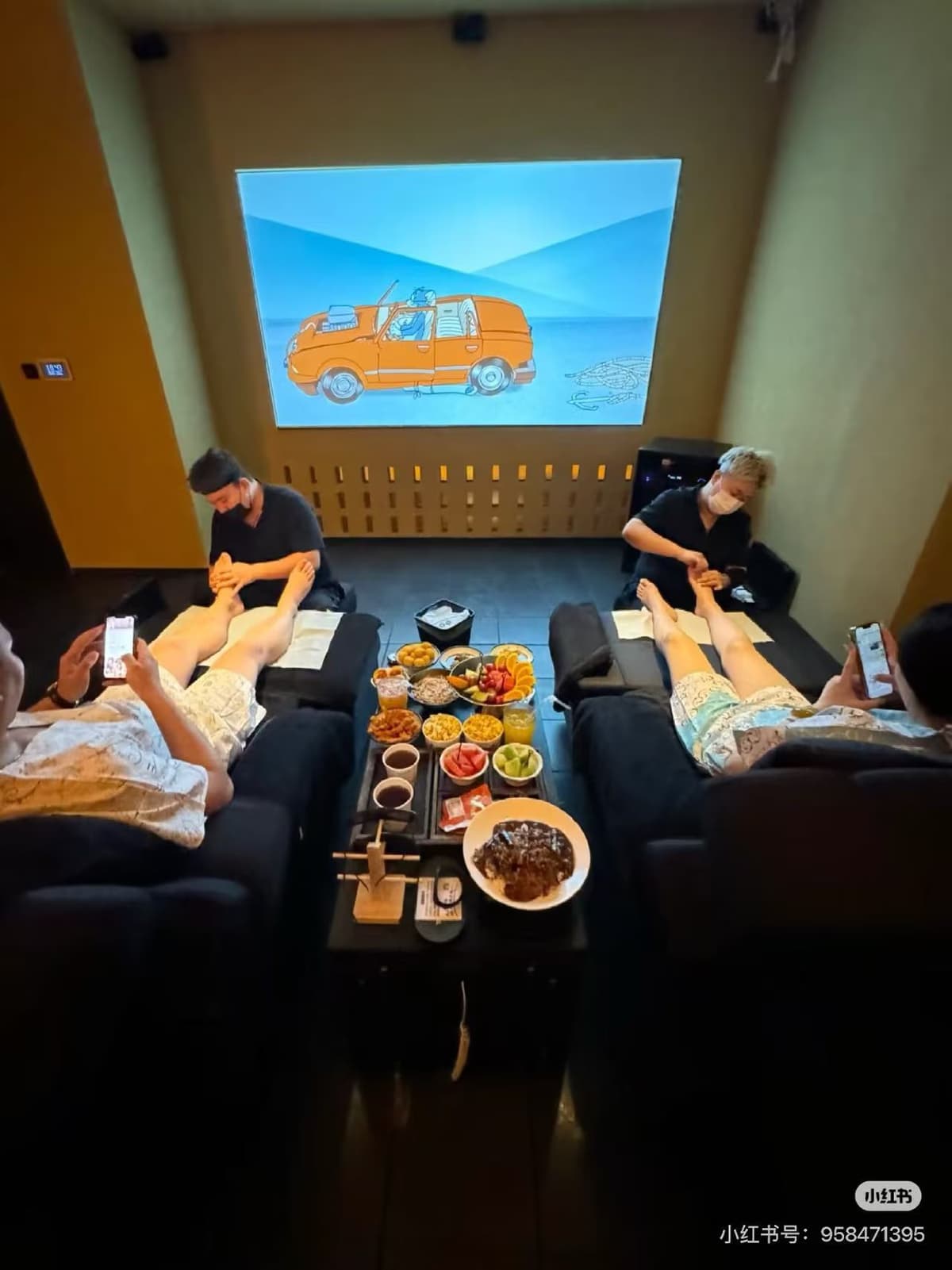
Buffet or à la carte, fruit and drinks (check what your ticket already covers). Hot food lines can look like an airport lounge at peak lunch — grab a tray, queue once, and double-check whether premium dishes need a second scan. Foot massage, Tui Na, arcade credits, and alcohol frequently ring up separately on the band — point at prices before staff scan you.
5. Overnight (if you bought it)
Public lounges mean shared noise, ceiling spots, and someone’s phone alarm at dawn — light sleepers should pack earplugs and an eye mask, or ask about timed private rooms and surcharges before the rest hall fills. Some venues rent small sleep pods; others only offer recliners in a shared cinema-style hall.
6. Exit audit
Match the receipt screen to what you remember: base ticket + every add-on. Dispute lines on the spot using photos of the menu wall.
Why Does the Wristband Total Surprise People?
Typical extras: scrub, full-body massage, ear cleaning, nail work, games, tobacco, premium drinks, overtime if you stay past the bundle.
Habits that help: photograph the full price wall at entry; confirm each new service with a calculator; scroll the checkout screen line by line.
How Do Visitors Choose a Venue, Talk, and Pay?
Search: Type tangquan, 水汇 (water club), or 洗浴 (bath) plus your city in Dianping (大众点评 — China's Yelp-class app). Filter review photos for buffet, overnight, and children mentions. English blurbs on general travel listings can help you grab a screenshot of the Chinese name and facade before you leave the hotel — still treat on-site boards as the real price. Read recent reviews when possible: venues renovate often, and older viral posts may show a layout that no longer exists.
Phrases: Save shǒu pái (wristband), duō shao qián (how much), chāo shí (overtime), guò yè (overnight) — see the toolkit table.
Pay: Set up mobile wallets before you go — How to Pay in China. Large final tabs are easier when you already know your per-transaction limits.
Kids, Modesty, and Lower-Stress Timing
Families: Policies differ by height, gender zones, and whether kids may enter wet areas at certain hours — read the listing or have your hotel call.
Modesty: Nudity rules apply mainly in single-sex wet zones; dry areas stay in shared, clothed space. Skip the format entirely if public wet zones are a non-starter.
Calmer visits: National chains on weekday afternoons beat Friday-night crowds.
Read This Series in Order
- Cuozao (scrub) — mostly wet-zone work: Chinese bathhouse body scrub (cuozao)
- Foot massage — often a dry-zone add-on or a separate shop: Chinese foot massage (chains)
- Safety and price locks before you walk in: China Massage & Spa Safety
Where People Misread the Rules
Assuming you must use all 24 hours. You buy a time ceiling, not a homework assignment.
Missing buffet windows. Lunch and dinner services close; late arrivals may face snack bars or surcharges.
Lending your wristband. Every scan lands on your bill.
Phones in steam. Lockers exist — humidity kills devices.
Practical Toolkit
| English intent | Chinese | Pronunciation |
|---|---|---|
| Wristband | 手牌 | shǒu pái |
| How much? | 多少钱? | duō shao qián? |
| Overtime (fee) | 超时 | chāo shí |
| Overnight | 过夜 | guò yè |
FAQ
Q: Do I have to book a scrub?
A: No. Base tickets usually cover pools and lounge access; scrubs are optional add-ons.
Q: Can I skip food?
A: Yes — choose a non-dining ticket if the venue sells one.
Q: Is it cheaper than a hotel?
A: Not automatically. Massage, meals, and private sleep rooms can push the wristband total toward mid-range hotel rates — compare final receipts, not poster prices.
Q: Will staff speak English?
A: A few flagship venues in top-tier cities label basics in English; most communication stays visual plus translation apps.
Q: Do I wear my own clothes in the dry zone?
A: Almost always no — you change into the venue's pajamas or robe after the wet zone. Street shoes and coats stay in the locker until you leave.
Soak, eat, do nothing for an hour — the day compresses into a slow blur. Many travelers treat the building as a trip brake: time feels inexpensive until the wristband reminds you it is not. If the scale of it still feels overwhelming, tackle wet zone first, eat second, and decide on massage only after you have seen the real crowd level.
Related:
- China Massage & Spa Safety — Legit Places, Fair Prices
- Chinese bathhouse body scrub (cuozao)
- Chinese foot massage (chain shops)
- How to Pay in China