Last updated: May 2026. Prices vary by city and venue — confirm on the menu before you sit down.
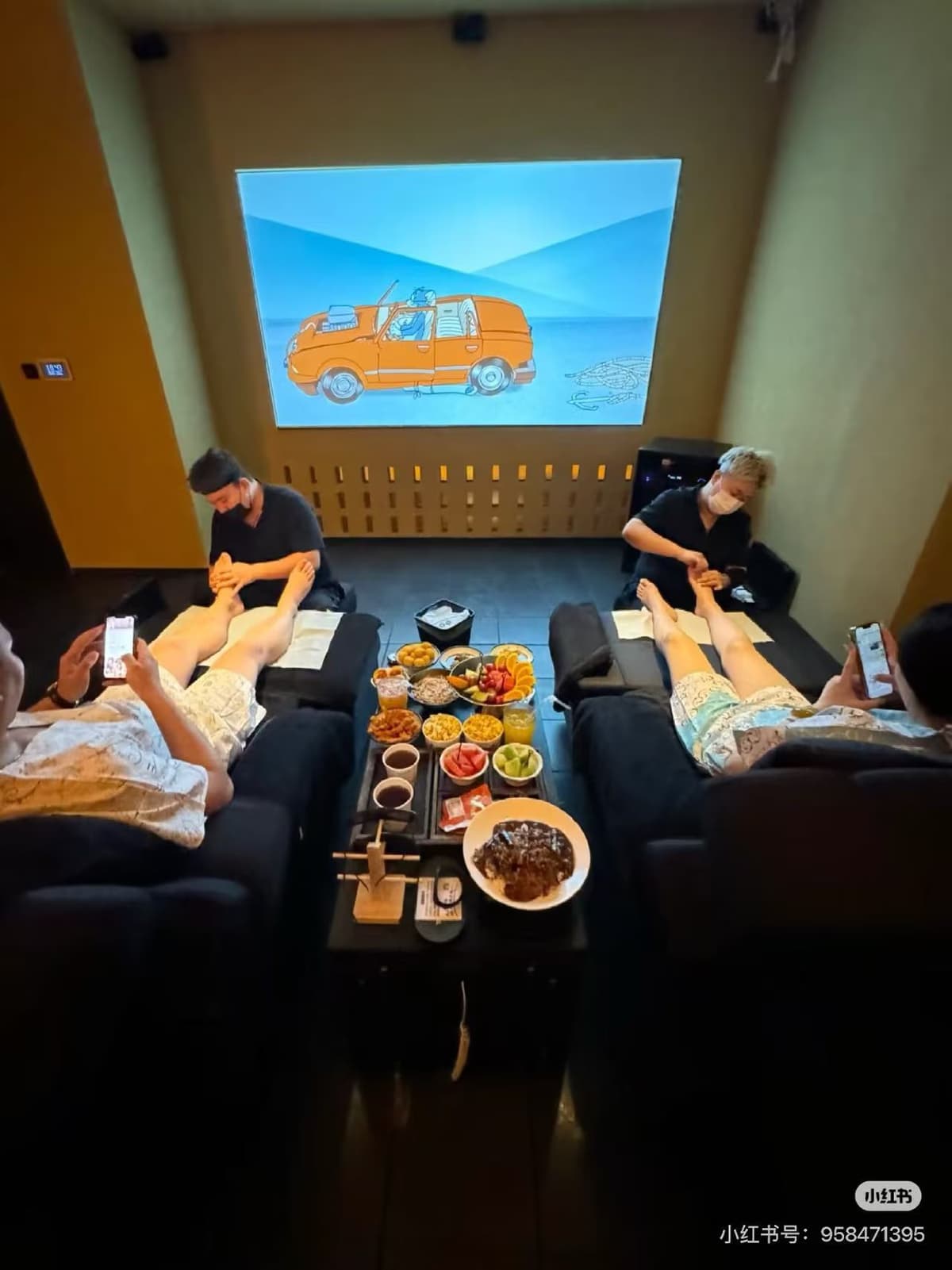
Chinese chain foot massage is a hard combo to copy elsewhere: herbal water you can't quite name (not bad — only unfamiliar), feet in the bucket, then thumbs and knuckles working arches and calves — sharp in places, then loose. In a proper shop you also get tea, fruit on a plate, a TV, and somewhere soft to sit while it all happens.
That's the standard opening at chains: about ¥60–¥180 for an hour, on strips near malls and train stations nationwide. Plenty of travelers hear about it within the first couple of days on the ground and still can't picture what happens after the door shuts. Below is the full walk-through.
At a Glance
| Item | What to expect |
|---|---|
| Typical price | ¥60–¥180 / 60–90 min at chain shops |
| What's included | Herbal soak, foot + calf work; many packages add shoulders/neck |
| Room setup | Private room or partitioned booth; loose clothes from the shop |
| Also common | Tea, sometimes fruit or snacks; TV |
| Payment | Alipay (international version works at many chains), cash (CNY); cards rarely accepted |
| Mandarin | Not required — gestures + phone translation handle almost everything |
| Booking | Walk-in is normal; peak hours may mean a 10–20 minute wait |
Prices are indicative — confirm on the printed menu before you sit down.
What Happens Right After You Walk In?
The beat is similar whether the brand is Huaxia Liangzi (华夏良子), Mingzudao (名足道), or another national chain.
1. Pick the package (about 2–3 minutes)
Staff walk you to a price board, tablet, or laminated sheet. Point at the line you want. If the menu is Chinese-only, snap a photo and run it through a translation app's camera mode — most layouts are simple: service name, duration, price. Photo the board anyway; you'll compare at checkout.
2. Change clothes (about 5 minutes)
You get loose shorts and a thin top from the front desk, plus slippers. Everything happens clothed — you're swapping into their outfit, not getting undressed for a table shower.
3. Foot soak (about 15 minutes)
In the room there's a wooden barrel or lined basin of hot water, often with a herbal sachet. Water should be hot-not-scalding — if it's uncomfortable, gesture toward the tap and they'll adjust. While your feet soften, you drink tea, watch whatever's on the TV, or stare at the ceiling — nobody cares. Fruit or snacks often arrive during this stretch.
4. The main session (about 45–75 minutes)
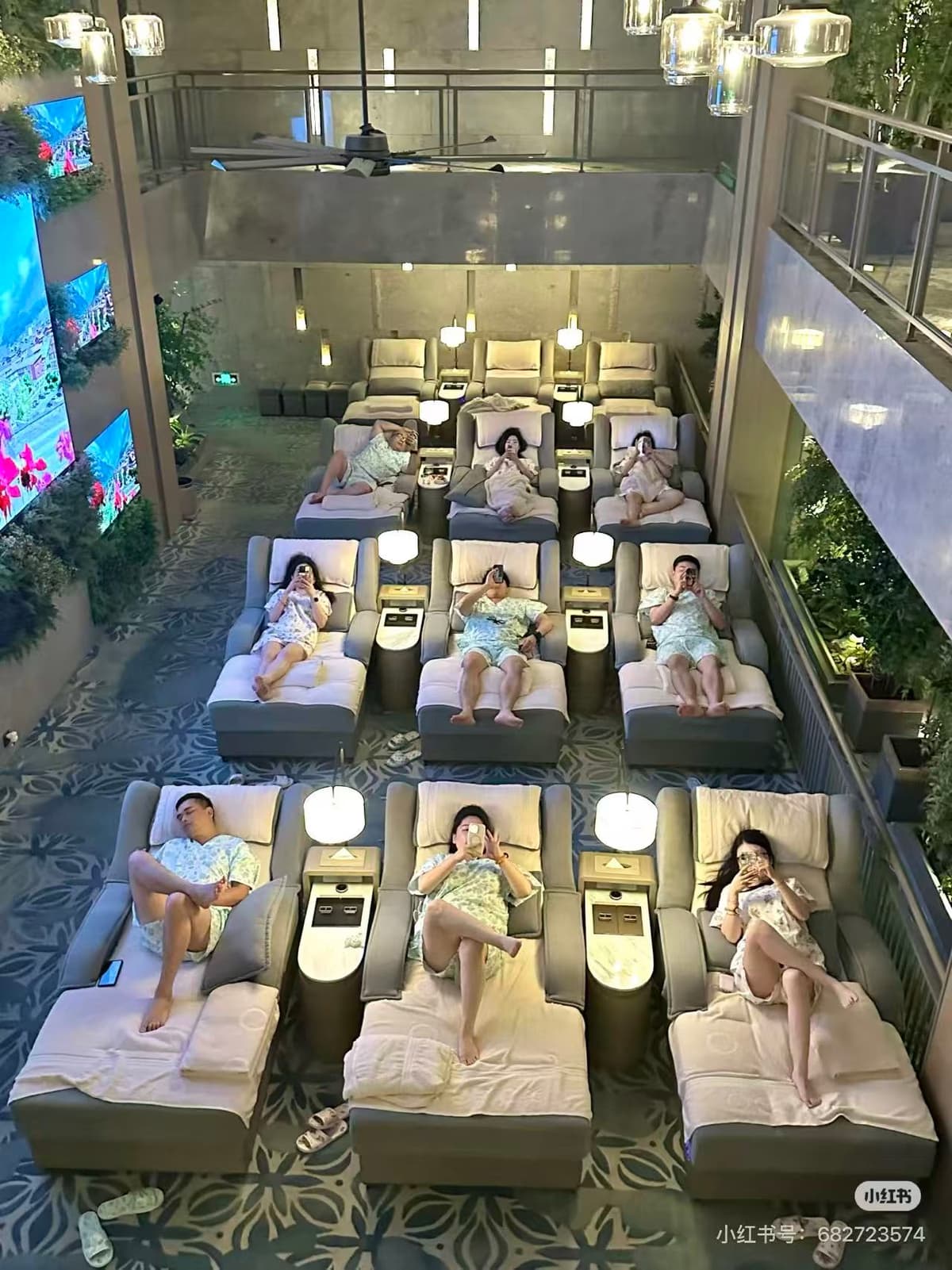
Rooms vary: some are fully enclosed for two or four guests (friends book together); others use tall partitions that block sightlines but not sound. Either way you're seated in a reclining chair or adjustable lounger, still in the shop's clothing. After drying off, the therapist works systematically: arches, heels, ankles, tight calves. Pressure runs firm — it's supposed to find sore spots. Most therapists respond if you give a thumbs-up (more pressure) or an "OK" circle with thumb and finger (lighter).
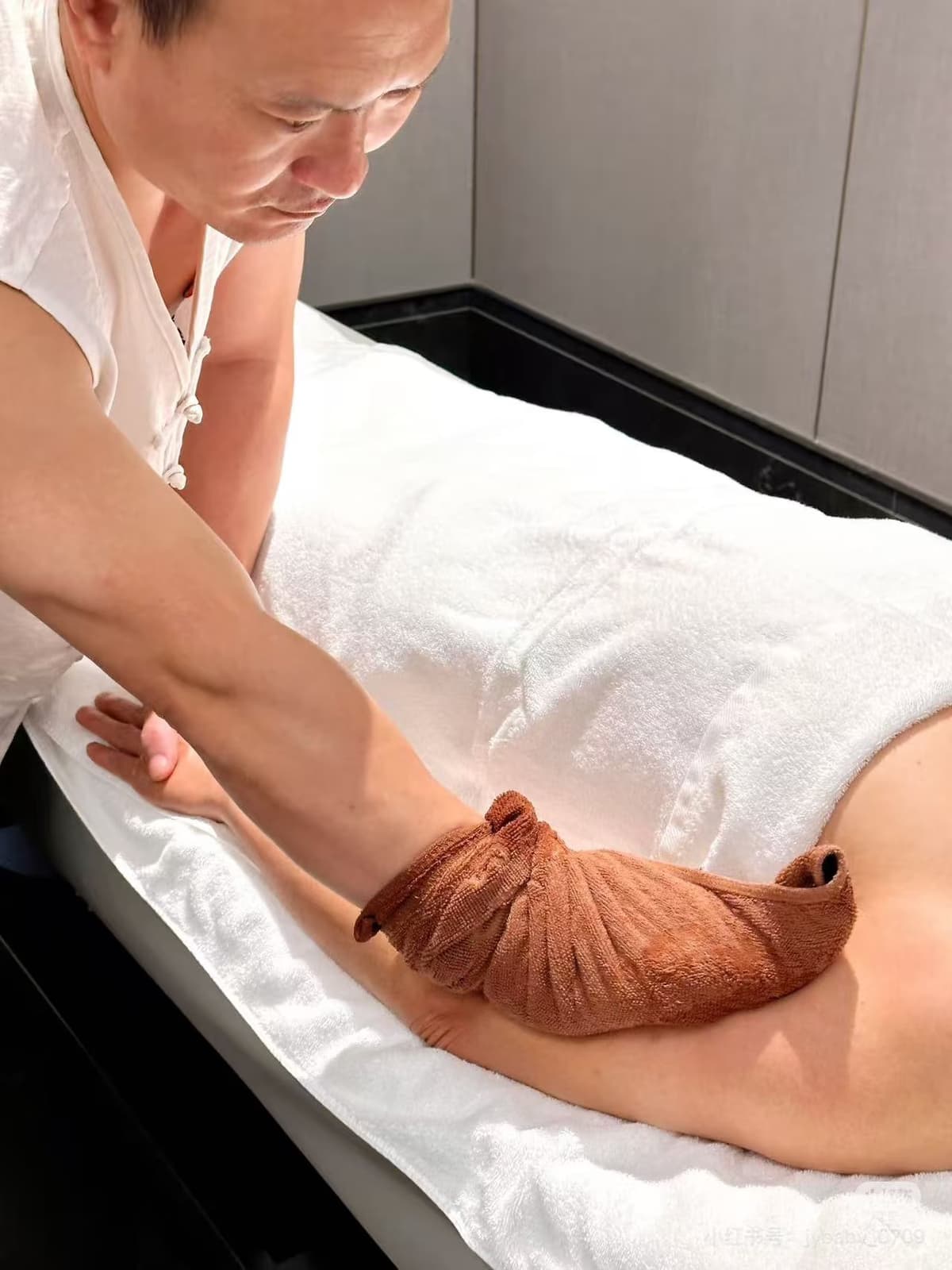
If your package lists shoulder or neck add-ons, expect short stretches where they'll lean over from behind the chair — still over clothing, still in public-safe territory. When in doubt, watch what locals in the next booth are doing.
5. Pay at the front
Dry off, change back, settle at reception. The total should match what you pointed at on the menu — if not, show your photo of the board.
Which Shop Should You Actually Pick?
Chains over mystery storefronts in downtown cores. Huaxia Liangzi is one of the largest nationwide networks; Mingzudao shows up in many cities too. Brand chains aren't always the fanciest, but menus and training tend to be more consistent — fewer surprises when you're already outside your comfort zone.
Use Dianping (大众点评 — China's Yelp-class review app) before you commit. Search the exact branch name; favor listings with 200+ reviews that include mediocre scores as well as glowing ones — that mix reads human. Scan photos for the waiting area and rooms so you know what you're walking into.
Trip.com (Ctrip) lists some spa and massage branches with English interfaces — useful if you want photos and cross-checking without installing another app. Hotel concierges at mid-range and upscale properties often keep a shortlist of nearby chains they've sent guests to; ask for the walking-distance option if you don't want to navigate transit afterward.
Timing: Right after a train ride or a long day of walking hits hardest — legs are ready. Late afternoon before dinner is easier than squeezing it in after midnight.
How Do You Get Through It Without Fluent Chinese?
Lock the price visually. Point at the line item, then mimic handing over cash or tapping a phone while raising your eyebrows — staff usually repeat the number or tap it into a calculator. If anything feels fuzzy, don't undress yet.
Tune pressure without words. Thumbs-up = harder; the small OK-circle gesture = gentler. For wording, use the phrases in the toolkit below — save them to your notes before you go.
Paying: Alipay's international version binds foreign cards and clears at most chains; carry cash in yuan as backup. WeChat Pay works best once you've gone through full mainland signup — skip unless you've already done that. Don't rely on Visa or Mastercard alone. For setup detail, see How to Pay in China at the end of this page.
Nothing forces small talk. Pointing, calculators, and translated screenshots finish the job.
FAQ
Q: Is this the same as Thai-style foot massage on a sofa in the mall?
A: Not quite. Chinese chains lean toward private or semi-private rooms, loose uniforms, longer soak segments, and heavier calf work. If you've only done Southeast Asian mall chairs, expect a slower open and more pressure through the lower legs.
Q: Will I share a room with strangers?
A: Usually no — you'll get either a closed room for your party or a partitioned booth. Busy branches sometimes schedule two unrelated guests in one large room with spaced chairs; if that bothers you, gesture toward an empty booth when staff seat you.
Q: What about tipping?
A: Not expected in mainland chains. If someone delivered genuine relief, a modest cash thank-you at the therapist's station happens — but skipping the tip won't read as rude.
Q: Is this routine for women traveling alone?
A: Yes — daytime visits at reviewed chains are normal for solo female travelers. For venue red flags and price checks, read China Massage & Spa Safety (also in Related below).
Where Do Expectations Usually Slip?
Thinking it's "only feet." Standard sessions sweep calves up to the knee; shoulder rubs often sneak into longer packages. Sixty to ninety minutes lands heavier than the phrase "foot massage" suggests in English.
Sitting through the wrong pressure. Adjust mid-session — therapists often default firm; it's fine to signal lighter early.
Skipping the menu photo. A handful of tourist-zone shops float verbal quotes above what's printed. Your snapshot is the anchor.
Scheduling a trek right after. Legs can feel worked for an hour or two — better before dinner than before a Great Wall climb.
Confusing "foot menu" with pure reflexology theory. Some therapists chat about pressure points; others stay silent. Either way you're paying for time on your legs and feet — not a medical diagnosis.
Practical Toolkit
| English intent | Chinese | Pronunciation |
|---|---|---|
| A little lighter | 轻一点 | qīng yī diǎn |
| A little heavier | 重一点 | zhòng yī diǎn |
| How much (total)? | 多少钱? | duō shao qián? |
Herbal water, TV glow, someone else's hands mapping spots you didn't know were sore — the arc is simpler than it sounds, and you don't need a sentence of Mandarin to finish it. Between ¥60 and ¥180, many travelers walk out feeling like they've traded their lower legs for a lighter pair.
Related: