Last updated: May 2026. Rules and menus differ by venue — confirm prices on the board before you tap your wristband.
Short clips keep showing the same scene: someone face-down on a tile bed while a worker drags a towel-wrapped hand along their back and little grey rolls peel away. They almost look like they’re enjoying it. Where does that actually happen? Does it hurt? How long are you in an all-nude wet zone? Can families bring kids? It is not only overseas visitors who arrive with questions — cuozao is a bathhouse ritual many people elsewhere in China, including a lot of southerners, only know from screens. Below is what to do, in the order you’ll do it.
At a Glance
| Item | What to expect |
|---|---|
| Venue type | Large bath complexes (pools, saunas, lockers, sometimes dining and lounges) — scrub stations sit inside the wet area |
| Wet area | Almost always single-sex; follow posted rules on nudity — many traditional venues use fully nude wet zones |
| Entry ticket | Often about ¥50–¥200 per person (city and tier vary; budget baths lower, flagship resorts higher) |
| Scrub add-on | Commonly about ¥30–¥150 (plain scrub, milk, salt, vinegar-style packages — names differ by shop) |
| Time | Shower + soak ~20–40 minutes before scrubbing; the table work often ~15–30 minutes |
| Payment | Alipay and WeChat are standard; carry cash for older neighborhood baths |
| Language | Menus and staff skew Chinese; photo translation + gestures cover most visits |
Prices are indicative — confirm on the venue’s printed board before you pay.
What Kind of Place Offers Cuozao?
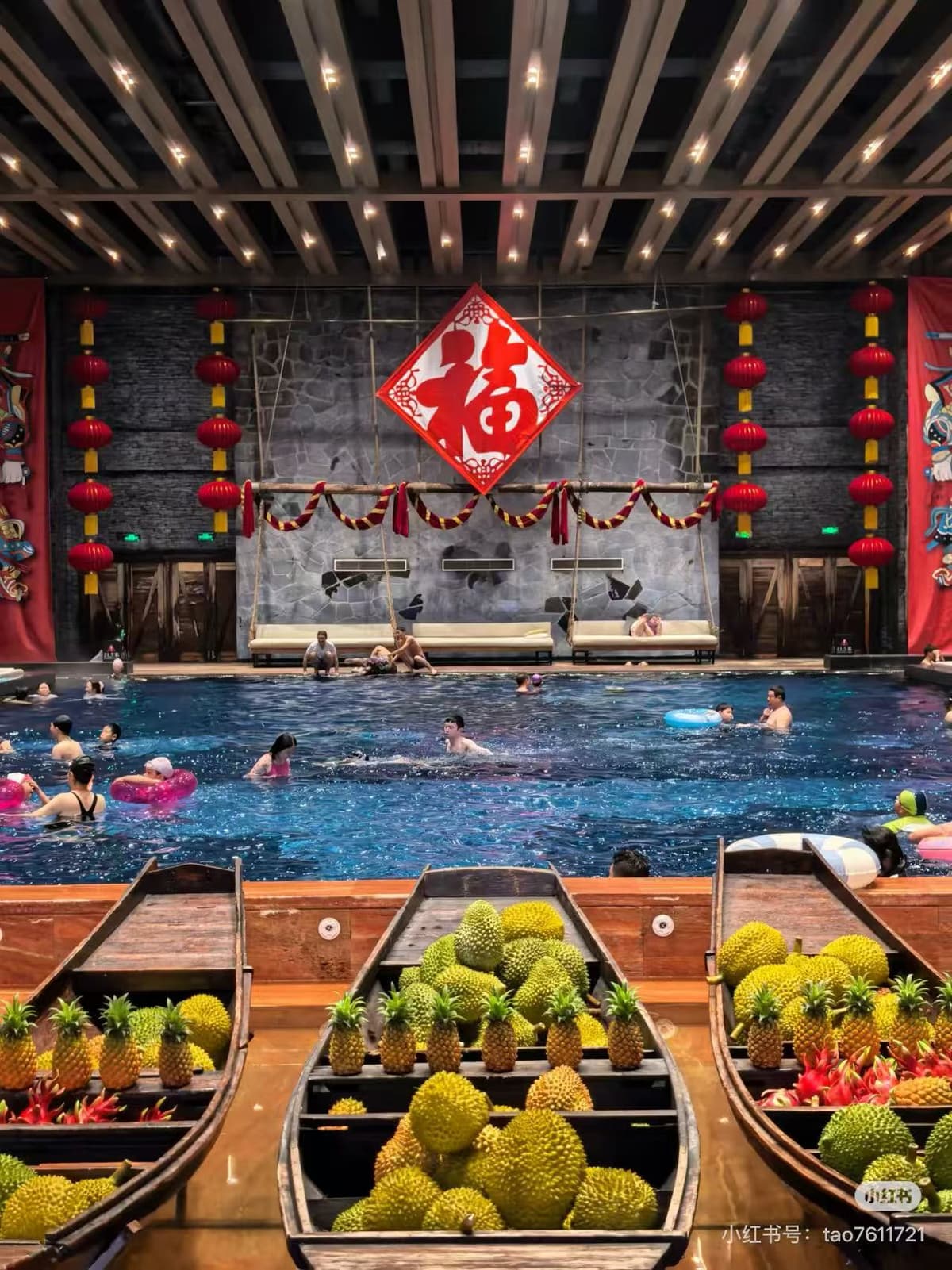
Cuozao is not the default menu at foot-massage-only shops. It shows up in large bath complexes (洗浴中心) with public showers, hot pools, sometimes steam or sauna, and scrub tables or a staffed scrub counter. Northerners still say “bathhouse” or “public bath,” but southern cities increasingly host big “water club” chains with the same layout.
You buy admission, trade street shoes for a locker key or RFID wristband, change in the locker room, then enter the wet zone with soap and shampoo. After you rinse and soften skin in the pool, you queue for 搓澡 (cuozao) — full-body exfoliation with a coarse towel or mitt, usually on a waterproof or disposable sheet.
Unlike a foot-massage parlor: you wash and soak yourself first, then someone else scrubs you. Rest halls, meals, and oil massage are often billed separately on the same wristband.
What Happens Step by Step?
1. Front desk — ticket and wristband
Pay base admission. The wristband logs add-ons (scrub, body treatments, food). You settle on the way out — keep the band on.
2. Locker room
Strip, stash street clothes and valuables, grab shower supplies. Some venues give basic toiletries; others sell them; upscale spots may include everything.
3. Shower, then soak
Rinse clean, then sit in the hot pool until skin softens — that is what keeps the scrub from feeling brutal. If the water runs very hot, keep early dips short.
4. Book the scrub
Inside the wet area, find the scrub desk, kiosk, or attendant line. Point at the menu row you want (“back scrub,” “full scrub,” etc.). Peak nights mean a wait — weekday mornings usually beat weekend nights for shorter lines.
5. On the table
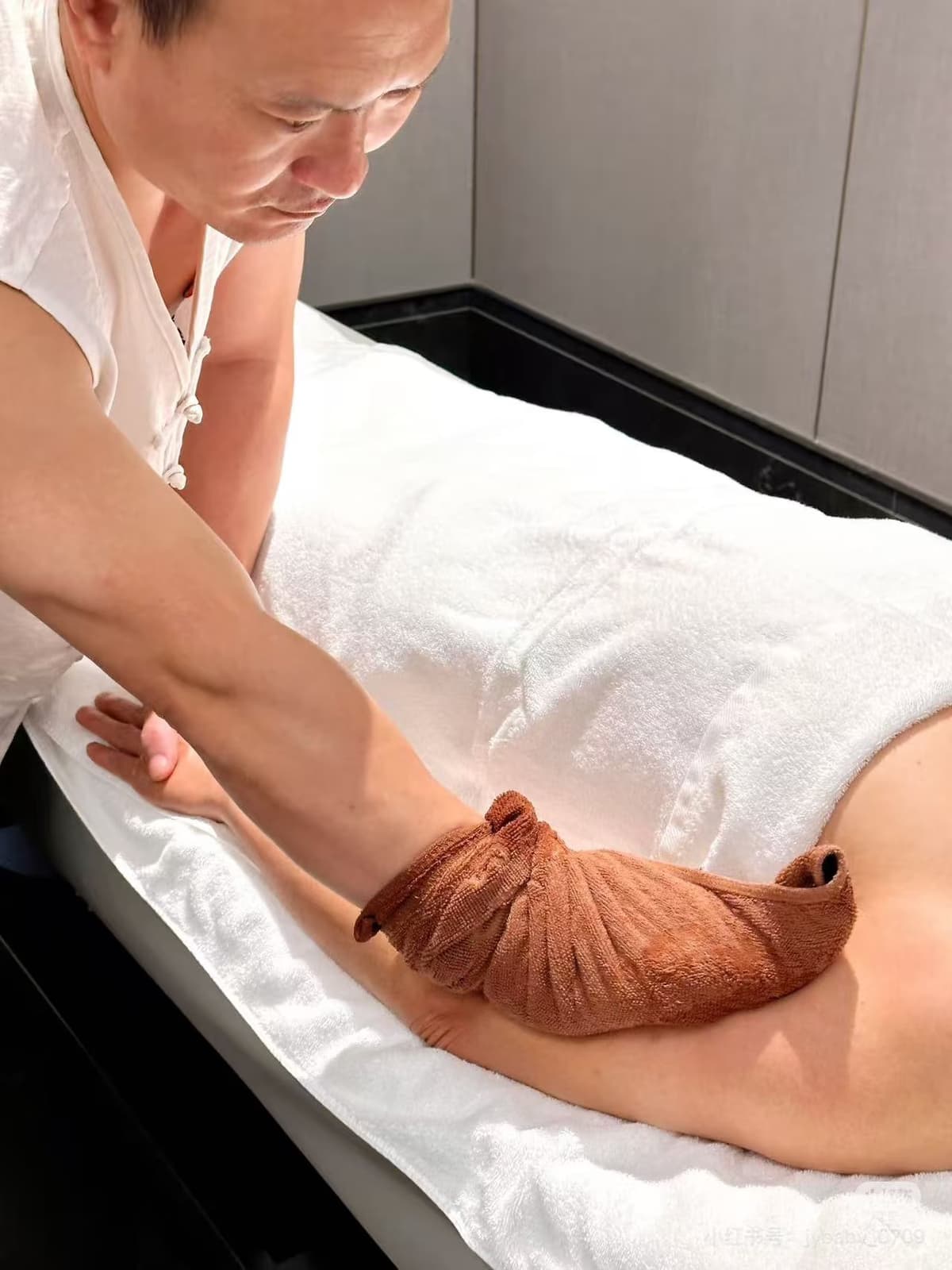
Lie face-down, flip when asked. The worker moves in sections: back, sides, legs, arms. You will hear the towel scrape; pressure should stay in the “hard exfoliation” range, not injury. Say "轻一点" (qīng yī diǎn — a little lighter) or tap the bed if you need less force.
6. Rinse out
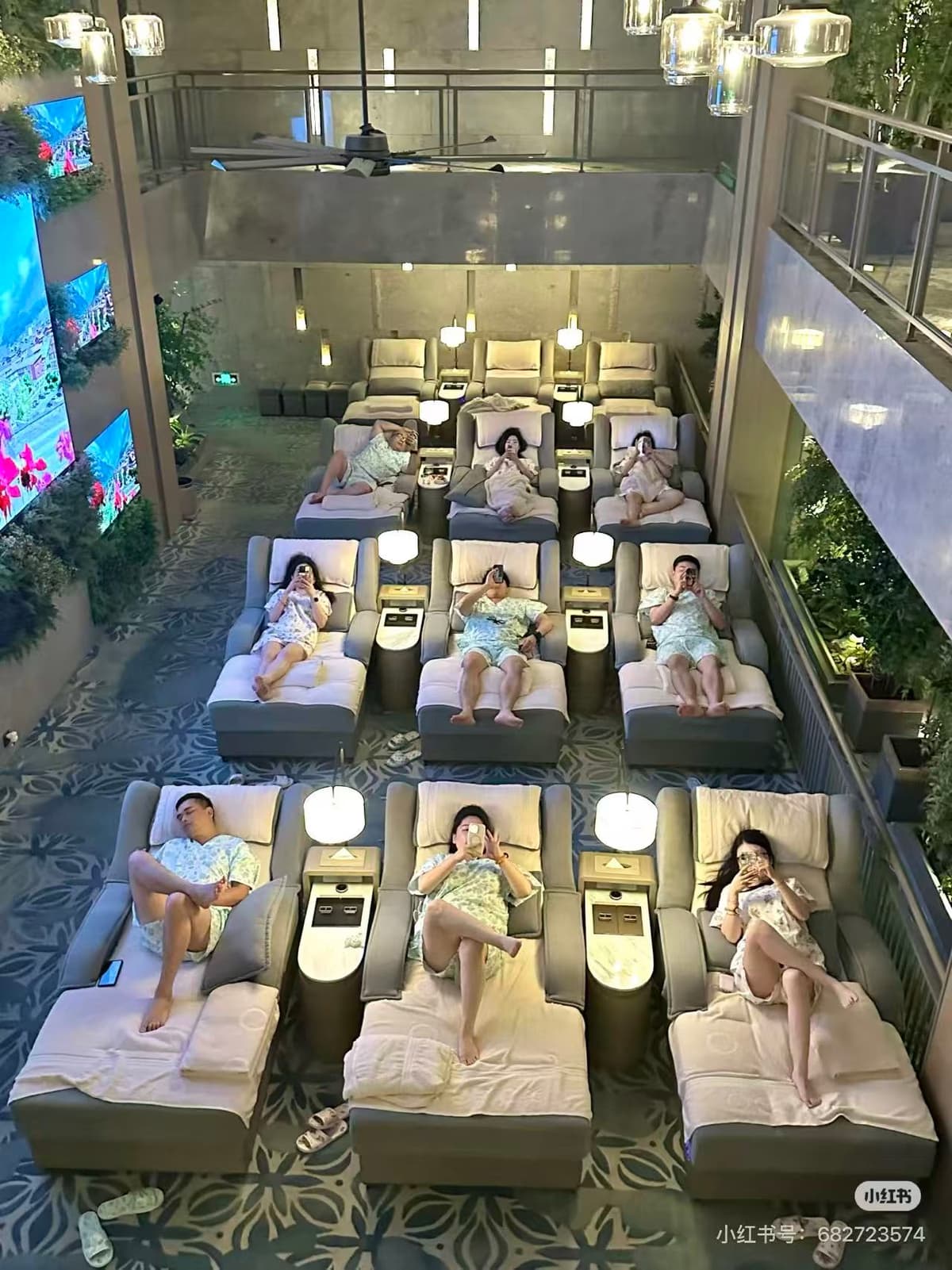
Wash off loosened skin, dry, slip into the house pajamas if you are heading to the lounge — or dress and leave if you are done.
What to pack: flip-flops for wet tile, a hair tie if you need one, and travel bottles of soap and shampoo unless the venue clearly provides them.
Does It Hurt? What About Sensitive Skin?
Expect strong friction, heat, and a short “raw” feeling — closer to a stiff loofah than a spa oil rub. Speak up early if pressure feels wrong.
The grey rolls are mostly dead skin and sebum — normal biology, not proof you “never shower at home.” Ignore shame-bait captions on clips.
Redness afterward is common and usually fades within hours. Skip cuozao with open cuts, bad sunburn, active eczema flares, or right after aggressive cosmetic peels.
How Do You Find a Venue, Pay, and Talk Through It?
Search: In Dianping (大众点评 — China’s Yelp-class app), search your city plus Chinese terms such as bath complex (洗浴中心), hot-spring club (汤泉), or water club (水汇). Scroll for photos that show scrub stations or menu lines labeled cuozao (搓澡). Mid-range hotel desks sometimes recommend nearby chains.
Pay: Mobile wallets are the default; older baths may still want cash. Set up at least one working wallet before you go — see How to Pay in China.
Talk: Photograph the price board, run camera translation, and preload the toolkit phrases below. Staff rarely need long English sentences — they need you to point at prices and nod or shake your head. Glance at the wristband screen when add-ons post.
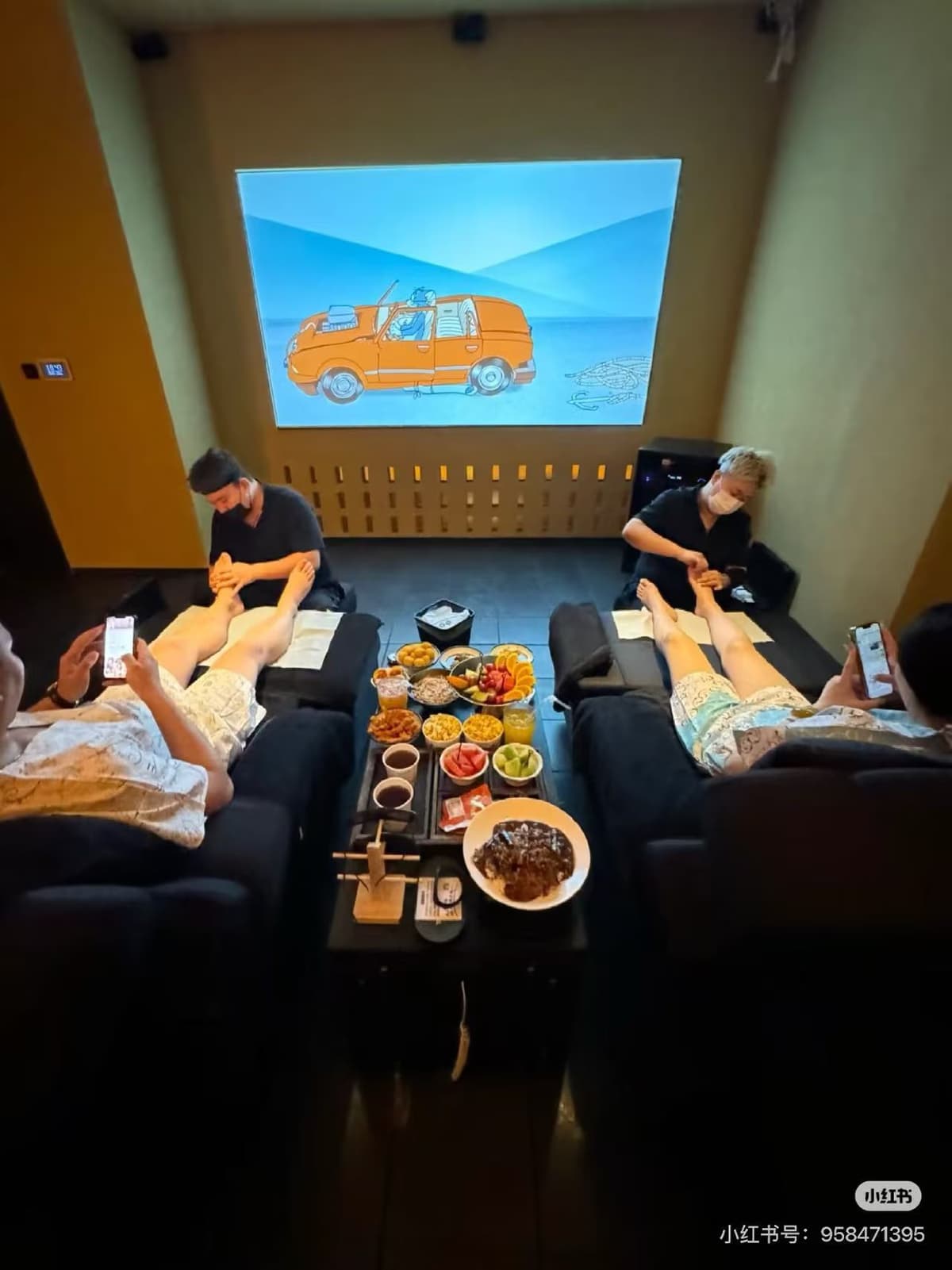
How this ties to other spa content: Foot-massage chains follow a different script (private rooms, soak buckets, no public pools). Big bath complexes may offer both wet-area scrubs and dry-area foot sessions, billed separately. For reading a shop before you walk in, keep China Massage & Spa Safety open alongside this page.
What About Kids, Modesty, or Nudity Anxiety?
Children: Many venues let a same-sex parent bring kids into the matching wet area, but age and height rules vary (especially boys in the women’s side). Read the listing or ask the hotel to call ahead — a screenshot of Chinese rules plus front-desk help works.
If you are shy: Choose a large chain; layouts and signage are usually clearer. Skip Friday-night peaks. If shared nude wet zones are a hard no, skip cuozao and book a private hotel bath instead.
Privacy: Scrubs usually run in an open wet hall or semi-partitioned bays — not a locked spa suite. Expect a public-club atmosphere, not a private cabin.
Where Expectations Go Wrong
Treating scrub as massage. Cuozao removes dead skin; tui na or foot work are separate wristband lines.
Skipping the soak. Dry skin hurts more and sheds less. Budget time in the pool before the table.
Blind wristband add-ons. Confirm each extra against the printed price before staff scan your band.
Phones in steam. Lockers exist for a reason — steam and tile kill electronics.
Practical Toolkit
| English intent | Chinese | Pronunciation |
|---|---|---|
| Body scrub | 搓澡 | cuō zǎo |
| A little lighter | 轻一点 | qīng yī diǎn |
| How much? | 多少钱? | duō shao qián? |
FAQ
Q: Is cuozao only a northern thing?
A: It is most common in the north, but large coastal cities increasingly offer it — filter reviews for scrub photos.
Q: Do I have to stay nude in the wet zone all day?
A: Your timer is yours. Shower and soak only as long as you need before the table; many guests scrub and leave without spending hours in the lounge.
Q: Must I order massage or food afterward?
A: No. Anything beyond base admission is optional — confirm the price before the band scans.
Q: How is this different from Korean jjimjilbang or Japanese onsen?
A: Jjimjilbang leans on heated rooms and cotton uniforms; onsen focuses on quiet soaking after a spotless rinse. Chinese bathhouses pair big pools with assisted mechanical scrubbing — a different social script.
Q: Can I skip the pools and only scrub?
A: You should not — the soak softens skin. If you hate shared water, ask how short a rinse-plus-soak can be; most workers still want a few minutes of hot water first.
Hot water, blunt friction, then skin that feels oddly new — that is the honest arc. If the wet hall feels like too much for one afternoon, a foot-massage chain visit is a softer entry; if safety signals worry you first, read China Massage & Spa Safety before you pick a venue.
Related: