Last updated April 2026. Verify before visiting.
At a Glance
| Walking Time | 2–3 hours at a slow pace |
| Distance | ~3 km through the heritage core |
| Best Time | Weekday mornings before 10:00 AM (fewer crowds) |
| Cost | ¥35 ferry + ¥20 Bagua Building museum (optional) |
| Difficulty | Easy — flat lanes with some short slopes |
| Key Styles | Amoy Deco, European Neoclassical, Southeast Asian Colonial |
| UNESCO Status | World Cultural Heritage since 2017 |
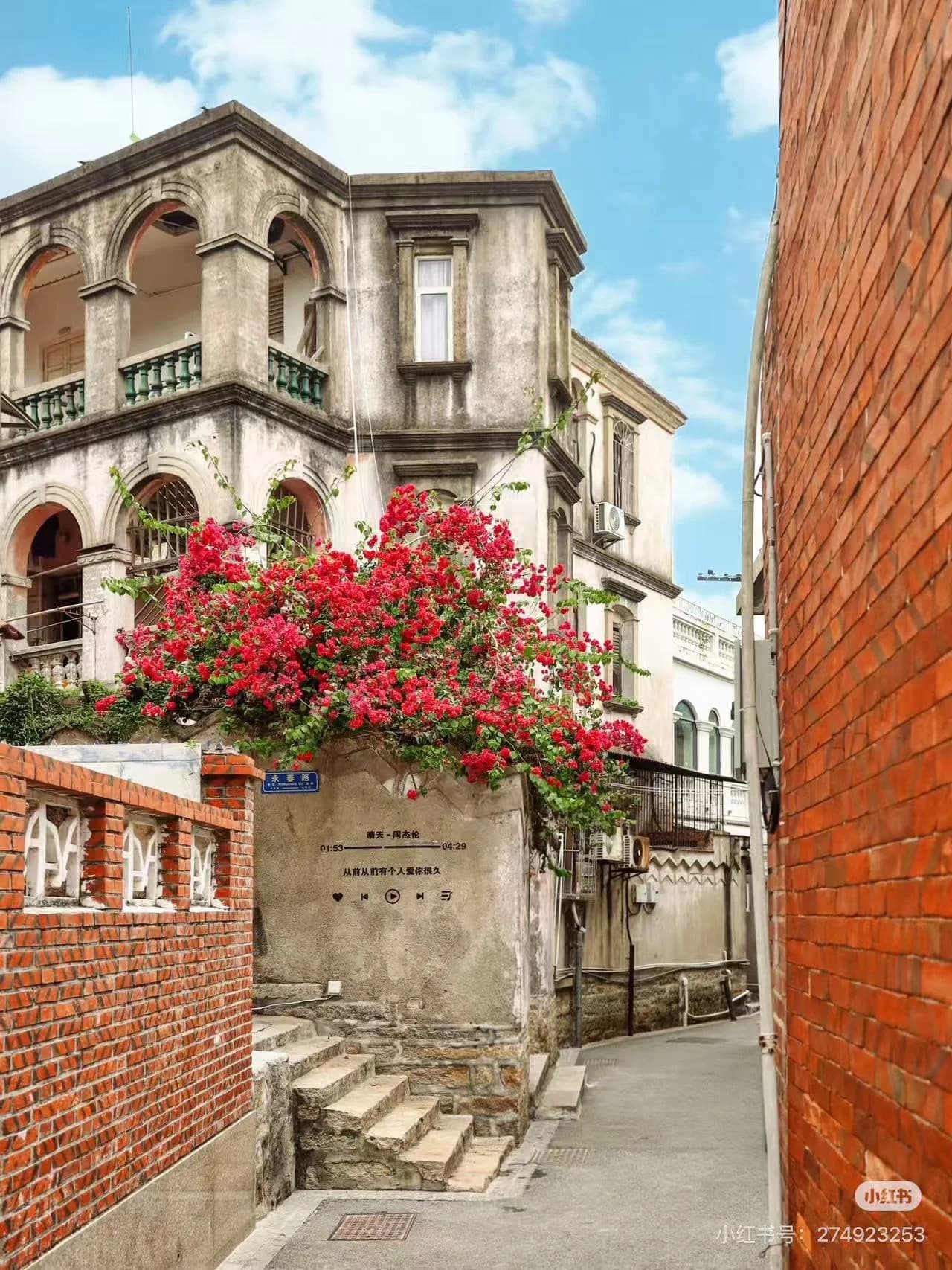
Morning light through the climbing ivy on a 120-year-old stone wall. Behind you, a Gothic cathedral with a Spanish architect's signature. Turn the corner and you're facing a red-brick mansion with Art Deco geometry over a Southeast Asian colonnade, topped with a traditional curved roof. Three continents visible before you've finished your coffee. This doesn't happen anywhere else in China — and on Gulangyu, it happens every 50 meters.
What This Actually Is
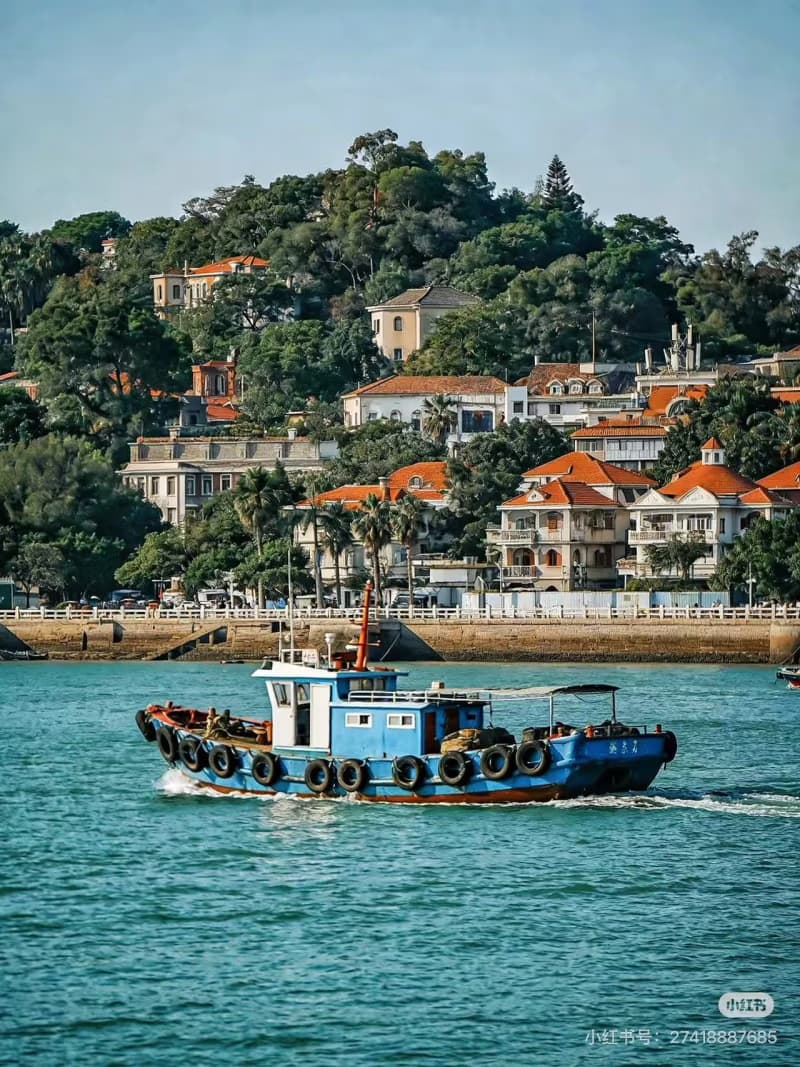
In 1842, after the First Opium War, Xiamen became a treaty port. Foreign merchants and missionaries initially settled on Xiamen Island itself, but the environment was disease-ridden and overcrowded. By the 1860s, they started moving to Gulangyu, an island 500 meters offshore with sea breezes, slopes suitable for villas, and relative isolation from the city's chaos.
The turning point came in 1902. Following a conflict between foreign residents and Chinese authorities, diplomats from Britain, America, Germany, France, and Japan signed an agreement establishing Gulangyu as an official international settlement — the second one in China after Shanghai's Foreign Concession. For the next 40+ years, they built. Consulates, churches, hospitals, schools, private estates. All on an island roughly 2 square kilometers in size.
But something unexpected happened here that didn't happen in Shanghai. While the diplomats were building their European monuments, a different group of people arrived: Overseas Chinese from Southeast Asia. They'd made money in Malaya, the Philippines, Sumatra, and came home to build. They knew both Western architecture and Southeast Asian building techniques, but they also knew home. So they mixed everything. European neoclassical columns sat above Southeast Asian covered arcades. Art Deco geometric lines ran across the facades. Red brick and curved swallow-tail roof ridges appeared where you'd expect ornamental cornices. Mandarin stone bases anchored English terraces. The result became known as "Amoy Deco" — not fusion, but something more like architectural DNA splicing.
UNESCO recognized this in 2017, designating Gulangyu as a World Cultural Heritage site. Not for the beaches or the piano concerts that dominate the marketing. For the buildings themselves. Over 2,000 historic structures survive on the island, with 53 core protection zones. The architectural density from the late 19th to early 20th centuries simply has no equal elsewhere in mainland China.
Whether This is For You
This walk is only interesting if you actually care about buildings and how cities preserve history in their walls and windows.
If you're just doing the standard Gulangyu tourist loop — Sunshine Rock, Shuting Garden, Piano Museum, beach photos — you don't need a separate architecture walk. The typical routes show enough building aesthetics to satisfy that. You'll get your photos.
But if you want to understand what 19th-century colonialism actually looked like when different empires shared the same island, or how people mixed foreign styles with local materials, then spend 2-3 hours here. Gulangyu is one of only two surviving foreign concessions in mainland China. Shanghai's version was mostly rebuilt and replaced. Gulangyu stayed smaller and more remote, so the original buildings are still standing. You're seeing 19th-century city planning that hasn't been significantly altered.
How to Actually Do It
Getting There and Setup (Before 8:00am)
Take an early ferry from Xiamen Island. The 8:00 or 8:30 departure is ideal — the light is angled for photography, and the crowds don't arrive until 10:00am. Ferries cost 35 yuan and run every 15-20 minutes; book ahead during peak season (May-August) or weekends if you're risk-averse, but morning slots rarely sell out completely. You can purchase tickets at the Xiamen Passenger Ferry Terminal on the island side — no advance booking required unless it's a major holiday weekend.
You don't need a combined ticket for attractions. The architecture walk is about exteriors, streetscapes, and building relationships to each other. The only paid site worth entering is the Octagon Tower/Organ Museum — 20 yuan — purely to understand the interior spatial proportions. If you're already familiar with European organ history, you can skip this and keep moving.
Wear proper walking shoes. The island is pure stone-paved streets and slope roads. Sandals and dress shoes will punish you by kilometer two. A light backpack is useful for carrying water and a phone charger. The lanes are hilly enough that you'll appreciate a place to store a light jacket in case of afternoon temperature drops.
Segment One: Dock to Lujoao Road — The Consulate District (20 minutes)
Exit the ferry and do the opposite of the crowds. Don't follow the masses toward Longhead Road (the main commercial street). Turn left and walk the waterfront along Lujoao Road. This decision alone separates you from 90% of Gulangyu visitors. The waterfront path is tree-lined, quiet, and the water views orient you to why the diplomats chose this island in the first place — isolation, cooling breezes, separation from the chaos of Xiamen's main port.
This strip was the original consulate district. The old British Consulate still stands at No. 14 Lujoao Road, now converted to a hotel but the facade is unchanged — deep eaves on the colonnaded veranda, arched windows, stone base. The building's spatial logic is Victorian: wrap the building in covered space, let servants and business move around the perimeter, keep the interior core private and cool. A few hundred meters further is the former Japanese Consulate. Look at them side by side. The British building is horizontal, expansive, confidence expressed through space and material expense. The Japanese building is compact, vertical, economical. Same era, same island, completely different architectural philosophies born from different imperial strategies. This contrast is the whole point of walking here — not to see individual buildings, but to understand how the same moment in history produced radically different choices.
Segment Two: Huangyan Road to Octagon Tower — Mixed Heritage (30 minutes)
From Lujoao Road, cut inland toward Huangyan Road. Here the hybrid buildings emerge in density. Ground floors in Mandarin stone. Second-floor Western balconies. Curved ceramic roof ridges (燕尾脊) above Art Deco window treatments. Red brick walls carrying classical cornices. Marble inlays next to hand-carved window frames. This is Amoy Deco — the visible DNA of a place where five cultures learned to build on the same street.
Stop and look at a single building from across the street. Count the stylistic references: European cornice line, geometric Art Deco band on the facade, curved ceramic tiles on the roof, stone foundation, Chinese-style inner courtyard visible through the gate. That's not fusion — that's a single architect trying to speak five languages at once using the only materials available.
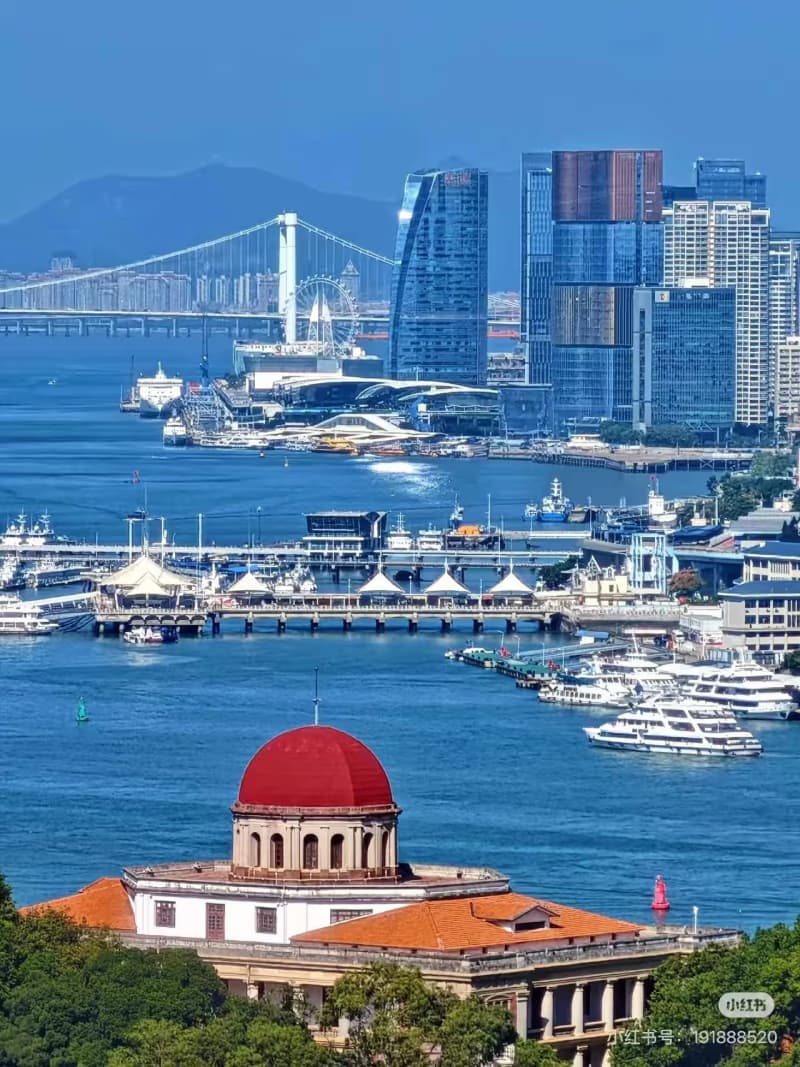
The Octagon Tower dominates the area, red dome visible from a distance. Completed in 1907, designed by a Dutch-American architect named William G. Howard, the building's name comes from its eight-sided roof structure (matching eight-trigram symbolism (八卦楼)). Inside is China's only organ museum, housing over 5,000 organs, some 300 years old — instruments that traveled the old Maritime Silk Road. The 20-yuan entry isn't about the organs themselves. It's about standing in the actual interior space and feeling the proportions the architect intended: high ceilings (designed for sound projection and heat movement in pre-air-conditioning Asia), natural light from angled windows, internal spatial flow from one room to the next. The building itself is the museum. The building's internal volume justifies the cost.
Segment Three: Zhonghua Road to Haitian Hall — Architectural Density (40 minutes)
Zhonghua Road is the architectural core. Walk this single street and you'll see more stylistic variation than most neighborhoods contain in entire cities. Every 50 meters the dominant visual language shifts: neoclassical colonnades, Art Deco geometric bands, red brick facades with Mandarin stone details, Southeast Asian covered arcades with Chinese roof elements sitting above European basement levels. If you were a builder in 1910 on Gulangyu, you couldn't ignore what your neighbors were building. Architectural competitiveness was real.
Stop at Haitian Hall, the only symmetrical villa complex on the island. Five buildings arranged along a central axis, like a miniature Versailles scaled to island proportions. This represents the highest level of East-West fusion attempted on Gulangyu. The symmetry itself is European — your average Minnan dwelling wouldn't dream of such formal regularity. But look at the materials: the roof tiles, the courtyard layout, the fenestration pattern. The symmetry is European; the bones are local.
Continue to Huang Rong-yuan Hall (built 1920), now the China Gramophone Museum. This building is a textbook case of Amoy Deco: Western classical facade with pediment and columned entrance, Southeast Asian open courtyards visible through the windows, Mandarin stone carved details in the spandrels and sill lines, curved roof elements. It's not mestizo or syncretic — those terms assume a middle ground. This is something that emerged only here, only in a specific 40-year window, and only once. The building vanished as a strategy the moment this particular colonial window closed in 1943.
Segment Four: Cathedral to Dock — The Quiet Lanes (30 minutes)
The Gothic Cathedral was completed in 1917, designed by a Spanish architect whose name has been lost to local history. Pointed arches, rose windows, European ecclesiastical orthodoxy — pure Iberian Catholicism exported to the South China coast. But here's the thing: stand across the street from the cathedral's main facade. The background is rows of traditional Minnan red-tile curved roofs, their ceramic curves catching the afternoon light. That frame is the most iconic image on Gulangyu. It's compositionally impossible in every other Chinese city, and it reveals the entire story at once. Europe in the foreground. China in the background. Not fighting, just coexisting. That's Gulangyu.
From the cathedral, return toward the dock through the residential lanes. Most buildings are private homes — you can't enter them, but the architectural details are visible from the street. Carved stone lintels, hand-forged door hinges, wooden window shutters with Chinese ideograms, European corner details, curved roof brackets combining half-timber with ceramic. These back alleys are the quietest parts of the island and the closest to what Gulangyu actually was before the tourist infrastructure arrived. This is where people lived, not where they performed.
How to Do It
Route: Ferry dock → Lujoao Road (consulate district) → Huangyan Road (Octagon Tower) → Zhonghua Road → Haitian Hall → Huang Rong-yuan Hall → Cathedral → Return lanes to dock
Ferry: 35 yuan one-way. Departures every 15-20 minutes from the Xiamen Passenger Ferry Terminal. Morning slots less crowded.
Costs:
| Item | Price |
|---|---|
| Ferry (one-way) | 35 yuan |
| Octagon Tower/Organ Museum | 20 yuan (optional) |
| Walking trails | Free |
Time needed: 2-3 hours without museum entry, 2.5-3.5 hours if you visit the Octagon Tower interior.
Payment: Alipay and WeChat Pay accepted everywhere. Small shops may require cash — bring 50 yuan in small bills just in case. Credit cards not accepted.
Best time to go: April-May (spring, comfortable temperatures). November (clear light, fewer tourists). Avoid June-August (hot, humid, afternoon showers). Weekdays are significantly quieter than weekends. Late afternoon (3:30pm onward) is acceptable if you're less interested in photography — tour groups exit by 3:00pm.
Common Mistakes
Expecting interior access — Most buildings are private residences or closed heritage sites under protection. You're looking at exteriors and street relationships. Wandering into courtyards or knocking on doors will upset residents and may attract official attention. The viewing point is from the street.
Following Google Maps without offline backup — Signal in the residential lanes is spotty. Download an offline map or screenshot your route before boarding the ferry. The buildings are close, but the lanes are narrow and easy to loop.
Attempting Longhead Road — The main commercial thoroughfare is crammed with snack shops, souvenir vendors, and tour groups. Few interesting buildings, crowds constantly, nothing resembling the architecture you came for. Avoid it entirely.
Arriving mid-afternoon — The island sees peak crowding between 10:30am and 3:00pm. Tour groups fill the main routes. If you can't do an early ferry, go after 3:30pm when groups depart, even if the light is warmer for photography.
Not respecting boundaries — Buildings that look abandoned may be registered heritage structures under surveillance. Climbing, trespassing, or removing materials will result in official contact. Look, don't touch.
Carrying valuables loosely — Crime is rare, but crowded areas see pickpocketing. Use a cross-body bag or backpack with zippers facing inward. The quiet lanes are genuinely safe; the commercial streets are where you need basic precautions.
Before You Go Checklist
- [ ] Book or plan a ferry departure time — early morning (7:30-8:30am) or late afternoon (3:30pm+)
- [ ] Download offline map or screenshot route to phone — signal unreliable in residential lanes
- [ ] Wear walking shoes — Stone streets and slopes throughout
- [ ] Bring water (1-1.5 liters) — Limited shops on the route itself
- [ ] Full phone charge — Navigation, payment, photography all drain battery
- [ ] Camera or phone with charged battery — Architecture photography is the point
Most visitors hit the same six spots in the same order — those buildings have been photographed from every angle already. This walk takes you down streets where you'll be one of the few people actually looking at the buildings themselves.