Last updated: May 2026. Per-head spend, queue apps, and closing times shift by shop — read the door board and your receipt the night you go.
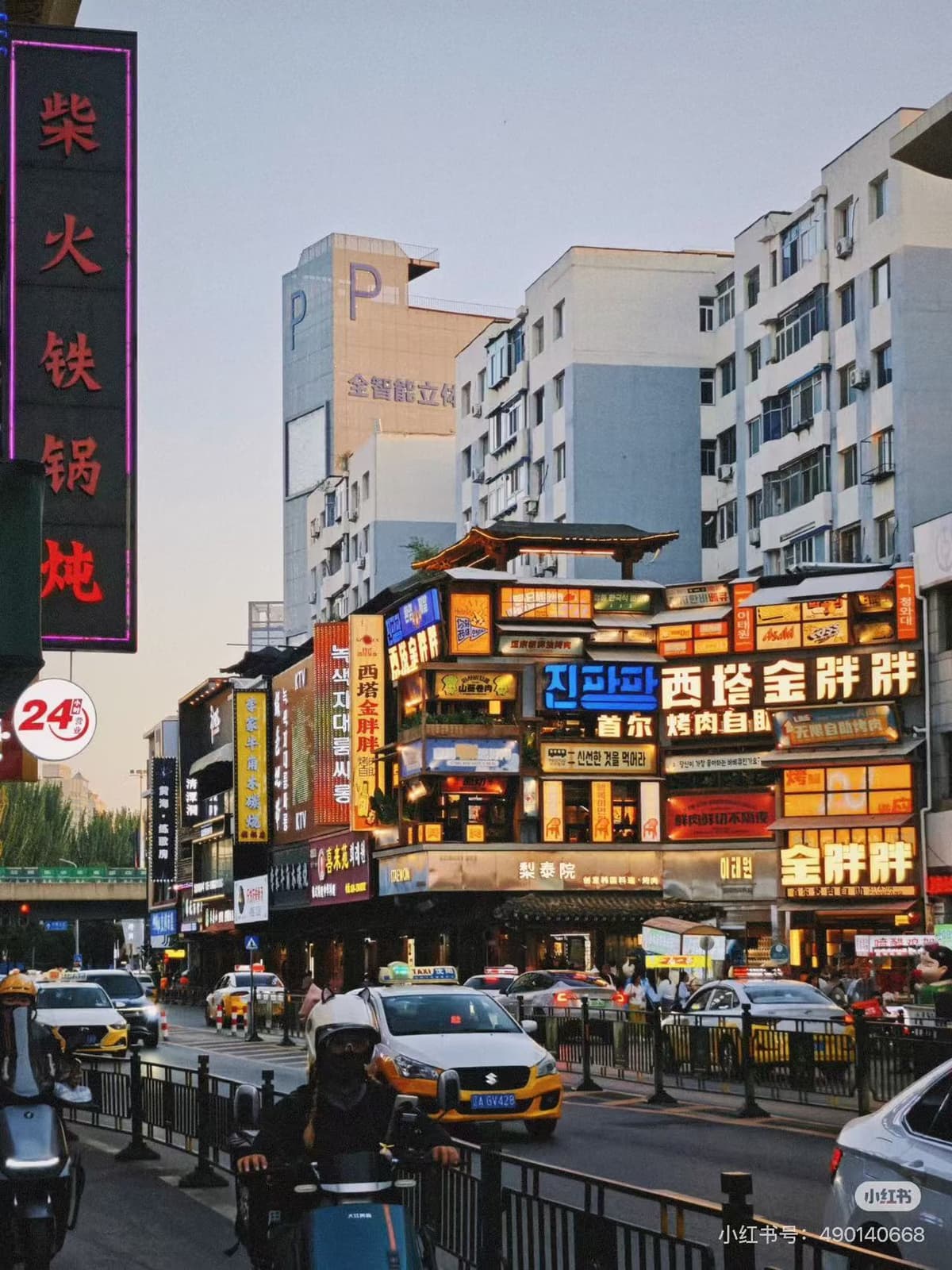
After dark, Xita Street fills with hard light: grills hiss under hoods, cold-noodle shops steam their glass, and the sidewalk mixes grill smoke with beer glasses clinking. The strip west of central Shenyang has carried commerce for more than a century; local gazetteers often call it “Xita commercial street.” Korean Chinese communities have concentrated here for generations, packing the spine with barbecue, pickle-forward snacks, rice wine, and retail — officials describe the corridor as a leisure-and-dining belt with strong Korean-Chinese character and Korean-style businesses. It does not feel like Zhongjie’s mall spine; it reads as late-night, shop-upon-shop eating. For travelers, the working language at the door is still Mandarin: photo menus, queue apps, and QR pay beat worrying about extra languages.
Winter cold keeps those smells low and blunt — fat and fermented cabbage hang in the air between buildings; summer pushes the same aromas sideways through alley drafts, so season shifts how intense the block feels, not whether it feels busy.
Quick Reference
| Topic | What to expect |
|---|---|
| Where | Xita Street zone, Heping District — maps often label “Xita” or “Korean flavor street” clusters nearby |
| Prime hours | 17:00–22:00 pulls the biggest crowds; barbecue halls queue hard on weekends |
| Language | Service runs in Mandarin; decorative foreign signage does not block ordering |
| Ordering | Wall combo photos, illustrated menus, Dianping “top dish” screenshots; barbecue sets by headcount save decisions |
| Payment | WeChat Pay and Alipay almost everywhere; tuck small cash for edge cases (How to Pay in China) |
| Budget | Full barbecue nights often land ¥80–¥200 per person depending on meat tier and drinks; cold-noodle and fried-chicken shops can run lower |
Table Customs Worth Knowing
Tipping does not factor into these meals — settle at the counter or desk, say thanks, leave.
Tea and barley water sometimes land free the moment you sit; bottled drinks from fridges may scan separately — glance at prices before you twist caps open.
Lazy Susan rhythm matters less than who owns the tongs — pass scissors or tongs when another guest’s meat is mid-grill; staff often swoop in during peak waves to replace foil or flip proteins.
Bill splitting stays informal: one guest usually QR-pays the whole ticket, then settles peer-to-peer offline; asking staff to split across five foreign cards is rare outside mall chains — agree casually before ordering rounds.
If you hate cigarette traces near sidewalk tables, pick indoor exhaust-heavy halls over curb seating when winter doors stay wide open.
Families should scout whether a barbecue hall offers non-spicy soup bases or rice bowls for kids — broth-heavy jjigae beats chili-loaded fried chicken rubs when toddlers tag along. High chairs appear inconsistently; stacking coats on spare chairs is normal.
Solo travelers rarely fail here if they stick to cold-noodle counters or fry-chicken bars with visible seat counts; full barbecue tables sometimes quote two-person minimums — read the fine print or pivot to a stall that sells skewers by the stick.
Groups of four or more gain the most: platters rotate cleanly on wide tables, you can split salty grilled cuts with vinegary salads, and makgeolli pitchers finally make sense economically.
How Xita Reads Against Zhongjie
Xita is Shenyang’s densest Korean-Chinese dining cluster — few Northeast cities keep this much grill-and-pickle signage lit past midnight. Treat it as a second food axis inside one city: Han-style Dongbei stews and dumplings crowd generic Northeast halls (Northeast food in Shenyang), while Xita sells table grills, banchan trays, and kimchi soups as its default visual grammar.
The block size rewards walking loops: main-street fronts stay loud; alleys hide rice wine, rice cakes, and pickle retail. Evenings skew toward group supper and midnight snacks, not quiet heritage pacing.
A 2–3 Hour Evening Loop
- Pick one anchor meal — Korean barbecue for groups, or cold noodles plus dumplings / kimchi pancake for solo or duo trips — so you do not tap out after micro-bites everywhere.
- Budget queues — on famous-brand weekends, grab a queue number, then wander side lanes instead of blocking the door.
- Round two = fried chicken or makgeolli bars — smaller than a full grill session, better as a late layer.
- Street snacks optional — rice cakes, fish cakes, spicy rice sticks if stomach space allows; mind cold items and chili load.
Ordering and Holds for Foreign Visitors
Staff serve locals daily — plain Mandarin is enough; peak season friction is numbers and pictures, not idioms.
Practical sequence:
(1) Walk in and ask for seats — off-peak weeknights still turn open tables.
(2) Dianping queue tokens — viral shops use them; the app is Chinese-heavy — hotel staff or travel partners can tap for you.
(3) Trip.com or similar — search “Xita” + Korean BBQ; booking availability shows at checkout.
Barbecue halls usually sell per-person combo sets (meat mix + veg + banchan). First-timers should default to a set before cherry-picking cuts. Lettuce wraps, garlic chips, and chili paste arrive from staff passes or self-serve trays — ask whether refill banchan is free; some houses charge per round.
Dianping workflow cheat sheet: download the app before you leave Wi-Fi, search the restaurant’s Chinese name from your map pin, tap queue / 排队, screenshot the number if your Chinese reading is slow, then roam until your bracket flashes. Staff rarely care whether the foreign phone matches the party — they care that the number matches the buzzer.
Plant-forward travelers should expect limited vegan defaults — tofu stews and mushroom sides exist, but tables assume pork belly anchors; preview photos before committing to a specialty grill-only hall.
Dishes That Cover First Visits
Korean barbecue — beef, pork belly, marinated slices; staff may swap foil or grill for you. Smoke clings to jackets — normal here.
Naengmyeon-style cold noodles — buckwheat noodles, chilled broth, sour-spicy balance; summer-heavy but winter shops exist.
Korean fried chicken — sweet-spicy or soy-garlic chunks sized for sharing.
Kimchi jjigae / doenjang jjigae / bibimbap — backup paths when you want less grill oil mist.
Banchan and street sweets — pickles, sundae rice sausage, rice cakes from stalls or counters; fermentation and chili often punch harder than mall-chain Korean food — trial small plates first.
Blood sausage (sundae) appears grilled or steamed depending on the stall — earthy, iron-heavy flavor inside chewy casing. Split one skewer between two people before you commit to a platter; texture shocks first-timers who expect Western breakfast sausage.
Getting There and Pairing Your Day
Xita sits on the west inner-city edge, beside Taiyuan Street retail. From Zhongjie / Mukden Palace, a taxi or ride-hail usually runs about ten-plus minutes depending on traffic. Metro and bus stop names change with network upgrades — search “Xita” or your restaurant pin in a map app and pick the shortest walk-out.
If you are already shopping Taiyuan Street, treat Xita as a westward evening extension instead of a second cross-town mission — mall lighting and grill neon bleed into each other after dusk.
Daytime Mukden Palace or Marshal Zhang’s mansion, then Xita dinner, is a common pairing — history blocks sit east; the grill corridor sits west, so you cross the old grid deliberately rather than stumble in by accident.
Rain or snow squeezes everyone indoors — queues spike fast; either arrive before 17:30 or aim after 21:00 when first-wave tables rotate.
Walking off dinner: once grills shut down your appetite, a slow lap toward Taiyuan Street neon lets digestion catch up; winter sidewalks ice easily — flat shoes beat fashion soles.
Common Mistakes
- Ignoring minimums or party-size rules on barbecue menus — read fine print before accepting a private room pitch meant for six.
- Wearing fragile fabrics — leave wool coats at the hotel; wear something washable.
- Chugging makgeolli or soju like beer — Korean rice wines and distilled soju climb fast; pace pours.
- Ordering Dongbei iron-pot stew expectations here — heavy pork-and-noodle stews belong to Han Northeast halls; pivot to the Dongbei primer linked below if stew pots are what you wanted tonight.
- Ignoring spice and fermentation — say shao la (“less chili”) or lean broth-forward dishes if your gut is sensitive.
- Assuming every glowing photo maps to tonight’s kitchen — oil shimmer on lens-heavy food pics hides soggy batters; skim recent three-star reviews for grease complaints before you commit across town.
Xita does not need a foreign city analogy — it is simply a lived-in west-side corridor where shops stay open late: grills and noodle bowls fill with mixed crowds, and oil-and-char smells cling to sleeves by design. One dinner is enough to remember its silhouette.
- Shenyang City Guide — Hotels near Taiyuan Street abutting Xita, metro map, pacing
- Mukden Palace (Shenyang Imperial Palace) — daytime pairing before Xita dinner
- Northeast China bathhouse culture — another Shenyang night script