Last updated: May 2026. Ticket prices, train schedules, and scenic area access can change. Verify before booking.
Yunnan puts three cities on one rail line and makes it look simple. Kunming, Dali, and Lijiang each do something distinct — one resets your altitude, one hands you a lake and a bicycle and a full day to figure out their relationship, one sends you up a glacier and then back down into a UNESCO-listed neighborhood by evening. Ten days is the right number here. Seven leaves you rushing; fourteen turns into something else entirely. With ten, Erhai Lake gets a full cycling day without shortcuts, Jade Dragon Snow Mountain gets a real morning at altitude, and Tiger Leaping Gorge doesn't have to share a day with anything else. The three extra days over a week aren't padding — they're the afternoons where you stop moving and notice where you are.
Is This Right For You
- ✅ Go if you're visiting Yunnan for the first time and want the rail corridor covered properly — Kunming to Dali to Lijiang, no backtracking, no internal flights. You have ten days, a valid visa (or visa-free entry), and you can handle real altitude: Kunming and Dali sit at roughly 1,900m, Lijiang is at 2,400m, and the Jade Dragon Snow Mountain cable car tops out at 4,506m.
- ✅ Good fit for people who want outdoor activity alongside the cultural stops. This itinerary includes a full lake cycling day, a gorge hike, a high-altitude gondola, and consistent daily walking. If you want movement in your trip, this delivers it.
- ❌ Skip it if you have fewer than seven days. Dali and Lijiang each deserve a standalone trip; compressing both into five days loses what makes each place worth the journey.
- ❌ Not the right fit for travelers with significant altitude sensitivity. The Snow Mountain cable car at 4,506m is a serious consideration. A lower-altitude alternative exists (Spruce Meadow gondola at 3,100m), but the trade-off is real.
Route Overview
| Days | City | Daily theme | Intercity transport |
|---|---|---|---|
| Day 1 | Kunming | Land, settle in, take it slow | — |
| Day 2 | Kunming | Stone Forest — first full day out | Charter car or tourist bus, ~90km |
| Day 3 | Kunming → Dali | Train transfer, Old Town first evening | High-speed rail, ~1.5–2 hrs |
| Day 4 | Dali | Erhai Lake cycling day | Bike rental, city transport |
| Day 5 | Dali | Three Pagodas + Cangshan Mountain | Cable car, city transport |
| Day 6 | Dali → Lijiang | Train transfer, Old Town evening wander | High-speed rail, ~1 hr |
| Day 7 | Lijiang | Jade Dragon Snow Mountain | Charter car or tourist bus, ~1 hr |
| Day 8 | Lijiang | Tiger Leaping Gorge day trip | Charter car or tour group, ~1.5–2 hrs each way |
| Day 9 | Lijiang | Shuhe half-day + Naxi music evening | Local taxi, ~15 min |
| Day 10 | Lijiang | Departure | Train or flight |
Why the days split this way: Kunming gets two days mainly as a buffer. Landing in Yunnan after a long-haul flight and immediately running a packed itinerary is a reliable way to spend the first few days tired. Stone Forest on Day 2 works as a long but self-contained excursion — you come back spent, sleep well, and feel ready for the train on Day 3.
Dali gets three days because Erhai Lake cycling cannot be done well in half a day. Forty to sixty kilometers along the lake takes a full day if you stop, eat lunch by the water, and don't feel rushed. The Three Pagodas and Cangshan Mountain share Day 5 without either feeling cut short.
Lijiang gets four days because Jade Dragon Snow Mountain and Tiger Leaping Gorge each need their own day — both involve significant travel time and real physical output. Day 9 is deliberately lighter: Shuhe in the morning, the Naxi music performance in the evening, nothing in between that demands effort.
Budget (mid-range, per person, excluding international flights): ¥6,000–12,000, covering trains, accommodation, meals, and entrance fees. The Snow Mountain cable car system runs ¥135–400+ depending on which gondolas you choose.
Best months: March–May and September–November. Rainy season (July–August) brings afternoon showers but also lower prices and thinner crowds. Avoid Golden Week (May 1–7 and October 1–7 specifically).
Difficulty: Moderate. Several days have real physical output — full-day cycling, gorge hiking, high-altitude walking. This is not an adventure itinerary, but it is not a soft one either.
Day 1: Land in Kunming, Take the Night Off
Afternoon — Getting in: Kunming Changshui International Airport is about 30km from the city center. Subway Line 6 runs direct to the center in roughly 40 minutes for ¥6 — the most consistent and cheapest option. Taxis cost ¥100–130 and are reasonable if you have luggage and someone to split with. Ignore anyone who approaches you at arrivals with offers of transportation.
Kunming sits at 1,895m. Most people arriving from lower elevations don't need active altitude acclimatization here — just don't overdo the first afternoon. If you are planning the Snow Mountain for later in the week, the gradual altitude gain across the itinerary (Kunming → Dali at the same elevation → Lijiang at 2,400m) is part of the logic.
Stay near Green Lake Park (翠湖公园) or Nanping Street — walkable to the subway, restaurants, and convenience stores.
Evening — Green Lake and rice noodles: Green Lake is ten minutes from most accommodation in the area. Winter brings red-billed gulls; spring brings cherry blossom along the paths. An hour here, no agenda, is exactly the right speed for a travel day.
Dinner: cross-the-bridge rice noodles (过桥米线) at any local chain. Jiànxīnyuán (建新园) is a reliable, no-guesswork option — a full bowl with toppings runs ¥25–50. The technique matters: the broth stays hot enough to cook the raw meat slices you lower in yourself. This is what Kunming tastes like.
Day 2: Stone Forest — Yunnan's First Big Landmark
Getting there: Stone Forest (石林) is 90km from the city center. A charter car round-trip runs ¥200–300 — worth it over the multi-transfer bus option. Aim to arrive before 9am; the site gets busier from mid-morning.
Tickets cost approximately ¥135 per person. International visitors can buy in advance on Trip.com (Ctrip's English-language version), which requires your passport number. You can also buy at the gate.
At the park: The main formation — 270-million-year-old limestone pillars raised from a prehistoric seabed, the tallest clearing 30 meters — takes 2–3 hours to walk properly. This is the Large Stone Forest (大石林). The Small Stone Forest and outlying sections like Naigu Stone Forest are worth adding if your legs hold up, but the main section alone justifies the trip.
English signage covers the primary route. Staff English is limited — bring a translation app with the Chinese offline language pack downloaded. The site is a UNESCO World Natural Heritage site and the interpretive materials reflect that.
Return to the city by late afternoon. The File Street (文林街) area near Green Lake has solid dinner options. During mushroom season (June–September), order dry-fried boletus mushrooms (干煸见手青) at a local Yunnan restaurant — this is the dish that regulars go back for.
Day 3: Train to Dali, Old Town First Night
Morning — Kunming South Station: Kunming South Station is about 18km from the city center on Subway Line 5 — allow one hour door to train. High-speed rail to Dali takes roughly 1.5–2 hours; second-class seats run ¥75–95. Book on 12306 (requires passport registration) or Trip.com.
Afternoon — Arriving in Dali: Dali Station is about 12km from the Old Town. A DiDi or shared three-wheeler runs ¥25–35. Stay inside the Old Town walls if possible — vehicle access is restricted inside, which means an in-town hotel puts everything within walking distance, including late dinners.
Check in, then walk Huguo Road (护国路), the main commercial street inside Dali Ancient City. The whitewashed Bai-style architecture catches afternoon light well. This is the right time to get a read on the layout before morning crowds arrive.
Evening: Dali's Old Town restaurants have adapted well to international visitors — English menus are common. Bai-style braised fish in a clay pot (砂锅鱼) is the local recommendation: ask whether the kitchen uses local Erhai carp or farmed fish; the difference in flavor is clear. Budget ¥60–100 for a pot. Any local rice noodle shop works for a lighter dinner option.
Day 4: Erhai Lake Cycling Day
Erhai Lake is why Dali gets three days. Don't compress this into a half-day.
Renting bikes: Rental shops throughout the Old Town offer regular bikes (¥30–50/day) and electric bikes (¥60–100/day). The full lake loop runs about 90km — most people ride 40–60km of the eastern shore, starting from Dali Ancient City toward Shuanglang (双廊) or Xizhou (喜洲), then take a taxi back. An electric bike handles this distance easily.
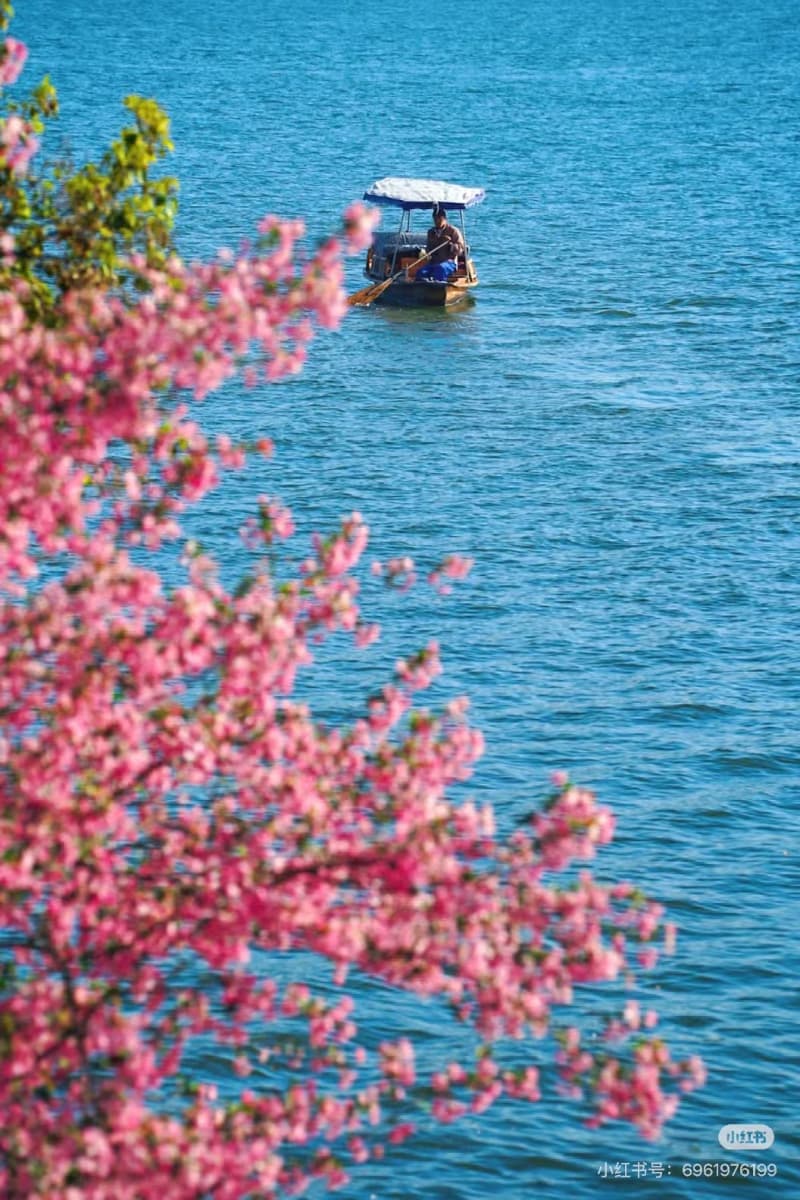
The eastern shore section: From Dali Ancient City toward Shuanglang is roughly 50–60km. You ride with Cangshan Mountain behind you and the lake to your right. Shuanglang is a Bai fishing village that has kept enough of its original structure to still read like a place rather than a backdrop — have lunch here, then sit by the water for twenty minutes before heading back. Several lakeside spots serve straightforward food at reasonable prices.
Payment along the route: Alipay and WeChat Pay work throughout. Bring some cash for small roadside vendors.
Notes: Some stretches have no shade — bring sun protection and water for summer trips. July–August is Erhai Lake's algae season; the smell near the shore is noticeable, but the cycling route itself is unaffected. Swimming in the lake is not recommended during this period.
Day 5: Three Pagodas + Cangshan Mountain
Morning — Three Pagodas of Chongsheng Temple (崇圣寺三塔): Dali's most recognized landmark. The main pagoda dates to the Tang dynasty at 70 meters; the two flanking pagodas stand at 42 meters each. Admission is ¥121, which includes the museum area. The reflection pool behind the museum gives the best angle for photographs — the crowd builds after 9am, so earlier is better here too.
Entry for international visitors: pay at the gate with cash or QR code payment. Passport entry is standard. English signage covers the main route; the museum has bilingual panels.
Afternoon — Cangshan Mountain (苍山): The mountain range behind Dali reaches 4,122m at its peak. For a half-day, the Zhonghe Cable Car (中和索道) is the practical option — single ride ¥58, return about ¥100. The mid-mountain viewing area gives a clean sightline down to Erhai Lake across the valley. A short walking trail connects the cable car stations. Plan 2–3 hours.
There's no need to hike to the summit during this itinerary. The cable car position already delivers the lake-and-mountain perspective that explains Dali's geography.
Day 6: Train to Lijiang, Old Town Evening
Morning — Dali to Lijiang: High-speed rail from Dali to Lijiang takes about one hour; second-class tickets run ¥55–75. Lijiang Station is about 12km from the Old Town — DiDi runs ¥25–35.
Afternoon — Lijiang Old Town (丽江古城): Lijiang Old Town is a UNESCO World Cultural Heritage Site. There is an ¥80 maintenance fee at the main entrance — charged once, valid for your entire stay with unlimited re-entry.
Start at Sifang Square (四方街), the center of the Old Town, and walk from there into the surrounding lanes. The Naxi-style rooflines and the stone-paved water channels threading through the residential alleys are what make Lijiang architecturally distinct from Dali. Worth slowing down for.
Lion Hill Park (狮子山公园) gives the standard elevated view over the Old Town rooftops. The climb takes 15–20 minutes; the view is what most photographs of Lijiang use as their reference point.
More on the city: Lijiang City Guide
Evening — Sifang Square after dark: Naxi community dancing (打跳, dǎ tiào) happens in Sifang Square most evenings, typically around 8pm. Anyone can join. It costs nothing. This is a circle of mostly local residents doing traditional group dances — not a performance arranged for visitors. Ten minutes of joining in tells you something about Lijiang that the day's sightseeing doesn't.
Day 7: Jade Dragon Snow Mountain
This is the most physically demanding day of the itinerary. Plan accordingly.
Getting there: Charter a car from the Old Town to the scenic area — about one hour each way, roughly ¥150–200 including waiting time. Tourist buses run as well but on fixed schedules. Depart by 8am: afternoon cloud cover significantly reduces summit visibility, and the clearest conditions are before 10–11am.
Book the cable car in advance: The Big Gondola (大索道) climbs to 4,506m above sea level. Tickets cost approximately ¥135 per person. Book through the official scenic area app or Trip.com at least one to two weeks ahead during peak months — this frequently sells out, and walk-up tickets at the gate are not guaranteed.
Additional gondola options:
- Spruce Meadow Gondola (云杉坪索道, 3,100m): ¥40 per ride; a solid lower-altitude alternative if you want to limit altitude exposure
- Yak Meadow Gondola (牦牛坪索道): ¥40 per ride
- Most visitors pick one or two; all three in a day is possible but tiring
Altitude: 4,506m is real altitude for most visitors arriving from Kunming and Dali at 1,900m. Headache, elevated heart rate, and mild shortness of breath are common. Oxygen bags are sold at the scenic area (¥30–50) and are worth carrying. People with heart conditions or hypertension should consult a doctor before committing to the Big Gondola — Spruce Meadow at 3,100m is a meaningful alternative.
Blue Moon Valley (蓝月谷): A 15–20 minute walk from the main gate brings you to a glacial meltwater lake that runs blue-green depending on the light. Included with the main scenic area ticket. Good spot to sit and recover after the gondola descent.
Full details: Jade Dragon Snow Mountain
Day 8: Tiger Leaping Gorge Day Trip
Tiger Leaping Gorge (虎跳峡) is about 90km from Lijiang. Budget a full day.
Getting there: Join a local day tour from the Old Town (¥150–200 per person, transport included) or charter a car (¥200–250 return). Depart by 8am to have enough time at the gorge.
Upper gorge: From the parking area, a 15-minute walk brings you to the closest viewpoint of the Jinsha River (金沙江) passing through an 18-meter-wide channel at the gorge's base. This is what Tiger Leaping Gorge looks like — the river compressed into a slot of rock, audible before it's visible, carrying enough force to feel the air move. No specialist gear needed; regular walking shoes work fine.
Full trek (not in this itinerary): The full trail from the trailhead to the middle gorge runs about 22km and needs at least two days with an overnight at a guesthouse en route. This is Yunnan's most demanding single trek. It doesn't fit the day-trip format here, but worth planning as a separate trip if trekking is the priority.
Return to Lijiang by late afternoon — plan on a 4–5pm arrival. After two demanding days back to back, this is a good night to eat somewhere proper instead of grabbing something fast.
Payment at the gorge: Alipay and WeChat Pay accepted. English signage covers the main route.
Full details: Tiger Leaping Gorge
Day 9: Shuhe Half-Day + Naxi Music Evening
A lighter day. Use it.
Morning/Afternoon — Shuhe (束河古镇): Shuhe is 4km from Lijiang Old Town — ¥15–20 by taxi. It's a smaller settlement with fewer visitors and no amplified music. The Tea Horse Road relay station (茶马古道) that once made Shuhe a staging post for trade caravans is still readable in the layout of the old trading plaza and the preserved stone road sections.
Walk the main plaza, look at the Naxi courtyard houses, and stop at the horse-riding area on the edge of town if you want low-intensity outdoor activity (¥50–100 for a short ride). Half a day is enough — head back to Lijiang Old Town by mid-afternoon for lunch.
Evening — Naxi Music Performance: The Naxi music ensemble (纳西古乐会) runs regular performances in Lijiang Old Town. Tickets run ¥120–160 per person; shows typically last about 90 minutes, starting around 8pm. Book one to two days ahead at the venue box office or on Trip.com.
Naxi traditional music is considered to preserve elements of Tang- and Song-dynasty Chinese court music that survived in Yunnan after disappearing elsewhere. The ensemble is typically made up of elderly Naxi musicians — average age well over 60. The performance is slow and formal by most live-music standards. That's the point.
Day 10: Departure
Lijiang has its own airport — flights connect to Kunming (45 min), Chengdu (1 hr), and select other destinations. High-speed rail back to Kunming takes about 2.5 hours and gives more flexibility on departure time.
If your flight is afternoon or evening: Black Dragon Pool Park (黑龙潭, free entry) offers a clear Snow Mountain reflection shot on calm mornings — a 20-minute walk from the Old Town.
Before leaving: check any purchased goods — copper crafts, jade pieces, or dried food items — against airline restrictions on liquids and powders. Mountain-area purchases sometimes need attention at security.
Getting There and Getting Around
Intercity:
- Kunming Changshui Airport → city center: Subway Line 6, ~40 min, ¥6
- Kunming → Dali: Kunming South Station, high-speed rail ~1.5–2 hrs, ¥75–95 (second class)
- Dali → Lijiang: high-speed rail ~1 hr, ¥55–75 (second class)
- Lijiang → Kunming: high-speed rail ~2.5 hrs, or direct flight ~45 min
Book train tickets on 12306 (register with your passport) or Trip.com English version. Buying a few days ahead is usually sufficient; Golden Week and Chinese New Year require significantly earlier booking.
Within cities:
- Kunming: Subway covers the main areas; DiDi has an English interface
- Dali: Walking inside the Old Town; DiDi or bike rental for distances; tourist buses run between major sights
- Lijiang: Old Town is vehicle-free — everything on foot. Taxis and DiDi work for reaching scenic areas outside town
Practical Information
| Item | Details |
|---|---|
| Daily budget (mid-range) | ¥600–1,200 per person (accommodation, food, transport, tickets) |
| Visa | China tourist visa (L-class) or visa-free entry; passport valid ≥ 6 months required |
| Best months | March–May, September–November; avoid Golden Week dates |
| Payment | Alipay International (bind a foreign card before arrival) covers 90%+ of situations; carry some cash |
| Language | English coverage is lower in Yunnan than in major eastern cities; a translation app is a practical necessity |
| Altitude | Lijiang 2,400m; Snow Mountain cable car 4,506m; avoid strenuous activity in first 1–2 days after arriving in Lijiang |
| Internet | Google, WhatsApp, and most foreign apps don't work on Chinese networks without preparation → Internet Access in China |
| Visa reference | China Visa Guide |
Book These in Advance
- Jade Dragon Snow Mountain Big Gondola — book 1–2 weeks ahead on the official app or Trip.com; peak season sells out and there is no walk-up guarantee
- High-speed rail tickets (Kunming → Dali → Lijiang) — a few days ahead is normally enough; book 2+ weeks ahead for Golden Week
- Naxi music performance — 1–2 days ahead at the box office or Trip.com; limited performance slots
- Stone Forest tickets — 2–3 days ahead during peak season via Trip.com with your passport number
- Accommodation in Dali Ancient City — limited rooms inside the walls; book 1 week+ ahead during spring and October
Tips and Tricks
- High-speed rail beats flying within Yunnan. Kunming to Dali by flight requires airport transfer on both ends; the train drops you closer to the Old Town and costs a fraction of the fare. No contest.
- Stay inside Dali Ancient City. The vehicle restrictions that complicate logistics are also why evenings there feel different — you can walk anywhere without checking traffic or calling a car.
- Start Snow Mountain day early. Cloud build-up after noon is consistent. Departure by 8am and summit arrival before 10–11am gives the best visibility by a significant margin.
- Hydrate and limit alcohol in Lijiang for the first two days. At 2,400m, the combination of altitude and alcohol hits faster than expected. Yunnan pu-erh tea is worth trying — just save the rice wine for later in the stay.
- Check weather the night before Erhai cycling. Yunnan gets afternoon rain showers; a light rain jacket (available in Dali Ancient City for ¥20–30) covers it. Start early and you'll generally outrun the afternoon rain.
- Bring a translation app with offline Chinese loaded. Staff English in Yunnan is lower than in Beijing or Shanghai. In markets, smaller restaurants, and when negotiating charter car prices, the app is the actual communication tool.
- Shuhe gets quiet after 4pm. Dinner options thin out — head back to Lijiang Old Town for the evening meal.
What to Cut If You're Short on Time
Can remove:
- Stone Forest (Day 2): If you only have eight days, cut Kunming to one night and move to Dali on Day 2. Stone Forest is worth a full trip on its own — don't rush it into an already tight schedule.
- Cangshan cable car (Day 5 afternoon): If Three Pagodas takes longer than planned or energy runs low, skip the cable car. The pagodas are the priority.
- Shuhe (Day 9 morning): If Lijiang Old Town still has areas you haven't covered, trade Shuhe for a morning in town. Keep the Naxi music evening.
Keep these:
- Jade Dragon Snow Mountain: The only point in this itinerary where the full scale of Yunnan's geography becomes visible. Nothing substitutes for it.
- Erhai Lake cycling: A half-day version is not the same. If time is genuinely short, swap cycling for a lake boat tour (¥50 per person, 1.5 hrs) — a different experience, but it gives you Erhai without the full-day commitment. The cycling cannot be replicated.
- Naxi music performance: Ninety minutes of time investment. Don't skip it because it seems optional — it isn't replicable outside this context.
Shortened 8-day version: Remove Stone Forest; compress Kunming to one night; everything else stays. Or remove Stone Forest and compress Dali to two days (cycling plus Three Pagodas, no Cangshan cable car), arriving in Lijiang one day earlier.
Before You Go Checklist
- □ Visa / visa-free status verified — check your nationality's current eligibility → China Visa Guide
- □ 12306 or Trip.com account set up — register with passport details; buy rail tickets for Kunming–Dali and Dali–Lijiang
- □ Jade Dragon Snow Mountain Big Gondola booked — 1–2 weeks ahead via official app or Trip.com
- □ Alipay International set up — link a foreign credit card before you land; this is harder to complete from inside China
- □ Internet access sorted — install and test before departure → Internet Access in China
- □ Translation app with offline Chinese language pack downloaded — download the Chinese file on your home network before you leave
- □ Naxi music performance ticket — book 1–2 days before the performance date
- □ Travel insurance — check that altitude-related incidents are covered; travelers with heart conditions or hypertension should consult a doctor before booking the Snow Mountain gondola
FAQ
Do I need Chinese to manage this trip? No, but a translation app is a practical necessity rather than a nice-to-have. Major scenic area signage is bilingual; restaurants in both Old Towns commonly have photo menus or English menus; DiDi has an English interface. The gap shows up when negotiating charter car prices, shopping in markets, or talking to older vendors — for all of these, phone-based translation is more reliable than hoping for English.
How serious is the altitude on Snow Mountain day? At 4,506m, most people get some combination of headache, elevated heart rate, and shortness of breath during and shortly after the gondola ride. Staying calm, moving slowly, and having an oxygen bag available handles this for most visitors. The risk is meaningfully higher for people with pre-existing heart conditions or hypertension — consult a doctor beforehand. A solid alternative: the Spruce Meadow gondola at 3,100m gives mountain views without the full altitude exposure.
Is Yunnan vegetarian-friendly? More than most of China. Bai and Naxi cuisine both use vegetables heavily, and dedicated vegetarian restaurants exist in both Dali and Lijiang Old Towns. Mushroom dishes are a regional specialty — June through September brings the best variety. Communicating "no meat" (bù yào ròu, 不要肉) with a translation app handles most restaurant situations.
Is July a viable month to visit? Yes, with adjusted expectations. Yunnan's rainy season typically delivers short afternoon bursts rather than all-day rain; starting outdoor activities early avoids most of it. The trade-offs: Erhai Lake algae season makes the shoreline smell noticeable, the lower gorge sections of Tiger Leaping Gorge may close due to high water, and crowds are thinner while accommodation prices are lower than peak season. Not the worst time to go — just not the easiest.
Ten days in Yunnan leaves something unfinished in each city, and that's by design. Dali is worth a month on its own; Lijiang in the off-season is a different place than the one in these pages. For a first trip: lock in the Snow Mountain and the Erhai cycling day, put the Naxi music performance on the calendar, and let the rest breathe. The afternoons with nothing scheduled are often the ones that stay with you.