Last updated: May 2026. Ticket prices, train schedules, and reservation systems can change. Verify before booking.
East China's four-city loop has a logic to it that takes about ten minutes to understand. Shanghai is the entry point and the exit — the international airport, the most English-friendly environment, the city that makes the rest of the trip easier to navigate after you've spent a few days finding your footing. Hangzhou is one hour away by train and gives you a lake that people have been writing about for a thousand years, plus a tea-growing valley that still functions exactly the way it did before tourism arrived. Suzhou fits two days: classical gardens and a canal district that hasn't been fully gentrified. Nanjing carries more historical weight per square kilometer than anywhere else on the route — the Ming dynasty city wall, a UNESCO mausoleum complex, and a memorial that shouldn't be skipped. The whole circuit runs on high-speed rail; the longest single leg is ninety minutes. Two weeks is the right amount of time to do all four without feeling like you're racing.
Is This Right For You
- ✅ Go if you're visiting East China for the first time and want to cover the full corridor properly. You have fourteen days, a valid visa (or visa-free entry), and you're comfortable with a city-switching itinerary — this route changes base every two to four days.
- ✅ Good fit for people who want variety in a single trip. Shanghai is one kind of China; Suzhou's classical gardens are another; Nanjing's layered history is a third. If you want contrast rather than depth in one place, this delivers it.
- ❌ Skip it if you have ten days or fewer. Four cities in ten days turns every stop into a highlights reel. Better to drop Suzhou (day-trippable from Shanghai) and do the other three properly, or do Shanghai plus one other city at a slower pace.
- ❌ Not the right fit for travelers who dislike frequent hotel changes or packing and unpacking. This itinerary moves base four times over two weeks.
Route Overview
| Days | City | Daily theme | Intercity transport |
|---|---|---|---|
| Day 1 | Shanghai | Land, Bund first evening | — |
| Day 2 | Shanghai | Yu Garden + Old City, French Concession afternoon | Subway / walking |
| Day 3 | Shanghai | Pudong skyline, People's Square | Subway |
| Day 4 | Shanghai | Suzhou Creek arts district, last Shanghai evening | Subway / walking |
| Day 5 | Hangzhou | Train transfer, West Lake first afternoon | High-speed rail, ~1 hr |
| Day 6 | Hangzhou | West Lake full day — boat, Su Causeway, Leifeng Pagoda | Cycling / walking |
| Day 7 | Hangzhou | Longjing tea village + Lingyin Temple | Taxi / bus |
| Day 8 | Suzhou | Train transfer, Humble Administrator's Garden | High-speed rail, ~30–40 min |
| Day 9 | Suzhou | Tiger Hill + Pingjiang Road canal district | City transport |
| Day 10 | Nanjing | Train transfer, Sun Yat-sen Mausoleum afternoon | High-speed rail, ~1.5 hrs |
| Day 11 | Nanjing | Ming City Wall + Nanjing Massacre Memorial | Subway / city transport |
| Day 12 | Nanjing | Confucius Temple, Qinhuai River, Presidential Palace | Walking / subway |
| Day 13 | Nanjing → Shanghai | Return to Shanghai for departure | High-speed rail, ~1.5 hrs |
| Day 14 | Departure | — | International flight |
Why the days split this way: Shanghai gets four days because it's genuinely large and geographically spread out. The Bund, the French Concession, Pudong, and the Suzhou Creek district are each distinct neighborhoods with different atmospheres — combining two in a day works, but three feels rushed. Four days means you can take mornings slowly and still cover the main areas without feeling like you're always moving.
Hangzhou gets three days because West Lake cannot be done well in an afternoon. The lake circuit is about 15 kilometers; doing it properly means a boat on the water, time on the Su Causeway on foot or by bike, and the Leifeng Pagoda viewpoint — those three things together take a full day. Day 7 (tea village and Lingyin Temple) is a completely different experience from Day 6 and shouldn't be combined with it.
Suzhou gets two days. The classical gardens are concentrated enough in the old city to walk between them, but each garden needs an hour or two to absorb properly. Two days is enough; three would be slow.
Nanjing gets three days because the historical sites each have significant weight. Sun Yat-sen Mausoleum (中山陵), Zhonghua Gate (中华门), and the Confucius Temple district are each a half-day at minimum. The Nanjing Massacre Memorial is not a site to rush through and benefits from having its own afternoon.
Budget (mid-range, per person, excluding international flights): ¥12,000–22,000, covering trains, accommodation, meals, and entrance fees. Shanghai accommodation runs significantly higher than the other three cities — mid-range hotels near the French Concession or Bund area cost ¥500–800 per night.
Best months: March–April (spring blossom, West Lake at its best) and October–November (autumn foliage, comfortable temperatures throughout). Avoid July–August — East China summer heat and humidity are serious, and Shanghai's apparent temperature regularly exceeds 40°C. Avoid Golden Week (May 1–7 and October 1–7).
Difficulty: Low to moderate. City infrastructure throughout is excellent, subway systems are comprehensive, and English signage in this region is the best in mainland China. The main challenge is logistics — four city changes, multiple advance reservations, and the need to stay organized with tickets and bookings.
Day 1: Land in Shanghai, Bund First Evening
Getting in: Shanghai Pudong International Airport (浦东国际机场) is about 40km from the city center. Subway Line 2 connects to the center in roughly one hour for ¥7 — straightforward but slow. The Maglev train (磁浮) covers the airport-to-Longyang Road stretch in about eight minutes for ¥50, then subway Line 2 continues into the city. Taxis run ¥150–200 from Pudong.
Hongqiao Airport (虹桥机场) is much closer — Subway Lines 2 and 10 connect to the center in 30–40 minutes.
Recommended base for the first four nights: French Concession (法租界) or People's Square (人民广场) area. Both sit on multiple subway lines and give access to all four days' destinations without changing hotels.
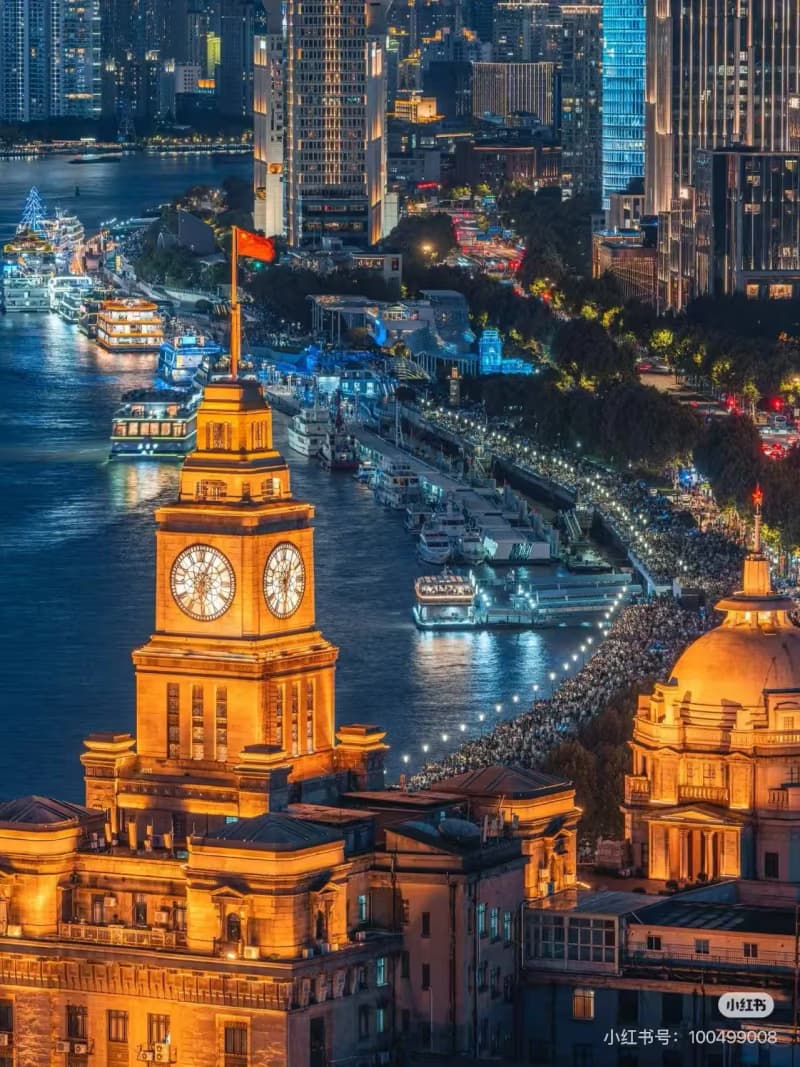
Evening — The Bund: Arrive at the Bund (外滩) before sunset. The row of 1920s–30s banking and trading buildings along the western shore of the Huangpu River faces the Pudong skyline directly across the water — the Shanghai Tower, Jin Mao Tower, and the SWFC building lit up at night against the Oriental Pearl TV tower. Standing between the two waterfronts with both illuminated is the image most associated with Shanghai, and it earns that status. Walk north along the riverfront promenade, then cross the river by ferry (¥2, runs until midnight) for the reverse angle from Pudong.
Dinner: the streets north of People's Square toward Zhapu Road (乍浦路) have Shanghai-style local restaurants at normal prices. Braised pork belly (红烧肉), soup dumplings (小笼包), and pan-fried dumplings (生煎馒头) are all easy to find here with photo menus or street-window displays.
Day 2: Yu Garden + Old City, French Concession
Morning — Yu Garden and the Old City: Yu Garden (豫园) is a Ming-dynasty private garden preserved within Shanghai's old city core. Tickets cost ¥40; arrive before 9am to get ahead of the main crowds. The garden itself takes 1.5–2 hours. The surrounding Yuyuan Bazaar (豫园商城) area has concentrated street food — soup dumplings at Nanxiang Mantou Dian (南翔馒头店) are a reliable option (¥25–40 for a bamboo steamer). Alipay International and WeChat Pay work throughout; some stalls also take cash.
International visitors buy tickets at the gate or via Trip.com with a passport number. English signage inside the garden covers the main route; staff English is limited.
Afternoon — French Concession: Take Subway Line 10 to Shaanxi South Road (陕西南路) station. The French Concession walkable circuit:
- Wukang Road (武康路): A one-kilometer stretch of 1920s–30s Art Deco apartments and consulate buildings under a canopy of French plane trees. This is the most photographed street in Shanghai. Walk it once, double back, spend an hour.
- Tianzifang (田子坊): A converted shikumen (石库门) lane system filled with independent design shops, cafés, and small galleries. English menus throughout; Alipay payments standard. Entry is free. Good for mid-afternoon coffee and browsing.
Evening: eat dinner in the French Concession. The neighborhood has restaurants ranging from local Shanghainese to international options at every price point. Huaihai Road (淮海路) has higher-end choices; the streets perpendicular to it are cheaper.
Day 3: Pudong — The Other Shanghai
Morning — Shanghai Museum or MoCA: People's Square (人民广场) area has two worthwhile options depending on interest. Shanghai Museum (上海博物馆) is free but requires advance reservation (official app or website, passport registration, closed Mondays). The collection — bronzeware, ceramics, calligraphy, and classical painting — is among the best in China. Allow 2–3 hours. The Museum of Contemporary Art Shanghai (MoCA, 上海当代艺术馆) runs ¥35–60 and has rotating exhibitions; no advance booking required.
Afternoon — Lujiazui Skyline, Pudong: Subway Line 2 to Lujiazui (陆家嘴) station. From the exit, the three towers are immediately visible: Shanghai Tower (上海中心大厦, 632m), the SWFC (环球金融中心, the "bottle opener"), and Jin Mao Tower (金茂大厦). Recommendation: go up one, photograph the others.
Shanghai Tower observation deck (floors 118–119) runs ¥130–160 per person and offers the highest and most complete panoramic view of the city. Buy tickets in advance on the official WeChat mini-program or at the desk — no passport required for the observation deck, but bring one as a backup. English signage and staff English are both good here.
The free elevated walkway between Lujiazui metro exits gives a ground-level view of all three towers together — good for photographs without spending on entry.
Evening: Return by ferry from Pudong to the Bund side (¥2) and walk along the Bund at night. The western buildings are lit; the eastern towers are lit. This is the second best version of the Bund, with the day's skyline still fresh in memory.
Day 4: Suzhou Creek District, Last Shanghai Evening
Morning — M50 and Suzhou Creek: M50 (莫干山路50号) is a cluster of converted industrial buildings along Suzhou Creek that now houses commercial galleries and artists' studios. Entry to the complex is free; individual exhibitions vary. Not every gallery will have something worth seeing on any given day — this is a wander rather than a destination. The creek-side walk along Suzhou Creek (苏州河) connects several converted warehouse districts and is a useful one-hour circuit.
Afternoon — Anfu Road and Jing'an District: Anfu Road (安福路) sits one street east of the Shanghai Drama Arts Centre and is the least tourist-facing section of the French Concession. Independent bookshops, small cafés, boutique clothing stores, and a low-key neighborhood feel. This is the right place to spend a final Shanghai afternoon: walk slowly, sit in a coffee shop, do very little. The city's energy is easier to feel when you're not chasing anything.
Day 5: Train to Hangzhou, West Lake First Afternoon
Morning — Shanghai Hongqiao to Hangzhou: High-speed rail from Shanghai Hongqiao (上海虹桥) to Hangzhou East (杭州东) takes about one hour; second-class tickets run ¥73–78. Book on 12306 (passport registration required) or Trip.com English version. Arrive Hangzhou East Station, then Subway Line 1 or 4 to the West Lake area (around 20–30 minutes).
Stay near the West Lake's eastern shore — Hubin Road (湖滨路) or Nanshan Road (南山路) area puts the lake five to ten minutes on foot and gives easy access to both the lake circuit and the southern neighborhoods.
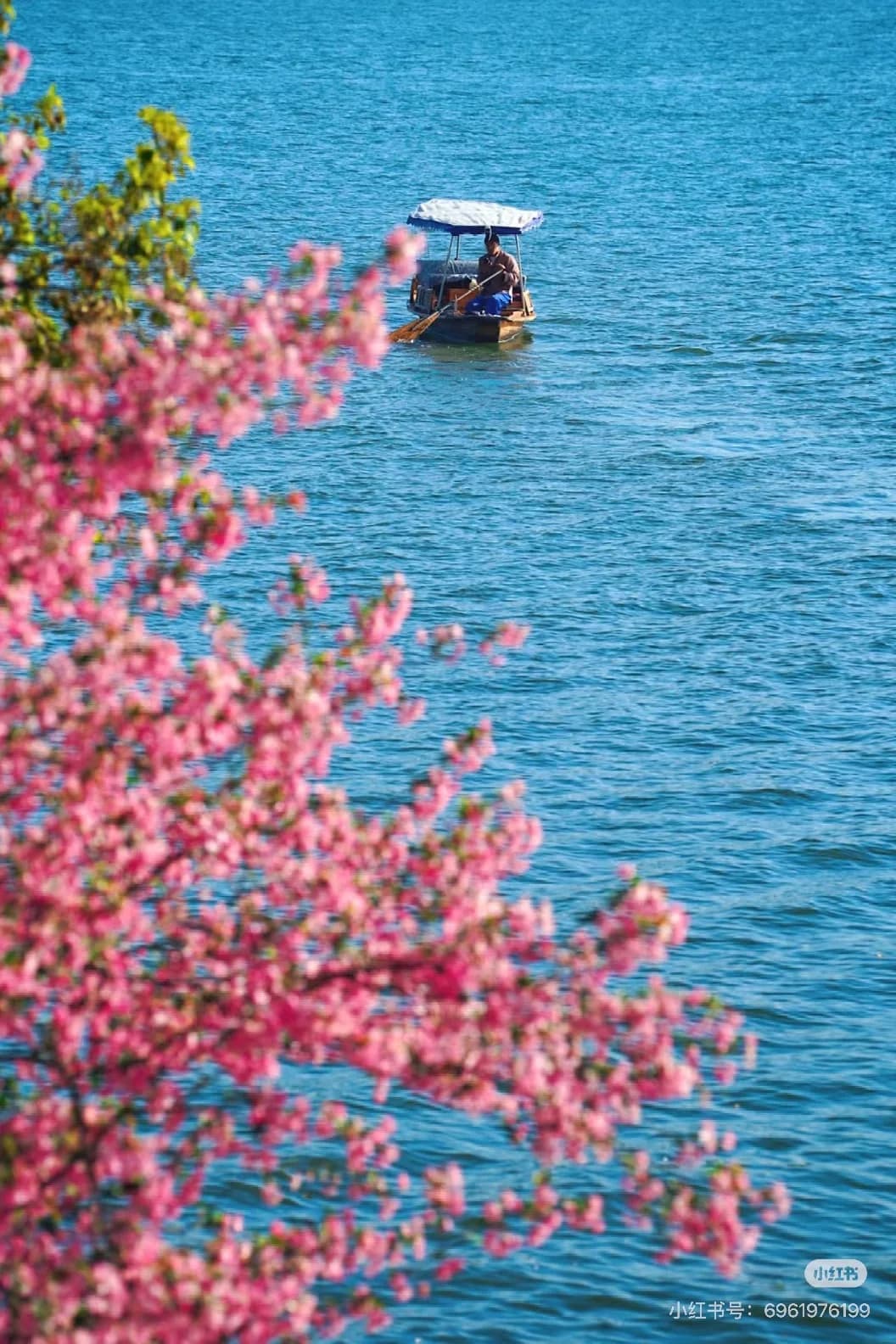
Afternoon — West Lake first walk: Walk to the lake and pick a direction. Don't try to cover all of it today. West Lake (西湖) is approximately 3.3km north-to-south and 2.8km east-to-west — larger than photographs suggest. Walk one section of the Su Causeway (苏堤) to get the spatial orientation right: the causeway runs straight across the lake with water on both sides, and the mountains visible to the south and west give the setting its specific character. One hour walking is enough for a first visit.
Evening — Hefang Street and Hangzhou cuisine: Hefang Street (河坊街) is Hangzhou's main traditional commercial street, with consolidated local food options. West Lake Fish in Sweet-and-Sour Sauce (西湖醋鱼), Dongpo Pork (东坡肉), and Dragon Well Shrimp (龙井虾仁) are the core Hangzhou dishes. A sit-down restaurant in this area runs ¥80–150 per person. Louwailou (楼外楼) is the most famous option — expensive and often crowded, worth it if you book ahead; the side streets have alternatives at lower prices.
Day 6: West Lake Full Day
Don't schedule anything outside the West Lake area today.
Morning — Boat on the lake: West Lake boat options:
- Shared scenic cruise (官方游览船): fixed route hitting Three Pools Mirroring the Moon (三潭印月) and Lakeside Pavilion (湖心亭), roughly ¥45–85 per person. Buy tickets at the ferry terminal or on Trip.com.
- Rented rowboat (手划船): ¥80–120 per hour for a small boat with no fixed route. Better if you want to drift around without schedule pressure.
Alipay International works at most ferry terminals. Some terminals also accept Visa/Mastercard at the counter — not guaranteed; Alipay is more reliable.
Afternoon — Su Causeway + Leifeng Pagoda: Walk or cycle the full Su Causeway (苏堤, 2.8km). Shared bikes (共享单车) are available lakeside; scan with Alipay. The causeway has six arched bridges and consistent views across the lake in both directions — this is the walk that explains West Lake's reputation.
Leifeng Pagoda (雷峰塔, ¥45) stands on the southern shore. The original collapsed in 1924; the current structure was rebuilt in 2002 over the original foundations, which are visible in a basement exhibition. The top-floor deck gives the best elevated view of the lake, the Su Causeway, and the surrounding hills. Elevator available; no serious climbing required.
West Lake scenic area English signage is comprehensive. The main lake circuit is fully navigable without Chinese language ability.
Day 7: Longjing Tea Village + Lingyin Temple
Morning — Longjing Village (龙井村): Dragon Well (Longjing, 龙井) tea grows in the hills southwest of West Lake, about 20 minutes by taxi (¥25–35) from the lake area. Meijiawu (梅家坞) and Longjing Village are the two main areas. March–April is the pre-Qingming (明前) picking season — the highest-grade and most expensive Longjing; visiting during this period means you can walk through active tea fields and watch picking in progress.
Expect persistent offers to taste and buy. Fixed-price shops with posted rates are more reliable for purchasing; tasting without buying is generally accepted. Basic communication about tea type and price works fine with a translation app. Budget ¥50–300/50g depending on grade and season.
Afternoon — Lingyin Temple (灵隐寺): One of China's most significant Buddhist temple complexes, dating to 328 CE. The combined ticket covers the Feilai Peak (飞来峰) stone carvings (Tang–Song dynasty Buddhist relief sculptures carved into cliff faces) and the temple complex itself — roughly ¥75–80 total. Allow 1.5–2 hours.
Dress modestly for the temple — shoulders and knees covered. The conventional entry sequence is left gate, exit right gate. English signage covers the main route; an English audio guide app is available via QR code at the entrance.
Day 8: Train to Suzhou, Humble Administrator's Garden
Morning — Hangzhou East to Suzhou: Hangzhou East to Suzhou runs about 1–1.5 hours (some services route through Shanghai, adding time). Second-class tickets run ¥60–90. Suzhou Station (老站) or Suzhou North (苏州北站) — check which station your train uses. The old city gardens are most accessible from Suzhou Station via taxi (¥20–30).
Stay in Suzhou's old city area — Pingjiang Road (平江路) or Guanqian Street (观前街) neighborhoods put you within walking distance of most gardens.
Afternoon — Humble Administrator's Garden (拙政园): China's largest and most studied classical garden. Admission ¥90 (higher during peak periods). The garden divides into east, central, and west sections; the central section — the Fragrant Isle (荷风四面亭), the remote fragrance hall (远香堂), and the lotus pond — is the core. Allow 2–3 hours minimum; the layout rewards slow movement rather than a fast circuit.
Buy tickets via the official app or Trip.com with a passport number — advance purchase avoids queues during peak season. Afternoon entry (after 2pm) has better light for the water sections and slightly smaller crowds than morning.
English guide maps are available free at the entrance. Audio guides are available in English for ¥30 (device rental). Staff English is limited; the maps are sufficient for navigation.
Day 9: Tiger Hill + Pingjiang Road
Morning — Tiger Hill (虎丘): Suzhou's oldest scenic site. Tiger Hill contains the leaning Cloud Rock Pagoda (云岩寺塔), which predates the Leaning Tower of Pisa by about three centuries and has a 2.3-degree tilt. Beyond the pagoda, the hill has the legendary burial site of King Helü of Wu, a 10,000-person arena carved into the rock face, and temple structures on multiple levels. Admission ¥60; allow 1.5–2 hours. Quieter than the gardens, with more natural landscape.
Taxi from the old city runs ¥25–35. English signage covers the main trail.
Afternoon — Pingjiang Road (平江路): Pingjiang Road is Suzhou's best-preserved historic canal street — about 1.5 kilometers of Ming and Qing dynasty residential buildings running parallel to Pingjiang River, connected by stone bridges. Walk the full length slowly (one hour), then double back through the side alleys. The small canal boats (¥40–60 per person, 20 minutes) offer a water-level view of the buildings and bridges from inside the canal.
Suzhou-style pastries — rice cakes, osmanthus wine rice balls, and almond cookies — are available from street-level shops along the road. Prices are low (¥5–20 per item); point-and-pay is sufficient.
Day 10: Train to Nanjing, Mausoleum Afternoon
Morning — Suzhou to Nanjing: Suzhou to Nanjing takes about 1.5 hours by high-speed rail; second-class tickets run ¥90–120. Most services use Nanjing South Station (南京南站), which connects to the city center via Subway Line S1 or Line 3 (about 30 minutes to the center).
Stay in Gulou District (鼓楼区) or Qinhuai District (秦淮区) — central to all three days' destinations and well-served by the subway.
Afternoon — Sun Yat-sen Mausoleum (中山陵): Sun Yat-sen Mausoleum is the burial site of the founder of the Republic of China, located on the southern slope of Purple Mountain (紫金山). Entry is free but requires advance ticket reservation with passport registration — book through the official mini-program or website at least one day ahead. Golden Week and peak spring/autumn weekends require earlier booking.
The approach to the mausoleum is a straight ceremonial staircase of 392 steps rising from the memorial archway to the dome above. The climb takes 15–20 minutes at a normal pace; the view back down the axis from the top is the payoff. The chamber itself is closed to the interior but visible through glass.
Note: English signage is adequate on the main route. Staff English is limited. The mini-program for ticketing is in Chinese — Trip.com sometimes offers an English-language booking option, worth checking.
More on Nanjing: Nanjing City Guide
Day 11: Ming City Wall + Nanjing Massacre Memorial
Morning — Zhonghua Gate (中华门): The Ming dynasty city wall surrounding Nanjing is the largest surviving city wall system in the world at approximately 35 kilometers. Zhonghua Gate (中华门) is the most complete section — a castle-style fortified gate with concealed soldier vaults, ramp passages, and a clear view over the Qinhuai River. Admission ¥50; allow 1.5–2 hours. English signage is good; the gate is one of Nanjing's most foreigner-accessible historical sites.
Afternoon — Nanjing Massacre Memorial (侵华日军南京大屠杀遇难同胞纪念馆): Free entry; advance reservation required via the official website or app, with passport registration. Book at least one to two days ahead. The memorial is closed Mondays.
The exhibition documents the 1937 Nanjing Massacre — one of the most significant events of the Second Sino-Japanese War — through survivor testimony, photographic records, and archaeological evidence from excavated burial sites. Bilingual (Chinese/English) throughout. Plan 1.5–2 hours; the exhibition is dense and emotionally demanding.
Schedule the memorial in the afternoon rather than before other activities. Leave time afterward for a quiet walk or an early dinner without immediately jumping to the next thing.
Day 12: Confucius Temple, Qinhuai River, Presidential Palace
Morning — Presidential Palace (总统府): The former seat of the Republic of China government, occupying a compound that has served as an administrative center since the Ming dynasty. Admission ¥70; allow 1.5–2 hours. The exhibitions cover the Taiping Heavenly Kingdom period, the late Qing, and the Republican government through 1949. Bilingual displays are present throughout, though with varying depth. Worth visiting if the previous day's memorial created an interest in understanding modern Chinese history with more context.
Afternoon/Evening — Confucius Temple and Qinhuai River (夫子庙·秦淮河): The Confucius Temple complex (夫子庙) has a free outer area and paid sections (combined tickets around ¥60 for the inner historic buildings). The Qinhuai River waterfront beside it is the more engaging space — lanterns, food vendors, and boat tours (¥80 per person, about 30 minutes) along the historic pleasure-boat district that once defined Nanjing's cultural life.
Nanjing's signature food: salted duck (盐水鸭) and duck blood vermicelli soup (鸭血粉丝汤). The area around the Confucius Temple has multiple restaurants serving both, typically ¥30–60 per person for a full meal. English menus are more common here than elsewhere in Nanjing.
Day 13: Return to Shanghai
High-speed rail from Nanjing South (南京南站) to Shanghai Hongqiao (上海虹桥) runs about 1.5 hours; second-class tickets are ¥150–165. Book in advance.
From Hongqiao: Subway Line 2 goes directly to Pudong Airport (浦东机场) — verify your departure airport first. Hongqiao and Pudong are separate airports on opposite sides of the city; the subway journey between them is about 75–90 minutes.
If departing the following morning (Day 14), use the spare evening in Shanghai for any missed stops or simply to decompress before an international flight.
Getting There and Getting Around
Intercity rail (all second class):
- Shanghai → Hangzhou: ~1 hr, ¥73–78 (from Hongqiao Station)
- Hangzhou → Suzhou: ~1–1.5 hrs, ¥60–90 (some services via Shanghai)
- Suzhou → Nanjing: ~1.5 hrs, ¥90–120
- Nanjing → Shanghai: ~1.5 hrs, ¥150–165
Book all tickets on 12306 (passport registration required) or Trip.com English version. Buy rail tickets three to five days ahead for normal travel; two to three weeks ahead for Golden Week or spring festival.
Within cities:
- Shanghai: Subway Lines 1–2–10 cover all this itinerary's destinations. Alipay and Apple Pay scan directly at turnstiles (no card needed). DiDi works with an English interface.
- Hangzhou: West Lake area is walkable and cyclable. City subway exists but is less necessary for this itinerary. DiDi for out-of-area trips (tea village, Lingyin).
- Suzhou: Old city walking and taxis. No subway needed for the main gardens.
- Nanjing: Subway Lines 1–2–3 cover Sun Yat-sen Mausoleum, city center, and the southern historical area. Purple Mountain has an internal electric shuttle (¥30) within the scenic zone.
Practical Information
| Item | Details |
|---|---|
| Daily budget (mid-range) | ¥900–1,800 per person (Shanghai highest, Suzhou lowest) |
| Visa | China tourist visa (L-class) or visa-free entry; passport valid ≥ 6 months |
| Best months | March–April (spring blossom); October–November (autumn foliage) |
| Payment | Alipay International (bind foreign card before arrival) covers most situations; Shanghai also has broader acceptance of Visa/Mastercard at hotels and higher-end restaurants |
| Language | Shanghai has the best English coverage in mainland China; Hangzhou's main sights are well-signed; Suzhou and Nanjing require a translation app at street level |
| Internet | Google, WhatsApp, and most foreign social apps require preparation before arrival → Internet Access in China |
| Visa reference | China Visa Guide |
Book These in Advance
- Shanghai Museum — free but requires advance reservation with passport; closed Mondays; book 1–2 days ahead, longer during peak periods
- Sun Yat-sen Mausoleum — free, advance reservation with passport required; book at least 1 day ahead, earlier during Golden Week
- Nanjing Massacre Memorial — free, advance reservation with passport required; 1–2 days ahead minimum; closed Mondays
- Humble Administrator's Garden — ticketed; advance purchase via Trip.com with passport number avoids queues during March–May and October
- High-speed rail, all legs — 3–5 days ahead for normal travel; 2–3 weeks ahead for Golden Week and spring peak
- Hangzhou West Lake accommodation — book 2–3 weeks ahead for late March to mid-April (peak blossom season); prices rise significantly during this period
Tips and Tricks
- Stay in the same Shanghai hotel for four nights. Choosing a central location (French Concession or People's Square) and not moving means all four days start without the friction of checkout and transit. The saving in energy is significant over a two-week trip.
- Alipay International handles 95% of this route. Set it up before you leave home — link a foreign Visa or Mastercard to Alipay International while on your home network. Inside China, the setup process is noticeably harder. Shanghai also has broader international card acceptance at hotels and restaurants; Suzhou and Nanjing less so.
- West Lake on a weekday if possible. Hangzhou is one of Shanghai's closest getaways, and West Lake weekends are crowded in a way that weekdays aren't. If your schedule has flexibility, move the Hangzhou days to Tuesday–Thursday.
- Enter Suzhou's gardens in the afternoon. Morning visits bring the highest visitor counts. The afternoon light — particularly on the water features of the Humble Administrator's Garden — is also better. After 2pm, the entrance queues shorten and the internal paths are less congested.
- Nanjing's Sun Yat-sen Mausoleum: book the ticket before you arrive in Nanjing. The reservation system requires a Chinese phone number or passport registration in advance. If you wait until you're in the city and try to book same-day, the slot may already be full during peak periods.
- Build in a luggage management plan. Four city changes over fourteen days means four check-ins and check-outs. Leaving non-essential luggage at your Shanghai hotel for the first four nights and traveling with a smaller bag to Hangzhou, Suzhou, and Nanjing is worth considering if your accommodation allows luggage storage — many do.
- Translation app with offline Chinese downloaded is non-negotiable outside Shanghai. In Suzhou's lane markets and Nanjing's smaller restaurants, the translation app is the actual communication tool. Download the Chinese offline language pack before departure.
What to Cut If You're Short on Time
Can remove:
- Suzhou Creek arts district (Day 4): If the contemporary arts scene doesn't interest you, use Day 4 for a half-day side trip to Suzhou (the 30-minute train makes it easy) and keep Suzhou's two-day block for a different focus. Or simply use the day to see any Shanghai area you missed.
- Additional Suzhou gardens (Day 8 afternoon): After the Humble Administrator's Garden, adding more gardens the same afternoon often results in visual fatigue. The Tiger Hill and Pingjiang Road on Day 9 are more varied; treating them as Day 8's afternoon is a better use of energy.
- Presidential Palace (Day 12 morning): If modern political history isn't a priority, this morning opens up for extended time at the Confucius Temple area or a return to any Nanjing site that needed more time.
Keep these:
- West Lake full day (Day 6): A half-day version of West Lake leaves out the Su Causeway walk, the pagoda, or the boat — removing any one of those three changes what you understand about the place. All three together make the day.
- Nanjing Massacre Memorial: This is not a tourist attraction that can be skipped for time. It's the context that makes Nanjing legible as a city. Plan the afternoon around it.
- Longjing tea village (Day 7 morning): Most people assume this is skippable until they've done it. Walking through an active tea-picking operation in a valley that has changed very little over centuries is a different experience than anything else on this route. Keep it.
Shortened 10-day version: Drop Suzhou as a base; instead, make it a day trip from Shanghai (Day 3 or Day 4). Remove Day 13 as a travel buffer day and fly from Nanjing Lukou Airport (禄口机场) directly, which connects to many international routes. The result: Shanghai 4 nights → Hangzhou 3 nights → Nanjing 3 nights → depart from Nanjing.
Before You Go Checklist
- □ Visa / visa-free status verified — check your nationality's current entry requirements → China Visa Guide
- □ 12306 or Trip.com account set up — register with passport details; buy all intercity rail legs before departure
- □ Shanghai Museum reservation — 1–2 days ahead via official channels with passport
- □ Sun Yat-sen Mausoleum reservation — at least 1 day ahead; earlier during peak periods
- □ Nanjing Massacre Memorial reservation — 1–2 days ahead; closed Mondays
- □ Alipay International set up and tested — link a foreign card on your home network before departure
- □ Internet access sorted — install and test before leaving → Internet Access in China
- □ Translation app with offline Chinese language pack downloaded — essential for Suzhou and Nanjing at street level
- □ Accommodation booked — Hangzhou West Lake area 2–3 weeks ahead during spring blossom season (late March–mid April)
FAQ
Which city is the best entry point? Shanghai, without question. It has the best-connected international airport, the most English-friendly environment, and the infrastructure that makes arriving in a new country less disorienting. Starting anywhere else on this route and working toward Shanghai is logistically possible but harder for a first trip.
Is this route doable without Chinese language ability? Yes — with two qualifications. First, Alipay International needs to be set up before arrival. Second, a translation app with offline Chinese becomes increasingly necessary as the route moves from Shanghai toward Suzhou and Nanjing. The itinerary is fully manageable; it just requires more phone-based communication outside of Shanghai.
What's the best time to see West Lake? Late March to mid-April, when the peach blossoms along the Su Causeway and the willow trees are both at their peak. This is also the period when Longjing tea's first flush (明前茶) is picked — the timing aligns well. The downside: this is peak season, and Hangzhou weekends become crowded. October–November is the second-best option — less crowded, autumn foliage on the hills, and comfortable temperatures.
Can Suzhou be done as a day trip from Shanghai instead? Yes. Shanghai to Suzhou is 30 minutes by high-speed rail — viable as a day trip if you prioritize the Humble Administrator's Garden and Pingjiang Road. The trade-off is losing Tiger Hill and the slower pace of an overnight stay. If the two-week schedule needs shortening, this is the cleanest cut.
East China in fourteen days doesn't exhaust any of the four cities — it gives each one enough time to make an impression. Shanghai's back streets, the ones you find by walking past the Bund and into the residential blocks behind the French Concession, take more than four days to start reading properly. West Lake has three causeway routes and most visitors only walk one. Suzhou has ten classical gardens and this itinerary covers two. Nanjing's Ming imperial architecture extends well beyond Zhonghua Gate. The loop works as a starting point, which is different from saying it covers everything — it doesn't, and it shouldn't try to.