Last updated: May 2026. Expo details subject to change—verify with official announcements.
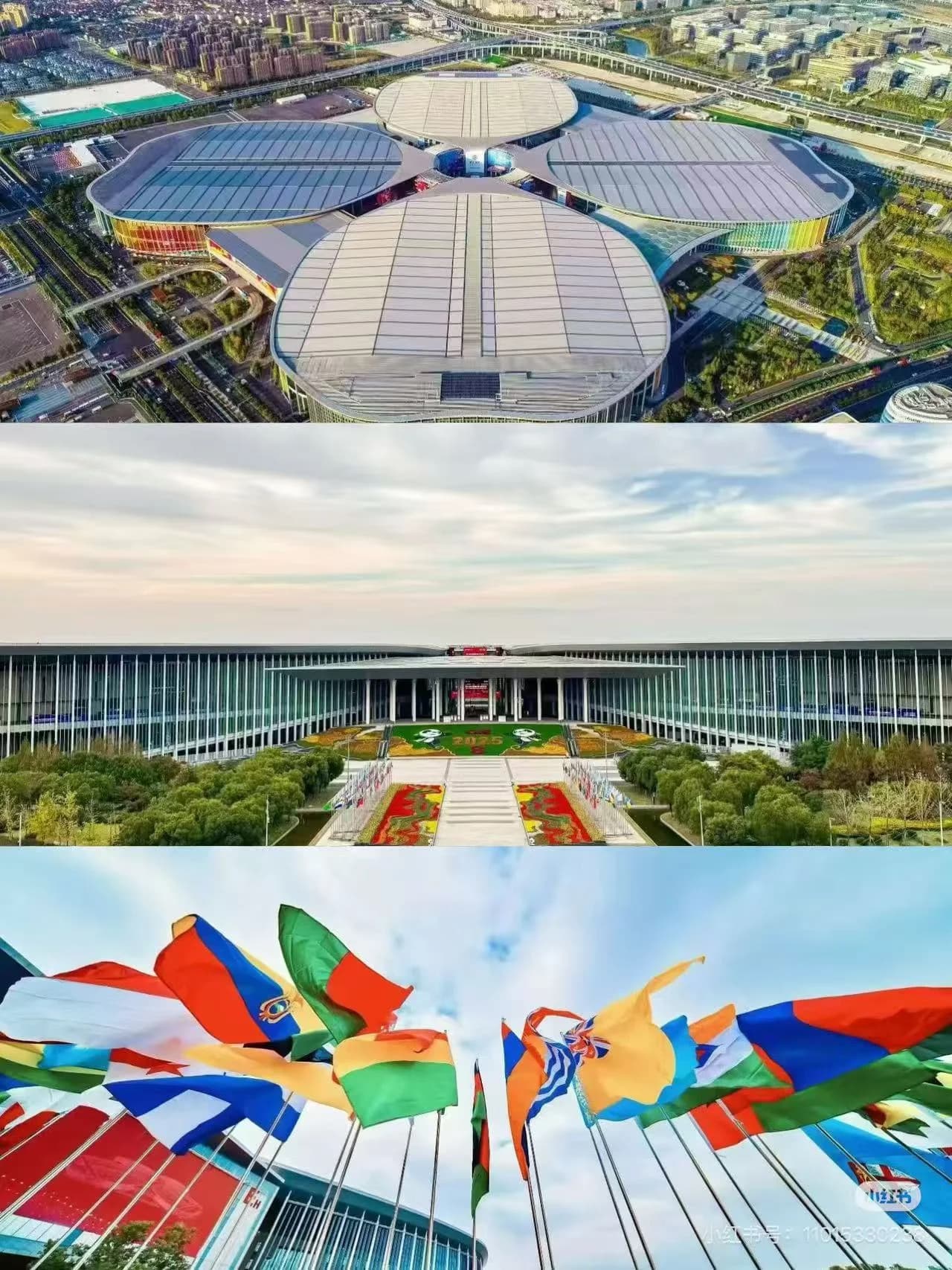
Every November, the National Exhibition and Convention Center in Shanghai hosts something unique—the China International Import Expo (CIIE).
It's the world's first national-level expo focused specifically on imports. If you're a foreign business looking to sell into China, or a buyer seeking international suppliers, this might be your most efficient entry point.
But CIIE is completely different from the Canton Fair. Canton Fair is "Made in China, sold to the world." CIIE is "Global goods, brought to China." Understanding this distinction is essential before you decide to attend.
⚠️ CIIE 2026 Dates
Expected: November 5–10 (TBC) (dates consistent yearly)
Important: Dates change annually — confirm at www.ciie.org before booking flights or hotels.
Preparation timeline:
- Exhibitors: Apply for booth space at least 6 months in advance
- Buyers/Visitors: Register 1–2 months ahead; approval takes time
At a Glance
| Full name | China International Import Expo (中国国际进口博览会) |
| When | Every November, 6 days |
| Where | National Exhibition and Convention Center (Shanghai), Hongqiao Business District |
| Positioning | World's first national-level import-focused expo |
| Who it's for | Foreign brands entering China; Chinese buyers seeking international suppliers |
| Scale | ~300,000 sqm exhibition area, 100+ countries/regions |
| Key zones | Food & Agriculture, Automobile, Intelligent Industry, Consumer Goods, Medical Equipment, Services |
| Official website | www.ciie.org |
What the Fair Is Actually For
In one sentence: CIIE is China's signal to the world: "We want to buy."
The essential difference from Canton Fair:
- Canton Fair = Made in China, exported globally (Export)
- CIIE = Global goods entering China (Import)
If you're a foreign company looking to establish channels in China, CIIE suits you better than Canton Fair. The Chinese buyers here arrive with import budgets ready.
During the expo:
- Business matchmaking sessions (book via official website)
- Industry forums (understand China's market policies)
- Product launches (many companies choose CIIE for China debuts)
- Country pavilions showcasing regional specialties
How to Register
As an Exhibitor (Foreign Company)
Application process:
- Contact your country's commerce department or CIIE official representative
- Submit company credentials and product information
- Choose booth type (standard booth/raw space)
- Sign contract and pay fees
- Prepare shipment (recommend arriving 1 month before expo)
Fee reference:
- Standard booth (9 sqm): ~¥30,000–50,000
- Raw space (36 sqm minimum): ~¥3,000/sqm
- Excludes construction, shipping, personnel costs
As a Buyer/Visitor
Registration process:
- Visit CIIE official website (www.ciie.org)
- Select "Professional Visitor" registration
- Fill in company information and purchasing intentions
- Wait for approval (1–2 weeks)
- Upon approval, receive entry credentials
Note:
- CIIE is not open to general public; business credentials required
- Individual visitors need invitation from qualified companies
- Registration typically opens 2–3 months before the expo
Getting There
From the Airport
Shanghai Hongqiao International Airport (SHA) — Closest option
- Distance: ~5 km to NECC
- Taxi: 15–20 minutes (¥30–50, traffic dependent)
- Metro: Line 2 to Xujing East Station, transfer to Line 17 or walk 10 minutes
Shanghai Pudong International Airport (PVG) — International flights
- Distance: ~60 km to NECC
- Taxi: 60–90 minutes (¥180–250)
- Metro: Line 2 direct to Xujing East Station (~90 minutes)
- Airport bus: Line 1 to Hongqiao Hub, then taxi/metro
By High-Speed Rail
Hongqiao Railway Station — Ideal for Yangtze River Delta arrivals
- Distance: ~3 km to NECC
- Metro: Line 2 or Line 17, one stop to NECC station
- Taxi: 10 minutes (¥15–25)
Metro to NECC
Lines 2 and 17 both serve "National Exhibition and Convention Center" station (国家会展中心站):
- Line 2: Connects to city center, both airports, Hongqiao Railway Station
- Line 17: Connects to Qingpu district and beyond
Exit strategy: Follow signs to the specific exhibition hall (Hall 1–8); the complex is massive and easy to get lost in.
Getting Around During Expo
- Venue shuttle: Free shuttles often run between major hotels in Hongqiao Business District and NECC during expo days
- Taxi/ride-hailing: DiDi is essential; queues form at closing time (plan to leave early or wait 30+ minutes)
- Metro: Most reliable option; expect crowds 8–10 AM and 5–7 PM
The City Beyond the Fair
NECC location: Hongqiao Business District, ~30km from city center
Life During the Expo
Where to stay:
First choice: Hongqiao Business District (walking or short drive to venue)
- Hotels: InterContinental Shanghai NECC, Cordis Shanghai Hongqiao, Hyatt Place
- Pros: Walking distance, expo shuttles, business-focused amenities
- Cons: Limited dining and entertainment options
Alternative: People's Square/Nanjing East Road (Metro Line 2 direct, ~40 minutes)
- Hotels: Marriott City Centre, The Ritz-Carlton Shanghai, Pudong
- Pros: Central location, dining variety, evening entertainment
- Cons: Daily commute during rush hour
Premium: The Bund/Lujiazui (farther but impressive, good for business entertainment)
- Hotels: Peninsula Shanghai, Park Hyatt Shanghai, Mandarin Oriental
- Pros: Iconic views, fine dining, memorable client entertainment
- Cons: 60+ minute commute to NECC, higher costs
Business dinner venues:
- Hongqiao Business District: Hongqiao Tiandi, Longfor Paradise Walk (convenient, close to venue)
- City center: Hyatt on the Bund, Peace Hotel (impress important clients)
- French Concession: Old Jesse, Yuan Yuan (experience authentic Shanghainese cuisine in historic surroundings)
Where to Go Between Expo Sessions
If you have half a day:
- The Bund (Metro Line 2 direct): 30 minutes to see the colonial architecture—classic choice for business visitors. Walk the waterfront, take in the skyline across the river.
- French Concession (Metro Line 10): Plane-tree-lined streets, historic villas, cafés ideal for informal business conversations. Try Wukang Road or Taikang Road.
- Jing'an Temple area (Metro Line 2): Mix of modern malls and traditional temple; good for quick shopping or a quiet moment.
If you have a full day:
- Lujiazui + The Bund: Morning ascent of Shanghai Tower or Shanghai World Financial Center for aerial views, afternoon Bund stroll exploring colonial-era banks, evening Huangpu River cruise for client entertainment.
- Yu Garden + Old Town: Traditional Chinese gardens and bazaars—show clients "traditional China," but avoid weekend crowds.
- Tianzifang: Arts and crafts enclave in the French Concession—narrow alleys, boutiques, cafés, good for souvenir shopping.
Making the Most of Shanghai
Timing considerations:
- November in Shanghai offers crisp, pleasant autumn weather—the best time of year, averaging 15–20°C
- First week of November avoids the summer heat and winter chill
- Hotels book up and prices surge during expo season; reserve 2–3 months early
Business culture in Shanghai:
- Shanghai is China's most cosmopolitan city; English is more widely spoken than elsewhere
- Business moves quickly here—meetings often lead to decisions faster than in Beijing or inland cities
- The coffee culture is strong; informal meetings often happen in boutique cafés rather than traditional tea houses
Logistics:
- Hongqiao Business District to city center is ~40 minutes by metro; plan accordingly
- Rush hour is 7:30–9:30 AM and 5:30–7:30 PM—avoid travel during these windows when possible
- Keep your expo badge handy; some restaurants offer discounts to CIIE attendees
Extending Your Trip
If arriving 1–2 days early:
- Adjust to time zone
- Visit Shanghai clients or partners
- Scout the venue beforehand
- Test your metro/app setup
If staying 1–2 days after:
- Deep-dive visits to Yangtze River Delta clients (Suzhou, Hangzhou within 1 hour by high-speed rail)
- Extended Shanghai city exploration
- Sample shipping, contract follow-up
Yangtze River Delta business circle (within 1 hour by high-speed rail):
| City | Rail time | Business value |
|---|---|---|
| Suzhou | 30 minutes | Manufacturing, foreign enterprise concentration, industrial parks |
| Hangzhou | 45 minutes | E-commerce, internet giants, private enterprise headquarters |
| Nanjing | 1 hour | State-owned enterprises, government relations, education sector |
| Ningbo | 1.5 hours | Port trade, manufacturing, cross-border e-commerce |
Recommendation: If you have multiple clients in China, use CIIE as your starting point, then visit surrounding cities by high-speed rail—more efficient than flying in and out repeatedly. Book rail tickets early during expo week.
Business Practicalities
Samples and Contracts
Bringing samples to China:
- Ship exhibition items 1 month ahead by sea to avoid customs delays
- For carry-on samples, keep purchase receipts to avoid duties
- Consider insurance for valuable samples
- Label everything clearly with company name and booth number
On-site signing:
- Chinese buyers often sign letters of intent (LOI) at the expo
- Formal contracts typically completed 1–2 weeks post-expo
- Prepare bilingual contract templates in advance
- Have company chop (seal) ready for formal agreements
Cultural Tips
Business cards:
- Prepare bilingual English-Chinese cards
- Receive cards with both hands, look at them before putting away
- Never immediately place someone's card in your back pocket
- Offer your card before asking for theirs
Business dining:
- Chinese custom discusses business over meals
- Toasting is common; a sip shows respect
- If you don't drink alcohol, decline early and politely—don't force yourself
- The host typically orders; let them guide the selection
- Business dinners often run 2+ hours—don't schedule tightly afterward
Communication Tools
- WeChat: Essential for all business communication in China; download and set up before arrival
- DingTalk: Used by many Chinese companies for internal communication
- Email: Less immediate than WeChat; follow up important matters via both channels
Practical Information
| Field | Information |
|---|---|
| Dates | November 5–10 annually (TBC) — verify at www.ciie.org |
| Venue address | National Exhibition and Convention Center (Shanghai), 333 Songze Avenue, Qingpu District |
| Official website | www.ciie.org |
| Registration | "Exhibitor/Visitor Registration" portal on official site |
| Transportation | Metro Lines 2/17 to "National Exhibition and Convention Center" station; 15-minute taxi from Hongqiao Airport/Railway Station |
| Recommended accommodation | Hongqiao Business District (closest), People's Square/Nanjing East Road (metro direct), The Bund/Lujiazui (business entertainment) |
| Languages | English signage common; bring bilingual materials |
| Currency | RMB (Yuan); mobile payment (Alipay/WeChat) dominates |
| Climate | November: 15–20°C, mild and dry; bring light jacket |
Before You Go
Visa:
- Business visa (M visa) typically requires invitation letter
- CIIE organizing committee can provide invitation letters; apply early (6–8 weeks before travel)
- Ensure passport has 6+ months validity
Essential apps:
- Alipay/WeChat Pay: Payment, metro, ride-hailing
- Baidu Maps/Amap: Navigation
- DiDi: Ride-hailing (similar to Uber)
- DingTalk/WeChat: Communication with Chinese clients
Internet:
- Prepare VPN before arrival (many Western services blocked)
- Purchase Chinese SIM card at airport for reliable local data
- Hotel WiFi usually allows international website access
- Free WiFi at NECC but often crowded and slow
Final advice:
CIIE isn't a "go see" expo—it's a "go do business" expo. Arrive with clear objectives: which clients to meet, what partnerships to discuss, what samples to bring. Six days pass quickly; a packed schedule delivers ROI.
November Shanghai weather is pleasant, but don't get distracted. During expo season, every minute could mean a deal. Prepare thoroughly, execute efficiently, and use the evenings to build relationships over dinner—that's how business gets done in China.
Related Guides:
- Trade & Business Hub — China trade overview
- Canton Fair Guide — Comparison (export-focused)
- How to Pay in China — Payment setup
- Shanghai City Guide — Shanghai deep dive
- China Visa Guide — Visa application details
- Staying Connected — Internet and VPN setup


