Last updated: April 2026
At a Glance
| Best Starting Point | Bashi Market (八市), open from 6:30 AM |
| Budget | ¥50–100 for a full street food meal |
| Time Needed | 2–3 hours for a proper food walk |
| Spice Level | Low — Fujian cuisine is mild and seafood-forward |
| Signature Flavor | Shacha (沙茶) — peanut-sesame-shrimp sauce on everything |
| Language Barrier | Medium — point-and-order works at most stalls |
| Payment | Alipay / WeChat Pay preferred; some stalls take cash |
By 7:30 AM, a stall at Baish Market has a line of six aunties waiting for oyster omelettes. A ladle of sea oysters goes on the griddle, then a scoop of sweet potato starch batter, an egg cracks on top—and there's that sharp sizzle. ¥15 a plate, stand and eat, then move along. To the left: live shrimp and crabs in tanks. To the right: fried spring rolls stacked high. Further ahead: a bowl of noodles in peanut sauce for ¥12. You could walk through all of Baish in an hour, but your stomach will probably surrender halfway through, though most people wish they had more space.
This is not a food ranking. This is an operating manual for a non-Mandarin-speaking foreign visitor in Xiamen on how to find things to eat, how to order them, how to pay, and how to avoid the pitfalls.
What This Actually Is
Xiamen's food belongs to the Fujian regional cuisine, a completely different direction from what you'll eat in Beijing, Chengdu, or Guangzhou. The Fujianese approach to food is fresh, clean, and naturally sweet. It doesn't rely on heavy oil or heavy chili; it relies on the ingredients themselves. Seafood makes up a high proportion because Xiamen is historically a fishing port. The one thing that ties everything together is shacha (沙茶)—a sauce ground from peanuts, sesame, dried shrimp, garlic, and spices with Southeast Asian roots but its own flavor. In Xiamen, shacha has the status that chili has in Sichuan: it goes on everything.
For foreign visitors, Fujian cuisine has one of the lowest entry barriers among Chinese regional cuisines. It's not spicy, not strange, the seasoning is mild, and seafood dominates. The only challenge is that a few dishes have appearance that hits hard—more on those later.
Where to Eat
If you're in Xiamen and only have time for one food experience, Baish Market is the place.
The reason is straightforward: Baish is the oldest continuously operating market in Xiamen, running for nearly 100 years. Local people actually buy groceries here. It's not a manufactured tourist food street. Though visitors are increasing, the stalls survive on local customers, so there's a quality floor.
If food isn't a priority and you just need to eat in Xiamen, you can grab random things on Zhongshan Road or in the Zengjiaaotan area, but those feel more like tourism infrastructure side dishes rather than the real thing.
What to Actually Eat
Must-Try List (In Recommended Order)
Shacha Noodles (¥10–20)
Yellow noodles in a shacha sauce broth, with self-selected toppings: squid, tofu, duck blood, pork liver, shrimp. You pay extra per topping type. Basic version ¥10–12; with three or four toppings roughly ¥15–20. The broth tastes like ground peanuts and sesame, slightly spicy with a touch of sweetness. This is Xiamen's most everyday breakfast and lunch. Find it at small shops around Baish Market and near Zhongshan Road.
Oyster Omelette (¥12–20)
Sea oysters (蚵仔) fried on an iron griddle in sweet potato starch batter, then topped with an egg and cooked until the outside is crispy and the inside tender. Dip it in sweet-chili sauce. Multiple stalls in Baish do this; go to whichever has the longest line. ¥12–15 per plate. It shares origins with Taiwan's oyster omelette but the Xiamen version uses more starch batter and has thicker texture.
Peanut Soup (¥8–12)
Peanuts cooked until soft, served in a milky-white sweet soup. Eat it as a dessert or some people eat it as breakfast. The classic pairing is with fried dough sticks. Huang Zeho (黄则和) is the most famous old shop on Zhongshan Road.
Sticky Rice Dumplings (烧肉粽) (¥8–15)
Xiamen's dumplings are nothing like sweet northern ones. Glutinous rice filled with pork belly, mushrooms, chestnuts, and dried shrimp, seasoned with soy sauce. Savory, not sweet. Bigger than standard dumplings—one serves as a full meal.
Braised Duck with Ginger (姜母鸭) (¥60–120 per serving)
A whole young duck braised in old ginger, sesame oil, rice wine, and medicinal herbs. Not fast food; it's the kind of thing where you sit down. Best in winter but available year-round in Xiamen. One serving feeds two or three people.
Challenge Level: Shredded Congealed Snail (土笋冻)
This one deserves its own note. The ingredient is a marine worm (星虫, literally star worm) that lives in sand near the shore. They're boiled to extract gelatin, cooled until it sets into a jelly texture, then cut into blocks and dipped in soy sauce and vinegar.
The flavor is actually mild—like flavorless jelly with sauce. The challenge is entirely visual. If you know you're eating a worm, you might hesitate. But from a texture standpoint, this dish is much easier on foreign visitors than its psychological difficulty suggests. ¥10–15 per portion; available at Baish Market and on Zhongshan Road. Try it if you want; completely optional.
Seafood Stalls and Market Restaurants
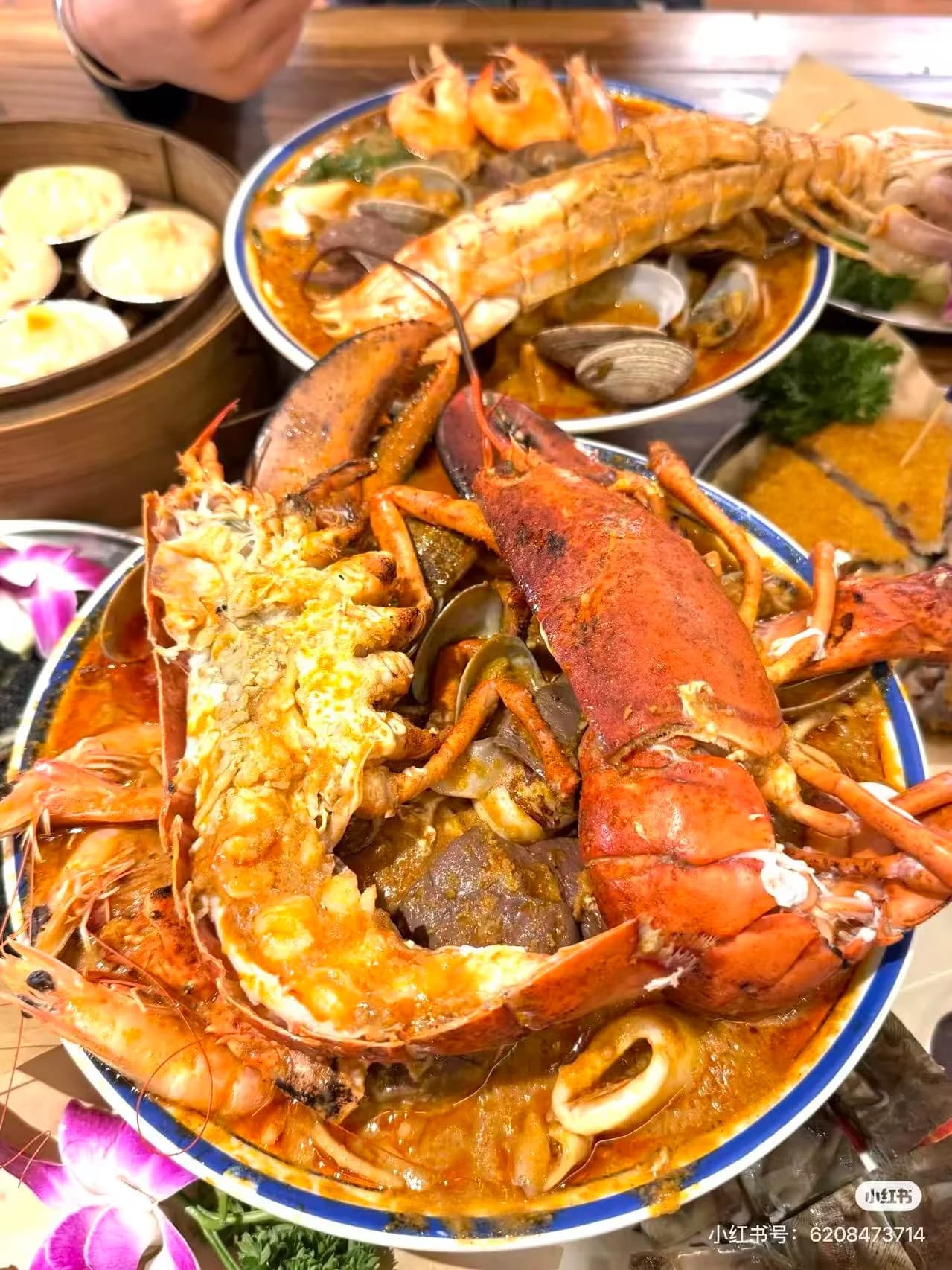
Inside Baish, you can buy live seafood and have nearby restaurants cook it. The process works like this:
- Pick live shrimp, crabs, clams, squid, etc. at the seafood stalls; you pay by weight
- Carry your selection to an adjacent processing restaurant and tell them how you want it cooked (steamed, stir-fried, soup)
- Processing fees are separate: usually ¥10–20 per dish
Two people can eat a whole seafood meal (buy seafood + processing fees) for ¥150–250 total. That's at least a third cheaper than ordering at a restaurant, and you picked the ingredients yourself so freshness is visible.
Language workaround: Point directly at what you want, use your phone calculator to compare prices. For cooking methods, use translation app photo translation on menu images, or just say "steam" or "fry"—most stall workers recognize these two words.
How to Do It
Suggested Routes
Half-Day Option (Recommended): Baish as the Hub
- Arrive at Baish Market around 7:30 AM (near the intersection of Kaihe Road and Kaiyuan Road)
- First loop: scout what's available without buying
- Second loop onward: eat as you go—oyster omelette → shacha noodles → peanut soup
- If appetite remains, try shredded congealed snail or fried spring rolls
- Leave before 11 AM to avoid peak lunch crowds
Getting there: Metro Line 1 to Zhenhai Road Station, then 5-minute walk
Evening Option: Zengjiaaotan
- After afternoon sightseeing, head to Zengjiaaotan in the late afternoon
- Snack stalls + seafood dining + dessert shops concentrated here; walking and eating as you go
- Most lively from 6 PM to 10 PM
- More commercial than Baish but wider variety and more relaxed atmosphere
Zhongshan Road
A commercial pedestrian street with arcade-style buildings on both sides. Street food prices are slightly higher than Baish, variety similar. Huang Zeho peanut soup is on this street. Good for combining shopping with eating, but not worth a dedicated trip just for food.
Payment
- 95% of stalls support Alipay or WeChat Pay
- A few older stalls take cash only; carry ¥50 in small bills as backup
- International credit cards are essentially unusable on the street; set up mobile payment beforehand with your bank
Common Mistakes
- Arriving at Baish on a full stomach — Portions are small but variety is enormous; you fill up fast. Go hungry
- Eating a main meal on Gulangyu Island — Restaurant prices there are inflated, quality is mediocre. Grab a snack on the island; eat real meals back on the mainland
- Seafood allergies without pre-checking — Fujian cuisine uses dried shrimp, oysters, and fish sauce in the baseline flavor profile. Even if you order something that's not "seafood," it may contain seafood components. If you have allergies, prepare a Chinese note saying what you're allergic to
- Going to Baish in the afternoon — Seafood freshness peaks in morning, crowds are thinnest, and more stalls are open. Afternoons, some stalls close early
- Getting distracted by "influencer" shops — The longest lines at Baish aren't always the best. Some are just good at marketing. Watch where local aunties eat
Before You Go Checklist
- [ ] Install Alipay or WeChat Pay on your phone and link a payment method
- [ ] Carry ¥50–100 in cash as backup for older stalls
- [ ] Download a translation app with photo translation (Google Translate works)
- [ ] If you have a seafood allergy, write out a Chinese note explaining it and carry it with you
- [ ] Eat a light breakfast or go on an empty stomach
Prices are indicative — confirm before booking.