Last updated: May 2026. Ticketing rules change seasonally—verify before you visit.
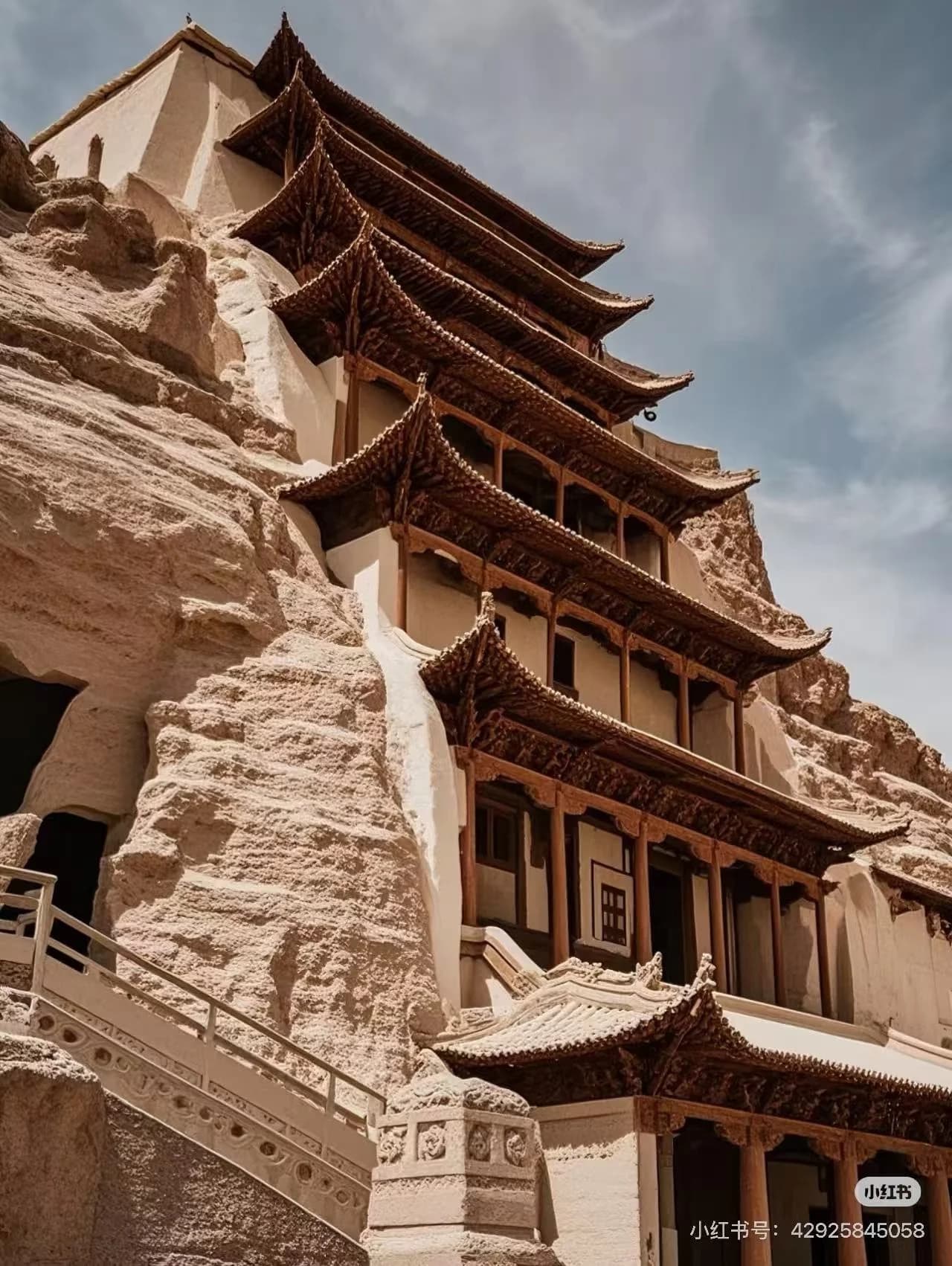
The Mogao Caves are the largest surviving site of Buddhist cave art in the world: 492 cave temples carved into a desert cliff face, containing 45,000 square metres of murals and more than 2,000 painted sculptures spanning the 4th to 14th centuries. No single dynasty built them. They accumulated over roughly a thousand years, as successive rulers, merchants and pilgrims travelling the Silk Road added to what the previous generation had left.
Plan for about two hours on site. Peak-season tickets start at ¥238. Foreign passport holders cannot buy tickets through the standard online system—you'll need to queue at the ticket office in person, or arrange through a travel agency in advance. In peak season, the daily quota can sell out by mid-morning.
What Makes it Worth It
The murals are not decorative. They're a record of what happened when four different artistic traditions converged in the same place over the same period.
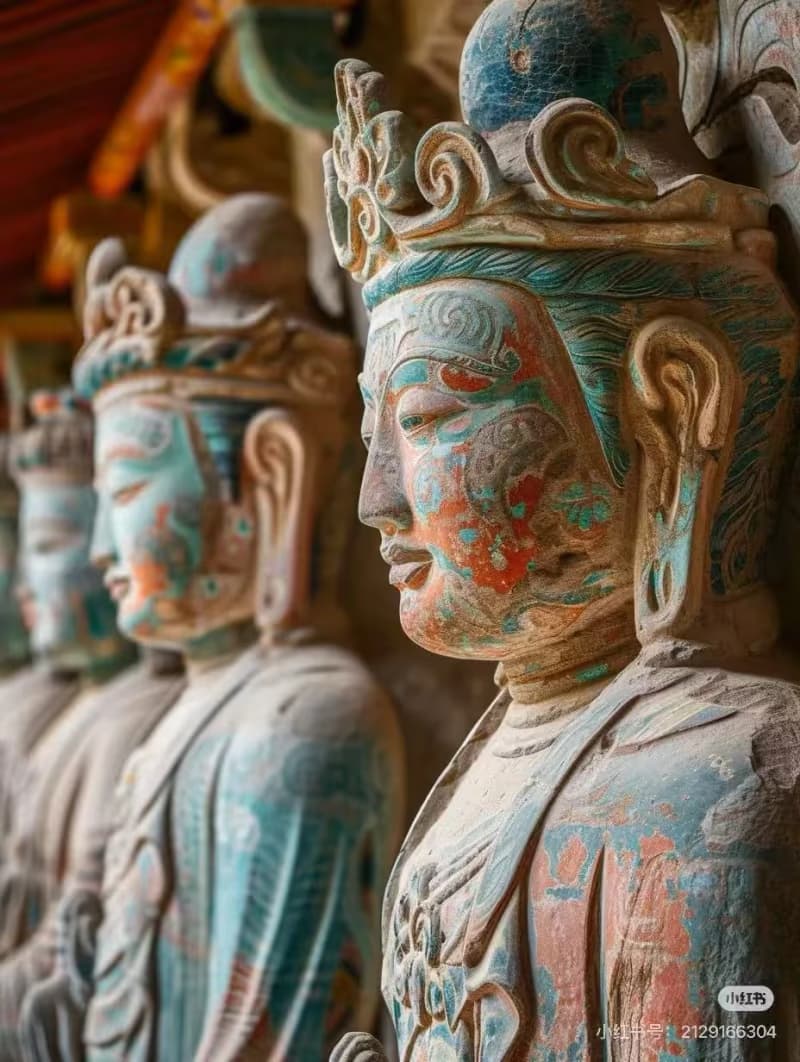
In a single cave you can identify sculptural forms from the Gandharan tradition—the Greek-influenced Buddhist art that travelled from what is now northwestern India through Afghanistan and into Central Asia—alongside Persian geometric borders, South Asian lotus iconography and the fluid brushwork of the Central Plains. These elements appear side by side not because someone collected them, but because artists and patrons from across the Silk Road world contributed to this site over centuries. No museum can assemble this; it grew here in place.
The pigments compound the effect. Sections painted with lapis lazuli and mineral colours—sealed inside the caves for over a thousand years in Gansu's dry desert air—retain their original intensity. The colour you're looking at has not been restored.
The Flying Apsaras (飞天) that appear in cave after cave provide an unintentional timeline of Chinese painting. Northern Wei figures are angular and spare; Tang-dynasty Apsaras are full-bodied and flowing; the Song and Yuan versions are more intricate. The same subject, evolving across six centuries, is visible in a single afternoon.
What to Expect
The booking problem for foreign visitors is the first thing to sort out. The official ticketing system requires a Chinese ID or permanent residence permit for online purchase. Foreign passport holders have three options: buy at the ticket office on the day (a quota is reserved for walk-ups, but in May–October this quota can be gone by 9am); pre-book through a licensed travel agency (minimum group size 10); or use an English-language third-party platform such as Trip.com, Klook, or Viator, which handle the Chinese booking system on your behalf. If you're visiting in high season without a pre-booked ticket, plan your arrival time around the ticket office opening—not around your hotel breakfast.
The visit structure adds time you may not expect. All visitors go to the Digital Exhibition Center first, where you watch a 35-minute film on the history and preservation of the caves. Then a free shuttle bus takes you to the cave complex (about 15 minutes). Your guide leads a tour of 8–10 caves, roughly one hour. English-language tours run on a separate schedule from Chinese-language tours—confirm the next available English session as soon as you reach the Exhibition Center.
Photography inside the caves is prohibited and this is strictly enforced. Phones and cameras stay in your pockets from the moment you enter a cave. The exterior cliff face and the Exhibition Center can be photographed freely.
The caves are cooler than the desert outside. Bring a light layer regardless of the season.
Don't Miss
The Digital Exhibition Center film — Worth watching properly, not skimming. It covers the discovery of the Library Cave in 1900 (which contained 50,000 manuscripts), the removal of materials by Aurel Stein and other foreign explorers, the conservation methods now used to stabilise the murals, and a visual survey of how styles changed across dynasties. Going in with this context makes the actual cave visit substantially different.
The Apsaras across different dynasties — Ask your guide to make the stylistic comparison explicit. The Northern Wei figures (lean, elongated, robes flying in stiff angles) and the Tang figures (rounded, the fabric seemingly in motion) are the most striking contrast. When you can see both in the same hour, the difference is impossible to miss.
Special caves (if available) — Some caves not included in the standard tour can be booked separately at the ticket office for an additional fee. These tend to include some of the best-preserved or most significant interiors. Availability varies; ask at the ticket counter when you arrive.
Practical Information
| Item | Details |
|---|---|
| Tickets | Peak season (Apr–Nov): ¥238–258; Off-season (Dec–Mar): ¥140–160 |
| Opening hours | Peak season 8:00–18:00; off-season hours reduced—verify before visit |
| Daily visitor cap | 6,000 |
| Booking | Foreign passport holders: buy at the ticket office in person; pre-book through a travel agency (group min. 10); or use third-party English platforms (Trip.com, Klook, Viator). Chinese citizens: official site mogaoku.net |
| Payment at ticket office | Cash and Alipay accepted. International credit cards not reliably accepted—bring cash as backup |
| English tours | Available; limited daily sessions—confirm timing on arrival at the Exhibition Center |
| Photography | Prohibited inside caves; permitted at the cliff exterior and Exhibition Center |
| Special caves | Additional fee; availability varies—inquire at ticket office |
| Official site | mogaoku.net (primarily Chinese) |
Getting There
Bus — Route 12 from central Dunhuang runs to the Digital Exhibition Center. Fare ¥8; roughly hourly; journey time about 40 minutes. Confirm the first departure time before relying on this for an early start.
Taxi / Didi — Around ¥40–60 from the city centre, 20 minutes. More reliable for timing. Didi works in Dunhuang; a Chinese phone number is required to register.
In peak season, aim to arrive at the ticket office before it opens. Taking a taxi gives you control over departure time that a bus schedule does not.
Half a day is the right allocation for Mogao Caves. The visit itself takes two hours; the drive and the Exhibition Center add more. Visitors who go in knowing what they're looking at—what the Gandharan influence actually looks like, which dynasty produced which style—consistently say an hour inside isn't enough. The preparation matters here more than at most sites.
Related guides:
- Dunhuang Travel Guide — Full city overview and trip planning
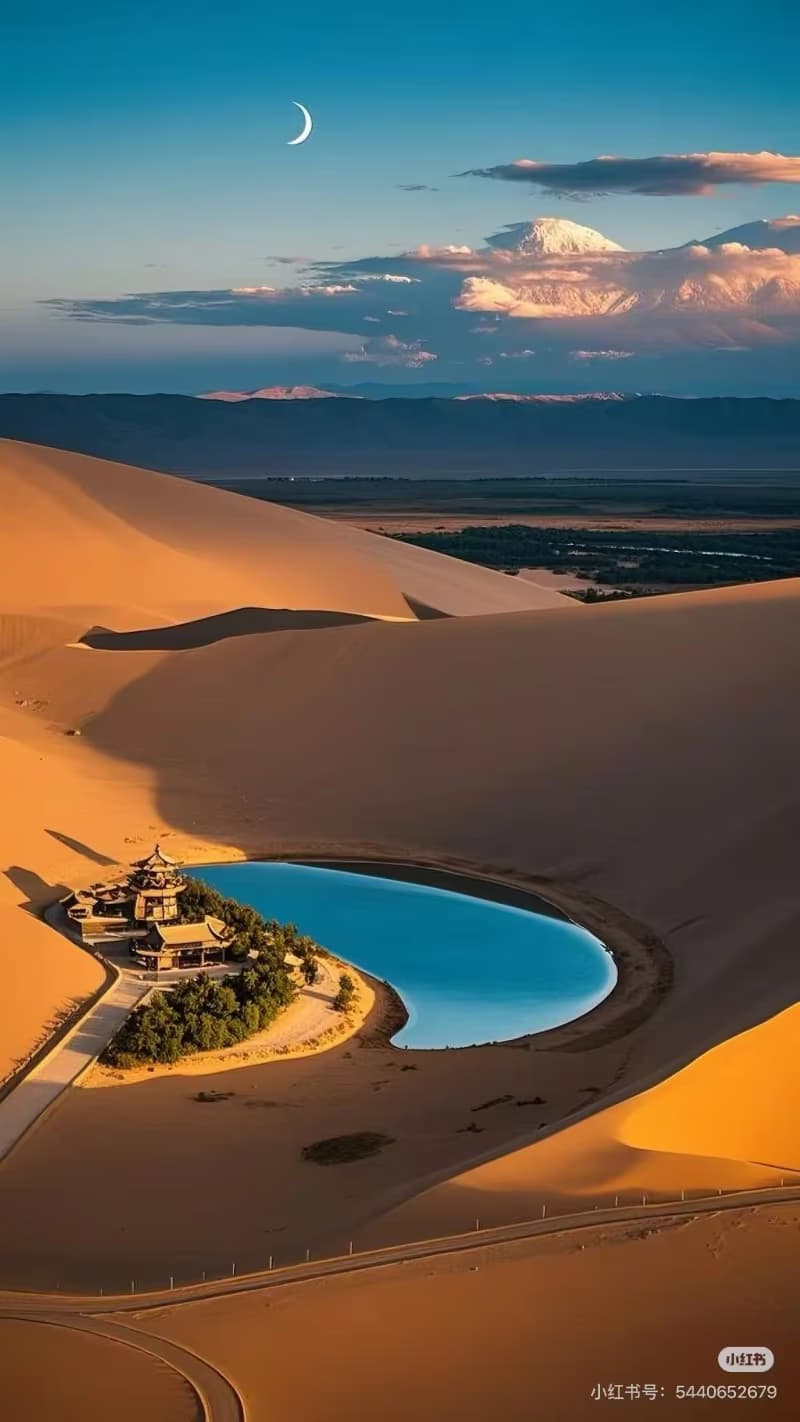
- Mingsha Mountain and Crescent Moon Spring
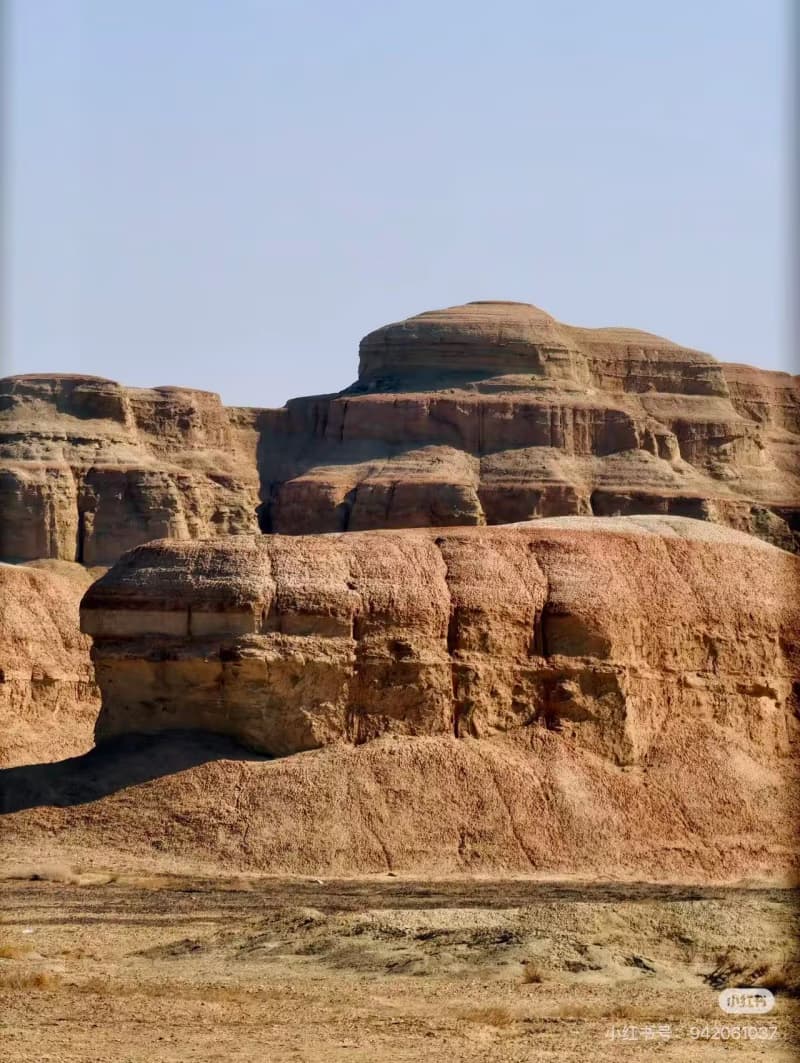
- Yardang National Geopark