Last updated: May 2026. Ticket prices and opening hours change seasonally—verify before visiting.
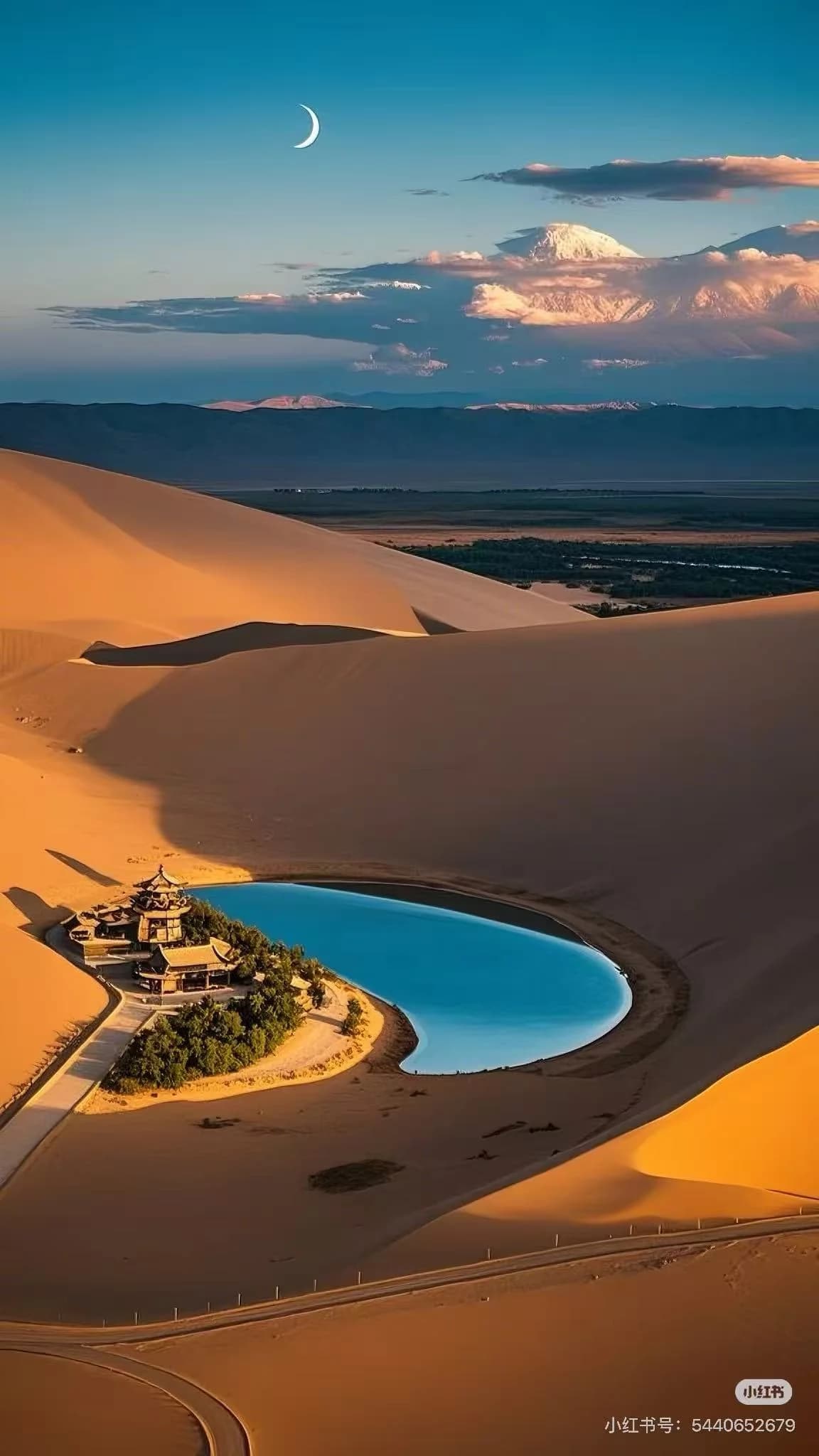
Mingsha Mountain is a desert dune field six kilometres south of Dunhuang, with the highest dunes reaching around 250 metres. Less than a hundred metres from the dune base, there is a crescent-shaped spring that has been there for over two thousand years and has never been buried by the sand.
Peak-season tickets are ¥120. Camel riding is sold separately inside the park (¥100 per person) and is not included in the entrance fee. In May through October, arriving two hours before sunset gets you the best light and lets you avoid the worst of the midday heat.
What Makes it Worth It
The geological anomaly — Active sand dunes and a permanent spring share the same patch of desert, less than a hundred metres apart. The dunes shift with the wind; the spring does not get buried. The water comes from underground aquifers fed by the Qilian Mountains—the dunes move across the surface, the source below stays put. Two thousand years of this, and counting.
The singing sand — Under specific wind and temperature conditions, sand grains sliding down the dune faces produce a low resonant hum. The mountain's name comes from this. You cannot schedule it, and it does not happen on every visit, but when it does, the sound carries across the dunes.
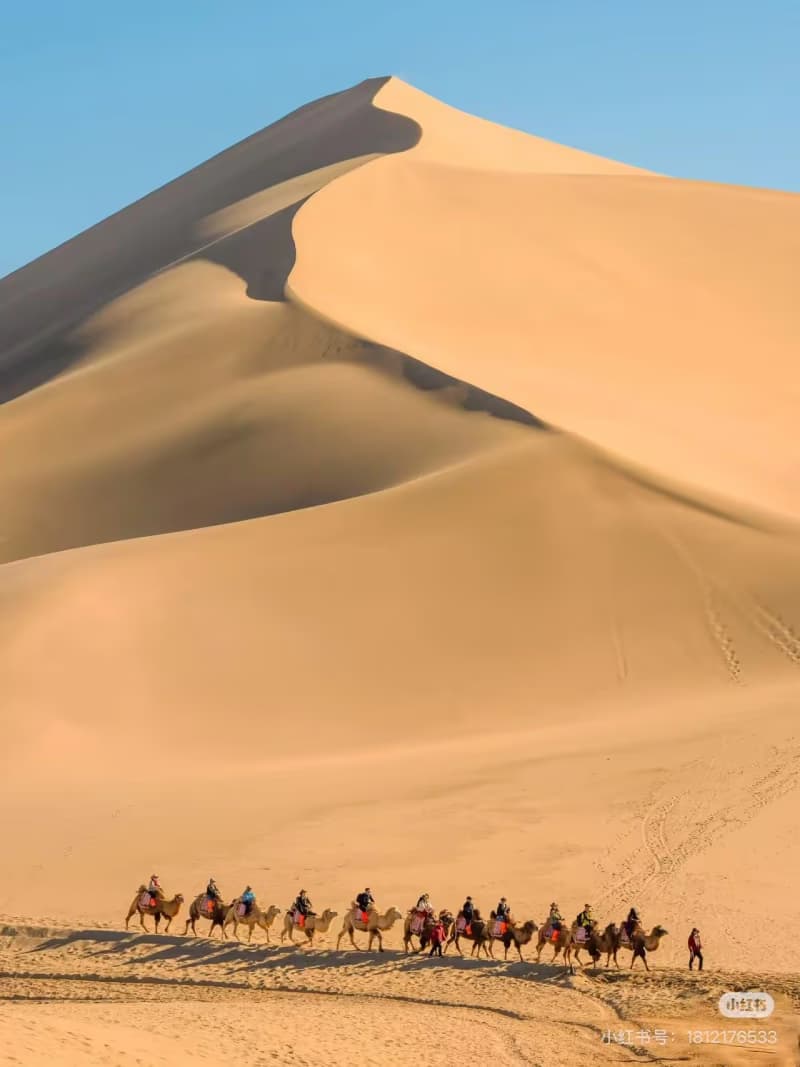
The dusk window — The camel train moves along the sand ridge as the sun drops. The dune faces go from yellow to orange to a deep red over about forty minutes. Camel silhouettes against that sky are the image most people take home from Dunhuang.
What to Expect
Tickets and booking — Entrance tickets are valid for three consecutive days with multiple entries. At the gate, payment by cash, Alipay, or WeChat Pay is accepted. Foreign visitors without Chinese payment apps can pre-book through Klook or Trip.com's English site—neither requires a Chinese phone number. Camel rides are purchased separately at the camel service area inside the park; do not assume they are included.
In peak season (May–October), camel ride queues in the afternoon can stretch to 40 minutes. Head to the camel service area as soon as you enter the park, even before walking to the spring.
Physical requirements and gear — Walking from the main gate to Crescent Moon Spring takes about 15 minutes on flat ground. Climbing to the main dune ridge takes another 20–30 minutes; the slope is steep and the sand gives way underfoot with each step. Sand works its way into shoes quickly—the park sells shoe covers (¥15) at the entrance, or wear shoes you do not mind filling with sand. Between 11am and 3pm in summer, the sand surface temperature can exceed 60°C. Avoid hiking the dunes in this window.
Language — Ticket windows and the camel service area have no English-speaking staff worth counting on. Scanning a QR code or showing a Klook booking confirmation on your phone gets you through every transaction. Major signs in the park are bilingual.
Don't Miss
The camel ridge route — The standard route starts at the park entrance, follows the dune ridge to the highest point at the back of the mountain, then descends to Crescent Moon Spring. The full circuit is about 3 kilometres and takes roughly 90 minutes. Sitting on the camel, you can see successive dune ridgelines stacked behind each other, and a thin line of green at the far edge where the oasis starts—a view that is not really accessible on foot.
Crescent Moon Spring at dawn — The spring is about 218 metres long and 54 metres across at its widest, with a depth of around 5 metres. Reeds and willows line the bank. In the early morning, the water is still enough to reflect the dune face above. Worth noting: it is smaller than photographs suggest—not a lake, just a desert oasis. The early morning visit keeps crowds low and the light is better than at sunset.
Sand sliding — Boards are available at the top of a designated dune for sliding straight down. The run takes about 15 seconds. Cost is ¥15 per go. Wear close-fitting trousers.
Practical Information
| Item | Details |
|---|---|
| Tickets | Peak season (May–Oct): ¥120; off-season (Nov–Apr): ¥60; valid 3 days |
| Opening hours | Peak season approx. 5:00–22:00; off-season 7:30–18:00 (confirm with park) |
| Booking | Gate (cash/Alipay/WeChat Pay); or Klook / Trip.com English for advance purchase |
| Payment | Cash, Alipay, WeChat Pay accepted. International credit cards not reliable—bring cash |
| Camel riding | ¥100 per person, ~90 minutes; purchased separately inside the park |
| Sand sliding | ¥15 per run |
| Shoe covers | ¥15 at park entrance; or bring old shoes |
| Official site | mssyyq.com (Chinese only) |
Getting There
Taxi / Didi — Around ¥15–20 from central Dunhuang, roughly 10 minutes. Didi works in Dunhuang but requires a Chinese phone number to register. A regular taxi is the easier option for foreign visitors.
Motorcycle taxi / tuk-tuk — Available from the city centre gathering point, ¥10–15 per person. Fine for solo travellers comfortable with informal transport.
Public bus — No direct route. Not recommended if you are working to a schedule.
In peak season, arriving before the park opens lets you go straight to the camel service area before queues form.
Come in the late afternoon. Finish the camel ride, find a gap in the dune ridge, and sit down for the last hour of light. Most visitors who spend a day in Dunhuang say this is the part they remember.
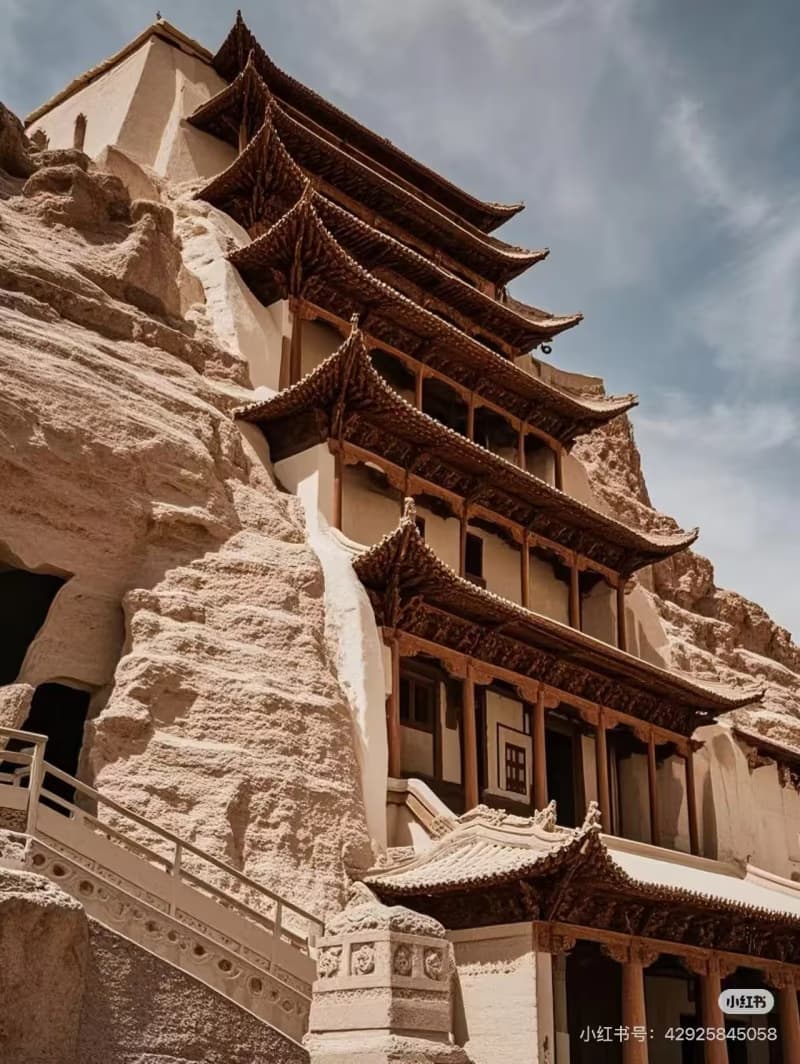
Pairing it with Mogao Caves on the same day is the standard approach: caves in the morning, dunes from mid-afternoon onward.
Related guides: