Last updated: May 2026. Prices, ticketing rules and opening hours change frequently—verify before booking.
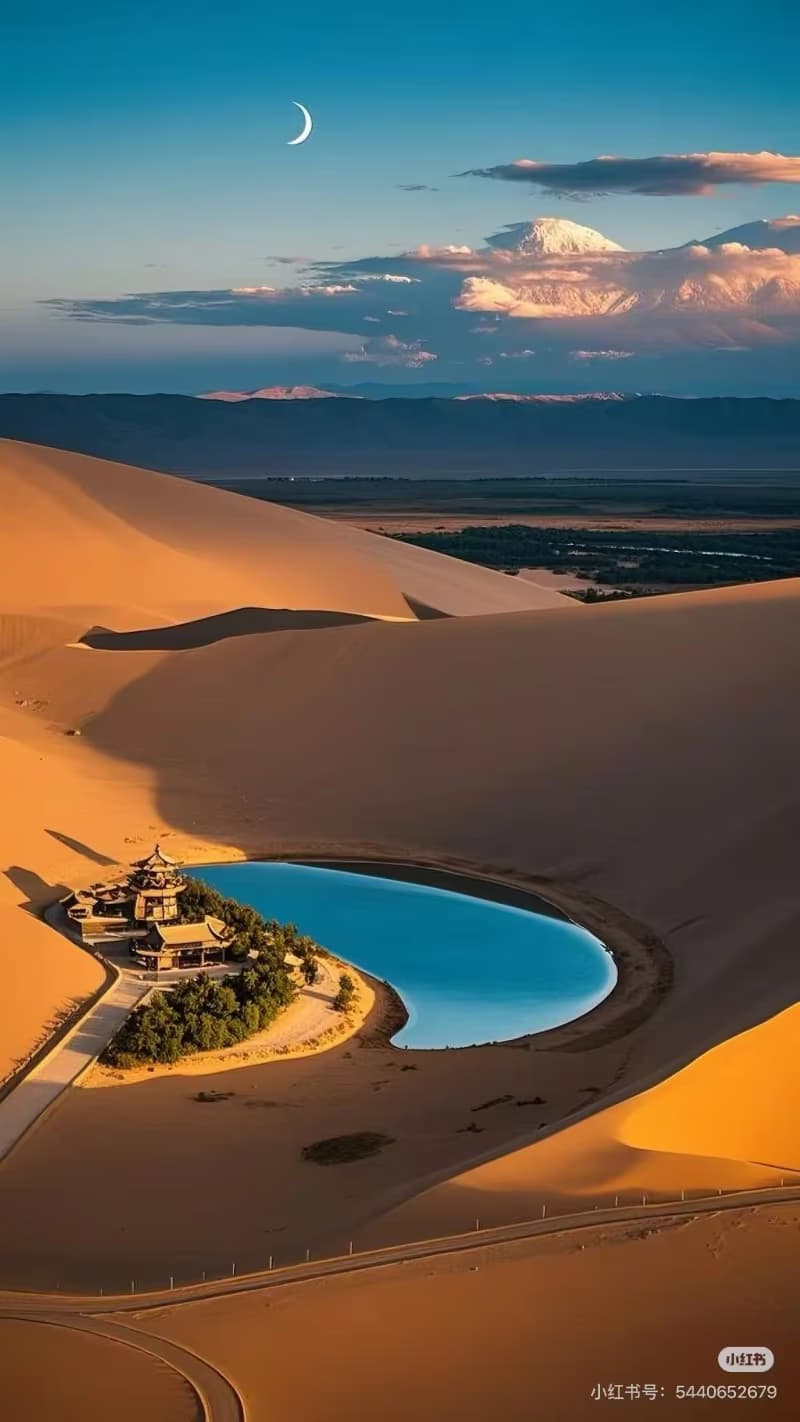
On a May evening, a line of tourists waits at the crest of Mingsha Dunes for their turn on the camels. Half a mile away, Crescent Moon Spring catches the last light—and has been doing so, unburied by the surrounding dunes, for as long as anyone has recorded it. Both things happen at the same time, in the same line of sight. That combination is very Dunhuang.
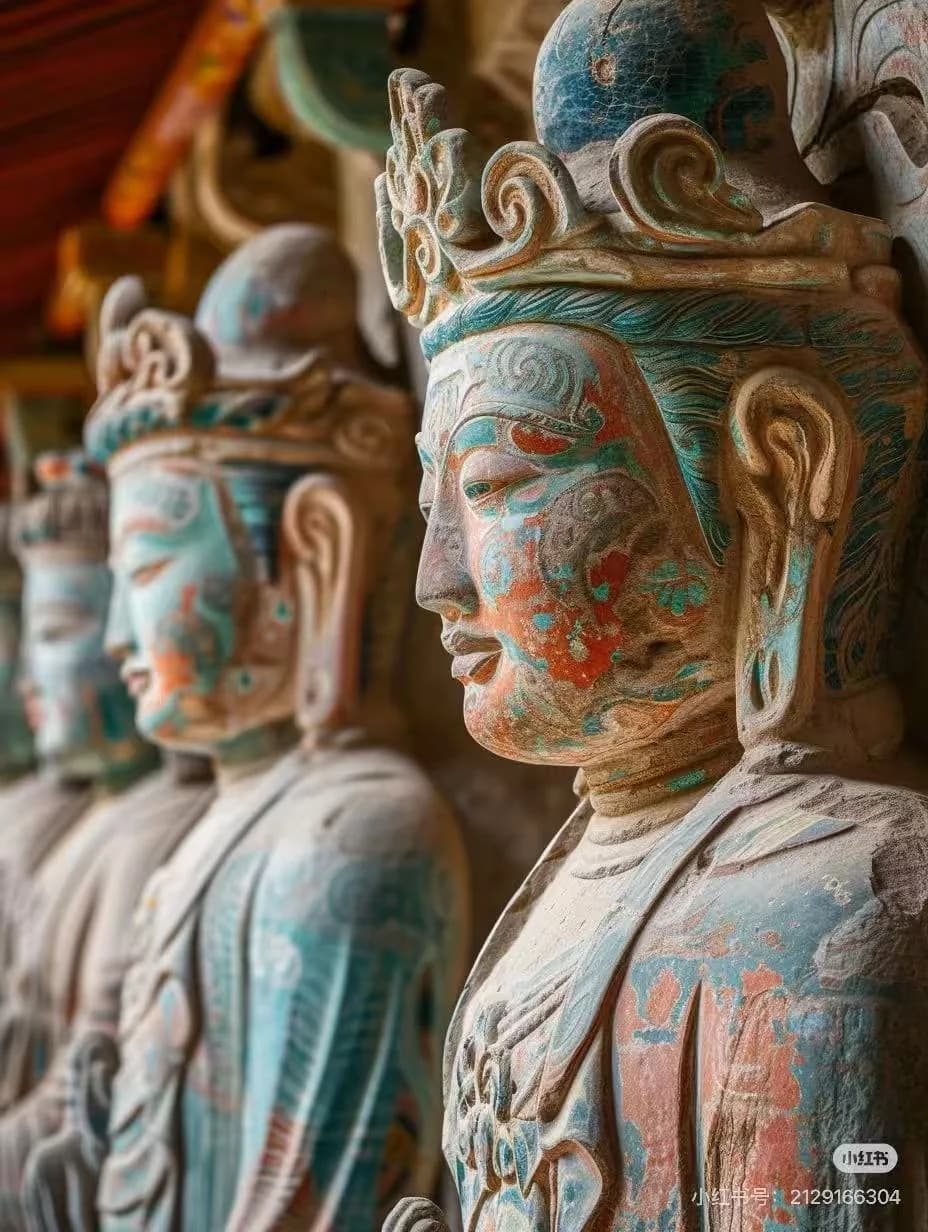
Inside the Mogao Caves, murals painted in lapis lazuli and mineral pigments have held their color through more than a thousand years of desert air. Down at the night market on Yangguan East Road, stalls serve donkey-meat noodles and apricot-skin tea until midnight. The whole city sits on an oasis—which means everything here is closer to the sand than you expect, and, in a way, more precarious than it looks.
At a Glance
| Best time to visit | April–June, September–October (desert climate; summers hit 40°C / 104°F with extreme UV) |
| Recommended stay | 3–4 days |
| Budget per day | ¥500–900 / US$70–125 (mid-range, includes Mogao Caves ticket) |
| Getting there | Dunhuang Mogao International Airport (DXN); Dunhuang Railway Station |
| Known for | Mogao Caves murals, Mingsha Dunes camel rides, Yardang desert landforms |
| Special requirements | Mogao Caves limits visitors to 6,000 per day. Foreign passport holders cannot book online independently—buy at the ticket office in person or arrange through a travel agency in advance |
Why Dunhuang Belongs on Your China Itinerary
Most visitors to China skip Gansu Province entirely. That's a mistake worth correcting.
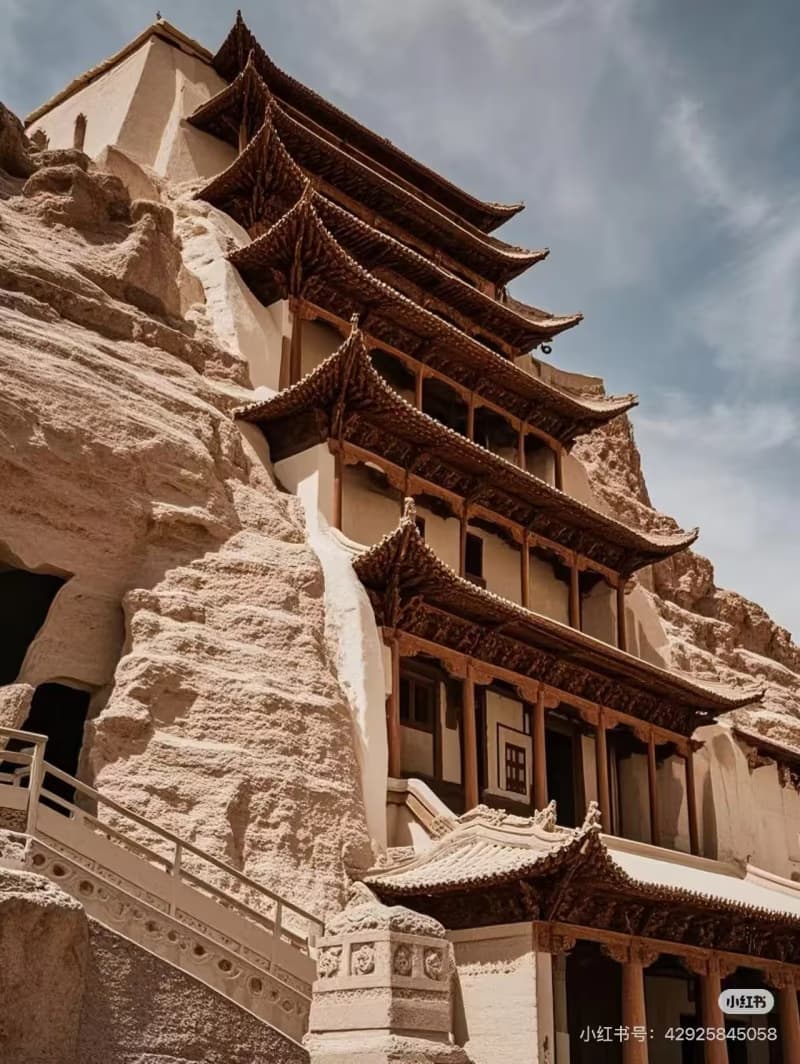
Chinese scholar Ji Xianlin—one of the leading Sinologists of the 20th century—once wrote that the four great civilisations of human history (Chinese, Indian, Greek and Islamic) converged in only one place on earth: Dunhuang. Walk into the Mogao Caves and you can verify this yourself. In a single cave complex dating to the 5th century, you'll recognise sculptural forms from the Gandharan tradition of northwestern India and Greece, Persian-style geometric patterns, lotus iconography from South Asian Buddhism and the fluid line-work of the Central Plains—all of it made here, not shipped in, not restored, sitting exactly where it was placed over a thousand years ago. No museum can recreate this, because it isn't a collection. It grew here.
Visitors from Japan, South Korea and Southeast Asia often say they feel an unexpected familiarity standing inside the caves—the Buddhist iconography on the walls shares its origins with what's in their own temple traditions at home, carried along the same road several centuries earlier. For visitors from Europe or North America, Dunhuang carries a different kind of weight: Marco Polo described this region; 19th-century explorer Aurel Stein removed manuscripts from Mogao's Library Cave and shipped them to the British Museum. This is the place where those stories actually happened.
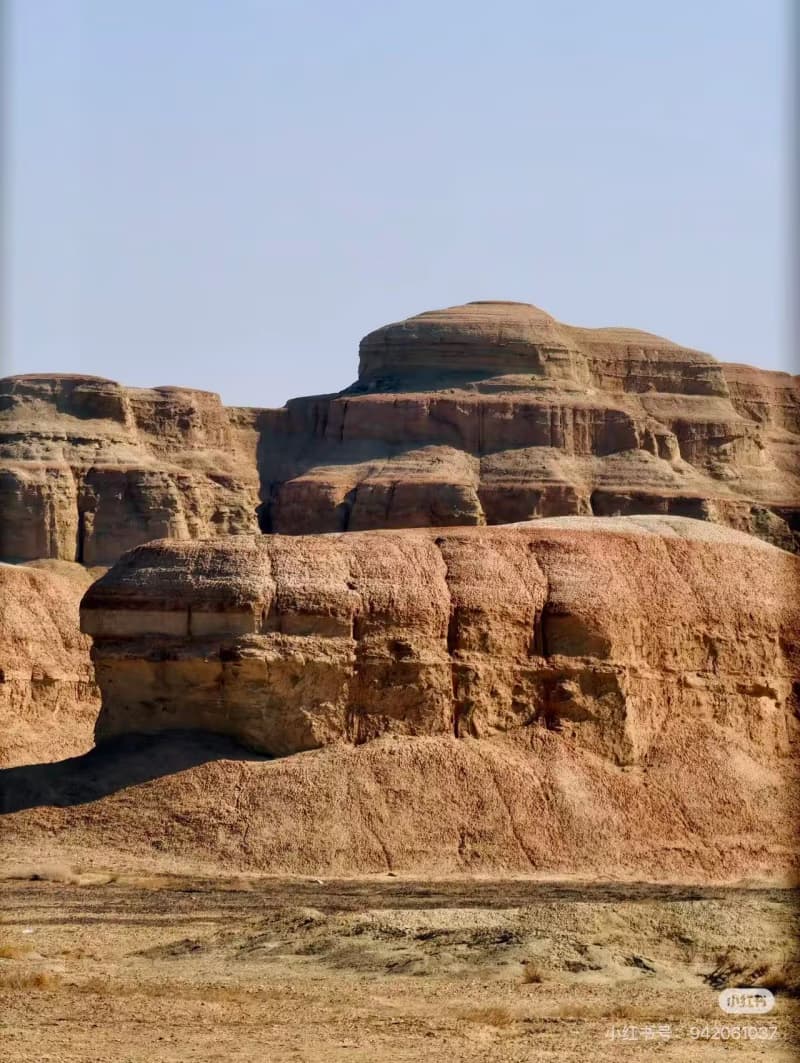
Beyond the caves, two more things here are genuinely unique in China. Mingsha Mountain and Crescent Moon Spring sit next to each other in a way that shouldn't be possible—kilometres of desert dunes, and a spring that the sand has never swallowed. Then there's Yardang National Geopark, 150 kilometres out of town: twenty kilometres of wind-eroded clay formations that look, under a low sun, like a red planet landscape.
One honest note: Dunhuang is far from anywhere, hot enough in summer to make you not want to leave your hotel, and more expensive than most inland cities. But if you're already in China, these three things together are worth a dedicated flight.
Ways to Experience Dunhuang
Walk Through Mogao Caves and Look at What Survives
Starting at the Digital Exhibition Center, you board a free shuttle to the cave complex. Each visit covers 8–10 caves with a guided tour lasting around an hour. Once you're inside, take time to look at where the images actually come from: three-dimensional sculpting from Central Asian traditions, geometric borders from Persia, South Asian devotional figures and Chinese ink-style painting technique appear side by side on the same wall. The "Flying Apsaras" (飞天)—those weightless, wingless figures drifting across the upper registers of almost every cave—change in style with each dynasty, Sui different from Tang different from Song.
English-language tours are available; confirm the schedule when you arrive at the Exhibition Center.
Mogao Caves: tickets, tours and what to expect
Watch the Light Change at Mingsha Dunes at Sunset
The ticket covers both Mingsha Mountain and Crescent Moon Spring. You can hike up the dunes on foot (steep, about 45 minutes) or ride a camel partway (extra charge, around ¥120 per person). Arrive two hours before sunset, climb to any ridge and wait. The colours across the dune face change quickly—gold to orange to a flat, purplish grey in roughly ten minutes. Crescent Moon Spring is a 15-minute walk from the base of the main dune.
Mingsha Mountain and Crescent Moon Spring: full guide
Drive Out to Yardang: the "Devil City"
Yardang National Geopark has no public transport. You need to join a day tour from Dunhuang (travel agencies around the night market and in most hotel lobbies offer a full-day western route including Yardang, Jade Gate Pass and other sites for around ¥280–400 per person including entrance fees). Once inside, you ride an electric cart through the formations. The tallest wind-eroded towers reach about 20 metres. The colours and shapes look remarkably similar to Mars rover footage—not a metaphor used lightly. The light is best an hour or two before sunset.
Yardang National Geopark: what to see and how to get there
Eat Your Way Through Shazhou Night Market
Shazhou Night Market runs along Yangguan East Road and is the most concentrated stretch of local food and craft stalls in the city. Donkey-meat noodles (驴肉黄面), hand-pulled lamb, skewers and apricot-skin tea are all here within a hundred metres of each other. Stall prices run lower than restaurants, which makes it a sensible first meal when you arrive. Nobody hard-sells; you can walk through without buying anything.
See a Dunhuang-Themed Performance
Two long-running shows play at venues in town: Again Dunhuang (又见敦煌), an immersive walk-through production, and Silk Road Flower Rain (丝路花雨), a traditional stage musical. Both use Silk Road and cave imagery as their subject matter. Running time is 60–90 minutes; tickets run ¥198–328 depending on seating—book at least a day ahead. Chinese-language programme notes are provided; neither show requires language comprehension to follow the visuals.
Top Attractions
Mogao Caves (莫高窟)
A UNESCO World Heritage Site with 492 cave temples preserving Buddhist murals and painted sculptures spanning the 4th to 14th centuries—the largest surviving complex of its kind anywhere. Peak-season tickets (April–November): ¥238–258. Off-season (December–March): ¥140–160. Daily cap: 6,000 visitors.
Foreign passport holders cannot book tickets through the standard online system. A quota of tickets is reserved for walk-up purchase at the ticket office each day. In peak season (May–October), those tickets can sell out by mid-morning. Arrive before the ticket office opens, or pre-arrange through a licensed travel agency (minimum group size typically applies). English-speaking guides are available.
Mogao Caves: booking, timing and what foreign visitors need to know
Mingsha Mountain and Crescent Moon Spring (鸣沙山月牙泉)
Six kilometres south of the city centre. The combined ticket (¥110) covers both the dune area and the spring. Camel rides, sand-sledding and dune buggies are all available at additional cost. The site stays open after dark, with lighting turned on at the spring. City bus Route 3 runs directly here from downtown (¥1–2).
Mingsha Mountain and Crescent Moon Spring: full guide
Yardang National Geopark (雅丹国家地质公园)
About 150 kilometres from the city, this is one of China's largest and best-preserved examples of yardang landforms—locally known as "Devil City" (魔鬼城). Private vehicles cannot enter the core area; you take an electric cart included with the ¥60 entrance fee. No public transport runs here. Book a day tour from the city.
Yardang National Geopark: day tour options and what to expect
What to Eat in Dunhuang
Lamb and wheat noodles are the two staples. Flavours run salty and savoury, portions are large, and a couple of dishes are essentially impossible to find outside this part of northwestern China.
Donkey-Meat Noodles (驴肉黄面)
Dunhuang's most distinctive dish. The noodles are made with alkaline water, which gives them a pale yellow colour and a springy, slightly firm texture. Braised donkey meat comes sliced thin on the side, along with chilli sauce, garlic water and a small broth. A bowl runs ¥15–25. Every large stall in Shazhou Night Market has it, and there are dedicated shops around the city centre.
Hand-Grabbed Lamb (手抓羊肉)
Bone-in lamb, simmered and served on a plate. You eat it with your hands—hence the name. Dip in salt or ground cumin. The meat here is softer than Xinjiang-style versions and noticeably less gamey. About ¥40–80 per portion; enough for two people.
Where: Halal restaurants and general Chinese restaurants both serve it; there are stall versions at the night market too.
Lamb Skewers (羊肉串)
Charcoal-grilled, seasoned with cumin and chilli powder, with generous chunks of meat. ¥3–5 per skewer. Similar in style to Xinjiang skewers but with a slightly saltier finish.
Where: Shazhou Night Market is most concentrated; after 7pm the queues form at the better stalls.
Apricot-Skin Tea (杏皮茶)
A local drink made by simmering dried apricot skins with rock sugar. Lightly fruity, served hot or cold, and genuinely unlike anything elsewhere in China. ¥5–15 a cup at the night market and most restaurants.
Sand-Leek Scrambled Eggs (沙葱炒鸡蛋)
Sand leek (sha cong) is a wild plant from the desert fringe, sharper and more aromatic than regular chives. Stir-fried with eggs, it's a home-style dish that tastes different enough from anything you'd find in eastern China to be worth ordering once. Not every restaurant has it—ask.
Where to Stay in Dunhuang
[First-time visitors] Downtown, near Shazhou Night Market
Walking distance to the night market, close to public transport, surrounded by restaurants and convenience stores. Mingsha Mountain is about 6 kilometres away—a 15-minute taxi ride.
Best for: Visitors whose main focus is Mogao Caves and Mingsha Mountain, who want to minimise transport dependence. Keep in mind: Noise from the market area runs late. Prices spike noticeably during national holidays.
[Dune experience] Near Mingsha Mountain scenic area
Several hotels cluster on the north side of the scenic area, some with direct dune views. If you want to walk to the park entrance for an early-morning climb or sunset session, this is the logical base.
Best for: Visitors planning multiple entries to Mingsha Mountain, or those who specifically want sunrise or sunset on the dunes. Keep in mind: Slightly further from the night market and Mogao transport links. Confirm the actual walking distance to the park gate before booking.
[Transit stopover] Near the airport or railway station
Both are about 10 kilometres from the city centre, with limited surrounding amenities. Practical only for late-night arrivals or very early departures.
Best for: Transit passengers who aren't staying for sightseeing. Keep in mind: Not recommended as your main base for a touring itinerary.
Search by neighbourhood on Booking.com or Ctrip to compare options in each area.
Getting to and Around Dunhuang
Getting to Dunhuang
By air: Dunhuang Mogao International Airport (DXN) is 13 kilometres east of the city. Summer schedules (roughly late March–late October) are much denser than winter, with direct flights from Beijing, Shanghai, Chengdu, Xi'an, Shenzhen and Guangzhou, plus frequent Lanzhou shuttles. The airport bus to the city centre costs ¥10; a taxi runs around ¥30 and takes about 20 minutes. For most visitors coming from major Chinese cities, flying is significantly faster than the train.
By train: Dunhuang Railway Station is about 10 kilometres east of the centre. There are high-speed connections from Jiayuguan (1.5–4 hours depending on service). From Xi'an, the most practical route is to change at Lanzhou—total journey time is roughly 9–15 hours by the fastest combination, which makes flying the better option for that corridor unless cost is a priority. Buy tickets with your passport at any station window or self-service machine; the 12306 app requires a Chinese phone number.
Foreign visitors note: You'll need your passport to buy train tickets and to check into most hotels. Keep the original with you—photocopies are not accepted at transport ticket windows.
Getting Around the City
Dunhuang is small. Most central points are reachable in under 10 minutes by taxi, with low starting fares. Didi works here and requires a Chinese phone number to register.
Useful bus routes: Route 3 runs to Mingsha Mountain (¥1–2). Route 12 runs from the railway station through the city to Mogao Caves (¥8, roughly hourly, about 40 minutes). Buses run about once an hour on both routes—not very reliable for tight schedules. If you're trying to reach Mogao early to queue for walk-up tickets, take a taxi.
Yardang has no public transport at all. The only options are a travel agency day tour (western route including Yardang, Jade Gate Pass and the Han Great Wall, around ¥280–400 per person including entrance fees and park transport) or self-driving. Travel agencies can be booked at stalls near Shazhou Night Market or through most hotel front desks.
Before You Go
- How to Pay in China — Cash is still useful in northwestern China; carry some alongside mobile payment options
- Staying Connected in China — Signal can drop at desert sites away from the city
- China Visa Guide — Entry requirements and what documents you'll need on arrival
Dunhuang-specific notes:
- Mogao Caves walk-up tickets sell out in peak season. On busy days in May–October, the daily quota can be gone by 9am. Arrive before the ticket office opens, or pre-book through a travel agency.
- Desert temperature swings are real. Even in summer, evenings can drop to 10°C (50°F). Bring a layer regardless of the forecast.
- UV is intense from April onward. Mingsha Mountain and Yardang have almost no shade. Pack sunscreen, a hat and a water bottle.
- English is functional at major tourist sites (Mogao has English tours; most park staff have basic signage). Away from the main sites, use a translation app.
- No photography inside the caves at Mogao. This is enforced strictly. Guides remind you at the entrance; phones stay in pockets once you're inside.
Three to four days is the right amount of time here. Mogao Caves needs a morning. Mingsha Mountain is worth staying for sunset. Yardang takes half a day with the drive. If you try to compress all of this into two days, something gets shortchanged.
Dunhuang is remote, expensive by Chinese standards in peak season, and genuinely difficult to reach quickly from most of the country. But the combination of what's here—a complete record of one of the world's great artistic and religious traditions preserved in the desert, plus two natural landscapes that exist nowhere else in China—is not the kind of thing you come back for later.
Plan it properly the first time.
Related guides:
- Mogao Caves — Booking process, what to expect inside, foreign visitor logistics
- Mingsha Mountain and Crescent Moon Spring — Camel rides, sunset timing, what the spring actually looks like
- Yardang National Geopark — Day tour options and what the formations look like up close
- Xi'an to Dunhuang — How to connect these two Silk Road cities