Last updated: May 2026. Opening hours and transport schedules change seasonally—confirm before booking.
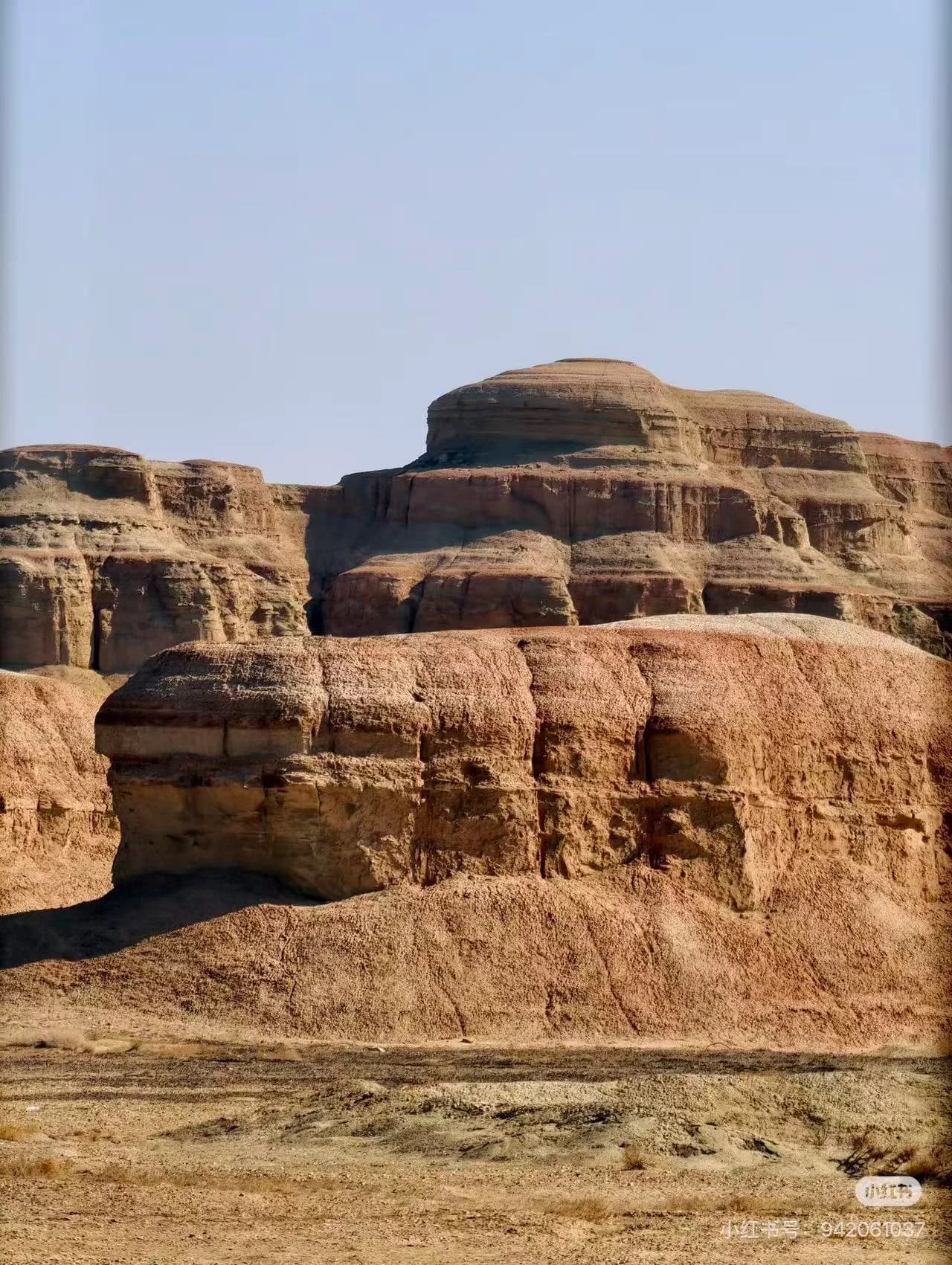
Yardang National Geopark sits about 180 kilometres northwest of Dunhuang—further out than any other attraction in the area. The park covers roughly 400 square kilometres of wind-eroded terrain, with earthen towers stretching 25 kilometres from east to west. The towers reach up to several dozen metres in height, their flat tops and sheer sides carved by centuries of desert wind. At night, the wind through the formations sounds like howling. The locals call it the Ghost City.
Getting there requires either a day tour (around ¥280–400 per person) or a chartered vehicle (¥400–600 for the car). Once inside, all visitors ride the park's shuttle buses—private vehicles are not permitted in the core zone. Spring and autumn are the practical seasons; summer brings 40°C heat and winds strong enough to make outdoor stops unpleasant.
What Makes it Worth It
Scale — The yardang field runs 25 kilometres from end to end. From the highest stop on the northern tour, formations stretch to the horizon in every direction. Photographs do not convey this well. The sense of scale only lands in person.
The logic of wind erosion — Yardang landforms develop where steady unidirectional winds scour exposed lakebed sediment over long periods. Because the wind comes from one direction, all the towers align along the same axis, their long sides parallel, tops level, walls vertical. From a distance the arrangement looks deliberate—like a ruined city laid out on a grid. Some towers still show the horizontal sediment layers from the original lakebed on their upper surfaces, a record of when this entire area was underwater.
Early light — In the hour after sunrise, low-angle light turns the tower faces from sand-yellow to deep orange. Shadows extend across the gravel floor between formations. This is also the quietest time of day.
What to Expect
Getting there—the main friction point for foreign visitors — There is no reliable public transport to the geopark. A seasonal tourist bus runs from Dunhuang's West Bus Station (around 7:30am, roughly ¥76 return), but schedules are irregular and the service is not set up for non-Chinese speakers. The two realistic options are: joining a day tour that includes the geopark (usually combined with the Yumen Pass ruins, bookable in English through Klook or Trip.com); or chartering a vehicle through your hotel (¥400–600 for the car, sensible split across three to five people). Book the day before and confirm that the driver will wait two hours at the park.
Inside the park — The park's shuttle buses are mandatory for all visitors and included in the ticket price. The northern circuit covers four stops, with 15–30 minutes at each. The full loop takes about two hours. Walking between stops is not permitted; activity is confined to the designated area around each stop.
Language — The ticket office has no English-speaking staff. If you book through Klook, English-speaking guides are typically included. Main signs around the park are bilingual, but interpretation panels are Chinese only.
Don't Miss
The northern circuit — The four stops on the northern route each have a name drawn from the shape of the surrounding formations: Peacock, Sphinx, Fleet, West Sea Fleet. The names are fanciful, but they give you something to look for. At each stop, walk past the shuttle bus to the open viewing area in front—that angle shows the full grouping of towers in relation to each other, which is harder to read from the vehicle. Good light makes the flat-topped profiles and sheer walls very clean to photograph with a telephoto lens.
First bus of the morning — The 7:30am opening bus catches the lowest sun angle of the day. The contrast between lit faces and shadow is at its strongest, and the colour shift across the formations is more pronounced than at any other time. Compared to midday, when the light is flat and the heat rises off the gravel in waves, the early-morning version of this place looks like a different landscape. If your tour departs early enough to catch the opening, the extra effort is noticeable in the photographs.
The panorama from the high point — The elevated stop at the back of the northern circuit gives a simultaneous view of the yardang field, the flat gravel desert, the distant Kumtagh Sand Desert, and the low mountain ridges beyond. You can see yardang towers, flat gravel desert, sand dunes, and mountain ridges all at once. That combination is not something you find often.
Practical Information
| Item | Details |
|---|---|
| Tickets | ¥120 (includes ¥50 entrance + ¥70 shuttle bus); concession ¥95 |
| Opening hours | 7:30–17:30 (confirm with park before visiting) |
| Getting there | Day tour ¥280–400/person; charter car ¥400–600/vehicle; seasonal tourist bus ~¥76 return |
| Booking | Gate (cash/Alipay/WeChat Pay); Klook or Trip.com English for day tour pre-booking |
| Payment | Cash, Alipay, WeChat Pay. International credit cards not reliable—bring cash |
| Shuttle bus | Included in ticket; departs approximately every 20 minutes |
| Time needed | ~2 hours inside the park; full day with transport (7–8 hours from Dunhuang) |
| Best season | April–May and September–October |
| Official site | yadanpark.com (Chinese only) |
Getting There
Day tour — Most tours combine the geopark with the Yumen Pass ruins, which are about 40 kilometres apart. Cost is roughly ¥280–400 per person including transfers. Klook and Trip.com's English site both list bookable options—this is the straightforward choice for foreign visitors who want English-language commentary and no logistics to manage.
Charter vehicle — Book through your hotel front desk or a booking platform. Budget ¥400–600 for the vehicle. Confirm the day before, specify the geopark by name, and make clear the driver needs to wait approximately two hours. Three or more people sharing makes this cheaper than a tour and gives you more flexibility on timing.
Tourist bus — Runs from Dunhuang West Bus Station in peak season, departing around 7:30am, returning in the afternoon. Return fare roughly ¥76. Schedules shift and communication at the station is in Chinese. Not recommended as the sole plan for foreign visitors.
The distance is the main commitment. Once you are there, two hours on the shuttle circuit is about right—enough to see the range of formations without the visit dragging. Pairing the geopark with the Yumen Pass ruins on the same day makes the trip worthwhile; the two sites are 40 kilometres apart and easy to combine with any day tour from Dunhuang.
Related guides: