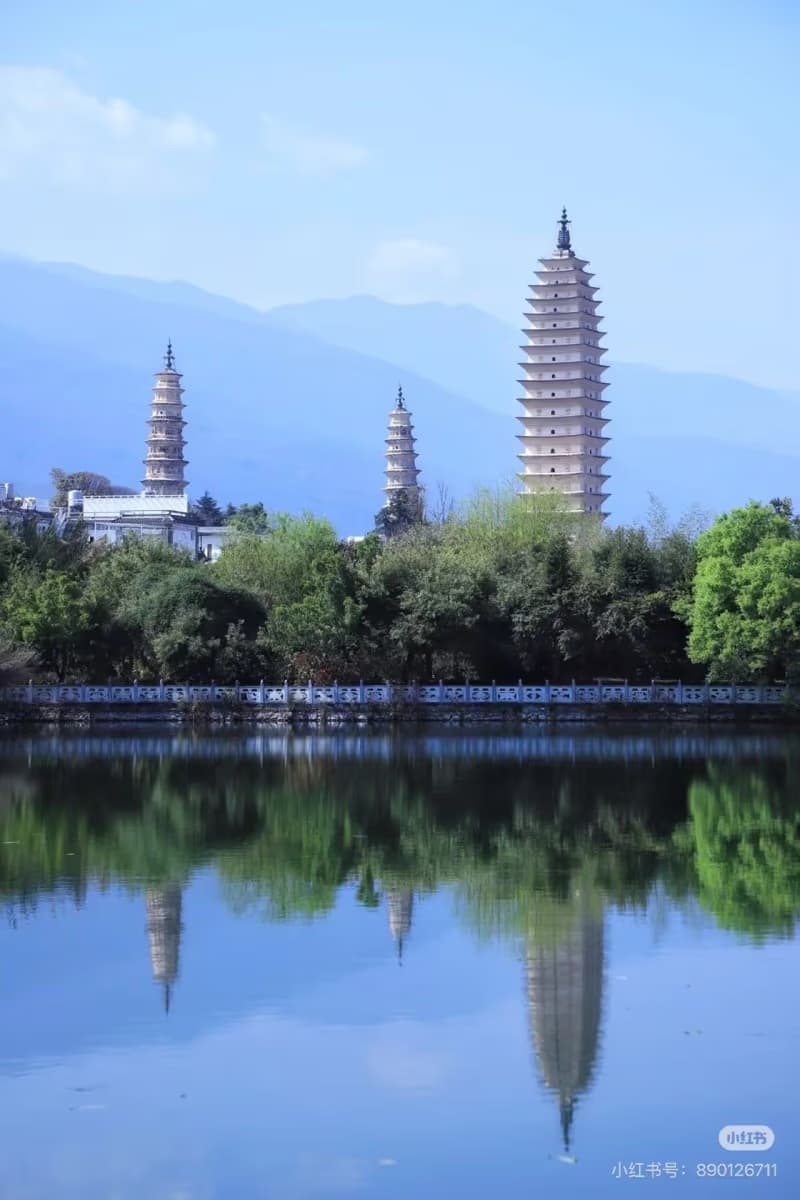
Last updated: April 2026
At 7 AM, everything feels perfect. Sunlight is soft, the road is flat, the lake sits to your left, and mountains anchor the right horizon. By 2 PM, wind arrives from the east—wind at force 5 or 6—hitting straight into your face. Your legs start burning. Sunscreen has been sweat away. Your phone says 40 kilometers remain. This is the truth about Erhai Lake cycling: the first half is a postcard; the second half is a physical test.
The full lake loop is about 130 kilometers. Every year, visitors try to complete it in one day. Most underestimate two things: the afternoon headwind and the hidden physical cost of riding at 2,000 meters elevation. This article isn't encouragement to finish the full loop in a day—it's a guide to choosing your section, understanding the conditions, and pacing your time.
What This Actually Is
The Erhai Eco-Corridor is a road system built around the lake. The western section—46 kilometers—is a dedicated bicycle lane (no motorized traffic). The surface is high-quality asphalt. It's pleasant to ride. The eastern section shares space with motorcars; the road surface and safety conditions are weaker.
Two ride styles exist: e-bikes and regular bicycles. E-bikes are what most people choose. They require less effort, move faster, and suit people who don't ride regularly. Regular bicycles work for people with solid riding experience and good fitness.
Is It Worth It
If you'll be in Dali (大理) for three days or more, spending half a day or a full day cycling around Erhai is among the most worthwhile uses of time. Not just for the lake scenery—the route passes through Bai minority villages, rice fields, fishing ports, independent coffee shops, and several small towns worth stopping for. Driving or taking a boat shows you the landscape. Cycling shows you life.
If you have only two days in Dali, pick one spot on the lake—Shuanglang or Xizhou—and spend half a day there. You don't need to cycle the full distance.
The Real Experience
Full Loop vs. Partial Route
Full Loop (130 kilometers — not recommended as a one-day trip)
On a regular bicycle, expect 10–12 hours. On an e-bike, 6–8 hours. The real problem isn't the distance. It's afternoon wind. Starting at noon, wind on the lake surface increases. By 2 or 3 PM, it can reach force 5 or 6. If you ride clockwise (west to east), the afternoon puts you on the eastern shore facing the wind directly. That's exhausting.
If you do want the full loop, split it across two days. Ride to Shuanglang the first day, stay overnight, and return the second day. This way, each day is 60–70 kilometers—a reasonable pace—and you catch the sunset at Shuanglang.
Partial Route (Recommended)
Choose a section of the west or east shore. Ride for 3–5 hours. Experience the lake. Come back. This works better.
Three Recommended Routes
Route A: Old Town to Xizhou (West Shore, ~25 kilometers, 2–3 hours)
This is the classic starter section. The entire route uses the western eco-corridor—a dedicated bicycle lane. The surface is flat and smooth. You pass the famous Panxi S-bend (a prime photo spot), Caicun Wetland, and several small Bai villages. The Panxi S-bend itself deserves a stop—it's the angle where the road curves and the lake catches light in a way that photographs cleanly. Caicun Wetland is quieter, good for spotting water birds or just sitting on a bench if your legs need rest. Reach Xizhou and eat xizhou baba, a local flatbread pastry filled with meats or vegetables, served warm. Wander through Sifang Street, the main pedestrian area with traditional Bai architecture (wood frames, tile roofs, blue and white tilework). Look into courtyards if doors are open. Then ride back or take a vehicle back to the Old Town. Half a day. Works for everyone.
Route B: Xizhou to Shuanglang (West Shore, ~20 kilometers, 1.5–2.5 hours)
You can attach this to Route A or start here after being dropped off in Xizhou. The route passes Longquan Peninsula, which offers 360-degree views of the lake—the peninsula juts into the water with mountains directly across—and Haisha Park, a small waterfront green space where locals walk. In Shuanglang, eat lunch at a small restaurant near the dock, drink coffee at one of the independent coffee shops (many run by artists or relocated urbanites), and position yourself to watch the sunset toward the mountains on the far side. The sky turns pink and the water turns copper. Shuanglang itself has become something of a tourist town with galleries and boutique hotels, but the core—the dock, the old streets, the fishing boats—remains. Biking from the Old Town to Shuanglang is roughly 45 kilometers—just fits a half-day with the morning start—but return requires a ride-share (convenient and affordable via Didi, the Chinese Uber equivalent) or cycling back on tired legs.
Route C: Wase to Wenbi Village (East Shore, ~13 kilometers, 1.5–2 hours)
This section of the eastern shore is the quietest and has the strongest scenery. Fewer people. Wide views. You see both the mountains and the lake. Wase Dock is the most photographed spot on Erhai. This part doesn't use the dedicated lane; it shares road with motorized traffic, so attention to safety is needed. Ride in the afternoon to catch the sunset.
E-bike vs. Regular Bicycle
| Category | E-bike | Regular Bicycle |
|---|---|---|
| Cost | ¥20–80/day | ~¥40/day |
| Physical effort | Low | High |
| Speed | Fast | Slow |
| Range | 60–80 km (confirm) | Unlimited |
| Best for | Most visitors | Experienced riders |
The key issue with e-bikes is range. When renting, ask directly: How many kilometers on a full charge? Where can you recharge or swap batteries mid-ride? For partial routes (under 50 kilometers), most e-bikes have enough power. For the full loop, you'll need to recharge. Shuanglang and Xizhou have charging stations.
Rental locations: The Old Town has many rental shops. Brands like Hello E-bike have multiple pickup points. Both Alipay and WeChat Pay work.
How to Do It
Half-Day Plan (Most Recommended)
- Depart Old Town at 7:00–7:30 AM
- Follow the western eco-corridor (dedicated lane, safe and smooth)
- Stop at Panxi S-bend for photos (20 minutes)
- Arrive Xizhou around 10 AM; eat xizhou baba; walk through the Bai architecture
- Return by 11 AM, either cycling back or taking a ride-share
- Total distance: ~50 kilometers (round trip), total time: 4–5 hours
Full-Day Plan
- Depart at 6:30 AM
- Old Town → Xizhou → Shuanglang (~45 kilometers); have lunch and rest in Shuanglang
- Afternoon: Shuanglang → Wase → Wenbi Village (~13 kilometers); watch the sunset
- Evening: Ride-share from Wase back to Old Town (~40 minutes; ¥60–80)
- Total cycling: ~60 kilometers; total ride-share: ~40 kilometers; total time: one full day
Wind Strategy
This is what most guides don't mention: afternoon wind is the biggest thing on Erhai. It decides whether you have a good day or a rough one.
- December–April is wind season. Afternoon can hit force 6 or 7. The lake is in a valley; wind channels down.
- Outside wind season, you still notice stronger wind after 2 or 3 PM. It happens every day.
- If you ride clockwise (west to east), the afternoon puts you on the eastern shore facing the wind directly. You work harder, go slower, feel it pile up.
- If you ride counter-clockwise (east to west), the afternoon wind pushes you along. But the eastern shore has cars and bikes, and the scenery's not as good.
Plan: Whatever direction you go, finish your main riding in the morning. Aim to stop riding around 1 PM, before the afternoon wind gets bad. If afternoon wind gets too strong while you're out, call a ride-share and get back—that's the smart move, not quitting. A 30-minute ride-share costs ¥40–60 and beats riding another hour when you're exhausted.
Common Mistakes
- Underestimating afternoon wind — Force 5 or 6 wind can slow you to walking speed. Your cadence drops. Your legs burn. It destroys morale. Schedule your main distance for morning, finish by early afternoon, and you'll have a different experience.
- Not confirming e-bike range before departure — Renting an e-bike with unclear range is risky. You don't want to run out of battery at kilometer 40 and face walking the bike back. Ask directly at rental: How far on a full charge? Where can I recharge or swap batteries mid-ride? Many shops will deliver a fresh battery if you call ahead.
- Riding the eastern shore without attention to traffic safety — It's not a dedicated lane. Larger vehicles share the road. Motorcycles pass close. Stay right, don't ride side-by-side with friends (you take up two lanes), and use a mirror or glance frequently.
- Going without adequate water — Carry at least two liters. Water shops exist along the route, but spacing isn't guaranteed—you might ride 15 kilometers between shops. Dehydration at altitude makes fatigue worse.
- Trying to finish the full loop on tired legs — Cycling 130 kilometers at 2,000 meters elevation when fatigue sets in is not an achievement to pursue. It's a way to ruin your body for the next two days—sore quads, lower back pain, chafing. Ride a partial route and finish feeling strong, not destroyed. You'll remember the day better.
Before You Go Checklist
- □ Sunscreen (SPF 50+), sunglasses, hat or head wrap
- □ At least two liters of water plus energy snacks
- □ Lightweight windproof jacket for afternoon cooling
- □ Phone fully charged plus power bank (for navigation and photos)
- □ Confirm e-bike range and charging locations
- □ Check the day's weather forecast, especially wind speed and direction
The best version of Erhai cycling isn't "finished 130 kilometers in a day." It's this: Leave at 7 AM. Ride slowly along the western shore toward Xizhou. Stop at some spot on the lakeshore for ten minutes. Eat xizhou baba that's still warm. Watch the lake. The 130-kilometer number doesn't matter. What matters is stopping and staying still by the water for a while.