Last updated: April 2026
Three in the afternoon on Fuxing Road in the old city — sunlight hits the white walls of Bai ethnic houses hard enough to need sunglasses. Someone in a side lane is roasting roasted milk sheets (乳扇) — thin, fried rectangles of milk paste, 6 yuan each, eaten while you walk. Ahead is Wuhua Tower, and from its top you see the snow line on Cangshan Mountain to the west and the water surface of Erhai Lake to the east at the same time. Dali is a pocket-sized old city wedged between a mountain and a lake at 2000 meters elevation, with clean air, slow rhythm, and sun bright enough that squinting without dark glasses isn't optional.
Many travelers bracket Dali with Lijiang, looking for the difference. It's straightforward: Lijiang's old city is mostly a tourism commercial complex now — locals moved out, leaving bars and souvenir shops; Dali's old city still has people living in it. The vegetable market opens at 6 a.m., and elderly women carrying shopping baskets walk past you while you're having breakfast. You feel this difference within five minutes of entering the old city.
At a Glance
| Item | Details |
|---|---|
| Best time to visit | March-May, September-November (avoid June-August rainy season and December-February high winds) |
| Recommended stay | 3-4 days |
| Budget per day | Mid-range 300-500 yuan (accommodation, food, transport, admission) |
| Getting there | HSR: Kunming to Dali 2-3 hours, 109-155 yuan; or flight from Kunming (~1 hour, but factor in airport time) |
| Known for | Erhai Lake, Cangshan Mountain, Bai ethnic culture, Three Pagodas, indigo dyeing |
| Special note | Elevation 2000 meters, extreme sun — SPF50+ sunscreen, sunglasses, and a hat are non-negotiable |
Why Dali Deserves Your Time
China has no shortage of old cities, but most of them have calcified into a template: put on costumes for photos, buy beaded bracelets, eat fermented tofu. Dali mostly sidesteps this.
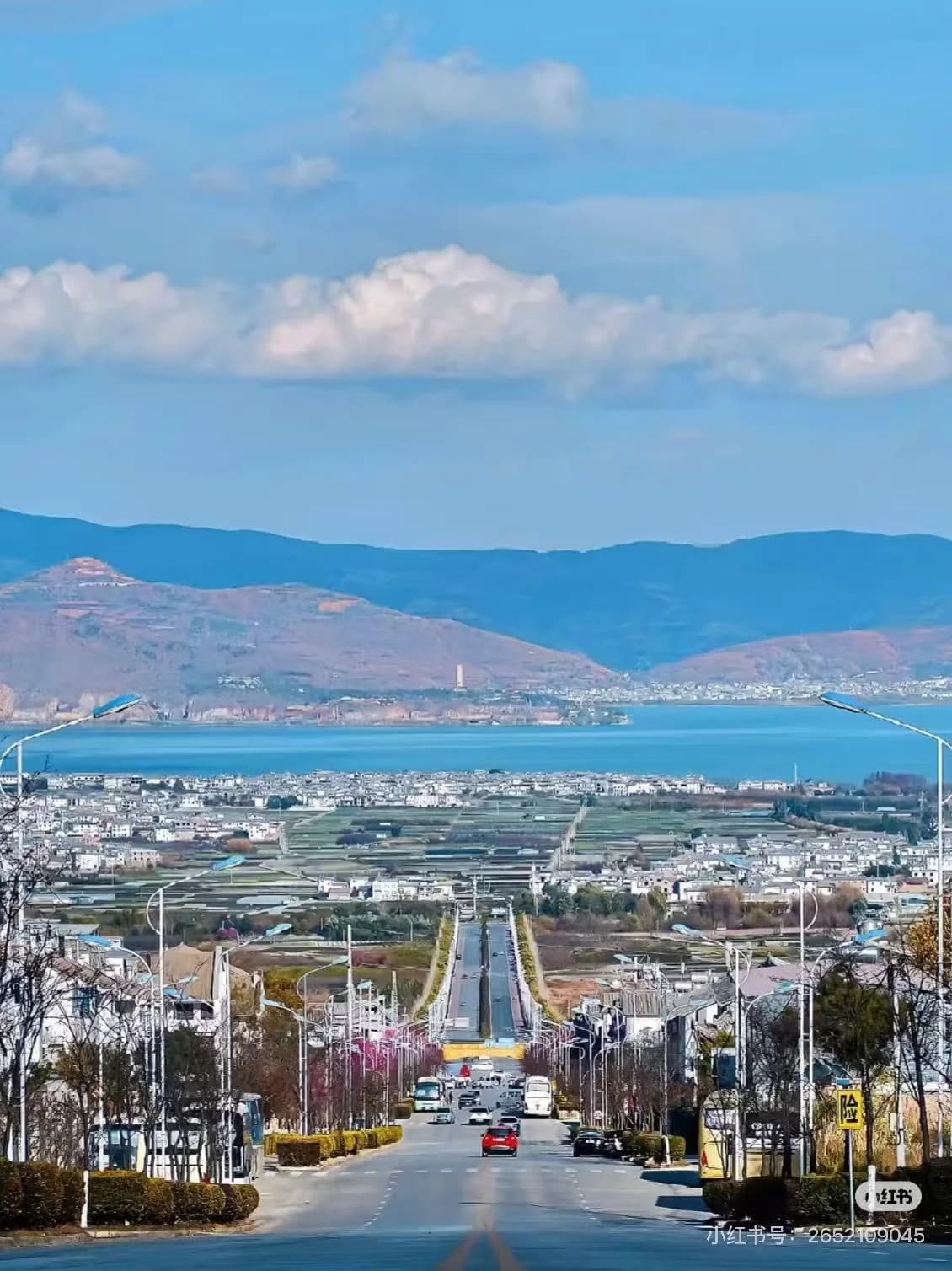
Dali has two singular things. The first is its geography: Cangshan Mountain rises above 3500 meters to the west, Erhai Lake — Yunnan's second-largest — sits to the east, and the old city occupies the gradual slope between them. Stand on any roof in the old city and you see both the snow line and the water at once — there's no second place like this among China's old cities.
The second is the Bai ethnic group. Dali is the Bai Autonomous Prefecture, and Bai people make up more than one-third of the local population. They have their own architecture (white walls, carved wooden windows and door frames, decorative screens), their own food (fried milk sheets, sour-spiced fish, three-course tea ceremony), and their own handicrafts (indigo dyeing has existed here for over a thousand years). This isn't performed "ethnic flavor" — it's something you encounter in the morning market, in Xizhou town, at roadside food stalls.
If your Yunnan itinerary includes three days, Dali claims them. It's 170 kilometers from Lijiang with a two-hour HSR connection, so it slots easily into the Kunming-Dali-Lijiang loop.
Ways to Experience Dali
Erhai Lake Circumference
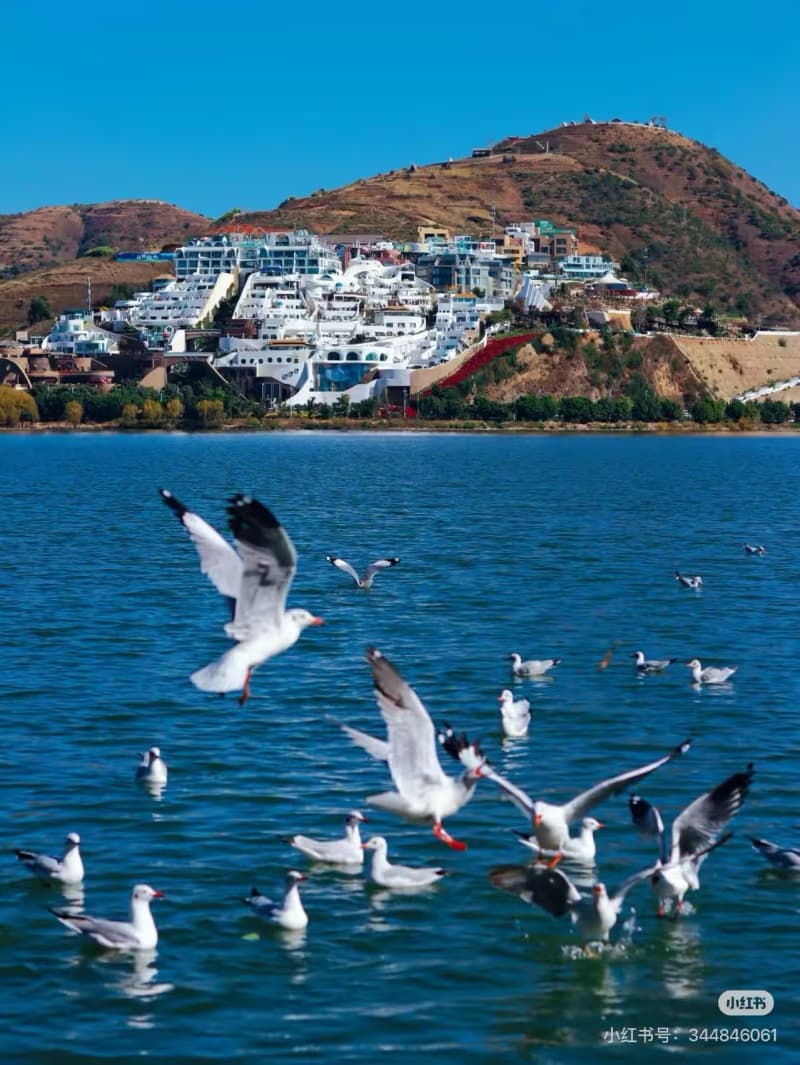
Erhai is Dali's core landscape. One loop is about 130 kilometers. You can ride around it (electric scooters work best), take a boat, or stay in a lakeside village for a night and watch the sunrise. Shuanglang and Xizhou are the two villages worth stopping in.
Cangshan Mountain Summit
Three cable cars; the highest reaches above 3200 meters. Jade Belt Path — a 22-kilometer trail that runs along the mountainside, passing waterfalls and temples. You don't need to walk the full route; take the cable car up, walk a section, come back down.
Chongsheng Temple Three Pagodas
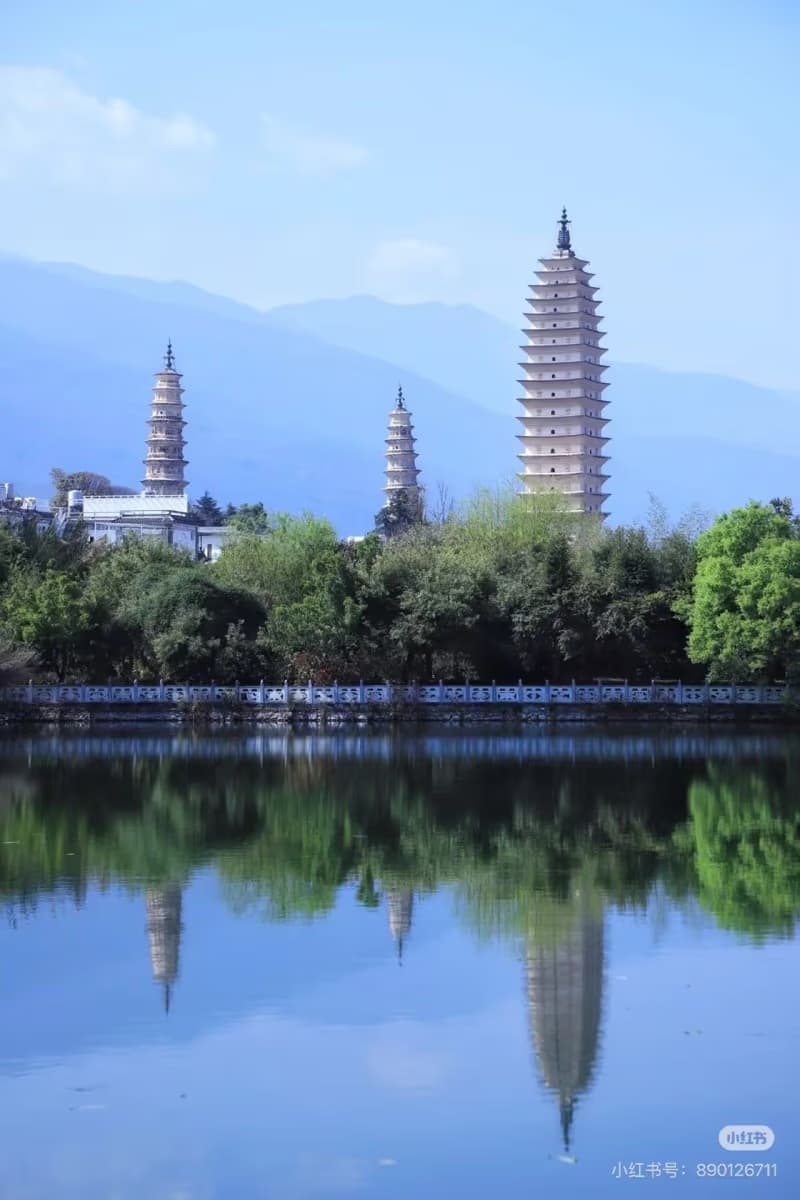
Dali's emblem — built during the Nanzhao and Dali kingdoms (9th-12th centuries). The three white towers against the Cangshan backdrop appear in nearly every Dali photograph. Admission 121 yuan is not cheap, but includes the entire temple complex.
Three Pagodas of Chongsheng Temple
Xizhou and Zhoucheng: Bai Culture Half-Day
Xizhou town preserves over 150 Ming, Qing, and Republican-era Bai mansions — the most concentrated display of traditional Bai architecture. Next to it, Zhoucheng is the birthplace of indigo dyeing; workshops there let you try it. Early morning at Xizhou's Sixiang Street market shows daily Bai life in motion.
Bai Cuisine Crawl
Fried milk sheets (milk paste formed into thin rectangles, roasted or fried), thick rice noodles (roasted until both sides turn golden), sour-spiced fish (Erhai carp with a tamarind-lime-chili base), peanut soup, roasted rice cakes. Fuxing Road becomes a food street at night; the market north of the old city gates is most crowded before 9 a.m.
Dali Bai Cuisine and Market Food Walk
Erhai Lake Bike Circuit Day
Rent an electric scooter or bicycle and move along the lake, stopping as you wish. The full 130 kilometers doesn't happen in one day, but the section from old city to Xizhou — about 30 kilometers, hugging the shore — packs the best views into half a day.
What to Eat in Dali
Dali food carries Bai flavor: fresh, tart, and spicy as the default mode, without relying on heavy oil or excess salt.
Fried Milk Sheets (乳扇) — 6 yuan each — Dali's most recognizable food. Milk curdled with sour water, stretched into thin fan-shaped rectangles, then roasted or fried and dusted with sugar or salt. "Yang's Fried Milk Sheets" at the Fuxing Road entrance is the place everyone goes to. Tastes like mild cheese mixed with a thin crepe.
Thick Rice Noodles (饵丝/饵块) — 8-15 yuan — Made from rice, roasted over charcoal until both sides puff and turn golden, eaten with sauce mixed in. Standard Dali breakfast.
Sour-Spiced Fish (酸辣鱼) — 40-80 yuan per serving — Erhai carp, base built from unripe mango, preserved plum, and chili. Nearly every local restaurant carries this dish; look for signs saying "Erhai live fish" and you'll find real versions.
Three-Course Tea (三道茶) — Bai tradition for receiving guests, designated national intangible cultural heritage. Three cups represent bitter, sweet, and lingering sweetness — symbolizing life's three stages. Experience it in some Bai mansions or tourism performances, not street food.
Where to eat: Fuxing Road becomes a food street 6-9 p.m.; the morning market north of the gates is best before 9 a.m. (follow locals carrying shopping baskets; skip the tourist row on Huguo Road).
Where to Stay in Dali
Accommodation splits two ways.
Old city interior: Most convenient; walking reaches every old-city site. Bai townhouses converted to guesthouses fill the 100-300 yuan per night range. Downside: peak season evenings might have bar noise.
Erhai lakeside: Shuanglang and Caicun are the main options. Shuanglang sits on the lake's east shore with the best angles for sunrise and Cangshan views — quieter, good if you want away from old-city crowds. Caicun sits north of the old city and closer to the shore, near but more peaceful. Lakeside rooms range 200-700 yuan.
Recommendation: Two nights in the old city works fine. Three nights or more, split one night lakeside for a different pace.
Getting to Dali and Getting Around
Getting to Dali
Kunming to Dali (HSR, recommended)
- Duration: 2-3 hours
- Cost: Second class, 109-155 yuan
- Frequency: 80+ departures daily, trains every 25 minutes, 6 a.m. to 9:30 p.m.
- From Dali station to old city: taxi 40-50 yuan, about 30 minutes
Dali to Lijiang (HSR)
- Duration: 2-2.5 hours, 72 yuan and up
- About 8 departures daily
By air: Kunming to Dali takes about 1 hour flight time, but airport transit on both ends adds time until the math matches HSR. Cost is more than double. Skip this option.
Getting Around Dali
Electric scooter (best option) — Renting one for a day is the most flexible way to experience Dali. Easy for lake loops, Xizhou trips, or Shuanglang runs. Brands like Hello offer multiple pickup points in the old city.
Bicycle — 20-30 yuan per day. Works for old city surroundings and short lake segments. The full 130-kilometer loop on a regular bicycle isn't realistic; choose a section.
Buses — Old city to Xiaguan (new city) costs 2-3 yuan; lakeside villages have routes too. Cheap, but schedules shift.
Didi/taxi — Didi operates here. Taxis start at 8 yuan. Old city to train station runs 40-50 yuan.
Before You Go
- Elevation 2000 meters — High-altitude sickness is unlikely, but the sun is extreme. SPF50+ sunscreen, sunglasses, and a hat are required, not optional
- Wide day-night temperature swing — Midday T-shirt weather; early morning and evening need a jacket or sweater. Even summer requires a long-sleeved layer
- Wind — Dali earns the nickname "Wind City." December-February winds can exceed force 8. Winter travel requires a wind-resistant shell
- Payment — Alipay and WeChat Pay cover most vendors, but markets and older stalls may accept only cash; carry 100 yuan in small bills
- Language — Bai has its own language, but Mandarin is universal. English works partially in old-city tourism zones, rarely beyond. Carry a translation app
- Three to four days is right — Old city 1 day, Cangshan or Three Pagodas 1 day, Erhai lake loop or Xizhou 1 day, and if a fourth: an overnight in Shuanglang
Final Word
Between Cangshan's snow line and Erhai's water, a pocket-sized old city at 2000 meters with abundant sun and modest living costs. That formula has drawn roughly 100,000 young Chinese to settle long-term in recent years — software developers, designers, musicians, cafe owners, novelists — calling themselves "New Dali People" and the place "Dalifornia." The old city's lanes now have dozens of live-music bars, independent bookshops, and craft studios; evenings you'll see guitar players and indigo-dyed fabric sellers on street corners. Dali's geography gave those newcomers a reason to stay, and those newcomers gave Dali something that's missing in other Chinese old cities — ease, freedom, no hurry.
Related Links
- Erhai Lake — Boat routes, villages, and lake-circuit itineraries
- Three Pagodas of Chongsheng Temple — History and architecture
- Cangshan Mountain — Cable car options and hiking routes
- How to Pay in China — Mobile payment setup and cash
- Kunming-Dali-Lijiang by High-Speed Rail — Full route and timing