Last updated: May 2026. Ticket systems, opening hours, and booking requirements change regularly. Verify each item before your trip.
China is not the easiest family destination to organize, but three things make it worth the effort: the Great Wall, giant pandas, and Shanghai's skyline. These are not just impressive on paper — they land differently with kids than with adults. The toboggan ride down from Mutianyu Wall produces the kind of memory kids still talk about years later; standing in front of a panda eating bamboo at 8 a.m. in Chengdu is something no zoo at home quite prepares them for. This 14-day itinerary splits the time between Beijing (6 days), Shanghai (4 days), and Chengdu (4 days) at a pace families can actually sustain — no waking up at 5 a.m. every day, no six attractions before lunch. The focus is getting the big things right and leaving room for the unexpected.
Is This Right For You
- ✅ A good fit for families with kids aged 5 and up who can handle a few days of walking and a city-switch every few days. If seeing the Great Wall, giant pandas, and a proper skyline in one trip is the goal, this route delivers all three without stretching across the whole country.
- ✅ Works well for parents willing to pre-book key tickets — Forbidden City, Mutianyu cable car, and Chengdu Panda Base all require advance reservations. The itinerary is built around that constraint.
- ❌ Not recommended for families with children under 5. The Great Wall, Forbidden City, and parts of Chengdu are not stroller-accessible, and the daily walking distance will wear out toddlers fast.
- ❌ Skip this if your family prefers staying put in one place rather than switching cities. This route moves every 4–6 days, and the city transitions — especially the Beijing-to-Shanghai rail leg — take a chunk of the day.
Route Overview
| Days | City | Daily Focus | How to Get There |
|---|---|---|---|
| Day 1 | Beijing | Arrival, check in, first evening walk | — |
| Day 2 | Beijing | Tiananmen Square + Forbidden City (天安门/故宫) | Subway / walk |
| Day 3 | Beijing | Mutianyu Great Wall — cable car + toboggan | Private car or Didi |
| Day 4 | Beijing | Temple of Heaven (天坛) + Nanluoguxiang hutong | Subway |
| Day 5 | Beijing | Summer Palace (颐和园) — lakeside half-day | Subway / Didi |
| Day 6 | Beijing | Beijing Zoo + packing day | Subway |
| Day 7 | Shanghai | High-speed rail transfer, Bund evening walk | G-train, ~4.5 hrs |
| Day 8 | Shanghai | Shanghai Natural History Museum + Pudong skyline | Subway |
| Day 9 | Shanghai | Yuyuan Garden (豫园) + City God Temple snacks + Xintiandi | Subway / walk |
| Day 10 | Shanghai | French Concession wander, pack for flight | Walk / subway |
| Day 11 | Chengdu | Fly to Chengdu, Kuanzhai Alley (宽窄巷子) afternoon | Domestic flight, ~2.5 hrs |
| Day 12 | Chengdu | Panda Base — get there by 8 a.m. | Didi / shuttle |
| Day 13 | Chengdu | Leshan Giant Buddha day trip | Train + ferry |
| Day 14 | Chengdu | Wuhou Shrine (武侯祠) + Jinli, afternoon departure | Subway / Didi |
Why this day split?
Beijing gets 6 days because the major sites do not compress well — the Great Wall needs a full day, the Forbidden City needs at least half a day to walk without rushing, and the Temple of Heaven deserves its own morning without being combined with something else. Shanghai gets 4 days at a lighter pace, which is appropriate; the city's main appeal is less about ticking sites and more about feeling how a major Chinese city moves. Chengdu gets 4 days: one full morning for pandas, one day out to Leshan, and the rest for eating and walking the old town streets. The Beijing-to-Shanghai leg is a 4.5-hour G-train — kids eat, sleep, and watch things out the window, and it beats flying with checked luggage.
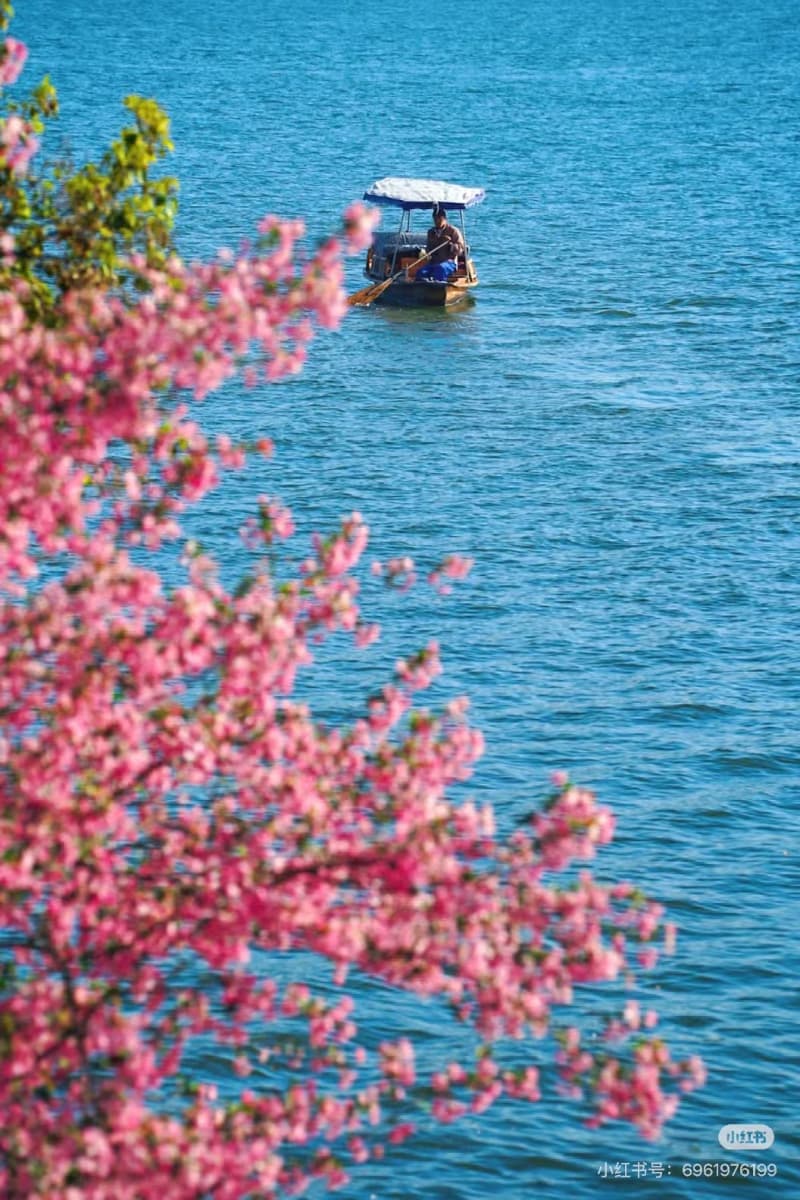
Best time to go: March–May (spring, comfortable temperatures, Beijing has blossoms) or September–November (autumn, cooler and cleaner air in Beijing). Avoid July–August in Beijing — heat plus peak crowds at every major site. Skip the week around May 1st (Labor Day Golden Week) and October 1–7 (National Day) — ticket availability collapses and queues double.
Estimated budget (mid-range, excluding international flights): CNY 40,000–70,000 for a family of four across 14 days. Hotel is the biggest variable — a decent 4-star in central Beijing or Shanghai runs CNY 600–1,000/night.
Difficulty: Moderate. Navigation is manageable once Didi is set up and an offline map app is downloaded. The main complexity is ticket pre-booking — three major attractions require passport-number reservations made days in advance.
Day 1: Land in Beijing, Get Oriented
Afternoon: Into the city
From Beijing Capital Airport (Terminal 3), the Airport Express train runs to Dongzhimen station in about 30 minutes (CNY 25/person), with a subway connection into the center from there. Families with heavy bags may prefer Didi — a ride to the central Dongcheng district typically costs CNY 150–200.
Recommended base: Wangfujing or the Dongcheng area. Both subway lines 2 and 5 connect to all the major sites on this itinerary.
Evening: Tiananmen Square (a quick look)
On arrival day, keep the agenda short. Tiananmen Square is free to enter at any hour and needs no reservation. Walk across to get a sense of scale — first-timers are usually surprised by how large it is — then find dinner in the Wangfujing area. Peking duck restaurants are everywhere, as are Beijing noodle shops. McDonald's and KFC are both on the main pedestrian street if the kids need a backup option the first night.
Day 2: Tiananmen + Forbidden City (故宫)
Morning: Tiananmen Square + Palace entrance
Book tickets before you travel. The Forbidden City (Palace Museum) is online-only — no tickets sold at the gate. Foreign visitors need their passport number to purchase through the official Palace Museum mini-program or website. Tickets cost CNY 60 per adult; children under 6 enter free, and there are reduced rates for students. Book 7–14 days ahead; popular dates sell out.
Arriving before 9 a.m. opening means missing the main wave. Walk through Tiananmen Square first (30 minutes), then enter through the Meridian Gate from the south.
Morning to afternoon: Inside the Forbidden City (故宫)
The main north-south axis runs about 2.5 km end to end. With kids, plan for 3–4 hours covering the main throne halls, the Imperial Garden, and the Treasure Gallery. The palace cats — over 100 stray cats that live inside the complex — generate more genuine excitement from children than most of the actual exhibits. The official English audio guide is CNY 40 to rent (CNY 100 deposit). English signage throughout is solid; staff speak little English, but a translation app handles most situations.
Evening: Wangfujing snack street
The market stalls north of Wangfujing sell candied hawthorn skewers (sugar-coated hawthorn on a stick), scorpions-on-a-stick for the adventurous, and a range of Beijing street snacks. Kids find the stalls visually entertaining regardless of what they eat.
Day 3: Mutianyu Great Wall (慕田峪)
Full day: Mutianyu section
Mutianyu is the right Wall section for families, for two clear reasons: the cable car takes you up without the climb (CNY 80 per adult, CNY 40 per child, one-way), and the toboggan slide brings you back down (CNY 80 per person, minimum age/height restrictions apply). Both features turn a history lesson into something kids actually want to do again.
This section is well-maintained, less crowded than Badaling, and the walking path between towers is wide enough not to feel dangerous with children. The restored stretch between towers 6 and 20 takes about 1.5–2 hours at a relaxed pace; going further is possible if the group has energy.
Getting there: private car round-trip CNY 400–500, or Didi one-way CNY 150–200. Public transit combination is possible but involves multiple transfers — not recommended with kids and day packs.
Arrival time: Aim for 9 a.m. or earlier. Crowds build significantly by noon, especially on weekends. Tickets can be bought on-site but getting cable car tickets ahead via mini-program avoids one queue. The wall itself is not stroller-accessible; wear shoes with solid soles.
Payment: Cable car and entrance tickets accept Alipay, WeChat Pay, and cash.
Day 4: Temple of Heaven (天坛) + Nanluoguxiang Hutong
Morning: Temple of Heaven (天坛)
The park covers 273 hectares — the Hall of Prayer for Good Harvests (the round, three-tiered building on every postcard) is the centerpiece, but the most interesting thing for kids is often the surrounding park itself: residents doing morning tai chi, spinning tops, and walking birds in cages. These are ordinary Tuesday mornings for Beijingers and fairly extraordinary for visitors. The park entry is CNY 15; the Hall of Prayer requires an additional CNY 30. Budget about 2–2.5 hours.
Afternoon: Nanluoguxiang Hutong
One of Beijing's most accessible old-neighborhood streets. The lane is pedestrianized, lined with small shops, and worth 1.5–2 hours of wandering. Kids reliably stop at the sugar-figure artists (they shape animals from hot caramel syrup in real time, CNY 10–30 each), and the ice cream and dessert stalls hold up well on a warm afternoon. Arrive before 2 p.m. to beat the biggest crowd of the day.
Day 5: Summer Palace (颐和园)
Morning: Summer Palace (颐和园)
Kunming Lake and the Long Corridor make the Summer Palace feel more like a park than a traditional sightseeing stop, which is a relief on Day 5. Renting an electric pedal boat on the lake (CNY 80–120/hour) is the reliable way to make a 3-hour site visit feel like recreation rather than obligation. The Long Corridor — a covered walkway painted with thousands of scenes — is a 15-minute walk that kids can handle without complaint. Entry CNY 30; season and holiday pricing may vary.
Afternoon: Free time / shopping
Day 5 is a good opportunity to slow down. Sleep in slightly, do laundry at the hotel, or let kids pick what they want to do. Sanlitun or Xidan are both easy subway trips for families who want to shop or need to replace anything.
Day 6: Beijing Zoo, Then Pack
Morning: Beijing Zoo + Giant Panda House
Beijing Zoo has a giant panda section (entry to the zoo CNY 15, panda area CNY 5 additional) and golden monkeys, which most visitors from outside China have never seen before. Budget 2–3 hours. It is worth seeing pandas here before Chengdu as a preview; the Chengdu Panda Base experience is more specialized and more immersive, but Beijing Zoo gives a first look without a long trip.
Afternoon: Prepare for the rail journey
Beijing-to-Shanghai G-trains depart from Beijing South Station. Plan to arrive at the station 40 minutes before departure. Tickets are bought online through Trip.com (English-language, works for foreign passport holders) or the 12306 app (requires Chinese phone number for registration). Book 14 days ahead for the best seat selection; peak-holiday tickets disappear fast.
Day 7: High-Speed Rail to Shanghai, Bund Evening
Full day: Beijing South → Shanghai Hongqiao
G-train runs about 4.5 hours. Dining car service, snack trolleys, and power sockets at every seat — for kids, this is manageable with downloaded shows and some snacks from the convenience stores near the station. A direct taxi or Didi from Hongqiao station to central Shanghai takes 30–45 minutes (CNY 80–120).
Recommended base: Jing'an or People's Square area. Metro lines 2, 4, and 10 connect all main sites on this itinerary.
Evening: The Bund (外滩)
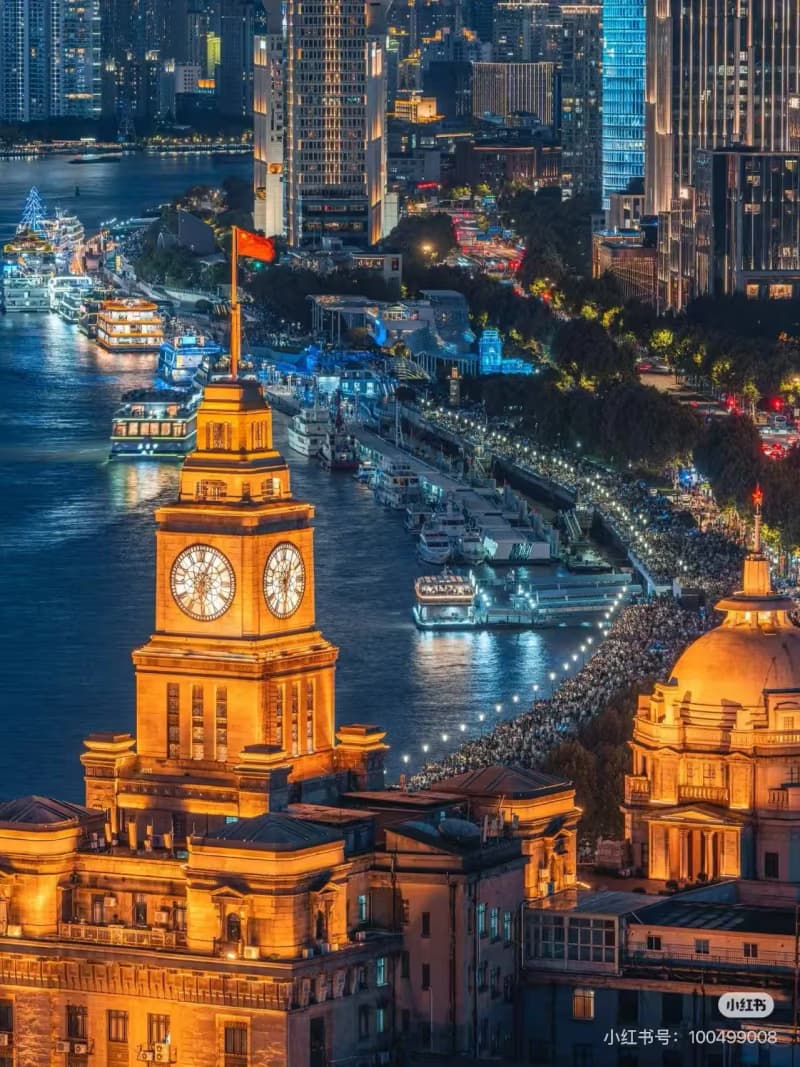
Arrive before sunset and find a spot along the Huangpu River waterfront. The Pudong skyline — Shanghai Tower, Jin Mao, Oriental Pearl — comes on as the light fades. This is the standard entry point to Shanghai and it holds up. The Bund itself is free, always open, and about a 15-minute walk end to end. Nanjing Road pedestrian street is five minutes north and has dense restaurant options; there is no shortage of food within walking distance.
Day 8: Natural History Museum + Pudong
Morning: Shanghai Natural History Museum
Metro line 13 to Shaanxi North Road, then a 10-minute walk. Admission CNY 30; book timed-entry tickets online ahead of time (the English website works for foreign visitors). The dinosaur fossil hall and the living coral reef section generate the most interest from kids. Budget 3–4 hours; the museum is genuinely large enough to fill a morning.
Afternoon: Lujiazui + Shanghai Tower
Metro line 2 to Lujiazui. Standing under Shanghai Tower (632 meters, second tallest building in the world) and looking up from street level costs nothing and is worth doing regardless of whether the family goes up. The observation deck on level 118 charges CNY 210 per adult and CNY 150 per child — the view is exceptional on a clear day. Worth it for families who like heights; not essential if the budget is tight.
A 10-minute walk to the Bund side for the reverse view of Pudong at dusk shows why photographers keep coming back here.
Day 9: Yuyuan Garden (豫园) + City God Temple + Xintiandi
Morning: Yuyuan Garden (豫园) + snack street
Yuyuan is a Ming-dynasty garden in the middle of the old city quarter, admission CNY 40. The zigzag bridge, the rockery sections, and the carp ponds are all accessible in about 1.5 hours. Immediately outside is the City God Temple food street: xiaolongbao (soup dumplings, CNY 20–40 per bamboo steamer), pan-fried buns (CNY 12–15 per order), and a dozen other Shanghai snacks. Lines are expected; queuing 15–20 minutes for a steamer of soup dumplings is normal. Alipay, WeChat Pay, and cash all work throughout.
Afternoon: Xintiandi
Metro takes about 20 minutes from Yuyuan. Xintiandi is a 1930s shikumen (石库门) neighborhood converted into restaurants and cafés, popular with families because the outdoor seating is spacious, English menus are standard, and children have room to move. Arrive around 3 p.m., sit outside with coffee or bubble tea, and let the afternoon go slowly. This is one of the more comfortable hours of the itinerary.
Day 10: French Concession, Pack for Chengdu
Morning: Wukang Road and Anfu Road area
The French Concession neighborhood has been written about in every Shanghai guide, but the reason people keep returning to the Wukang Road–Anfu Road corridor is practical: it is genuinely pleasant to walk through, the plane tree canopy is thick, and the scale is human. There are no mandatory sites — the Wukang Mansion building is worth a photo, and the independent cafés and bakeries work fine for a last Shanghai breakfast. Two hours here feels like a good pace for a final morning.
Afternoon: Airport transfer
Shanghai-to-Chengdu flights operate from both Pudong (PVG) and Hongqiao (SHA). Pudong is further but has more Chengdu routes; Hongqiao is more central. Flight time approximately 2.5 hours. Chengdu Shuangliu Airport or Tianfu International Airport — both have Didi pickup; Shuangliu is served by Metro line 10 (about 40 minutes to the center).
Day 11: Arrive Chengdu, Kuanzhai Alley (宽窄巷子) Afternoon
Afternoon: Kuanzhai Alley (宽窄巷子)
From the airport, check in first, then head to Kuanzhai Alley — a preserved Qing-dynasty residential neighborhood turned pedestrian street. Wandering for 1.5–2 hours covers the main section: street food stalls (dan dan noodles CNY 18, sweet water noodles CNY 12, zhong dumplings CNY 15), traditional craft vendors, and teahouse courtyards. Kids tend to stop at the sugar painting and dough figurine artists (CNY 10–20 each). Alipay, WeChat Pay, and cash all work; the street is cash-friendly for the vendors.
Evening: Chengdu hot pot
Day 11 evening is the right time for a proper Sichuan hot pot. Order a split pot — mild broth on one side, spiced on the other — so kids can dip from the mild side while adults try the numbing-spice side. Da Long Yi (大龙燚) and other chain restaurants have picture menus; staff at tourist-area locations usually manage a basic English exchange.
Day 12: Chengdu Panda Base — Arrive at Opening
Full morning: Chengdu Research Base of Giant Panda Breeding (成都大熊猫繁育研究基地)
Book ahead. Tickets are only available via the official mini-program and require a passport number for foreign visitors. Cost: CNY 58 per adult; children have discounted rates; children under 1.2 meters enter free. In peak season (spring, national holidays), slots sell out 7–14 days in advance.
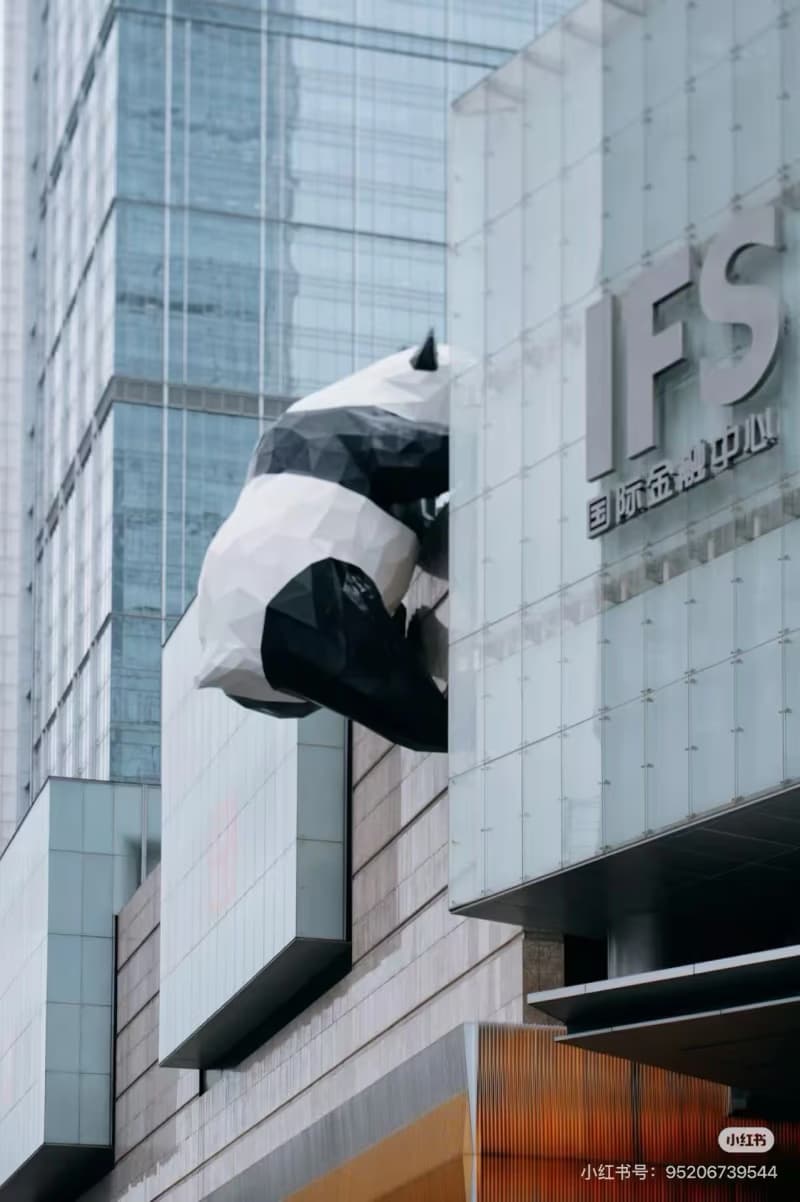
Get there by 8 a.m. Giant pandas are most active between 8 and 10 a.m. — eating bamboo, climbing, occasionally rolling around. By 11 a.m. most of them are asleep in their enclosures. Families that arrive after 10 a.m. regularly report seeing almost nothing moving. This one timing detail makes or breaks the day.
Didi from central Chengdu takes about 20 minutes (CNY 20–30). The base also runs a dedicated shuttle from a central pickup point — hotels can advise on the current route.
English signage throughout the base is comprehensive. There is a foreign-language service area near the main entrance if specific help is needed. The paths have gradients but are stroller-passable; some narrower sections require lifting. Allow 3–4 hours for a thorough visit.
Afternoon: Huanhuaxi Park or rest
The panda base is enough for one morning. In the afternoon, Huanhuaxi Park (near the base, free) is a reasonable option for a quiet walk before heading back. Most families with young kids use the afternoon to recover — this is appropriate. Save energy for Leshan the next day.
Day 13: Leshan Giant Buddha Day Trip
Full day: Leshan (乐山)
G-train from Chengdu East Station to Leshan takes about 35 minutes (CNY 22–36 depending on class). From Leshan station, taxi or Didi to the ferry dock takes about 20 minutes.
Take the boat. The Leshan Giant Buddha (乐山大佛) is 71 meters tall, carved from a clifftop over the river. Viewing from the water gives the full scale in one frame; standing at the base looking up at the toenails gives a different version. The standard ferry ticket is CNY 70 per adult (check current rates; foreigners buy at the dock window using passport, English service available). After the boat, the path up through the cliff allows closer viewing from the top — narrow stairways with one steep descent ladder section, manageable for children 8 and up.
Full visit including boat and cliff walk: about CNY 100–130 per adult, CNY 60–80 per children (rates subject to change). Lunch at the riverside restaurants near the dock: local Leshan dishes including bowl-bowl chicken (钵钵鸡) and sweet skin duck (甜皮鸭), budget CNY 50–80 per person.
Back in Chengdu by early evening. Taikoo Li (the city's main commercial district) is a 20-minute Didi ride from the train station if anyone wants a final shopping stop.
Day 14: Wuhou Shrine (武侯祠) + Jinli, Then Depart
Morning: Wuhou Shrine (武侯祠) + Jinli
Wuhou Shrine is a Han-dynasty complex dedicated to Zhuge Liang, the military strategist. Admission CNY 62. For children with some interest in history or strategy (chess players, history readers), the painted murals and stone carvings hold attention; for younger kids, the adjacent Jinli Street (锦里) is the actual draw — another pedestrian food and craft lane, but denser and noisier than Kuanzhai Alley. Budget 1.5–2 hours for the combination.
Afternoon: Airport
Chengdu Shuangliu Airport: Metro line 10 from city center, about 40 minutes (CNY 5). Tianfu International Airport: Didi, approximately 50–60 minutes depending on traffic. For international connections, arrive 3 hours before departure.
Getting There and Getting Around
Between cities:
| Route | Method | Travel Time | Approximate Cost/Person |
|---|---|---|---|
| Beijing → Shanghai | G-train (2nd class) | ~4.5 hours | CNY 553 |
| Shanghai → Chengdu | Domestic flight | ~2.5 hours | CNY 600–1,500 (book 4–6 weeks out) |
| Chengdu → (return) | Flight to Beijing or Shanghai | ~2–2.5 hours | CNY 600–1,500 |
Within cities:
All three cities have well-marked metro systems with English signage and announcements. Subway fares: Beijing CNY 2–7, Shanghai CNY 3–8, Chengdu CNY 2–6. Didi (English-language app, accepts international cards via Alipay) is the most practical option for anything off the metro grid — Mutianyu Great Wall, Panda Base, and Leshan station all require a car.
Didi setup: Download and register the app before arriving. Link an international card via Alipay or enter a card directly. Set up at home where support is accessible, not at a taxi queue.
Practical Information
| Item | Details |
|---|---|
| Visa | Many nationalities now qualify for visa-free entry (72–144 hours transit or bilateral agreements). Confirm your country's status before booking — see Visiting China Visa-Free |
| Payment | Alipay International and WeChat Pay both support foreign card linking. Set up before arrival. Cash (CNY) is accepted at most attractions and market stalls as backup |
| When to link your card | Alipay International can be linked outside China. Do it at least 2 weeks before departure in case of issues |
| Language | Beijing and Shanghai have the best English signage in China; Chengdu's main tourist sites are solid. Menus in tourist-area restaurants often have photos or English translations. A translation app with camera mode handles everything else |
| SIM card / connectivity | Buy a local SIM at the airport (CNY 100–200 for a monthly data plan) or activate international roaming. Google, Instagram, and WhatsApp do not work in China — download Baidu Maps or Amap before flying |
| Child discounts | Most sites: free under 1.2 m, half-price 1.2–1.5 m. Forbidden City: free under age 6 |
| Budget (family of 4, mid-range) | CNY 2,500–4,000/day including accommodation. Meals: CNY 600–1,000/day |
| Best months | March–May or September–November |
For full payment setup guidance, see How to Pay in China.
Book These in Advance
- □ Forbidden City tickets — Online only; requires passport number for each visitor; book 7–14 days ahead. No advance booking means no entry — the gate does not sell tickets on-site
- □ Mutianyu cable car + toboggan — Bookable online; peak weekends can sell out. On quiet weekdays, on-site purchase is usually fine, but queue time can reach 30–40 minutes
- □ Chengdu Panda Base tickets — Book via official mini-program with passport numbers; in peak season (spring, National Day week), slots go 7–14 days out
- □ Beijing → Shanghai G-train — Buy 14+ days ahead on Trip.com (English, accepts foreign cards) or the 12306 app. Holiday dates book out fast
- □ Shanghai → Chengdu flight — 4–6 weeks ahead for reasonable fares; last-minute prices spike significantly
- □ Alipay International + WeChat Pay — Set up before departure. Even one working is enough; having both is better
- □ Didi app — Download, register, and test a ride before the trip
- □ Leshan Giant Buddha boat tickets — Available on-site; in peak season, use Klook or Trip.com to pre-book and skip the queue
Tips and Tricks
- Mutianyu, not Badaling. Badaling is the closest Great Wall section to Beijing and consequently the most crowded. Mutianyu is 90 minutes out but has cable car access and a toboggan descent — these two features change the experience entirely for kids. The extra travel time is worth it.
- Forbidden City: download the official app. The Palace Museum app has a family-friendly English map with real-time crowd heat maps. It also shows current cat locations — the palace has over 100 resident strays, and kids find this considerably more interesting than the architecture.
- Natural History Museum: arrive at 9:30 a.m. The crowd builds quickly after 10. The first hour is noticeably quieter, and the dinosaur hall is worth seeing without people three deep around the displays.
- Panda Base: 8 a.m. is not optional. Families that arrive at 10 a.m. find pandas asleep. The difference between 8 a.m. and 10 a.m. is the difference between giant pandas eating and climbing versus seven furry lumps not moving. Set the alarm.
- Copy-paste destination names for Didi. Pasting the Chinese name (e.g., 故宫博物院 for the Forbidden City main entrance) into the Didi destination field is more accurate than typing romanized names — some major sites have multiple entrances, and the app routes to the correct one with the Chinese name.
- Keep CNY 500–1,000 in cash. Some market stalls, smaller restaurants near the Great Wall, and occasional rural spots around Leshan do not have reliable mobile payment terminals. Cash closes every remaining gap.
- Hot pot: order the split pot. The split pot (鸳鸯锅) gives a mild broth on one side and Sichuan spiced broth on the other. Kids eat from the mild side; adults can cross into the red as they like. Chain restaurants like Da Long Yi have picture menus and usually one English-speaking staff member at tourist-area branches.
What to Cut If You're Short on Time
10-day version (cut 4 days):
- Remove the Summer Palace and Beijing Zoo days (Days 5–6). Keep the Forbidden City, Great Wall, and Temple of Heaven as the Beijing core
- Combine the French Concession morning with the Xintiandi afternoon into one day in Shanghai, removing Day 10 as a standalone
- Chengdu stays intact — the Panda Base and Leshan are both non-negotiable for the family angle
Do not cut:
- Mutianyu Great Wall. This is the trip's first major high point for kids. Reducing Beijing to remove it leaves the itinerary without its best scene
- Chengdu Panda Base. The whole Chengdu leg is essentially built around this one morning
- Forbidden City. The scale and visual impact hold up; it is worth a full-day slot in Beijing regardless of time pressure
Shanghai + Chengdu only (skip Beijing): A 7–8 day version is entirely workable and reduces the trip's complexity considerably. The trade-off is missing the Great Wall.
Before You Go Checklist
- □ Confirm visa status — Check whether your nationality qualifies for visa-free entry or requires an application. Visa processing typically takes 2–4 weeks; do not leave this until the month of travel
- □ Alipay International — Download app, link an international Visa or Mastercard, test a small transaction. Do this at least 2 weeks before departure to have time to troubleshoot
- □ 12306 or Trip.com account — For the Beijing–Shanghai train, register with your passport. Trip.com is simpler for foreign visitors
- □ Didi app — Download, register, link payment. Test once before the trip
- □ Offline maps — Download Baidu Maps or Amap; save key locations offline. Google Maps is unavailable in mainland China
- □ Book Forbidden City tickets — As early as 14 days ahead; all adults' and children's passport numbers required
- □ Book Panda Base tickets — Same; passport numbers for everyone
- □ Children's medications — Bring a supply of your children's usual fever reducer, anti-diarrheal, and bandages. Chinese pharmacies are well-stocked but brands differ, and a sick child at 11 p.m. is not the time to figure out the Mandarin label
- □ Travel insurance — Confirm the policy covers pediatric care. Public hospitals in China require upfront payment for foreigners; major cities have international medical centers with English-speaking staff
FAQ
Do Chinese tourist attractions accept foreign credit cards? Rarely at the gate. The main payment systems are Alipay International (links to foreign cards, works for foreigners) and WeChat Pay (foreign visitor version). Cash CNY is also accepted everywhere. Set up at least one mobile payment option before arriving — finding out at the Panda Base ticket counter that you cannot pay is not a situation worth being in.
What do kids eat in China? Better than parents tend to worry about. Dumplings, noodle soups, fried rice, and steamed buns are available at any price point. Shanghai soup dumplings are popular with most kids on the first try. In Chengdu, the mild broth side of a hot pot works fine for children; Sichuan food does not have to mean maximum chili. KFC and McDonald's are present in all three cities if a familiar option is genuinely needed.
Is English spoken at major sites? English signage at the Forbidden City, Temple of Heaven, Shanghai's main museums, and the Chengdu Panda Base is thorough. Staff at smaller restaurants and market stalls typically speak very little English — camera-translate mode on a phone translation app resolves most situations without conversation.
Are strollers practical? In city metro systems and shopping areas, yes — elevators are standard. At Mutianyu Great Wall, the path is uneven stone and impractical for strollers; a carrier or structured pack works better. At the Forbidden City, the main path is accessible but some secondary areas have steps. At the Panda Base, paths are graded but have inclines — a stroller can be pushed but requires effort.
What should we buy as gifts for the kids? Panda Base official merchandise (bought on-site) is reliably genuine. Jinli Street in Chengdu has good sugar painting and folk-craft items at reasonable prices. Shanghai's City God Temple area has a range of small souvenir items. Avoid buying anything from unlicensed street vendors near major Beijing attractions — quality is inconsistent.
Getting China right with kids comes down to a handful of decisions made before boarding: tickets for the Forbidden City, tickets for the Panda Base, and Alipay on the phone. Everything else on this itinerary can be figured out as things unfold — what to eat, which path to take, whether to rent the boat or skip it. But those three tickets, if missed, mean standing at a gate with nowhere to go. Book them early, arrive at the Panda Base at 8 a.m., and let the rest of Beijing, Shanghai, and Chengdu show up as it will. The toboggan at Mutianyu and the panda eating bamboo at arm's length are the parts that end up in the family story.
Related guides: Beijing City Guide | Chengdu City Guide | 4 Days in Beijing Itinerary | Chengdu Giant Panda Base | Visiting China Visa-Free