Last updated: May 2026. Hours and prices vary by stall—verify on site.
Most hotel buffets in China serve roughly the same things regardless of which city you're in. Walk two blocks outside and the food changes completely: Wuhan eats sesame-paste noodles, Shanghai eats pan-fried buns with pockets of broth, Xi'an drinks a thick spiced lamb soup, Guangzhou sits down for a two-hour tea service. The window for all of it closes around 9am.
The Window: 6 to 9am, Then It's Gone
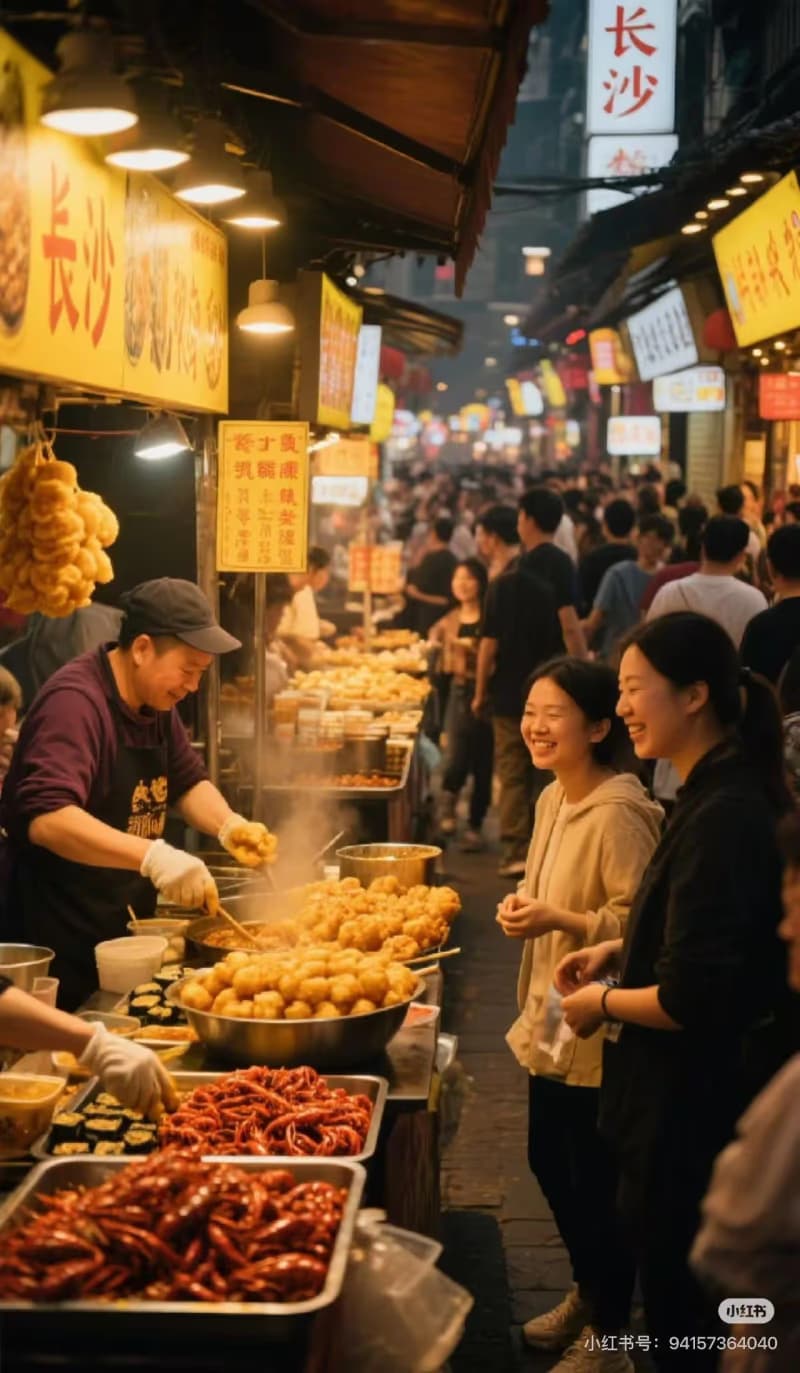
Most street breakfast stalls open around 6 or 7am and close when they sell out—which, at the popular ones, can be before 9. This isn't a quirk; it's calibrated to working hours. Locals eat before their commute, and vendors don't wait around.
There's a practical upside for travelers: you have a reason to be out early, before the tourist sites fill up. Walk out of your hotel at 7, follow the queue at the nearest stall, pay ¥10–15, and you'll have eaten better than most hotel buffets by 7:30.
Eight Cities, Eight Different Breakfasts
Chinese breakfast is not one thing. The gap between what someone eats in Wuhan versus Guangzhou versus Xi'an isn't a matter of spice level—it's a completely different set of foods, textures, and rituals.
Shanghai — Pan-Fried Buns and Scallion Oil Noodles
ShengJian bao (生煎, pan-fried buns) are Shanghai's most distinctive breakfast item: the bottom of each bun is crisped in a flat pan until it turns golden and crunchy, while the interior stays soft with a pocket of broth. A bamboo tray of four costs ¥12–18. The famous names—Nanxiang, Da Hu Chun—have queues; so do the unmarked stalls near residential blocks, which are often just as good.
Scallion oil noodles (葱油拌面) are quieter but just as local: plain wheat noodles tossed in hot lard, scallion, and soy. Almost every breakfast shop has them, ¥6–10.
Beijing — Douhua and the Douchi Challenge
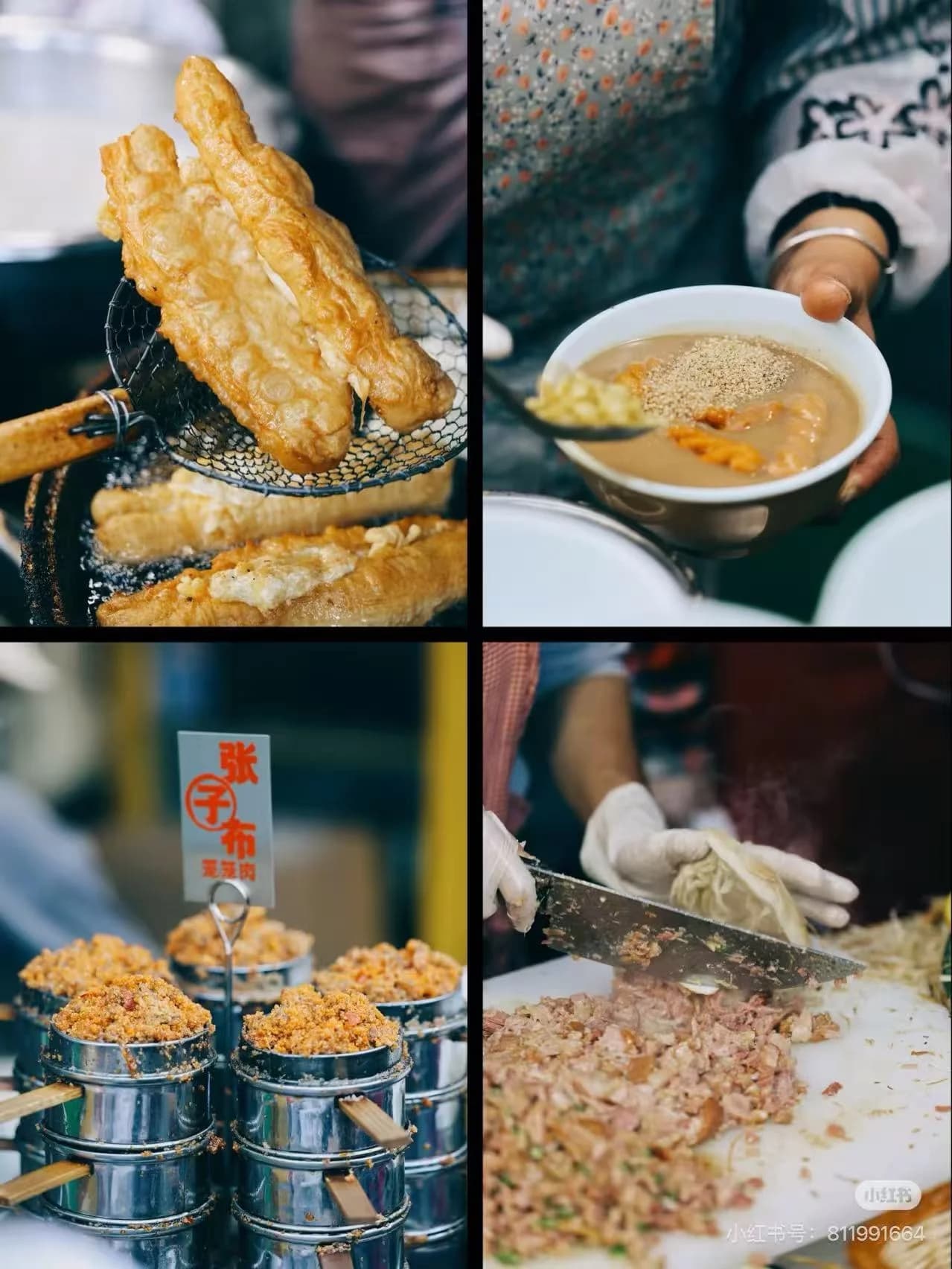
The food Beijing is most associated with for breakfast is douzhir (豆汁儿)—a grey-green liquid fermented from mung bean starch, sour and slightly funky, served with fried dough rings called jiaoquan and salted vegetables. Beijingers grow up on it; most people from other Chinese provinces don't finish their first bowl either. Worth ordering once, not worth forcing down if it isn't working for you. The Huguo Temple area (護国寺) and Niujie neighborhood both have it, ¥8–15.
The more approachable alternative: douhua (豆腐脑), soft tofu in a savory broth with pickled vegetables, served with a fried flatbread. ¥8–12, reliably satisfying.
Wuhan — Hot Dry Noodles
Re gan mian (热干面, hot dry noodles) is Wuhan's signature and arguably the most complete breakfast food in China. Alkaline noodles are boiled, drained, and tossed dry with sesame paste, scallion, soy sauce, and chili. No broth—the coating is the point. The noodles are chewy, the sesame paste is thick, and the whole thing takes about four minutes to eat standing up. ¥6–10. Walk down any residential street in Wuhan at 7:30am and you'll find at least one stall with a queue.
Xi'an — Hu La Tang and Roujiamo
Hu la tang (胡辣汤) is a thick, spiced lamb broth with vegetables, eaten with a piece of flatbread torn in and soaked through. It has a viscous texture that takes some getting used to, but in cold weather it's exactly what it sounds like it should be. Around Huimin Street and the old Muslim Quarter, vendors start early—look for the line, ¥8–15.
Roujiamo (肉夹馍, braised meat in a flatbread) pairs naturally with liangpi (凉皮, cold wheat-starch noodles with chili oil). Together they make a full meal: ¥18–27 for both.
Guangzhou — A Different Kind of Morning Altogether
Guangzhou's breakfast is yum cha (早茶): sit down in a tea house, order a pot, and eat dim sum at a pace that takes an hour or two. Cheung fun (肠粉), har gow, wonton noodles—it's a social meal, not a quick one. A full guide is at Guangzhou Yum Cha.
If you have twenty minutes rather than two hours, look for a street-side wonton noodle shop (云吞面): a small bowl of springy alkaline noodles with pork-and-shrimp wontons in clear broth. ¥15–25, quick, and its own kind of Cantonese.
Chengdu — Dan Dan Noodles and Soft Tofu
Dan dan mian (担担面) in Chengdu is a breakfast portion: a small bowl of thin noodles with sesame paste, chili oil, and Sichuan pepper. The numbing-heat combination is a different kind of wake-up than coffee. ¥8–15. Douhua (豆花)—soft tofu with spiced soy sauce, savory not sweet—runs ¥5–8 and fills in whatever space is left.
Yunnan / Kunming — Rice Noodles
Mi xian (米线, rice noodles) is Yunnan's morning staple. The tourist-facing version is the elaborate across-the-bridge noodles (过桥米线); what locals eat for breakfast is xiao guo mi xian—rice noodles cooked in a small pot with your choice of toppings, ¥8–15 a bowl, ready in minutes.
How to Find the Right Spot
Search "早餐" (breakfast) plus the city name on Dianping, sorted by rating. Scroll past anything described in tourist language and look for places where the reviews are from people who seem to eat there every day.
The simpler approach: walk out at 7am and follow foot traffic. A queue at a street stall is a more reliable signal than any rating system.
Asking your hotel's front desk "where do locals go for breakfast near here?" works well too, especially outside the major cities where the Dianping listings get sparse.
Ordering Takes About Thirty Seconds
Most street breakfast spots have three to five items on the menu—sometimes handwritten on a board, sometimes just the things sitting in front of you. Point at what you want, hold up fingers for the quantity, and pay. No conversation required.
Some stalls take payment first; others settle at the end. Watch what the person before you does. Sharing a table with strangers is normal—sit down without preamble.
If you have dietary restrictions, prepare the relevant Chinese text on your phone before leaving the hotel. The How to Order Food in China guide has ready-made cards for common situations.
Cost and Payment
| City | What to Get | Reference Price |
|---|---|---|
| Shanghai | ShengJian bao (4 pieces) + soy milk | ¥15–25 |
| Beijing | Douhua + fried flatbread | ¥10–18 |
| Wuhan | Hot dry noodles | ¥6–12 |
| Xi'an | Hu la tang + flatbread | ¥10–20 |
| Guangzhou | Wonton noodles (street shop) | ¥15–25 |
| Chengdu | Dan dan mian + douhua | ¥12–20 |
| Kunming | Small-pot rice noodles | ¥8–15 |
Payment: mobile scan (WeChat Pay or Alipay) is accepted at almost all stalls—the QR code is usually taped to the wall or the counter. Cash works everywhere; ¥50 in small bills covers two or three mornings. International cards are not an option at street stalls. Set up your payment method the night before; see How to Pay in China.
A Few Things Worth Knowing
Out by 9 is the actual constraint—not a suggestion. Many stalls sell out before then, and the ones that don't start running low on variety.
Beijing's douzhir has a flavor profile that challenges most first-timers. If you can't finish it, that's a normal reaction. Move to douhua and come back to douzhir on a later visit, or don't.
Guangzhou's yum cha requires time. If you have less than an hour, skip the tea house and find a wonton noodle shop instead—the experience of being rushed through dim sum isn't one worth having.
Some stalls collect payment upfront, others after. Watch the person in front of you before committing to either approach.
The breakfast window in most Chinese cities is about two and a half hours long. The cost is almost nothing. The planning required is minimal: wake up before 9, walk until you see a queue, point at something. For a broader map of what each region eats, the Chinese Food Regional Guide covers the full picture. For handling specific dietary needs on the ground, see How to Order Food in China.