Last updated: May 2026. Prices vary by city and vendor—verify on site.
The fried insects at Wangfujing are real, and they're also a tourist trap. Stinky tofu doesn't taste anything like it smells. Malatang has an ordering system that looks chaotic from the outside and makes sense in about thirty seconds. Some of Chinese street food's reputation for being adventurous is earned; some of it is theater; most of the confusion comes from not knowing which is which.
When the Smell Is Not the Point
Stinky tofu (臭豆腐, chòu dòufu)
Stinky tofu is fermented, then deep-fried until the outside crisps and the inside goes soft and molten. The smell—which is real, and difficult to describe politely—has nothing to do with the taste. Once the tofu is fried, it tastes savory and rich, with none of the pungency the smell promises. The disconnect is jarring enough that many people try it twice because they can't believe the first bite.
Changsha's version is black (dyed during fermentation), fried hard, and eaten with chili sauce. Shaoxing's version is grey-white and milder. Both are worth trying once, with reasonable psychological preparation. ¥5–10 per portion.
Luosifen (螺蛳粉)
Luosifen is a Guangxi rice noodle soup that has built a reputation for being one of the most divisive-smelling foods in China. The source is fermented bamboo shoots—not rot, not decay, just fermentation. The actual bowl is a hot-sour broth with rice noodles, black fungus, peanuts, and tofu skin. The smell fades as you eat. Shops selling it have spread beyond Guangxi to most major cities. ¥15–25 per bowl.
Things That Look Like Something Else
Jianbing (煎饼果子)
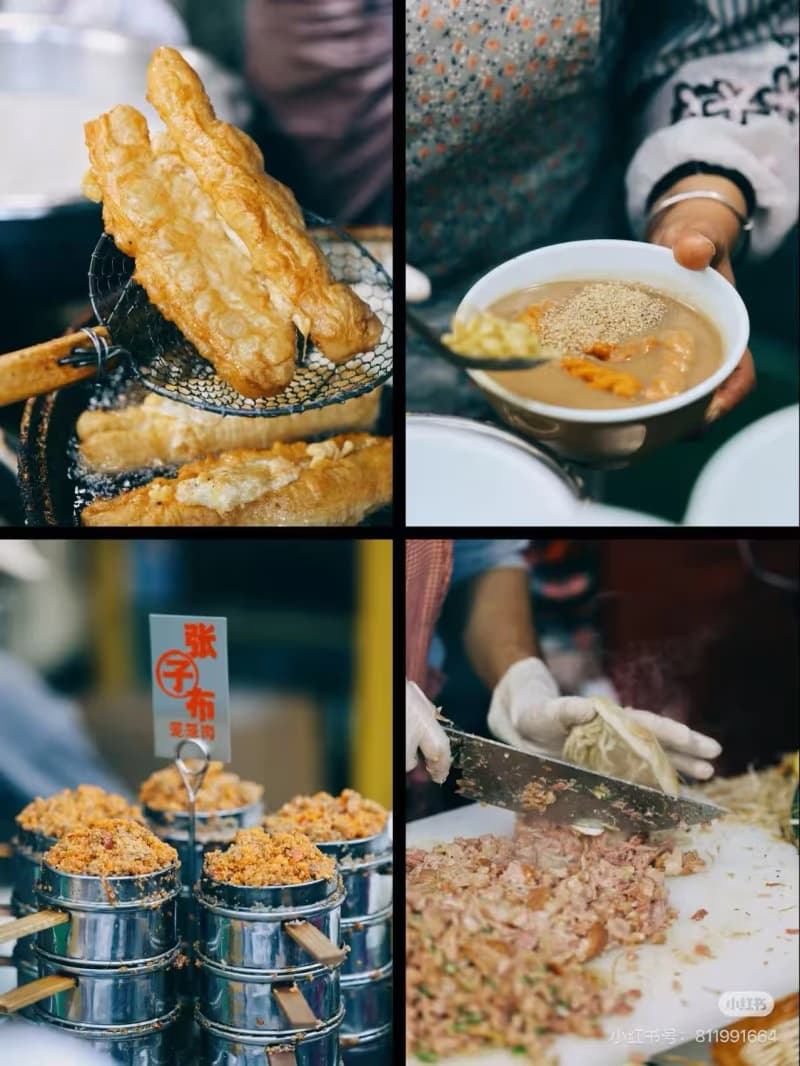
Jianbing is the most commonly misread street food in China. It looks like a breakfast crepe or a burrito. It's neither. A thin batter is spread on a flat griddle, an egg is cracked and spread over it, sweet bean sauce and chili paste are brushed on, a crispy fried sheet (or a section of fried dough) goes inside, and the whole thing is folded into a rectangle. The crunch comes from inside the pancake, not the wrapper. ¥8–12, eaten while walking. Found at breakfast stalls across northern and central China.
Tanghulu (糖葫芦)
Tanghulu looks like a candy apple on a skewer—bright red, glossy, arranged in a row at the stall. The fruit inside is hawthorn (山楂), which is quite sour and has a pit. The sugar coating is hard and shatters when you bite down. It's not a sweet snack in the way the appearance suggests; it's sour fruit in a brittle sugar shell, and you need to navigate the pit. ¥5–15 per skewer. Common across China in winter; available year-round in many cities.
Shaobing (烧饼)
A sesame-crusted flatbread that gets overlooked because it looks unremarkable—round, beige, slightly charred on the outside. Inside it's layered and flaky. Sold plain or with fillings like spiced meat or egg. The Beijing version is thicker; Shandong versions are more layered; Zhejiang versions run thinner and crispier. ¥3–8 each. One of the quieter snacks on this list, but consistently worth picking up.
Snacks With Their Own Ordering Logic
Malatang (麻辣烫)
Malatang is the street food that makes foreigners stand at the entrance for a while. The food itself—skewered ingredients cooked in a spiced broth—is approachable enough. The ordering process is what throws people.
You take a basket, walk to the cold display case, and pick your own skewers: tofu, vegetables, meat slices, fish balls, mushrooms, noodles. Hand the basket to the vendor; they weigh it or count the skewers, cook everything in the broth, and serve it in a bowl. You choose the spice level before cooking. ¥20–40 per person, fully customizable.
If you don't know what to do: follow the person ahead of you, or hand the basket to the vendor and point at someone else's finished bowl. Either works.
Duck neck (鸭脖, yā bó)
Duck neck is sold in sections along the bone, marinated and braised in a spiced sauce. There's not much meat—that's the point. You eat it by biting along the bone, stripping the meat and skin, and discarding the cartilage. Most foreigners look at a brown, bony segment and have no entry point. The technique is: hold one end, bite parallel to the bone, work your way down. Spice level is high, especially in Wuhan and Changsha. ¥15–30 per half-jin (250g). Sold at dedicated stalls and in convenience stores across China.
One Worth Skipping
Fried scorpions, centipedes, and silkworm pupae appear at tourist-facing stalls near Wangfujing in Beijing and on various scenic area streets. Foreign visitors get photographed approaching, then find the price is five to ten times what anything nearby costs. These are not part of everyday Chinese food culture—local people don't eat them. They exist for the photograph. If the photograph is what you want, that's fine. If you're spending money on the expectation of authentic street food, redirect it to the malatang stall two blocks over.
Finding Them, Paying, Ordering
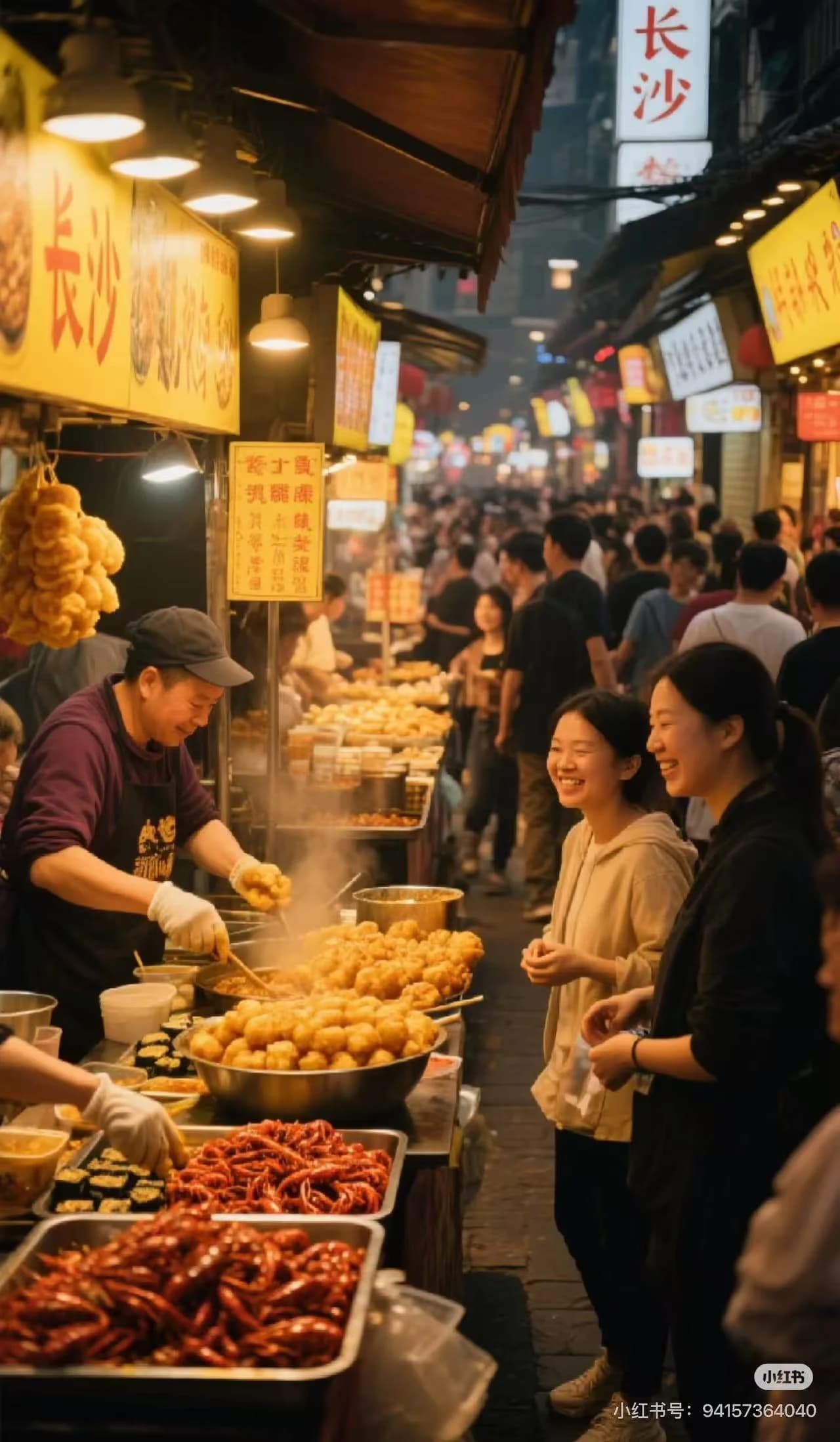
Most of these snacks won't appear on Dianping—they're genuine roadside operations. Walk toward foot traffic, look for smoke or a queue, and stop. Stalls near the entrances of tourist sites charge a premium; two streets back is usually cheaper and better.
Payment: mobile scan (WeChat Pay or Alipay) is standard at most stalls. The QR code is usually posted on the cart or the wall behind the vendor. Cash works everywhere in amounts under ¥100. International cards are not applicable. See How to Pay in China.
Ordering without Chinese is manageable: point at the food, hold up fingers for quantity, and watch what the vendor does next. For malatang, follow the person in front of you. For specific dietary concerns—halal, vegetarian, allergies—prepare a card in Chinese on your phone before going out; the How to Order Food in China guide has ready-made text for common situations.
Common Mistakes
Mistake 1: Judging stinky tofu by the smell — The smell and the taste are unrelated. If you've been avoiding it, try one piece before writing it off; the response is almost always surprise.
Mistake 2: Expecting tanghulu to be sweet — It is sweet, but it's also very sour. The hawthorn inside has a pit. Bite carefully and don't swallow the center.
Mistake 3: Standing frozen at a malatang stall — Pick up the basket and start loading skewers. There's no wrong combination. The vendor has seen everything.
Mistake 4: Buying fried insects expecting authentic street food — They're a tourist product. The money and the experience are both better spent elsewhere.
Mistake 5: Eating near scenic area entrances — Prices around Wangfujing, West Lake, the Bund, and similar sites run high for everything including street food. Walk one block off the main drag.
Most of the confusion around Chinese street snacks resolves after the first encounter. Stinky tofu smells terrible and tastes nothing like it smells. Tanghulu is sour fruit dressed up as candy. Malatang has a system that becomes clear once you've done it once. The fried insects are the one thing where the confusion is the product—skip those and spend the same ¥30 on something that a local would actually eat. For a broader map of what China's regions eat, the Chinese Food Regional Guide covers the full picture.