Last updated: May 2026. Prices vary by city and vendor — verify on site.
Xinjiang shares a border with eight countries. That's more than any other Chinese province, and the food reflects it — lamb and flatbread and cumin rather than pork and soy sauce. The reference points are Central Asian and Middle Eastern, not what most visitors think of as Chinese cuisine. Setting aside that framing before you arrive makes the food easier to navigate, and considerably more interesting.
Five Things Worth Going Out of Your Way For
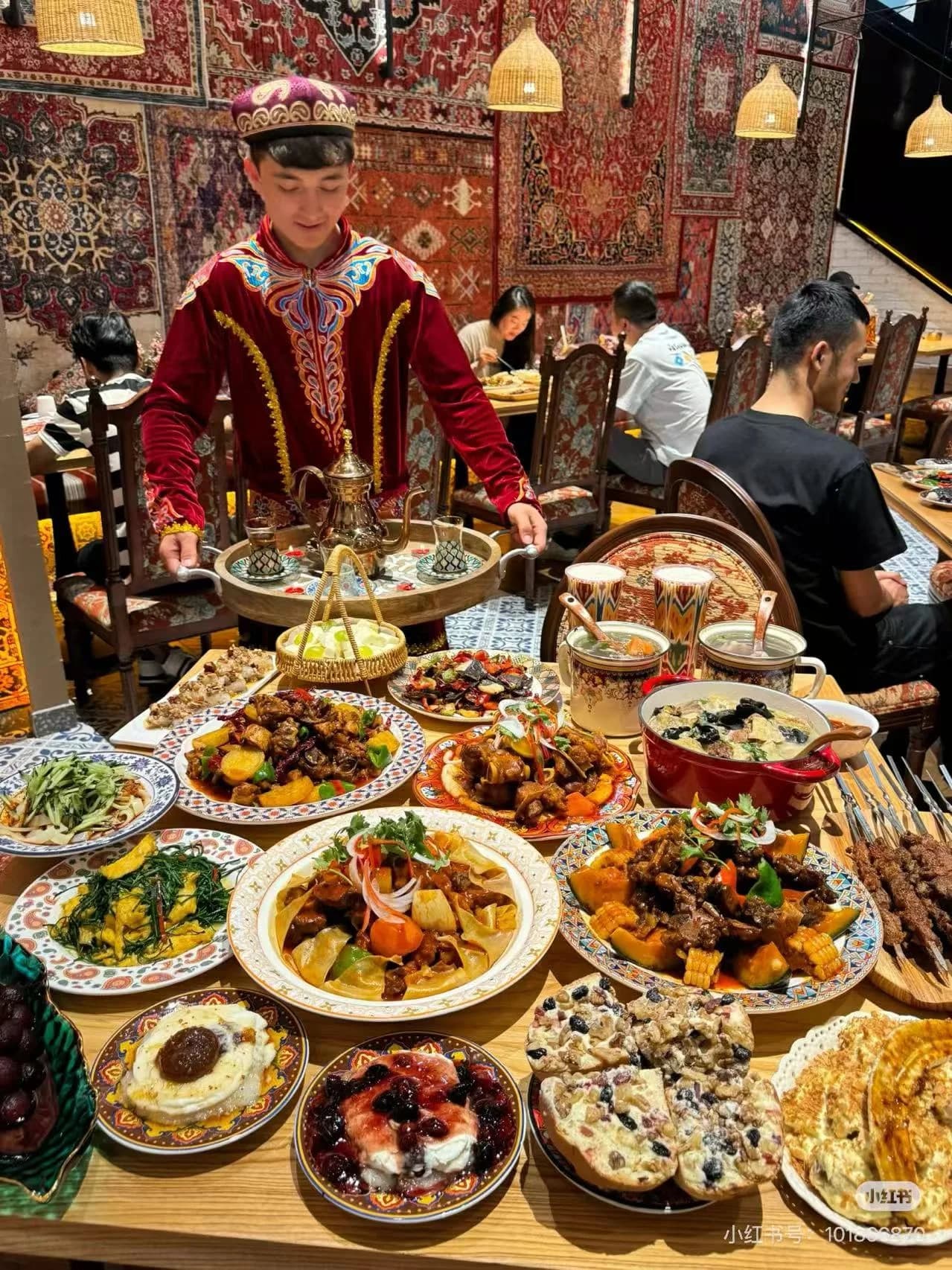
Hand-pilaf rice — zhuafan (抓饭): Xinjiang's central dish. Lamb pieces and shredded carrot are cooked into rice with rendered lamb fat, finished with raisins and chickpeas. The name refers to the traditional practice of eating with the hand; restaurants provide spoons. The result is deeply savory, oil-rich without heaviness, the rice absorbing the lamb fat in a way that no amount of seasoning replicates. One serving (¥20–35) is typically enough for two people.
Naan — nang (馕): The daily bread of Xinjiang. A thick round flatbread baked against the wall of a cylindrical pit oven, emerging with a crisp outer shell and an airy interior. In Xinjiang, naan functions as accompaniment, main carbohydrate, and snack — with tea in the morning, alongside zhuafan at lunch, eaten plain in the afternoon. Street-side bakers work in the open; buy directly from the oven when possible. ¥3–8 each. Freshness matters more than almost anything else with naan.
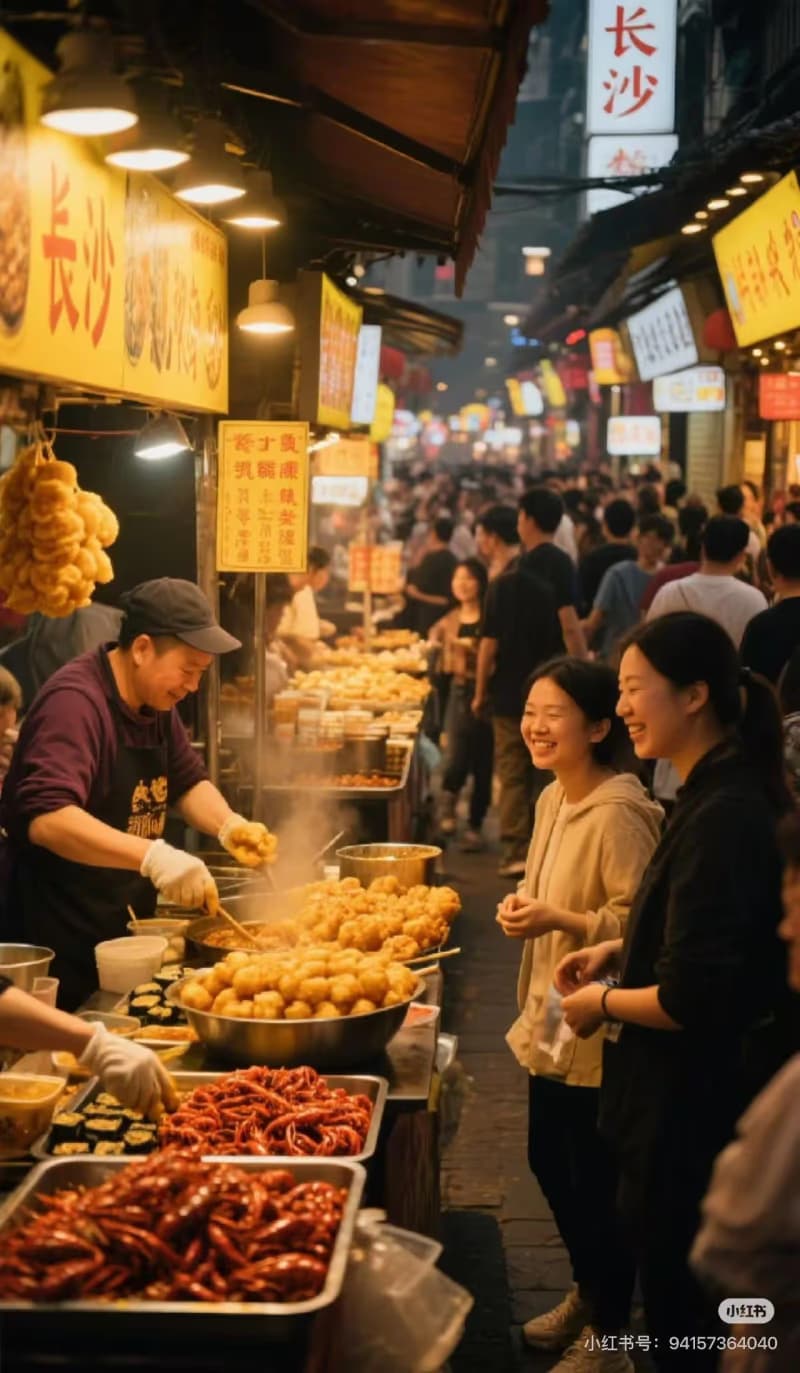
Lamb skewers — kao yangrou chuan (烤羊肉串): Structurally similar to versions found across China, but made from local Xinjiang lamb, which carries more fat marbling and a less aggressive flavor than the breeds used in eastern provinces. Seasoning is cumin and salt, applied at the grill. No sauce. The skewers are longer and more substantial than the inland version. Night market stalls and street vendors generally outperform tourist restaurants. ¥5–10 per skewer.
Big plate chicken — dapanji (大盘鸡): Literally "chicken in a big plate." Bone-in chicken pieces and potatoes braised in a thick sauce of chili, Sichuan pepper, and tomato, served with wide hand-pulled noodles dropped into the remaining sauce at the end. This is a one-pot dish for two people — three if you add extra noodles. The sauce is the point. Don't leave it at the bottom of the plate. ¥60–100 per pot.
Baked dumplings — kaobaozan (烤包子, samsa): A square pastry with a flaky outer crust, filled with minced lamb and onion, baked against the pit oven wall until the shell turns golden and layered. Entirely different texture from steamed dumplings — the exterior behaves more like a pastry shell, the interior holds broth. Eat immediately; they tighten as they cool. ¥5–8 each. Most common at breakfast or mid-afternoon.
Finding the Right Restaurant
Most restaurants in Xinjiang are halal-certified, but Han-operated establishments exist in commercial districts and tourist areas of every city. Confirm the crescent moon symbol and 清真 (Qīngzhēn, "halal") characters on the signage before entering — this applies regardless of city or neighborhood.
The most reliable indicators of a local-first restaurant: a baker or grill cook working visibly at the entrance, customers who are predominantly local, a menu in Uyghur and Chinese only (no multilingual tourist version). Tourist-facing restaurants aren't necessarily worse, but local-first places tend to use fresher ingredients at lower prices.
Urumqi: The area around Erdaoqiao International Grand Bazaar (二道桥国际大巴扎, Èrdàoqiáo Guójì Dàbāzā) is the densest concentration of Uyghur restaurants in the city — zhuafan stalls, naan bakers, and lamb skewer night markets within a few blocks of each other.
Kashgar: The old city (老城, Lǎo Chéng) is where most local family-run restaurants operate. Quality is consistent; prices are substantially lower than the tourist pedestrian streets that run alongside. The food is the same.
Ordering, Paying, and Getting By Without Chinese
Menus in local Xinjiang restaurants are in Uyghur and Chinese — not English. Point at what other customers have on their table, or photograph the menu for translation. The five dishes above are recognizable by description: "zhuafan" said with a pointing gesture toward the kitchen gets the message across.
For the basics, these work:
- One zhuafan: 手抓饭一份 (shǒuzhuāfàn yī fèn)
- One naan: 馕一个 (náng yī gè)
- Lamb skewers: 烤羊肉串 (kǎo yángròu chuàn) — hold up fingers for quantity
Payment: WeChat Pay and Alipay QR codes are standard at sit-down restaurants. Cash works everywhere, including street stalls and market vendors where mobile payment is less consistent. International credit cards are not accepted at most local establishments. For setting up mobile payment before arrival, see How to Pay in China.
Language: Staff in local restaurants typically speak Uyghur and Mandarin, not English. Simple dish names pronounced approximately are usually understood. A translation app with camera function (photograph the menu) handles the rest. For ready-made cards covering dietary restrictions and allergens, see How to Order Food in China.
Common Mistakes
Confirming skewer prices at the night market: Some vendors in tourist-heavy areas quote prices at the end rather than the beginning, at a higher rate. Ask the price per skewer before ordering (yī chuàn duōshǎo qián — "how much is one skewer?") or watch what a local customer pays. Not universal, but worth the ten seconds.
Ordering a full zhuafan serving for one person: One serving is sized for two. A solo traveler who orders a full portion and adds naan has significantly more food than they need. Share the zhuafan, order individual items around it.
Buying packaged naan from a supermarket: Vacuum-sealed naan and fresh-from-the-oven naan share a name and not much else. The texture of fresh naan — the contrast between the crisp shell and the interior — disappears within an hour of leaving the oven. Find a street-side baker.
Assuming dapanji spice level: Heat varies considerably between restaurants and cities. Ask "là ma?" (spicy?) before ordering, or specify "shǎo là" (less spicy) if uncertain.
Xinjiang food doesn't require research to enter — walk into any restaurant displaying the crescent moon and 清真 sign, point at zhuafan and naan, and the rest works itself out. For travelers who want context before the trip, Halal Food in China covers how to find certified restaurants across the country, and the Chinese Food Regional Guide places Xinjiang cuisine within China's broader food geography.