Last updated: May 2026. Ticket prices and operating hours confirmed for peak season; verify before visiting in winter.
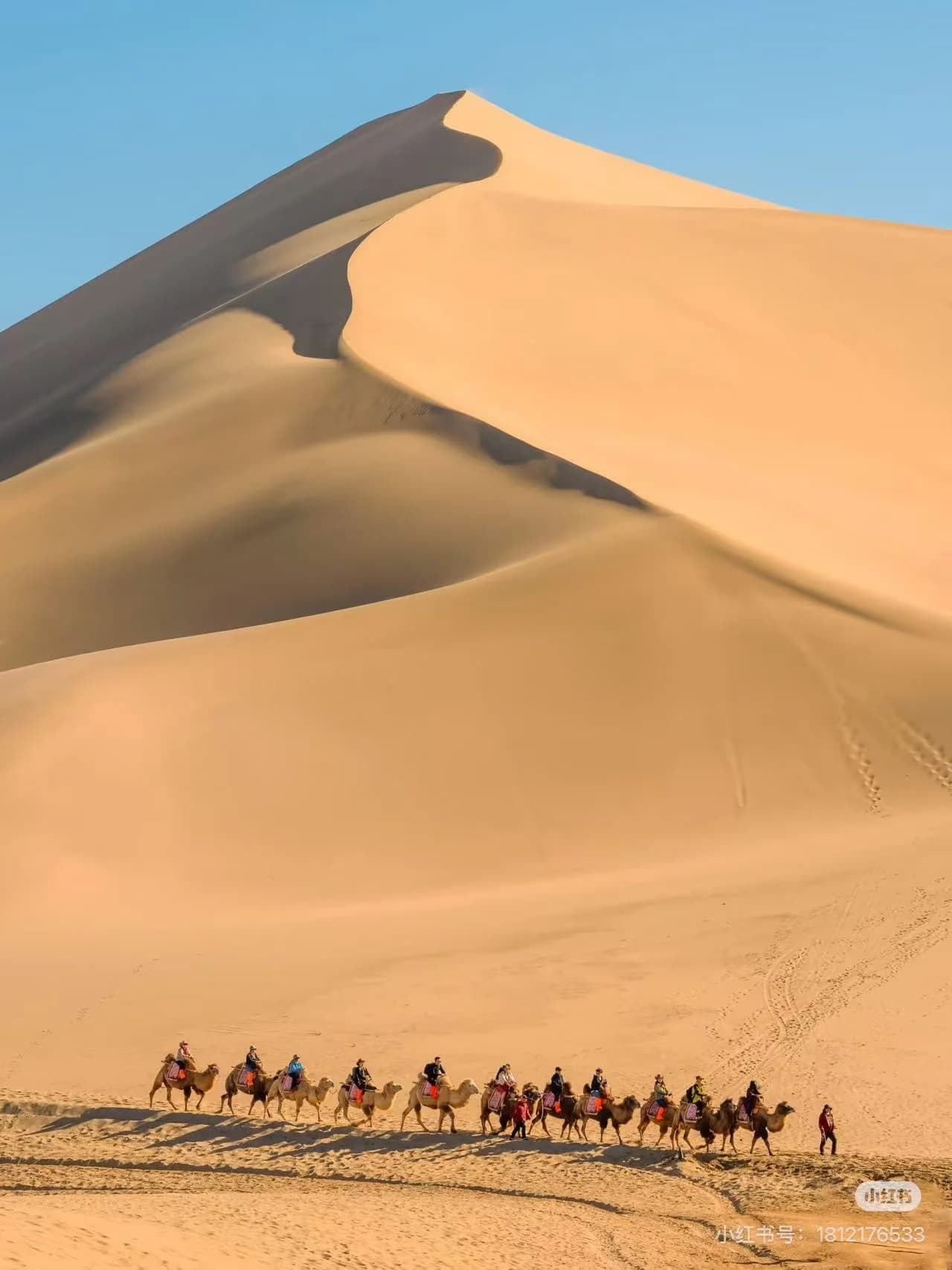
The camel sits down slowly. Back legs fold first—the whole body pitches forward, and you lean back or you'll slide off the saddle. Then the front legs tuck. Four distinct movements, each one shifting your angle. By the time it stands, you're two meters off the ground, looking at the sand ridge of Mingsha Mountain. The western slope has already gone deep orange. The camel handler pulls the lead rope and a column of ten or twelve camels starts moving.
That's the beginning of it. How it ends depends on what you came for.
What This Actually Is
Camel riding at Mingsha Mountain is a guided group activity, not independent travel. You sit on a camel roped to others in a single-file column, led on foot by a handler along a fixed route at the base of the dunes. The circuit takes 40–60 minutes and returns you to the starting point.
The route does not go to the top of the dunes. Camels walk on flat ground and gentle slopes, not up the main ridgeline. If you want to stand on the crest of Mingsha Mountain and watch the sunset from above, you need to climb on foot separately. That climb takes 15–20 minutes one-way through deep sand and is genuinely tiring.
Tickets: ¥100 per person for the camel ride, sold at the camel service booth inside the scenic area. This is separate from the main entrance ticket (¥120 peak season / ¥60 off-season), bought at the main gate before entering.
Is It Worth It
For the riding experience itself: yes. Forty minutes on a camel through desert terrain at the base of a two-hundred-meter sand dune is not something you replicate elsewhere in China at this price. The height, the side-to-side roll of the gait, the actual scale of the dunes at close range—none of that comes through in photographs.
For the sunset view: the camel ride alone doesn't deliver it. You're at the base, not the top. The light is good—late afternoon sun hits the sand at a low angle and the color is exactly what you're expecting—but the panoramic view from the ridgeline requires the foot climb.
Do both. Ride first, then walk up. Budget two and a half hours before sunset.
Not worth it if you weigh over roughly 100 kg (some operators decline heavier riders; policies vary by stall), or if you have significant balance problems.
The Real Experience
Getting On and Off
The camel crouches to let you mount from the side, using a stirrup. Sit down and grip the handle in front before anything moves. When it stands: back legs first, the body lurches forward—lean back now, not after. Then front legs, and it levels out. Getting off is the reverse. The forward pitch catches most first-timers; a handler will be nearby, but knowing it's coming makes it less disorienting.
The Ride Itself
The column moves at a steady walking pace. The sway is more pronounced than you'd expect—the camel's gait rocks side to side with each step. Two hands on the handle keeps you steady. Don't try to shoot photos while moving; the column stops periodically, and that's when you take them.
The route runs along the southern face of the dunes. Late afternoon turns the sand from pale gold to a reddish orange as the sun drops. Departing 90 minutes before sunset gives you the best light during the ride and enough time to climb afterward.
The Dune Climb
After the ride, the camel service area is about a ten-minute walk from the main dune access point. The slope to the ridgeline is steep and the sand shifts under every step—you gain ground and lose some with each stride. Sand socks (沙滩袜) are available to rent at the scenic area for ¥15. Without them, sand fills your shoes within the first fifty meters. The rental is worth it.
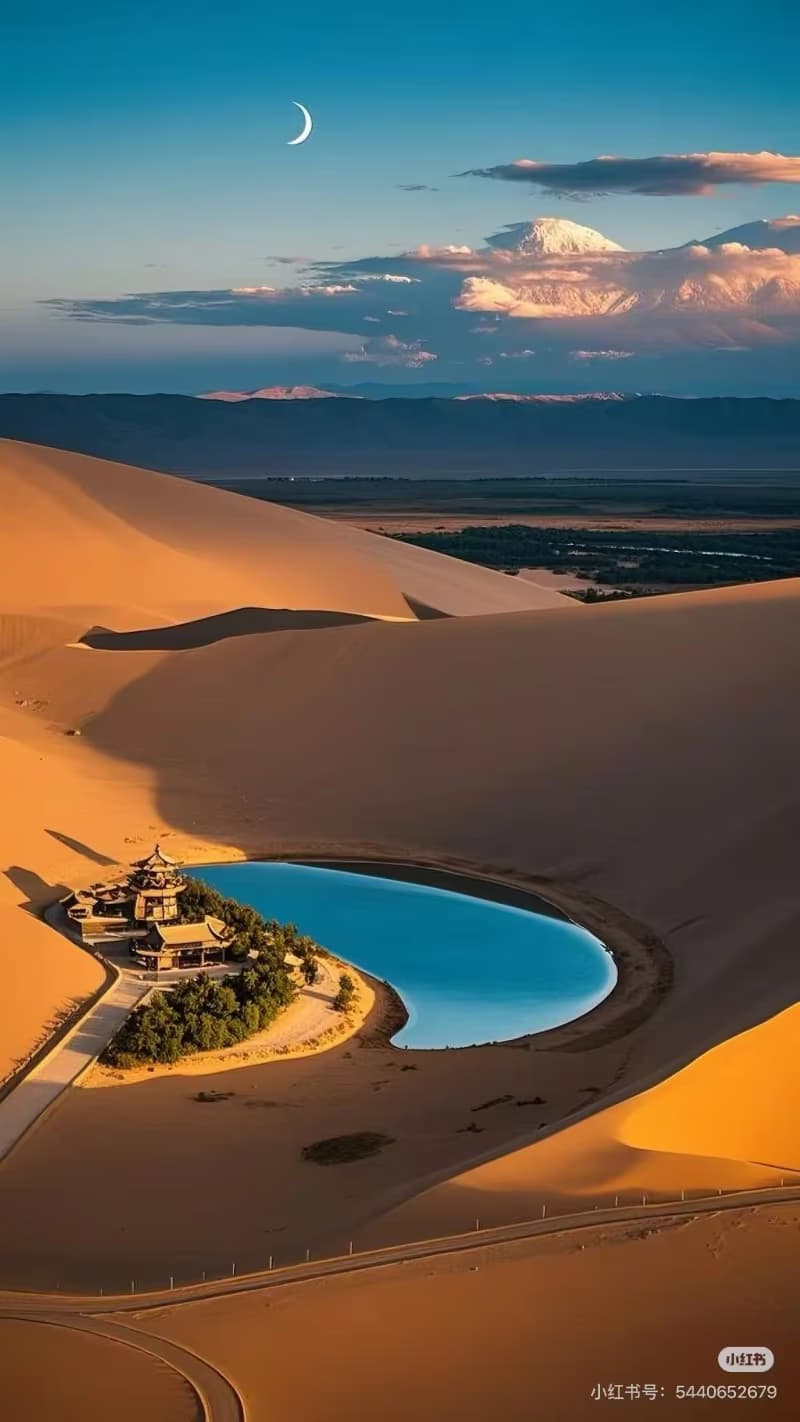
The view from the top is completely different from what you see during the ride. You're looking down at Crescent Moon Spring framed by the dunes, with the city of Dunhuang visible in the distance as the light fades. The camel ride and the climb show you Mingsha from opposite angles—ground level and above—and neither replaces the other.
How to Do It
Buying tickets: Purchase the scenic area entrance ticket at the main gate (¥120 peak, ¥60 off-season; cash, Alipay, and WeChat Pay accepted). Once inside, go to the camel service booth for the riding ticket (¥100; cash or QR code). No advance booking for the camel ride—join the queue on-site.
For foreign visitors: Neither ticket window has an English interface, but the process is simple. Scan a QR code on your phone or hand over cash. No passport required—these tickets are not registered by ID. Alipay International (linked to Visa or Mastercard) works at most payment points here; carry ¥300 cash as backup to cover entrance, camel ride, sand socks, and water inside the scenic area.
Timing: Arrive at the scenic area by 3:00–4:00 PM. Allow 30–60 minutes of queue time during peak season (July–August afternoons), then 40–60 minutes for the ride, then walk to the dune access point and climb. Summer sunset is around 7:30–8:00 PM; spring and autumn around 6:00–6:30 PM. Check the exact time for your visit date before leaving the hotel.
What to wear: Sunscreen is necessary—sand reflects UV and the exposure adds up. Closed-toe shoes, or sandals that let sand fall out easily, or rent the ¥15 sand socks and wear whatever. Avoid open-toed sandals on the camel itself; stirrups can pinch.
Common Mistakes
- Not leaning back when the camel stands — The forward pitch is significant and predictable; expect it before the back legs push up, not after
- Trying to photograph during the ride — The sway makes it harder than it looks; the column's rest stops are the right moment
- Arriving after 5:00 PM — The camel queue plus the ride plus the dune climb runs 2.5 hours minimum; late arrivals end up choosing one or the other
- Skipping the sand socks — ¥15 is the cheapest part of the day; sand in shoes through a 20-minute dune climb is unpleasant enough to remember
- Assuming the camel gets you to the top — It doesn't; the ridgeline view requires the foot climb, and that's the part most people talk about afterward
Before You Go Checklist
- [ ] Check exact sunset time for your visit date; arrive at the scenic area 3–4 hours before
- [ ] Set up Alipay International (Visa/Mastercard) at your hotel; carry ¥300 cash as backup
- [ ] Apply sunscreen before leaving the hotel; reapply before the dune climb
- [ ] Wear closed-toe shoes or plan to rent ¥15 sand socks on-site
- [ ] Charge your phone—sunset photography drains battery fast
- [ ] Buy water before entering the scenic area; prices are higher inside
Mingsha Mountain is about forty-five minutes from Dunhuang city center by taxi. The camel ride and the dune climb take roughly two hours of your afternoon. The walk back to the main gate happens in the dark, temperature already dropping, sand still working its way out of your pockets.