Last updated: May 2026. Stall availability varies by season; peak months (April–October) have the full spread.
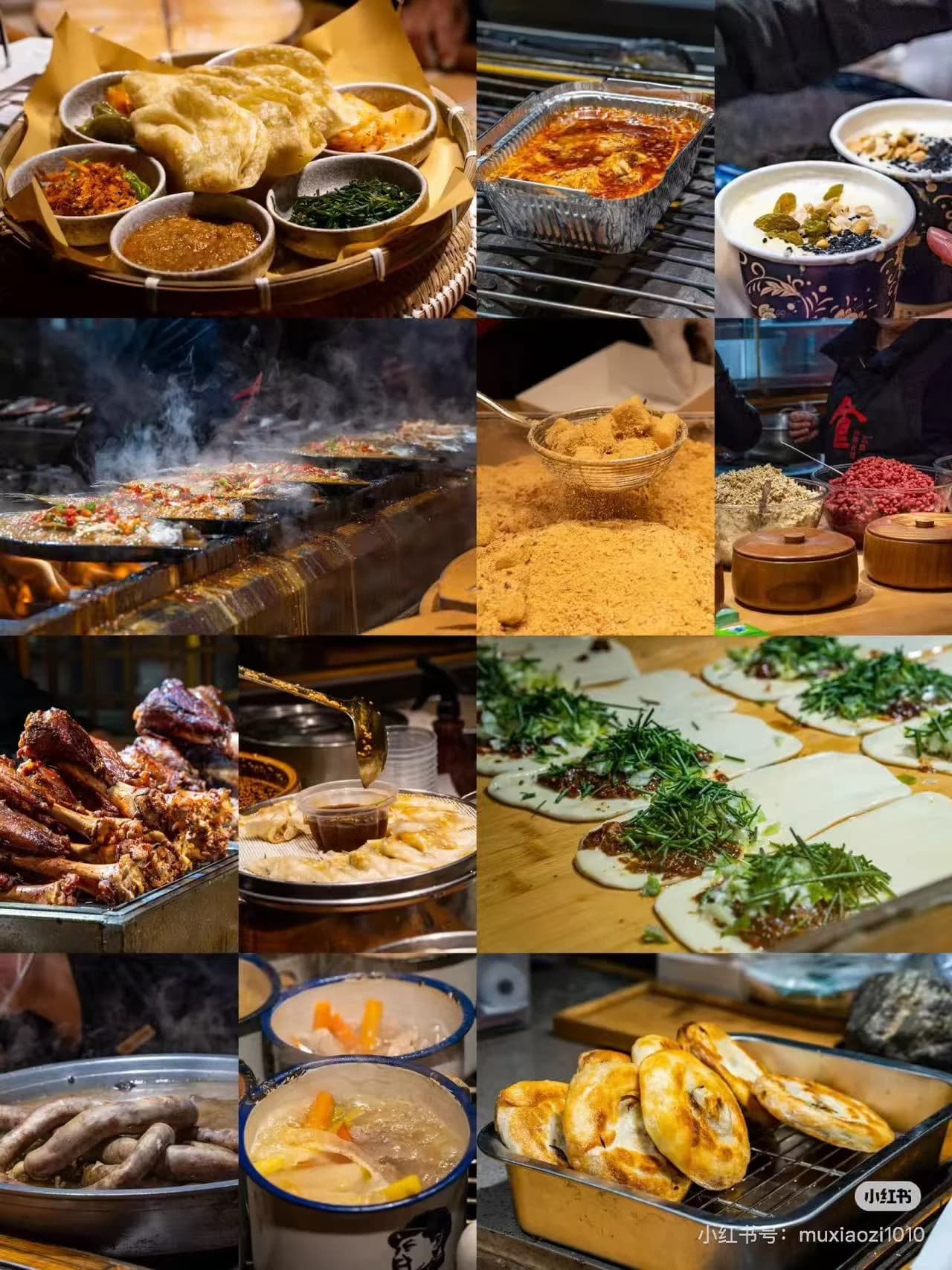
The cumin smell hits you fifty meters before the entrance. Past the gate, the first row on the right is grilling skewers—charcoal burning since five-thirty, lamb turned every few seconds, cumin and dried chili powder in the air. On the left, a vendor ladles camel-meat dumplings out of a rolling pot, tips them into a bowl, and adds vinegar and chili oil. ¥15 for eight. You won't find these outside Gansu Province.
Local families start arriving at seven. Kids on bikes thread between stalls; older couples sit on low stools drinking apricot juice. The temperature drops fast after dark. You're eating outside, in a high-desert city with nothing major within three hours. The market feels less polished than coastal night markets, more functional. That's fine.
What This Actually Is
Shazhou Night Market (沙洲夜市) is Dunhuang's main outdoor food market, located on Shazhou Street in the city center. Roughly 200 stalls, open from around 5:30 PM to midnight. Peak season (April–October) runs fully; in winter, stalls shrink and hours shorten. This is where Dunhuang residents eat dinner, not a tourist operation built around sightseers.
Is It Worth It
Yes, if you have any food curiosity. Yellow noodles with braised donkey meat and camel-meat dumplings are not available anywhere in China outside Gansu. The night market clusters the full range in one place at street-stall prices. Budget ¥60–100 for the main dishes.
If you want English menus, air-conditioned seating, and proteins you recognize by name, this market doesn't fit. No English menus exist anywhere. Two of the signature dishes use animals most Western visitors haven't cooked with before.
The Real Experience
Yellow Noodles with Donkey Meat — Lürou Huangmian (¥18–28)
Dunhuang's signature dish. The noodles are hand-pulled using an alkaline water technique that gives them a yellow color and noticeably more spring than standard pulled noodles. The topping is slow-braised donkey meat and its cooking liquid, sometimes with vegetables. Flavor is savory and reduced, the broth thick.
Look for stalls with a steady queue. This dish doesn't travel—donkey is less common as a food animal outside the northwest, and the yellow noodle technique isn't replicated in other regions. Start here.
Camel Meat Dumplings — Tuorou Shuijiao (¥15–20 per plate)
Eight dumplings per plate. Camel meat is leaner than beef, with a faint gamey note that the seasoning keeps in check. The skin runs thick, which holds up well in a rolling pot. Vinegar is the default dip. If you're curious about camel, this is a lower-stakes trial—a plate of eight rather than committing to a full skewer portion.
Grilled Lamb Skewers — Kaoyangrou Chuan (¥4–6 each)
Gansu-style, which means slightly less cumin than Xinjiang skewers but similar fresh quality. Dunhuang's slaughter volume is high during peak tourist season, so meat stays consistent. Two or three alongside something else is a reasonable approach.
Apricot Skin Drink — Xingpishui (¥5–10)
Made from dried apricot skins simmered and sweetened, then chilled. Color is amber, taste is sour-sweet with real fruit depth. Nothing carbonated, nothing artificial. Every drink stall has it.
Grey Pea Soup — Huidou Tang (¥5–8)
Small grey peas slow-cooked with red dates, served hot. Texture is thicker than a broth, closer to a loose porridge. Sweet, not savory. One small cup is the right commitment.
Suosuo Pastry — Suosuobing (¥5–10)
Baked pastry made with powder from the suosuo plant, a desert parasite with a local history in traditional medicine. Flavor is mild and slightly sweet. Sold mainly as a take-home specialty but available by the piece. Texture is dry. One is enough.
How to Do It
When to go: 7:30–9:30 PM is the full-operation window—complete stall count, fresh ingredients, the market at its most active. Before 7:30 you'll find seats more easily. After 10 PM some stalls close down.
Getting there: Shazhou Street, city center. Search "沙洲夜市" or "Dunhuang Night Market" in any map app. Walking distance from most hotels in central Dunhuang.
Ordering: No English menus. The system that works: point at whatever is cooking or displayed in front of the stall and say "zhège" (this one). Hold up fingers for quantity. If you're unsure about price, screenshot Chinese numerals for ¥10–50 before leaving your hotel and show the vendor to confirm.
Payment: Most stalls take cash. Some of the larger or newer stalls accept Alipay and WeChat Pay. Alipay International (linked to Visa or Mastercard) works at a portion of stalls, not all. Carry ¥100 in small bills (¥10 and ¥20 denominations). Don't rely entirely on digital payment.
Stall selection: Choose vendors with consistent turnover—this means ingredients aren't sitting in the heat all day. For camel dumplings, check that the pot is at a rolling boil. For yellow noodles, watch whether the braised meat is being ladled fresh.
Common Mistakes
- Carrying only cards or large bills — Market stalls run on cash; ¥100 in ¥10 and ¥20 denominations is the right setup
- Arriving after 9:30 PM — Some stalls close early; arrive by 7:30 if you want full selection and a seat
- Overloading on camel — Camel dishes are filling and the flavor is assertive; one plate of dumplings before ordering more is the right approach
- Treating suosuo pastry as a main food — Dry and mild; one piece is the appropriate portion
- Skipping yellow noodles — The donkey meat flavor is mild, not gamey in any distracting way; this dish has the most local significance and the clearest difference from what you'd eat anywhere else in China
Before You Go Checklist
- [ ] Set up Alipay International with your Visa or Mastercard at your hotel on Wi-Fi; also carry ¥100 in cash
- [ ] Download Google Translate or similar with photo translation for any posted menus
- [ ] Screenshot ¥10–50 in Chinese characters to confirm prices without speaking
- [ ] If you have food allergies (especially lamb or gluten), prepare a written Chinese allergy note
- [ ] Eat lightly before going—portions per item are small, but the total adds up
Shazhou Night Market has no English menus and no staff set up to help foreign visitors navigate. Vendors and local families eating there aren't performing anything for tourists. Yellow noodles with donkey meat and camel dumplings cost ¥15–28, the same price for everyone. Dunhuang residents have been eating these dishes here for a long time.